Artwork
円山応挙筆 白鷺図|White Herons
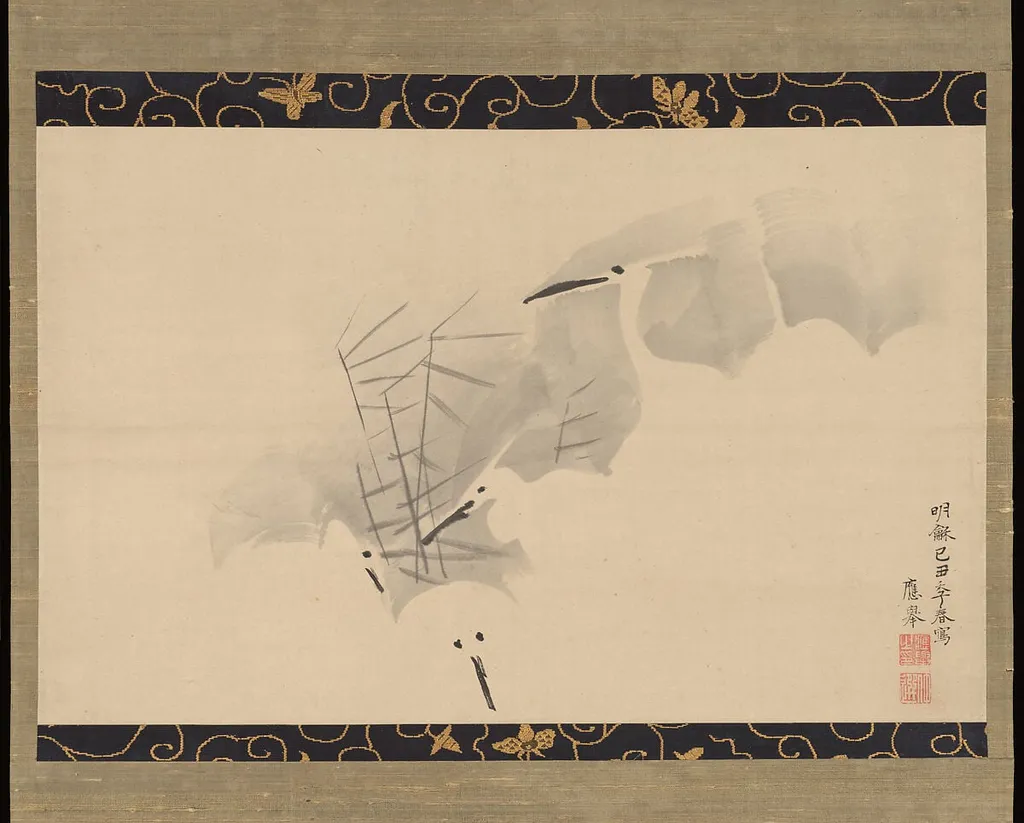
円山応挙筆 白鷺図|White Herons is an ink painting by the Romanticist artist Maruyama Ōkyo 円山応挙. It dates from 1769 and is held in the collection of the Metropolitan Museum of Art. Created in 1769, White Herons is a hanging scroll by Maruyama Ōkyo, the founder of the Maruyama school.
About this work
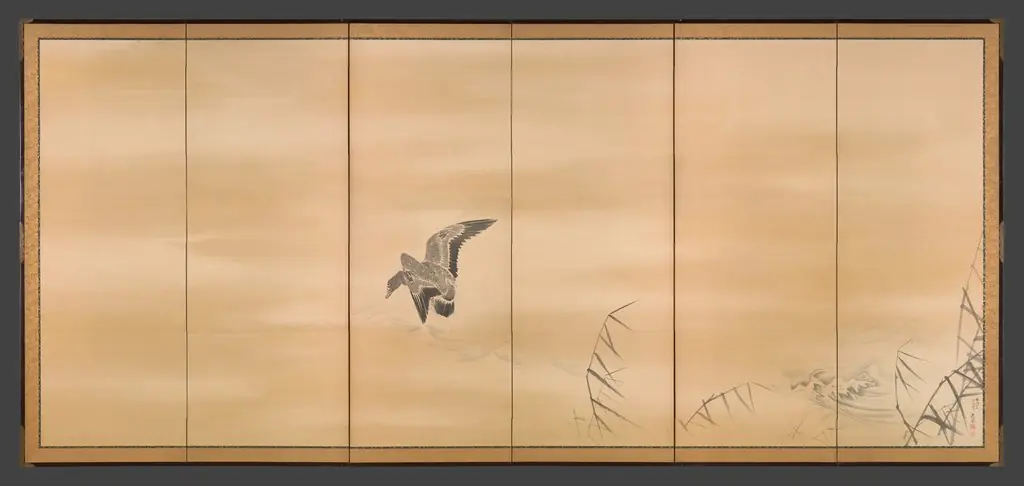
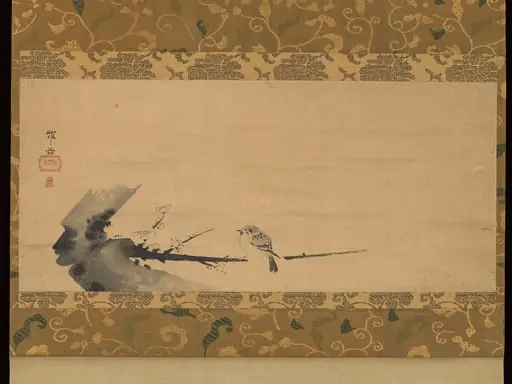
Three white herons stand in shallow water, their long necks curved like question marks. One lifts a foot, mid-step. The rest of the scroll is empty paper.
Ōkyo painted this in 1769, when most Japanese artists filled every inch. He left the herons floating in silence instead. The ink is so light you can see the brush hairs in the feathers.
If you like how quiet it feels, look up *birds* next.
Overview
Created in 1769, this hanging scroll by Maruyama Ōkyo presents a minimalist scene of three white herons standing in shallow water. Rendered in ink on paper, the composition occupies only the lower portion of the scroll, leaving the majority of the surface empty and emphasizing a sense of quietude.
Subject & Meaning
The work focuses on the graceful posture of the herons, each with a long, curved neck reminiscent of a question mark. One bird appears mid‑step, lifting a foot, suggesting a fleeting moment captured in stillness. The sparse setting invites contemplation of the birds' serene presence within an otherwise unadorned space.
Technique & Style
Ōkyo employs a light, almost translucent ink wash that allows the texture of brush hairs to remain visible within the feathered forms. This delicate handling contrasts with the densely detailed approach common among Japanese painters of the period, highlighting the artist’s preference for subtle suggestion over exhaustive detail.
History & Provenance
The scroll originates from the late Edo period, a time when many artists filled their surfaces with intricate patterns. Ōkyo’s decision to leave the majority of the paper blank reflects a deliberate departure from contemporary conventions, aligning with his broader interest in naturalistic observation and restrained composition.
Context
Maruyama Ōkyo was known for integrating Western perspective techniques with traditional Japanese painting. While this piece does not display overt perspective, its emphasis on negative space and the isolated subject aligns with his broader aesthetic that valued realism tempered by compositional restraint.
Artist & collection