Artwork
The Infant Christ Asleep on the Cross (after Bartolomé Esteban Murillo)
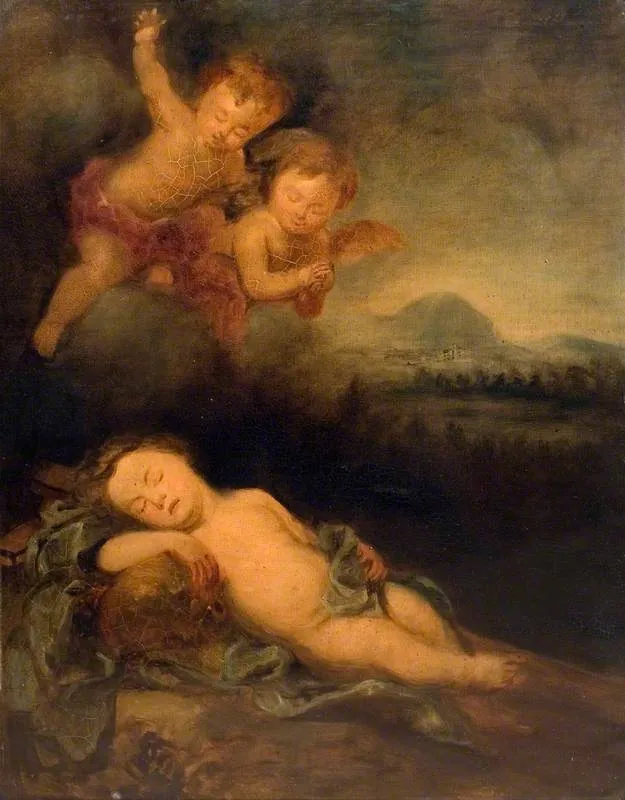
The Infant Christ Asleep on the Cross (after Bartolomé Esteban Murillo) is an oil painting by the American Folk Art artist Mary Baker. It dates from 1858 and is held in the collection of the Victoria and Albert Museum.
About this work
Overview
The Infant Christ Asleep on the Cross is an oil painting by Mary Baker, dated 1858, now in the Victoria and Albert Museum. It depicts a unique religious scene of the Infant Christ in a state of slumber on a cross.
Subject & Meaning
The painting portrays the Infant Christ asleep on a draped cross, conveying serenity amidst foreboding symbolism. The Infant's peaceful expression contrasts with the cross, a prefiguration of his future crucifixion, inviting contemplation on the intersection of innocence and destiny.
Technique & Style
Baker employs chiaroscuro to dramatic effect, with a dark, tonally nuanced background that accentuates the Infant Christ's face as the focal point. Subtle light hints and deep color gradations add depth, drawing the viewer's gaze to the subject's serene, sleeping form.
History & Provenance
Created in 1858 by Mary Baker, the painting is part of the Victoria and Albert Museum's collection, attributed as being 'after Bartolomé Esteban Murillo', indicating it is either a copy, interpretation, or inspired work based on Murillo's original composition.
Context
While the original by Murillo would have been deeply rooted in 17th-century Spanish Baroque religious art, Baker's 19th-century interpretation reflects a continued European interest in religious themes and the technical mastery of chiaroscuro across centuries.
Legacy
The painting's legacy lies in its representation of artistic lineage and the enduring appeal of religious subjects in European art. As part of a prominent museum collection, it contributes to the study of both Murillo's influence and 19th-century religious painting practices.
Artist & collection
Artist
Mary Baker kept a daylight lamp burning in her studio so she could paint the exact moment a shadow crossed a face, not the face itself.

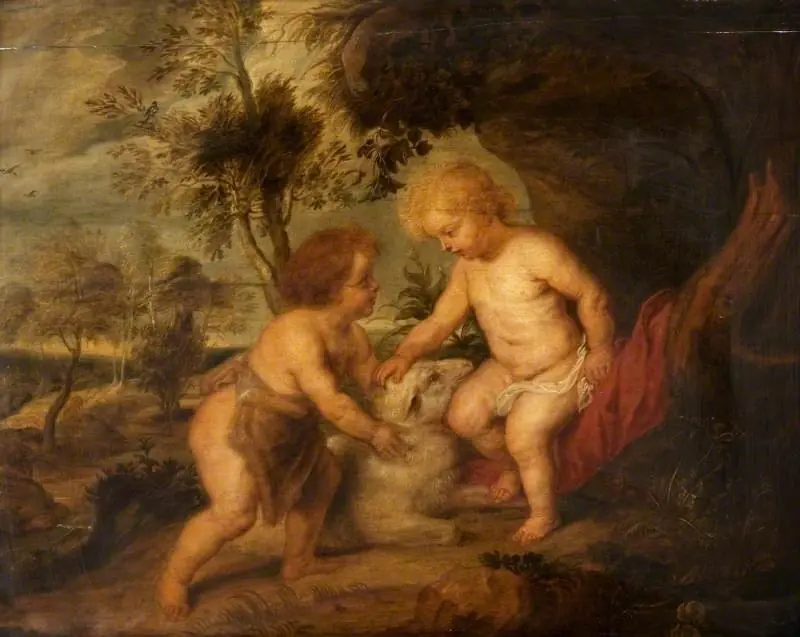 The Infant Christ and Saint John with a Lamb
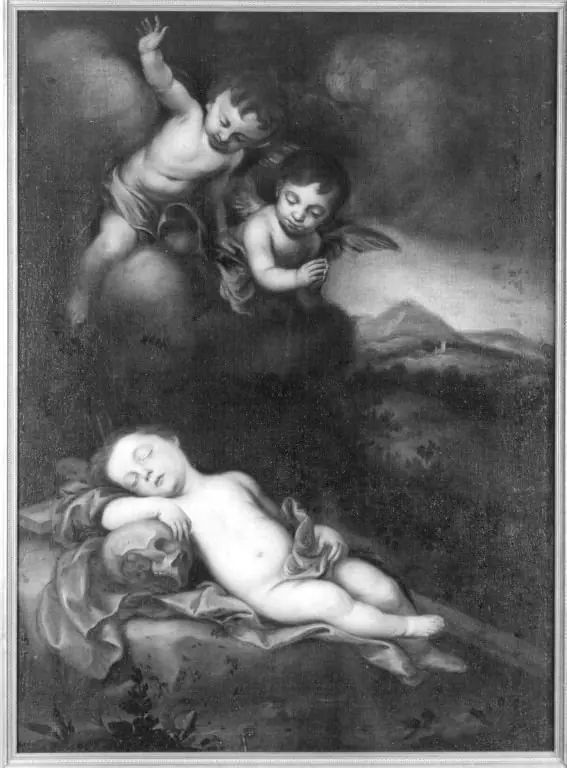 Schlafender Jesusknabe mit Engeln (Nachfolger)
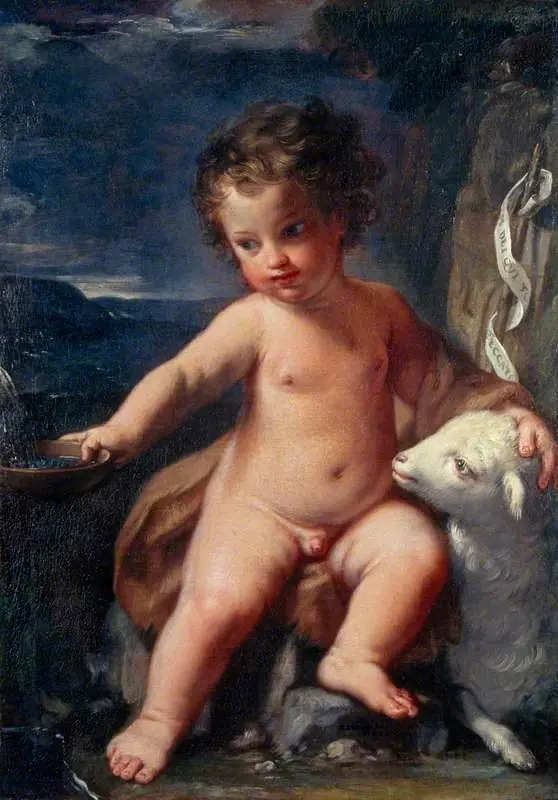 The Infant Saint John the Baptist in the Wilderness
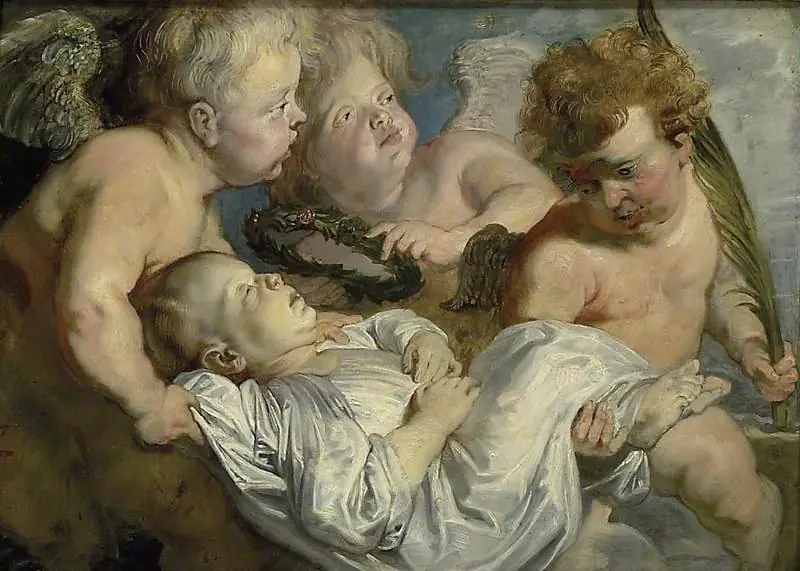 A dead Child carried to Heaven by Angels
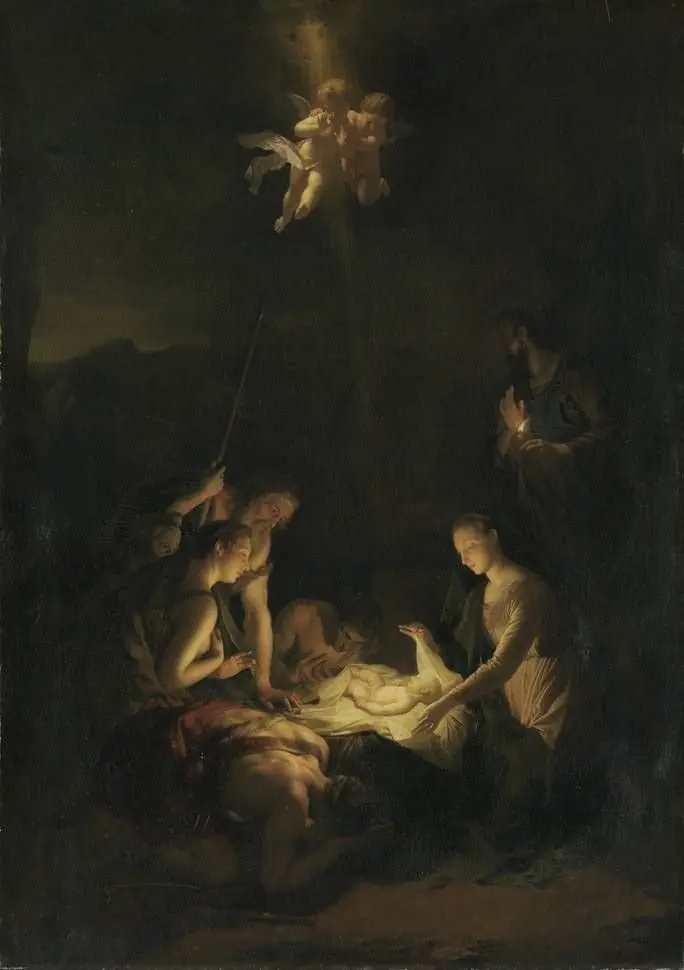 Nativity
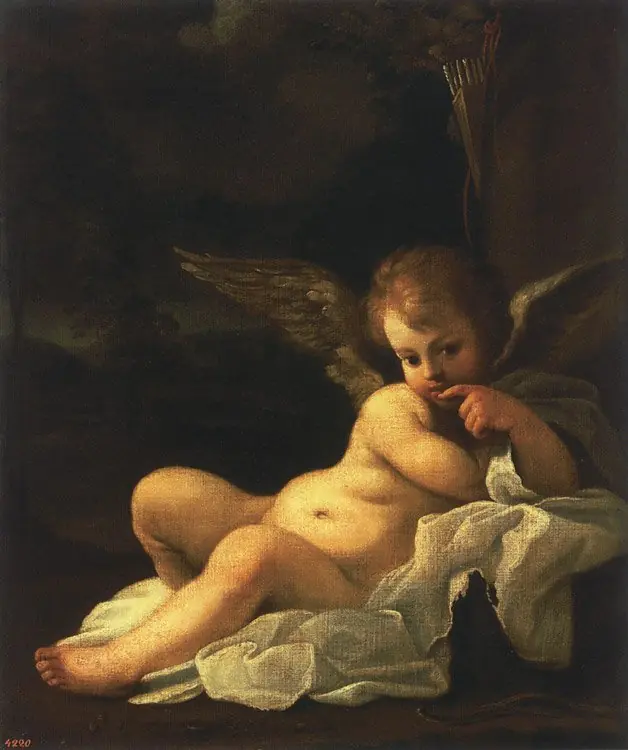 Cupid in a Landscape
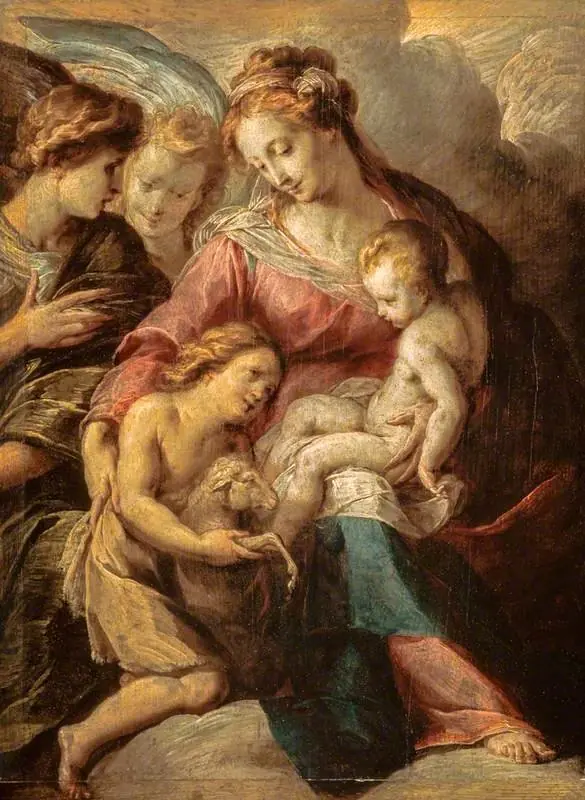 The Virgin and Child with the Infant Saint John and Attendant Angels
 Cupids and Geniuses
 The Cherub Harvesters
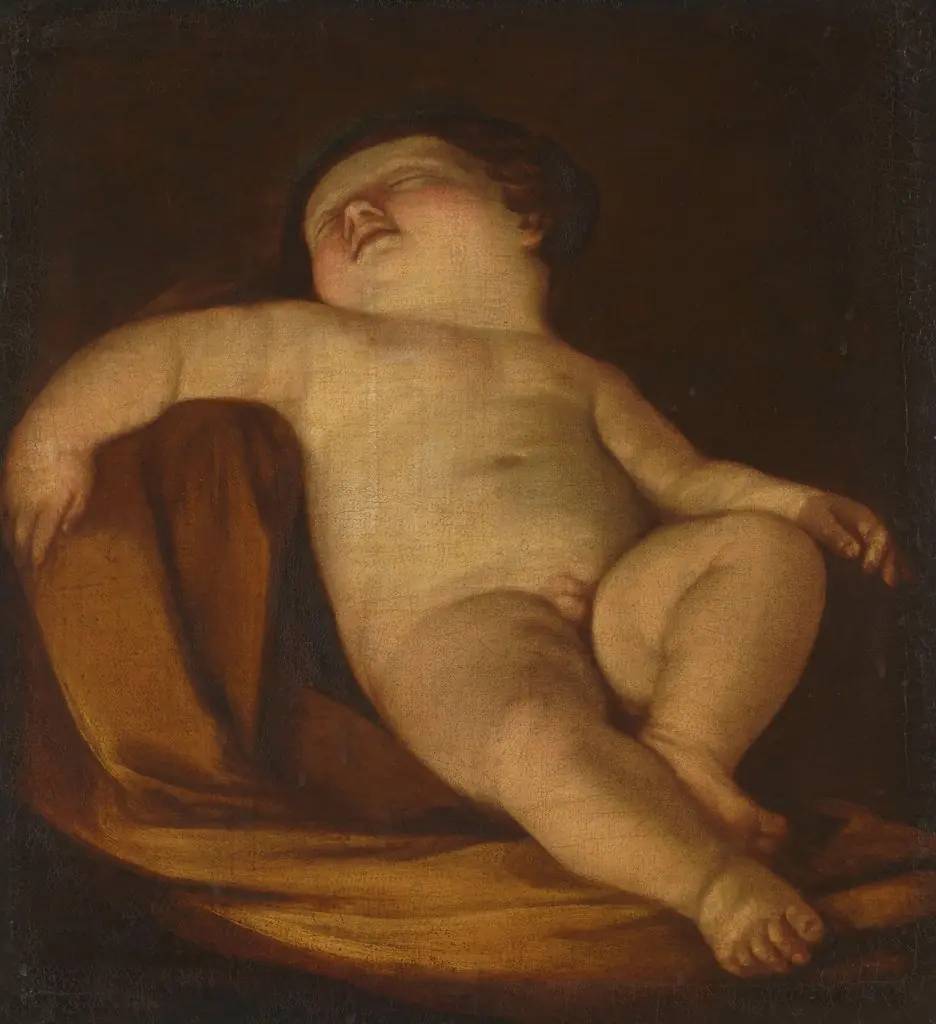 Sleeping Putto
 Visul lui Iacob
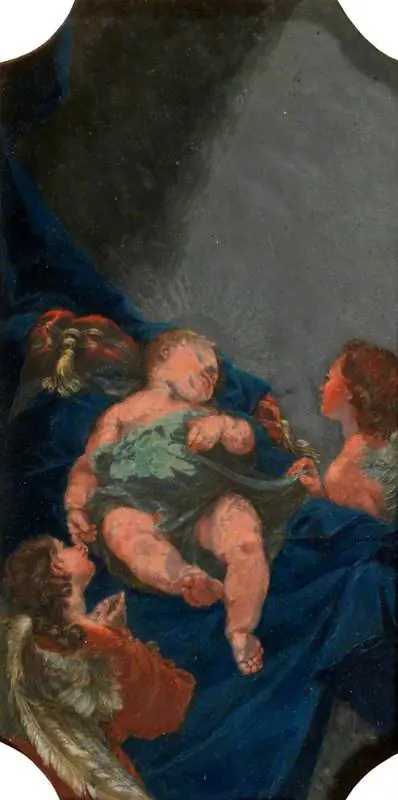 The Infant Christ Asleep, Adored by Two Angels