Artwork
The Baptism of Clovis
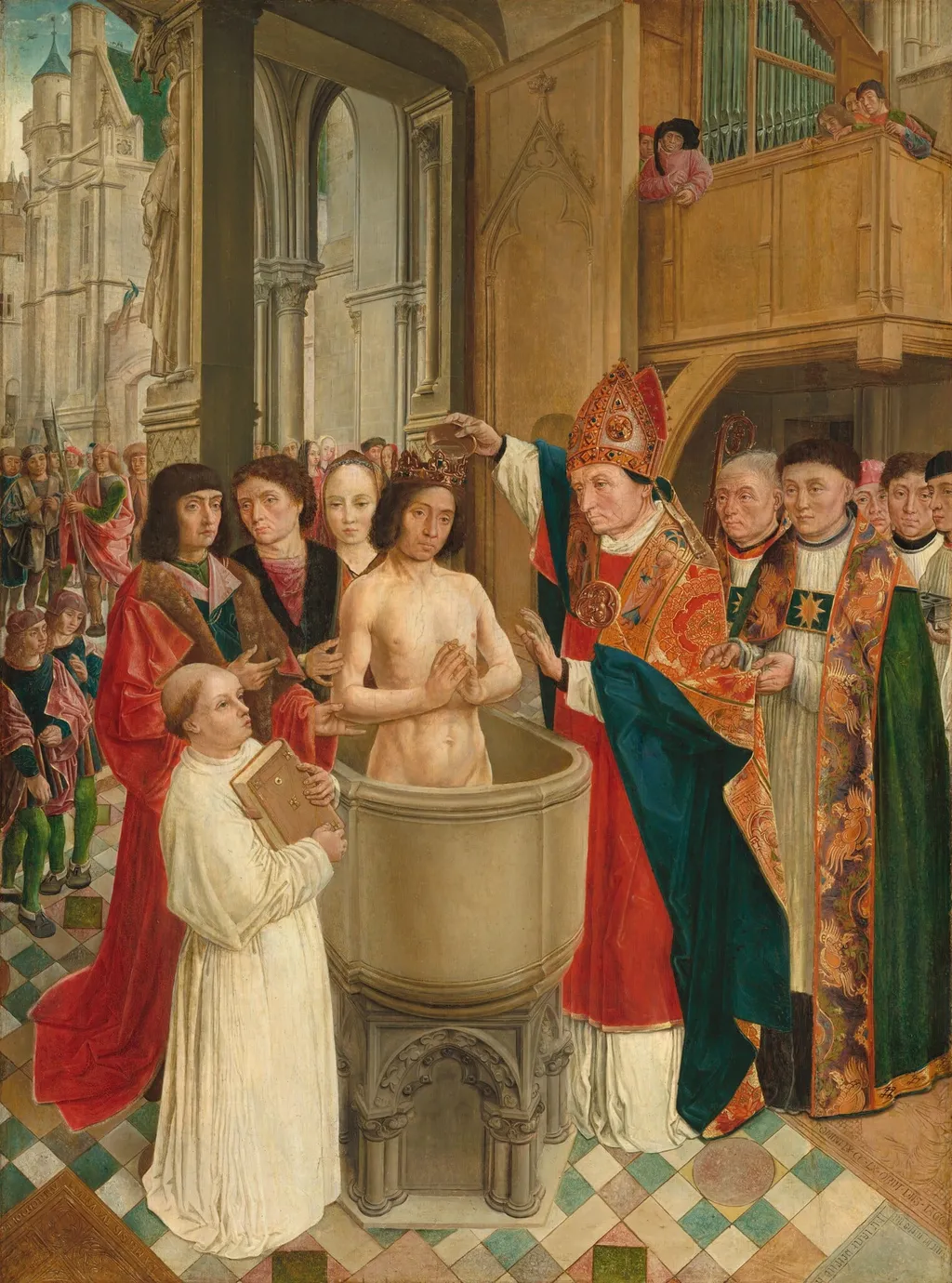
The Baptism of Clovis is an oil painting by the Northern Renaissance artist Master of Saint Giles. It dates from 1500 and is held in the collection of the National Gallery of Art.
About this work
The priest is wearing a colorful robe and a tall hat, and the people around him are dressed in clothing from the 16th century.
The painting shows a man standing in a large stone baptismal font, with his hands clasped in prayer. He is surrounded by a group of people, including a priest pouring water over his head, and others watching from a balcony.
The priest is wearing a colorful robe and a tall hat, and the people around him are dressed in clothing from the 16th century.
If you want to learn more about the style of this painting, you might look into the Renaissance.
Overview
The Baptism of Clovis, an oil painting on panel, was created around 1500 by the artist known as the Master of Saint Giles. This religious work depicts a pivotal moment in early French history, illustrating the conversion of the Frankish king Clovis I to Christianity. The composition presents a detailed narrative scene, characteristic of Northern European art at the turn of the 16th century.
Subject & Meaning
The painting centers on Clovis, depicted with clasped hands, standing within a substantial stone baptismal font. A priest, distinguished by a vibrant robe and a tall hat, pours water over the king's head. Numerous onlookers, dressed in attire typical of the 16th century rather than the historical period of Clovis, observe the ceremony from various vantage points, including a balcony. This anachronistic costuming serves to connect the historical event with the contemporary viewer.
Technique & Style
Rendered in oil on panel, the painting exhibits the meticulous detail and rich color palette characteristic of the Northern Renaissance. The artist, the Master of Saint Giles, employed this medium to create a luminous surface and intricate textures, particularly evident in the varied fabrics worn by the figures. The composition's clear narrative and the careful depiction of architectural elements and human forms align with artistic trends of the late 15th and early 16th centuries.
Own this work as a print
Artist & collection