Artwork
Episodes from the Life of a Bishop Saint
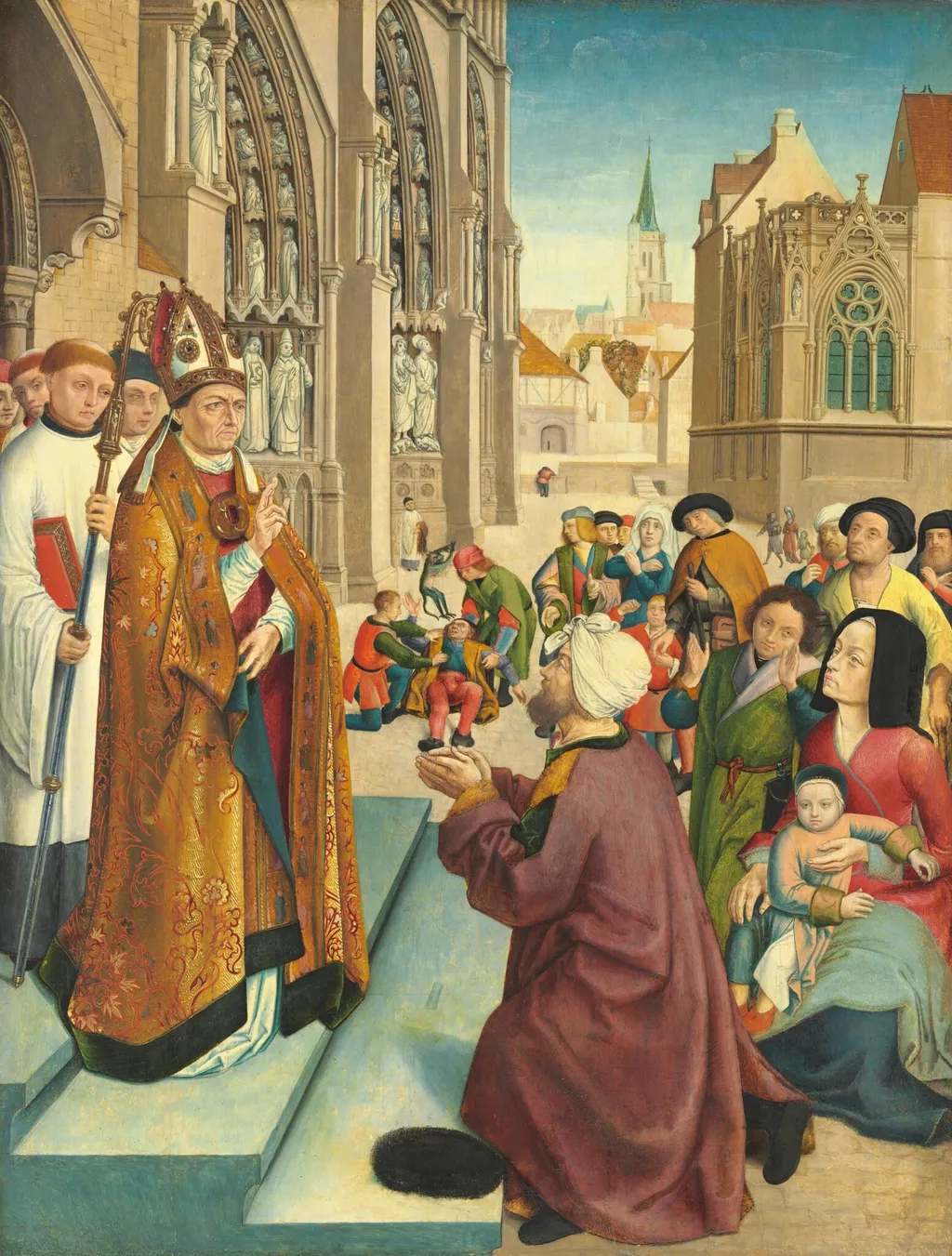
Episodes from the Life of a Bishop Saint is an oil painting by the Northern Renaissance artist Master of Saint Giles. It dates from 1500 and is held in the collection of the National Gallery of Art.
About this work
Overview
This oil on panel painting, titled "Episodes from the Life of a Bishop Saint," was created around 1500 by the artist known as the Master of Saint Giles.
This oil on panel painting, titled "Episodes from the Life of a Bishop Saint," was created around 1500 by the artist known as the Master of Saint Giles. The work depicts a religious narrative, presenting a bustling street scene centered on a bishop engaged in an act of blessing. As a religious painting, it offers a glimpse into devotional practices and urban life at the turn of the sixteenth century.
Subject & Meaning
The composition features a bishop, prominently positioned on a raised platform, clad in richly patterned robes. He holds a staff and a book, extending a gesture of blessing towards a diverse crowd gathered below. Among the onlookers, some figures kneel in reverence, while others observe intently, including a woman cradling an infant. The scene unfolds before a grand church with pointed arches and statues, suggesting a public, sacred event within a vibrant urban setting.
Technique & Style
The artist employs a meticulous approach, utilizing bright colors and precise details to articulate the scene. A notable stylistic choice is the visual distinction between the bishop's ornate, vibrant vestments and the more subdued attire of the surrounding populace. This contrast serves to emphasize the holy figure's elevated status and spiritual authority within the depicted narrative, drawing the viewer's eye to the central sacred act.
Context
Created around 1500, this painting aligns with artistic trends prevalent in the Northern Renaissance. The detailed rendering of figures, architecture, and textures, along with the use of oil paint for its luminous quality, reflects the period's emphasis on realism and narrative clarity. Such works often served didactic or devotional purposes, bringing religious stories to life through relatable, yet idealized, urban settings.
Own this work as a print
Artist & collection