Artwork
Saint James the Greater
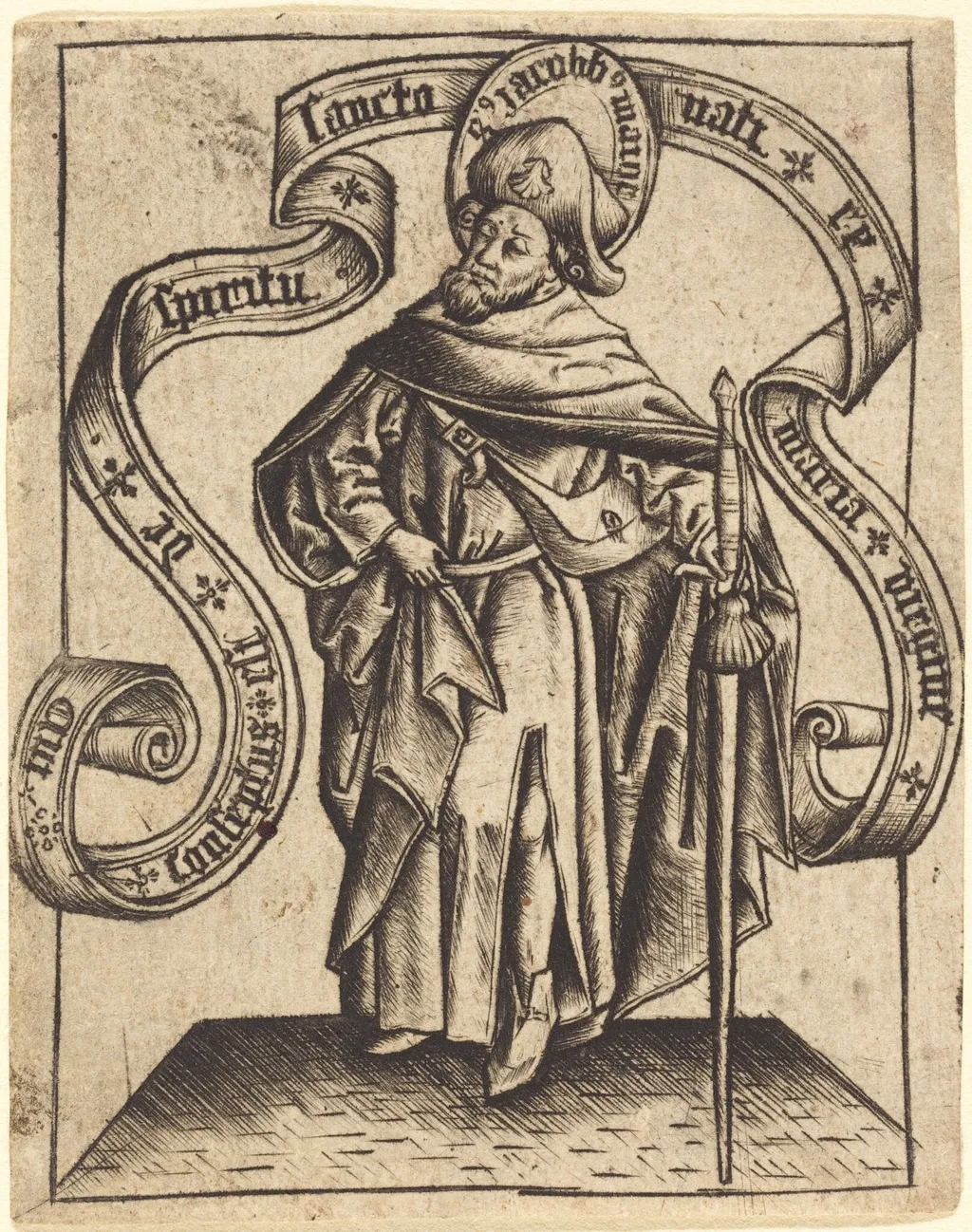
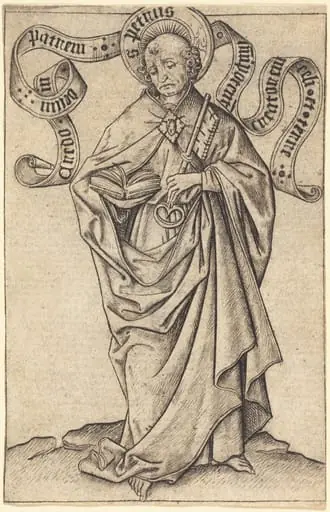
Saint James the Greater is an ink print by the Renaissance artist Master of the Berlin Passion. It dates from 1465 and is held in the collection of the National Gallery of Art.
About this work
Overview
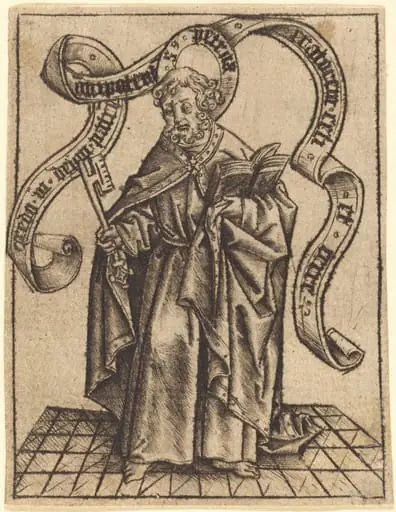
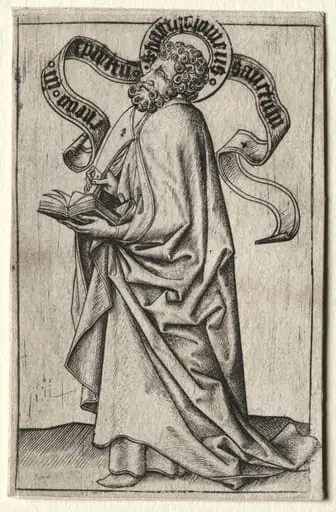
This early printed image, executed in engraving on laid paper around 1465, portrays a standing figure identified as Saint James the Greater. The composition places the saint on a brick‑tiled floor, his posture upright and dignified, while a flowing banner encircles him, lending a sense of movement to the otherwise static scene.
Subject & Meaning
The figure wears a long robe and a cloak, typical of medieval saintly iconography, and holds a staff in his right hand—a traditional attribute of James, the apostle. In his left hand he carries a book, suggesting his role as a teacher or the bearer of the Gospel. His calm, contemplative expression conveys spiritual introspection.
Technique & Style
The work is rendered through fine engraving lines and dense cross‑hatching, techniques that create subtle gradations of tone and a convincing illusion of depth. The texture of the brick floor and the folds of the clothing are achieved by meticulous line work, characteristic of the Master of the Berlin Passion’s approach to printmaking.
History & Provenance
Attributed to the anonymous Master of the Berlin Passion, the engraving belongs to a body of mid‑15th‑century Northern European prints. Its dating to circa 1465 places it among the early examples of devotional prints intended for private contemplation or small‑scale circulation.
Context
During the mid‑1400s, engraving emerged as a primary medium for reproducing religious imagery beyond the reach of painted altarpieces. The depiction of Saint James aligns with contemporary pilgrimage cults, particularly the growing veneration of the apostle as a protector of travelers on the Way of St. James.
Artist & collection