Artwork
Saint Peter
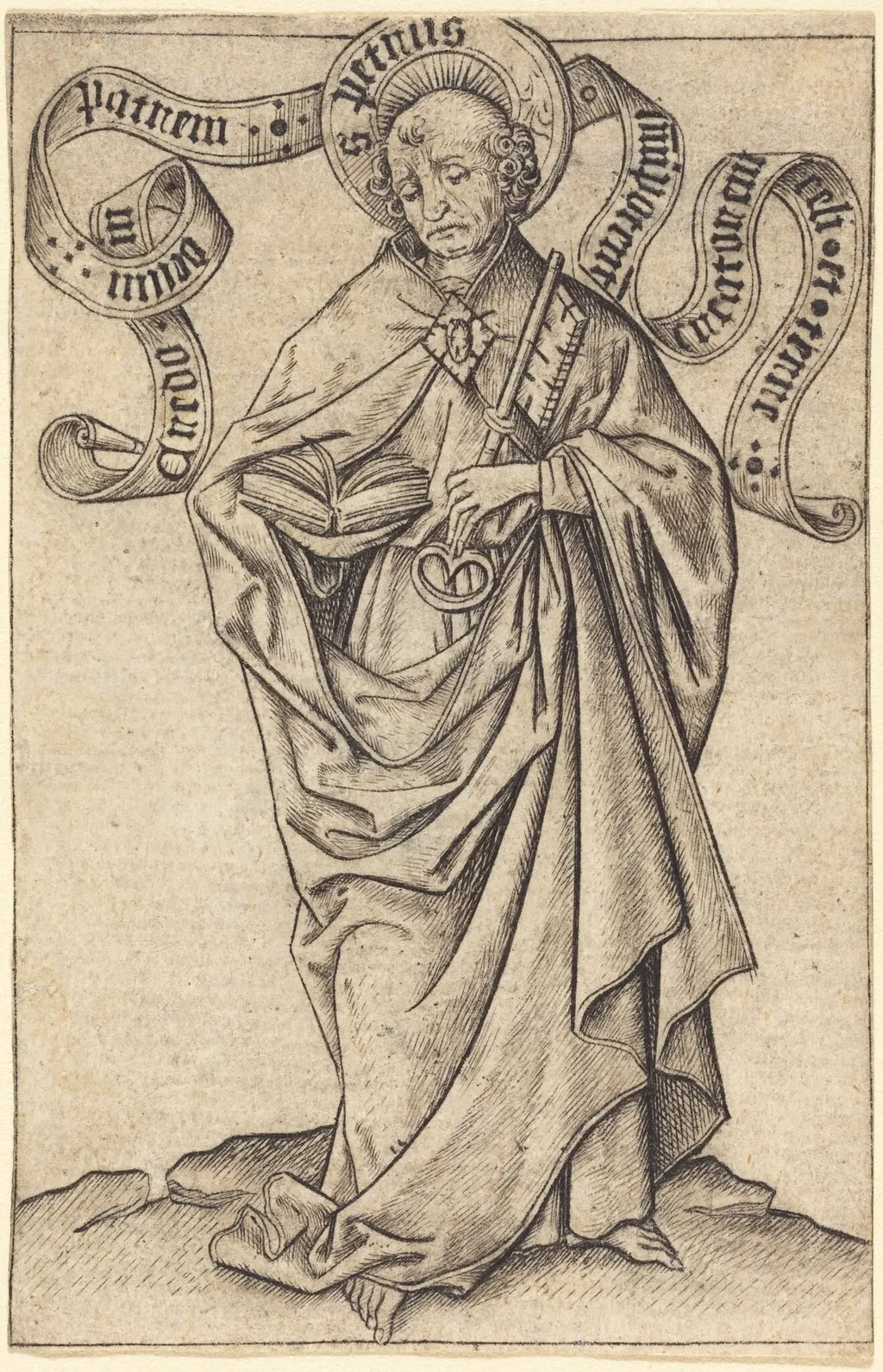
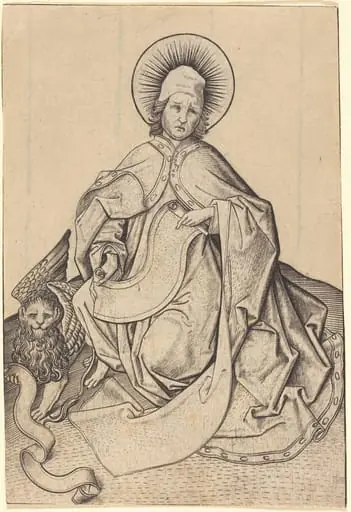
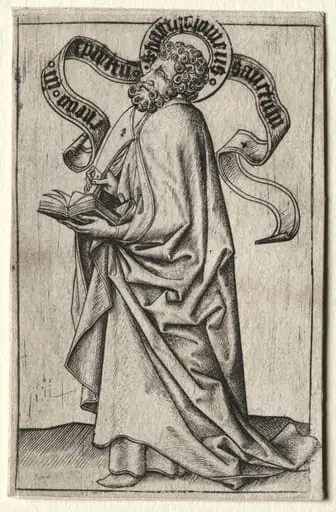
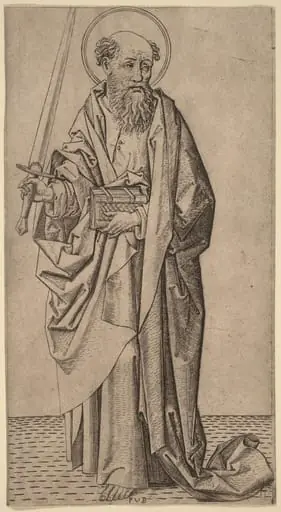
Saint Peter is an ink print by the Renaissance artist Master E.S.. It dates from 1455 and is held in the collection of the National Gallery of Art.
About this work
Overview
The engraving titled Saint Peter, executed on laid paper, dates from around 1455. It depicts the apostle kneeling with a book and a pair of keys, rendered in delicate, linear incisions characteristic of early German printmaking.
Subject & Meaning
The figure is identified as Saint Peter by the presence of his traditional attributes: a halo, the keys of heaven, and scrolls bearing the Latin words PATREM and FILIUS, alluding to his role as the father of the Church and the son of the faithful.
Technique & Style
Created by an unknown German goldsmith active in the mid‑15th century, the work employs engraving—a process of incising fine lines into a metal plate and transferring the inked image onto paper. The rendering shows a late Gothic sensibility, with realistic drapery folds and expressive facial features.
History & Provenance
The artist, known only by the monogram E. S., is regarded as the first significant German master of old‑master prints. His activity is placed between roughly 1420 and 1468, and his works were circulated among devotional contexts in the German-speaking lands.
Context
As a religious print, Saint Peter belongs to a genre that catered to personal piety and the spread of biblical imagery. Its detailed execution reflects the period’s emphasis on didactic clarity and the growing importance of portable, reproducible images for worship.
Artist & collection

Artist
Master E. S. (c. 1420 – c. 1468; previously known as the Master of 1466) is an unidentified German engraver, goldsmith, and printmaker of the late Gothic period. He was the first major German artist of old master prints…