Artwork
The Martyrdom of Saint Lucy
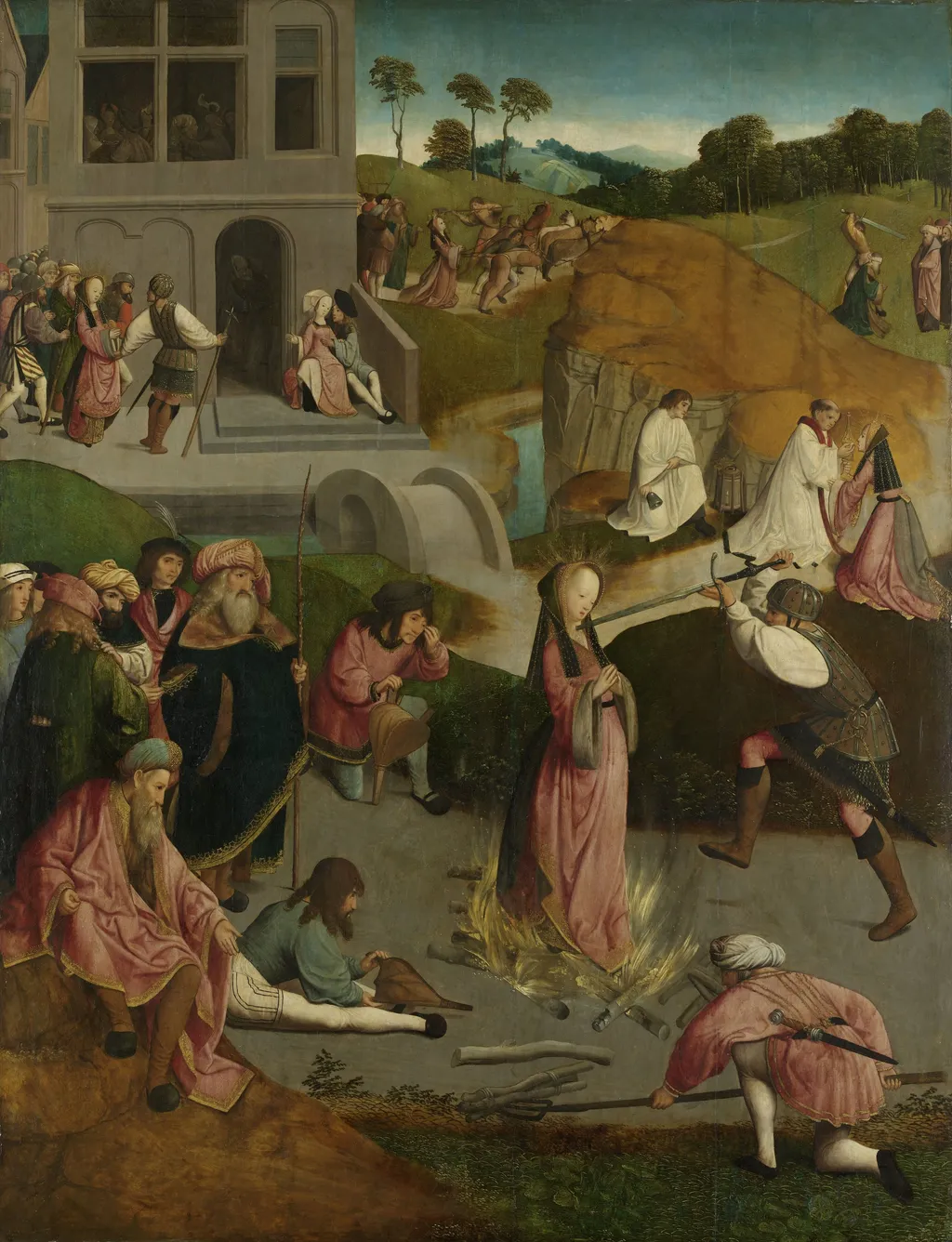
The Martyrdom of Saint Lucy is an oil painting by the Northern Renaissance artist Master of the Figdor Deposition. It is held in the collection of the Rijksmuseum.
About this work
Overview
Created in 1507, this oil on canvas portrays the martyrdom of Saint Lucy and is attributed to the anonymous workshop known as the Master of the Figdor Deposition. The work belongs to the collection of the Rijksmuseum, where it is displayed as an example of early sixteenth‑century Northern European religious painting.
Subject & Meaning
The composition centers on a woman in a pink garment, her hands joined in prayer as she faces violent assault. A sword is pressed to her throat while another figure attempts to pierce her with a spear, illustrating the traditional narrative of Lucy’s steadfast faith amid persecution.
Technique & Style
Executed with the meticulous detail characteristic of the Northern Renaissance, the painting renders figures and landscape with realistic texture. The background features rolling hills and trees, while the attackers wear varied attire, including turbans and cloaks, adding depth and cultural nuance to the scene.
History & Provenance
The piece emerged from the workshop of the Master of the Figdor Deposition, an artist active in the Low Countries around the turn of the 16th century. It entered the Rijksmuseum’s holdings through acquisition in the early 20th century, where it has remained in the museum’s permanent collection.
Context
Saint Lucy’s martyrdom was a popular subject in late medieval and early modern devotional art, reflecting contemporary concerns with piety and sacrifice. This painting aligns with that tradition, employing a dramatic narrative and vivid realism to engage viewers in the saint’s spiritual endurance.
Own this work as a print
Artist & collection