Artwork
Calvary
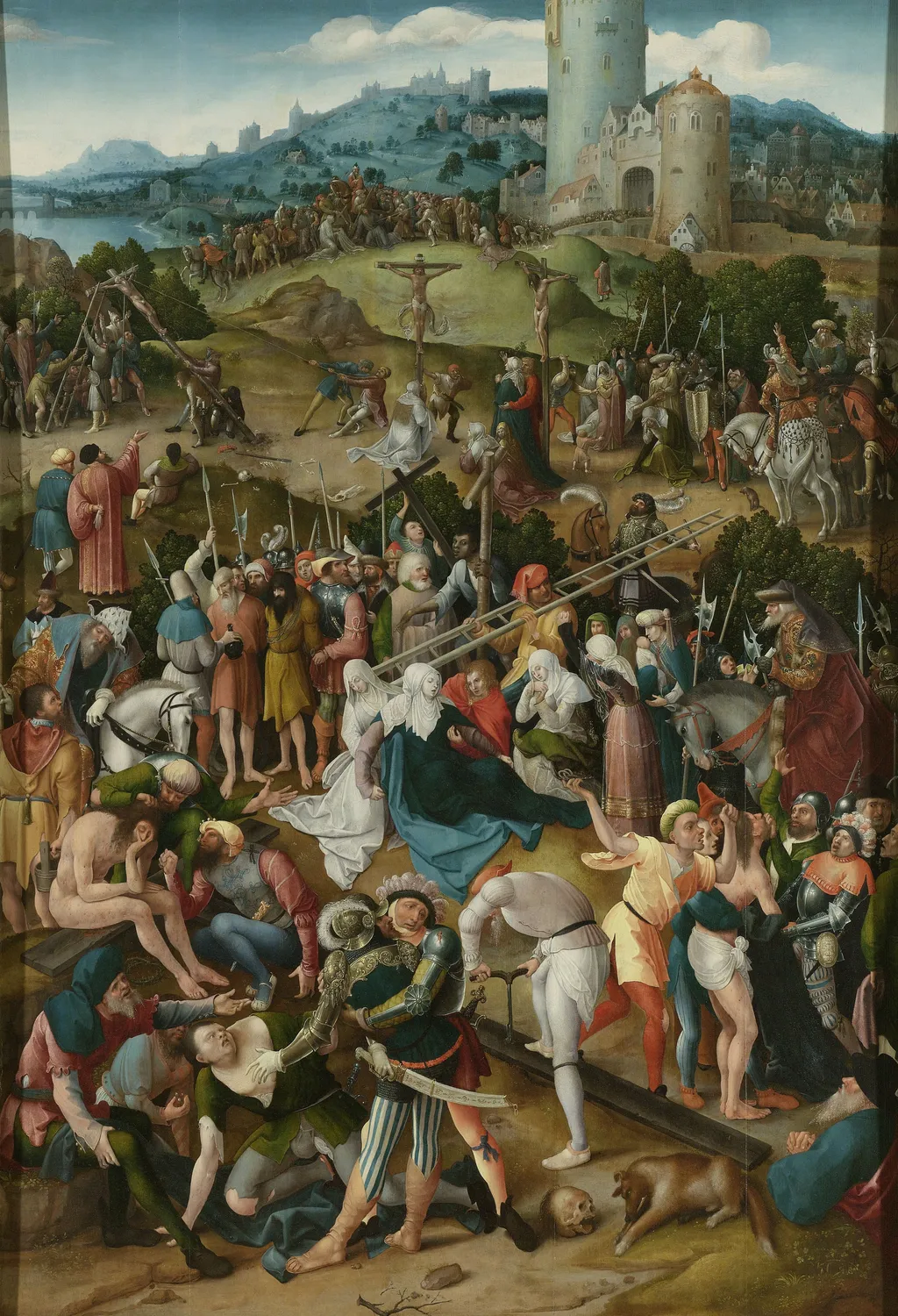
Calvary is an oil painting by the Northern Renaissance artist Pseudo Jan Wellens de Cock. It dates from 1520 and is held in the collection of the Rijksmuseum.
About this work
Overview
It stands as a notable example of religious art from the early 16th century, currently held within the collection of the Rijksmuseum.
Authored by the artist known as Pseudo Jan Wellens de Cock, "Calvary" is an oil painting created around 1520. This work portrays the Crucifixion of Jesus Christ, rendered with a dramatic and tumultuous atmosphere. It stands as a notable example of religious art from the early 16th century, currently held within the collection of the Rijksmuseum. The painting's composition effectively conveys the chaotic nature of the event, drawing viewers into its intense narrative.
Subject & Meaning
The painting vividly depicts the chaotic scene surrounding Christ's crucifixion. A densely packed multitude fills the foreground, with numerous figures, including soldiers bearing swords and spears, overlapping to create a sense of overwhelming disorder. Amidst this turmoil, specific elements like a horse and a soldier are discernible. In the background, a detailed cityscape with buildings and a body of water provides a stark contrast to the dramatic events unfolding under a deep blue, cloud-strewn sky.
Technique & Style
Executed in oil paint, "Calvary" showcases the medium's capacity for rich and vibrant color, which contributes significantly to the painting's intense visual impact. Pseudo Jan Wellens de Cock employs a compositional strategy that emphasizes density and overlap, particularly in the depiction of the crowd. This approach amplifies the feeling of chaos and movement, immersing the viewer in the tumultuous event. The detailed rendering of both figures and the distant cityscape further demonstrates the artist's skill.
History & Provenance
Created around 1520, "Calvary" represents a work from the early 16th-century Northern European tradition. The painting is currently part of the permanent collection at the Rijksmuseum, where it is presented as an example of religious narrative art from this period. Its attribution to Pseudo Jan Wellens de Cock places it within a specific artistic lineage, contributing to the understanding of art production during that era.
Own this work as a print
Artist & collection
Artist
This group painted biblical scenes in the 1520s around Antwerp. Their *Triptych with the Crucifixion* shows Jesus on the cross between saints, while *Lot and his daughters* tells a story from Genesis. Look for their…

![The Raising of the Cross [center, left, and right panels], by Master of the Starck Triptych](https://artifactworldgallery.com/img/master-of-the-starck-triptych--the-raising-of-the-cross-center-left-and-right-panels--5f0053e23b45aff7-w320.webp)