Artwork
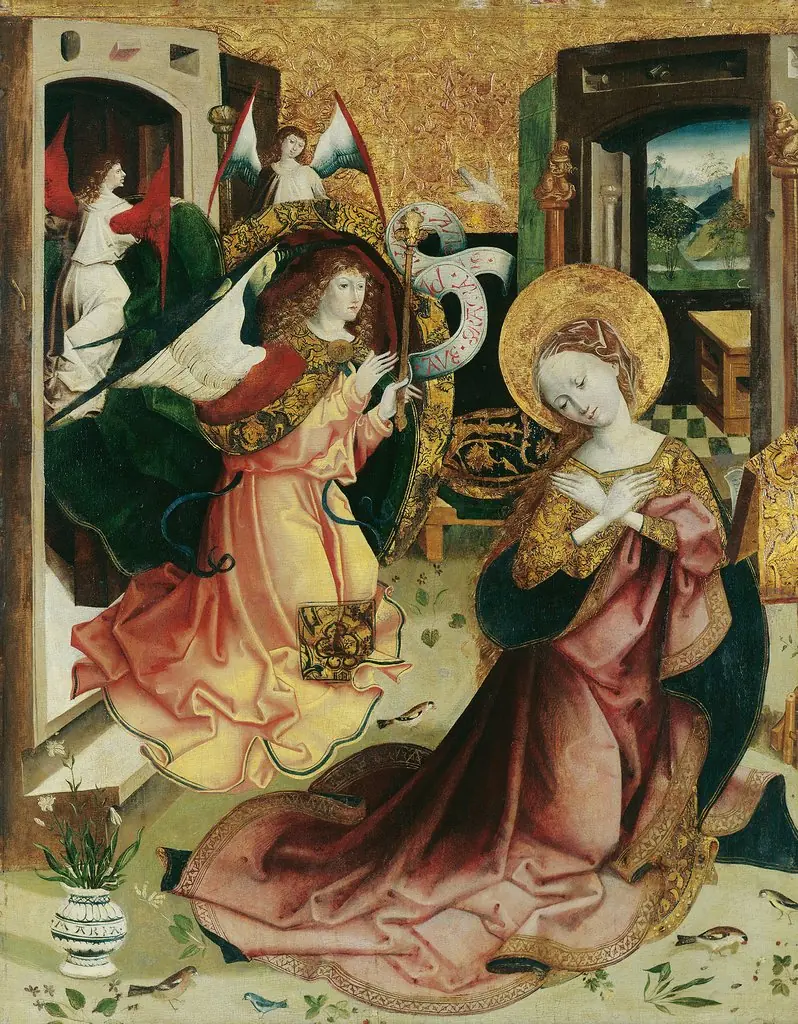
The Life of Mary: the Annunciation (lower half of the Crucifixion of Christ)
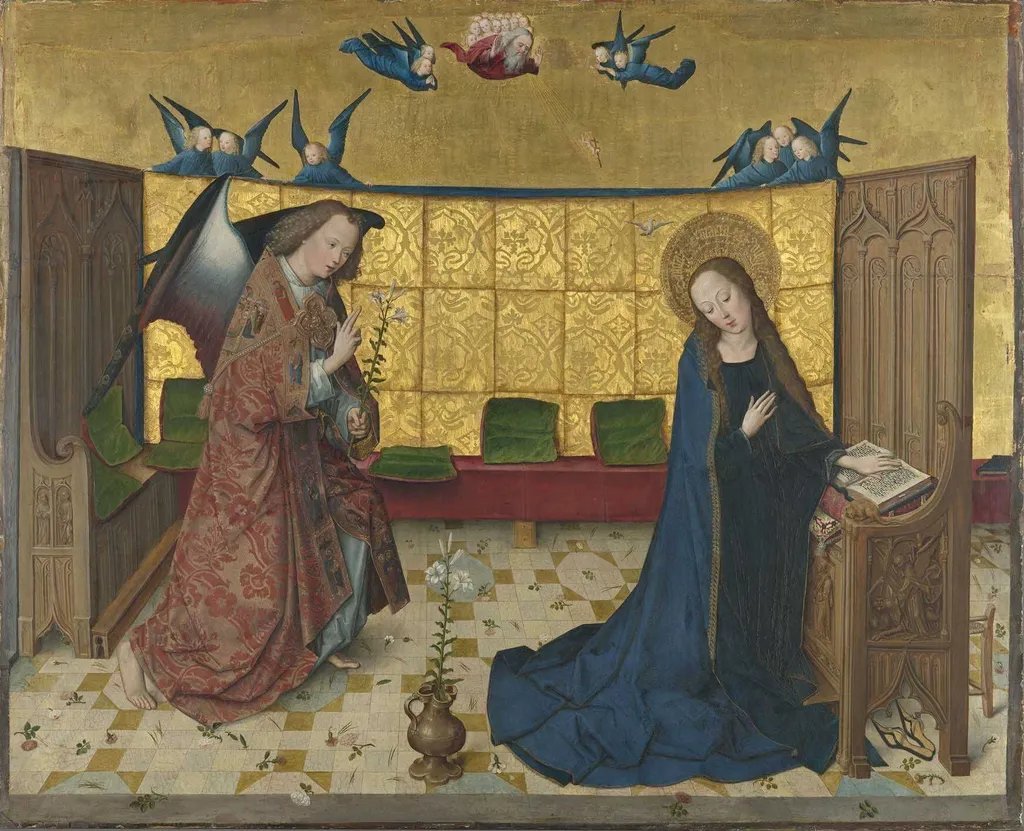
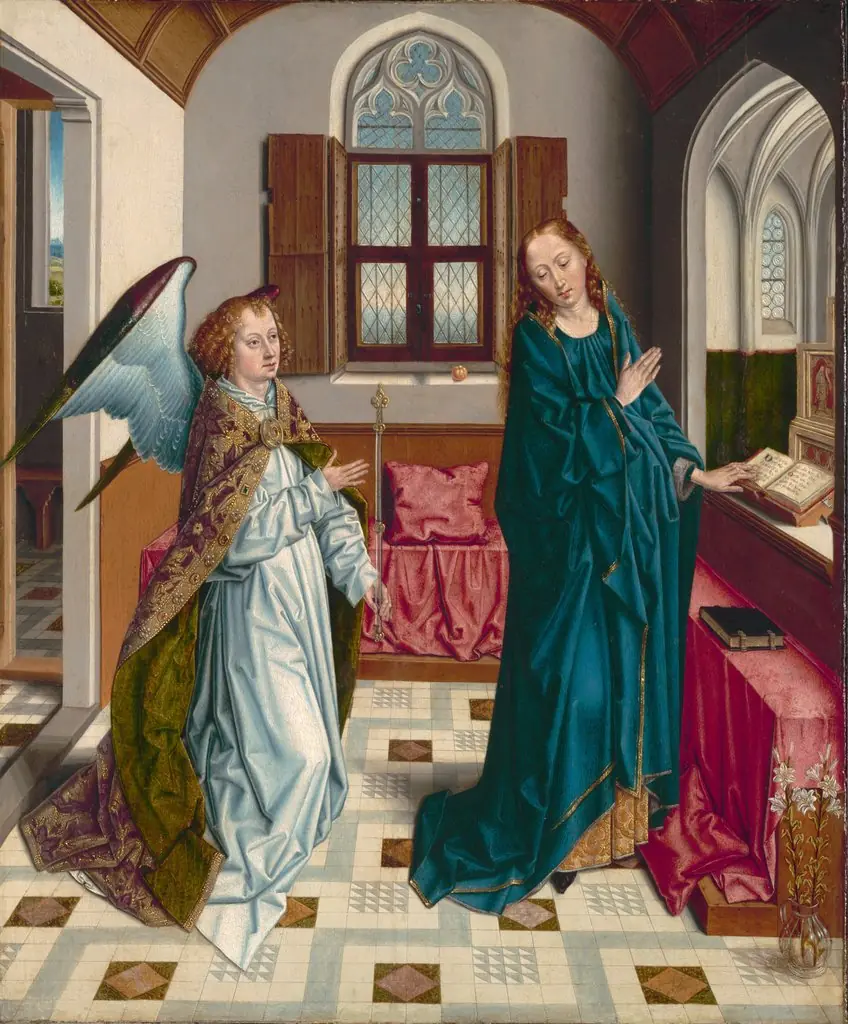
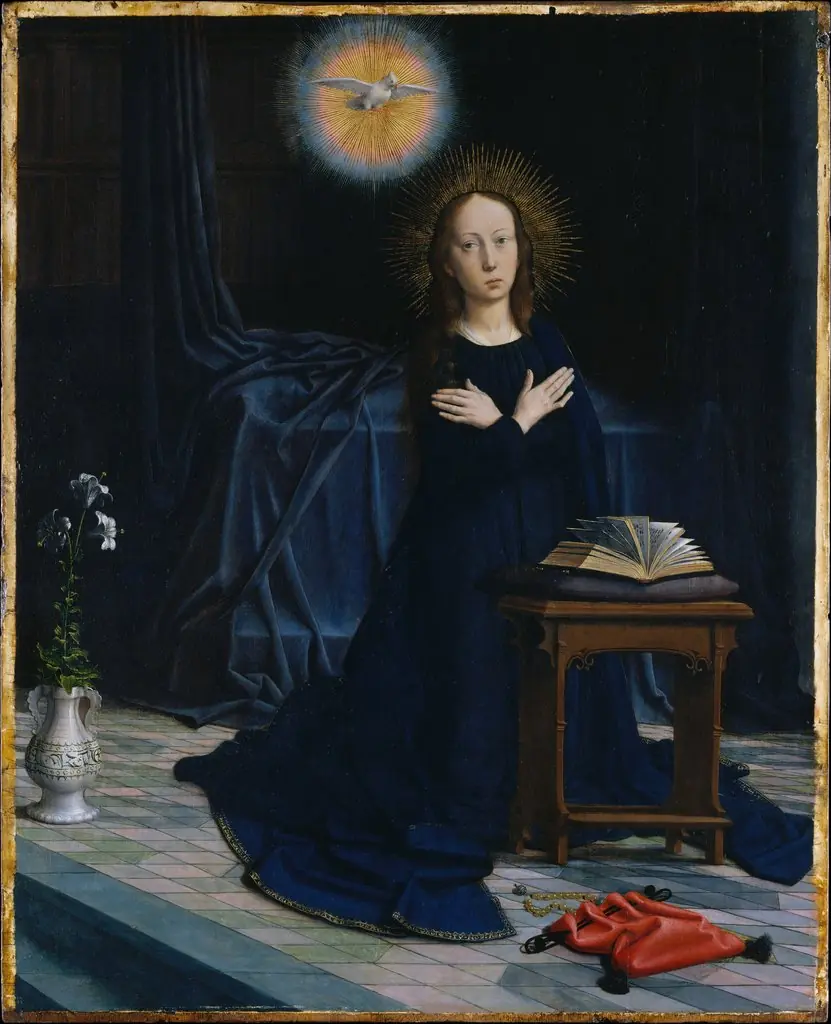
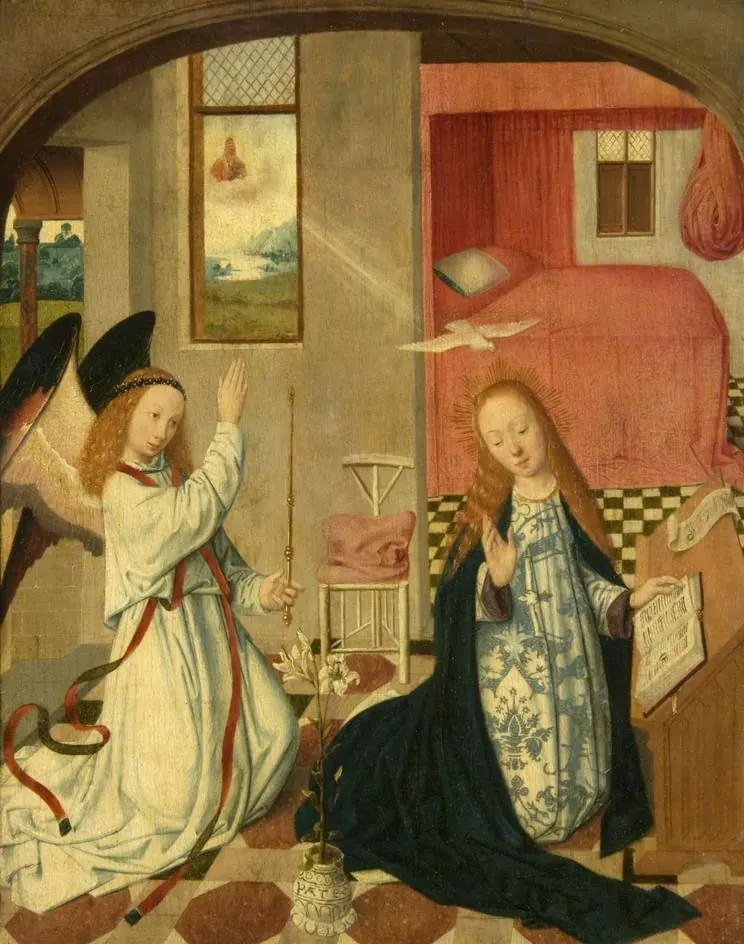
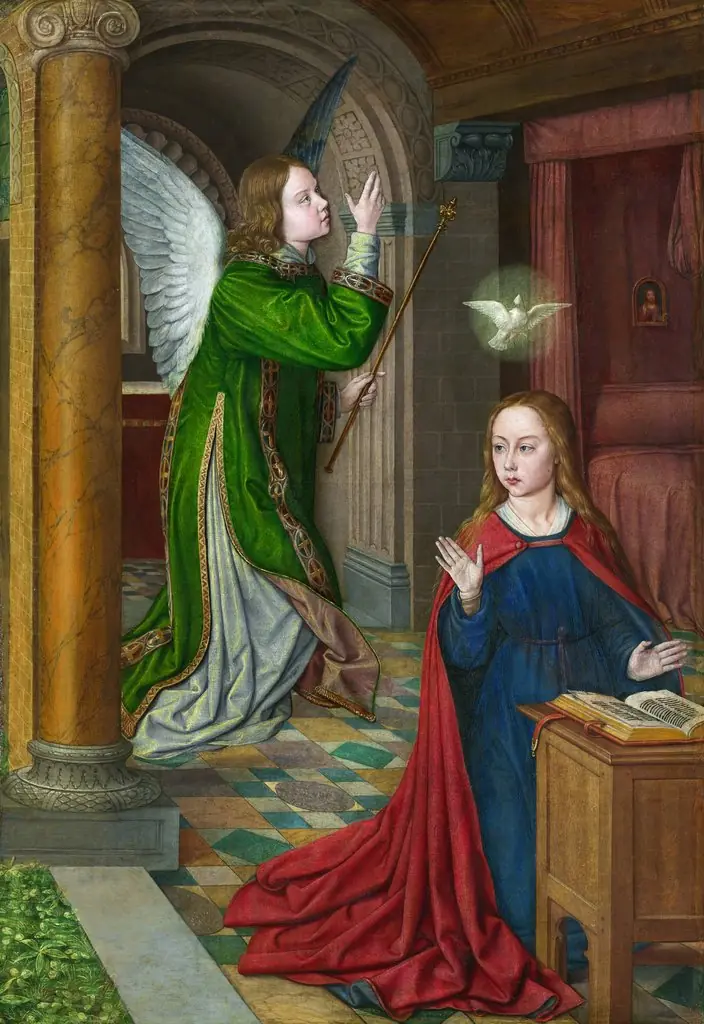
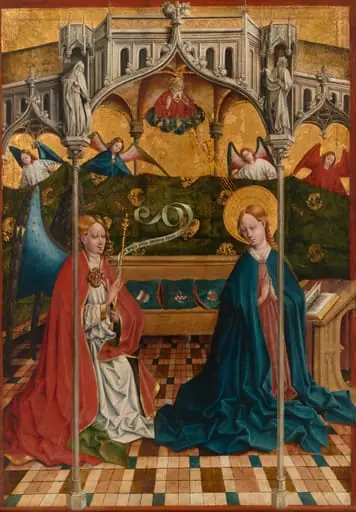
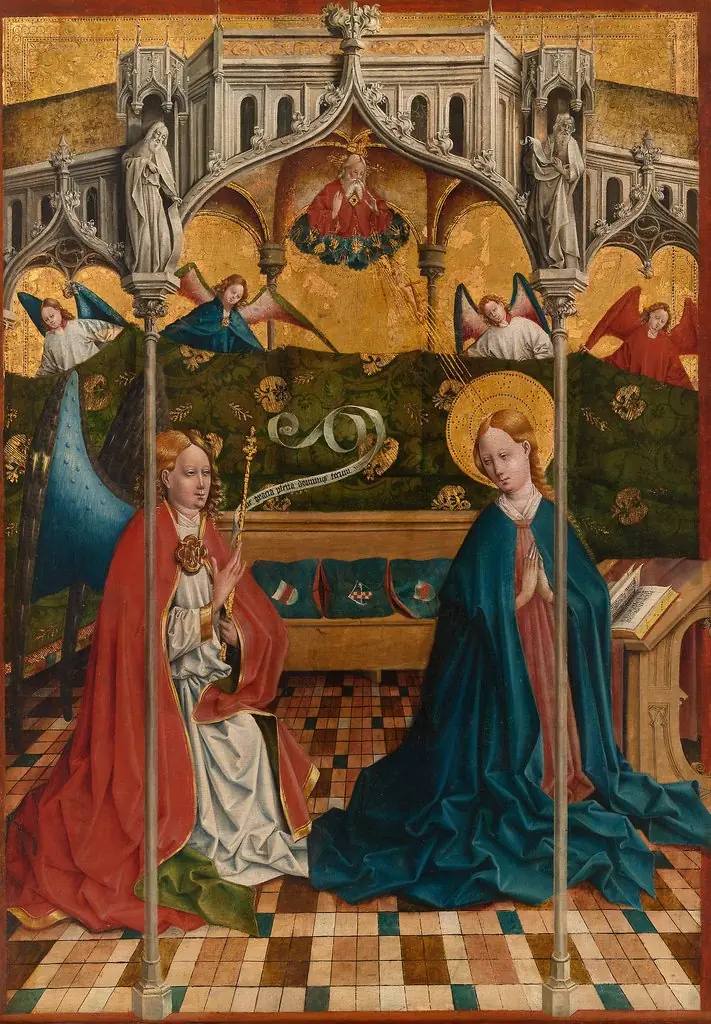
The Life of Mary: the Annunciation (lower half of the Crucifixion of Christ) is a paint painting by the Northern Renaissance artist Master of the Life of the Virgin. It dates from 1474 and is held in the collection of the Bavarian State Painting Collections.
About this work
Overview
Created in 1474 by the anonymous workshop known as the Master of the Life of the Virgin, this painted panel is part of the collection of the Alte Pinakothek in Munich. The work depicts a domestic interior that doubles as a sacred space, populated by two women and a host of angels against a luminous gold backdrop.
Subject & Meaning
The central figure in a red robe holds a white lily, a traditional emblem of purity, and appears to be addressing the kneeling woman in blue who is deep in prayer. The composition suggests the moment of the Annunciation, with the angelic presence reinforcing the divine message being conveyed.
Technique & Style
Executed in tempera or oil paint on panel, the artist employs a rich palette of reds, blues, and golds, rendering intricate textile patterns and a detailed wooden cabinet. The figures are rendered with a graceful linearity characteristic of late Gothic painting, while the floating angels introduce a subtle sense of spatial ambiguity.
History & Provenance
The panel was produced in the late 15th‑century Germanic tradition and has remained in the Bavarian collection since its acquisition by the Alte Pinakothek. Its attribution to the Master of the Life of the Virgin rests on stylistic parallels with other works in the same series depicting scenes from the Virgin’s life.
Own this work as a print
Artist & collection
Artist
Master of the Life of the Virgin
This anonymous painter worked in the 1470s, specializing in small devotional panels that tell the story of Mary’s life.

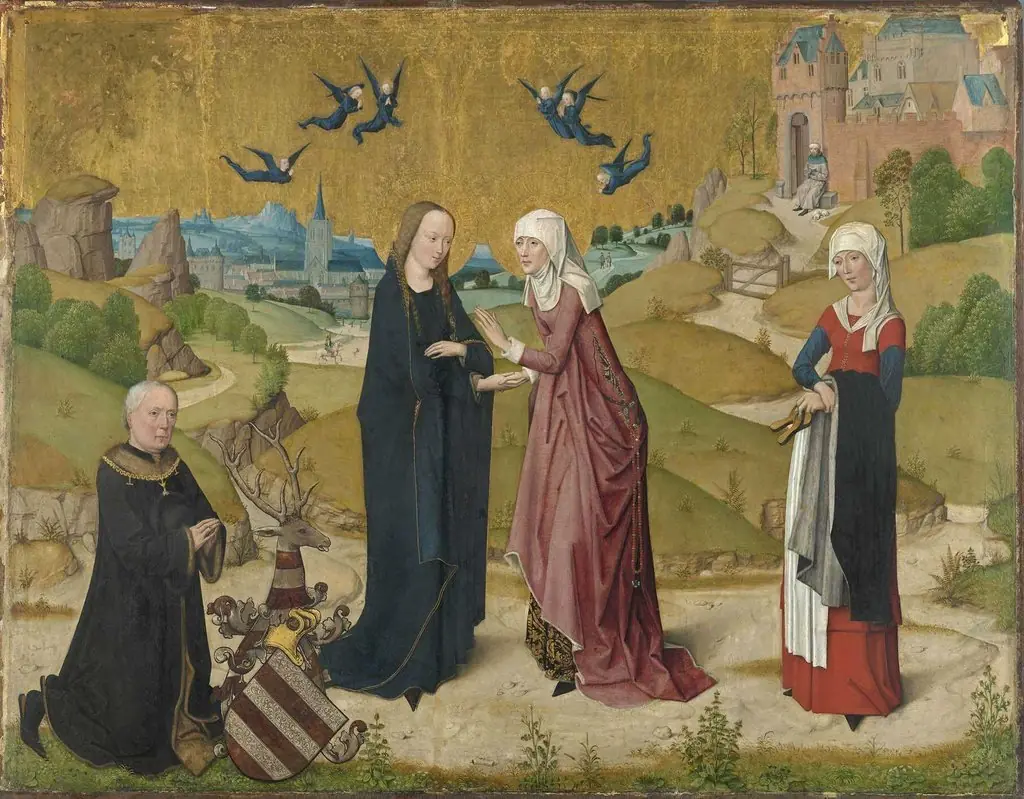 The Visitation with a portrait of donor Johann von Hirtz (?-?)
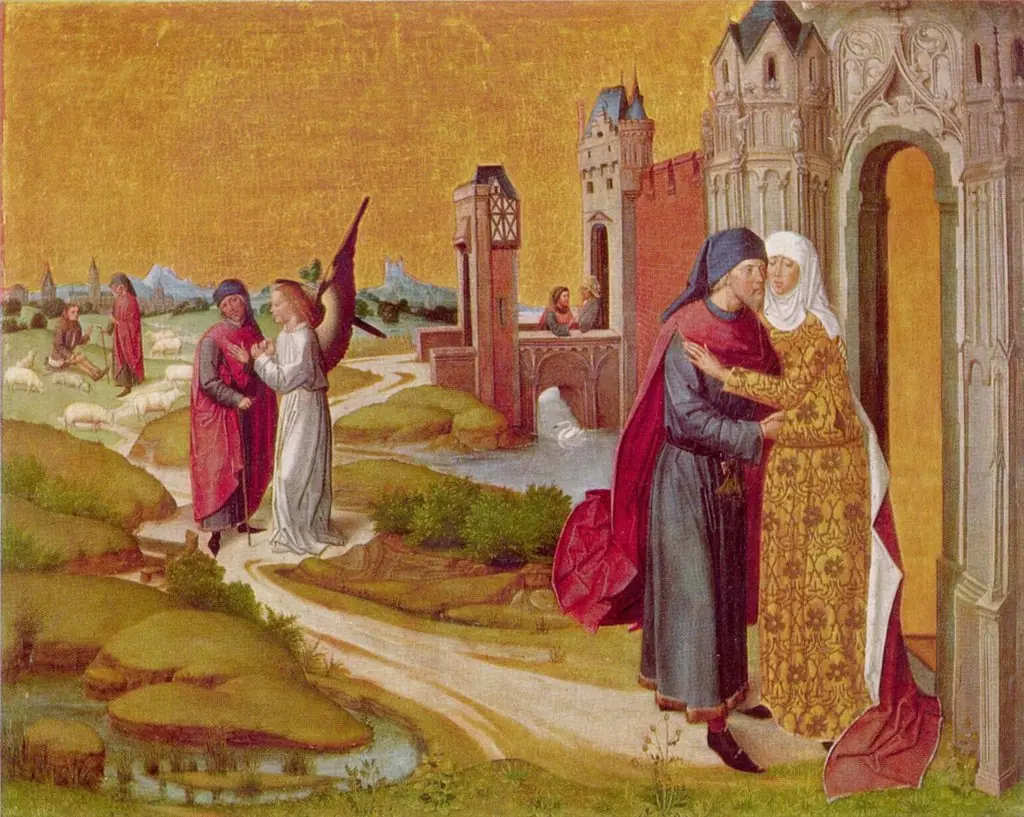 The Life of Mary: Joachim meets Anna at the Golden Gate; in the background the Annunciation of the birth of Mary to Joachim by an angel (verso: upper half of the Crucifixion of Christ)
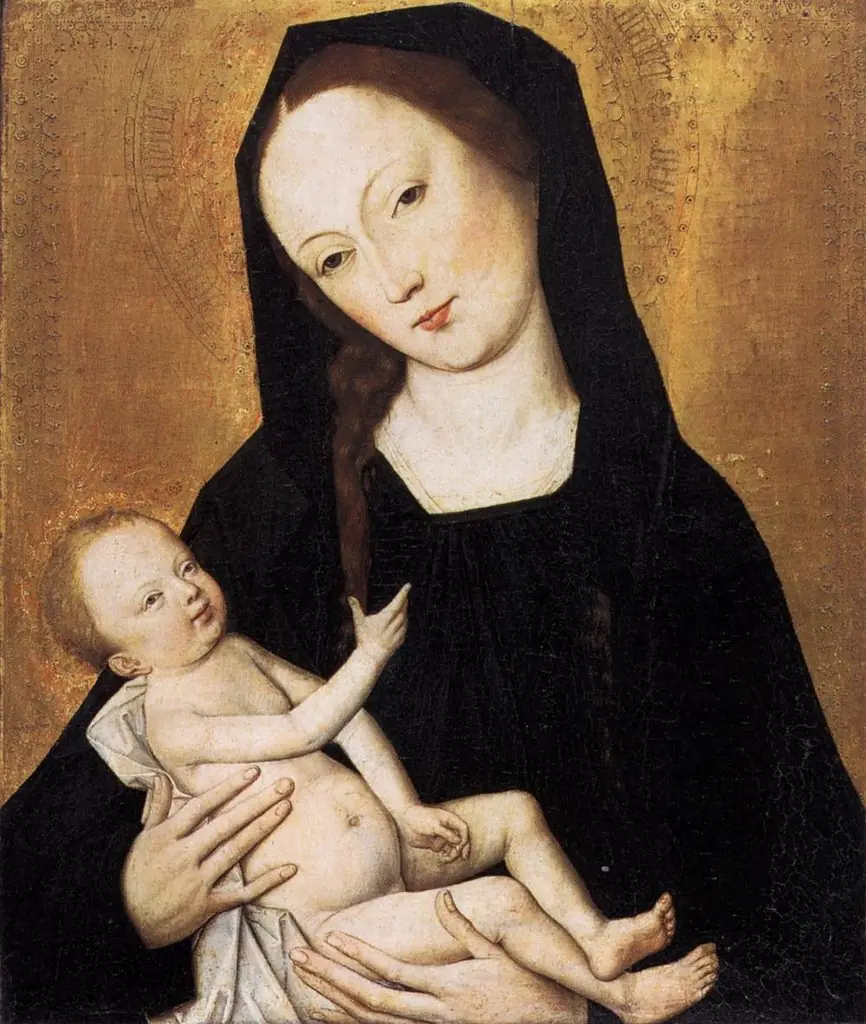 Maria mit dem Kind
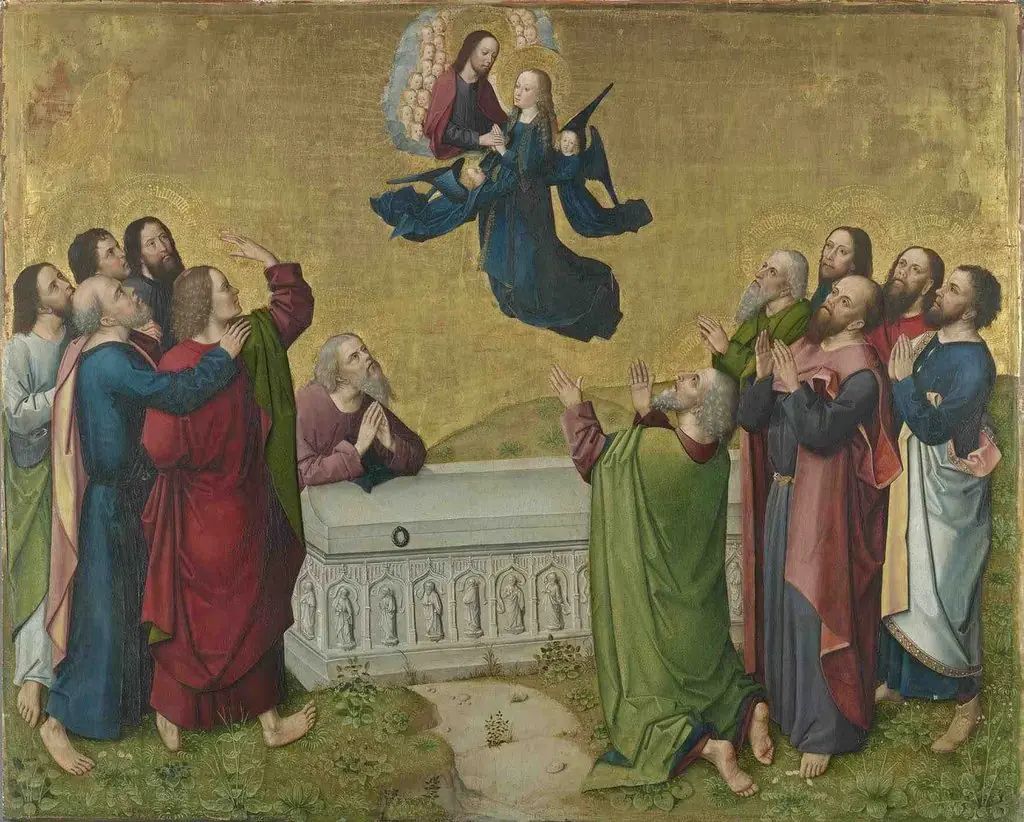 The Life of Mary: the Assumption of Mary (verso: lower half of the Coronation of Mary)
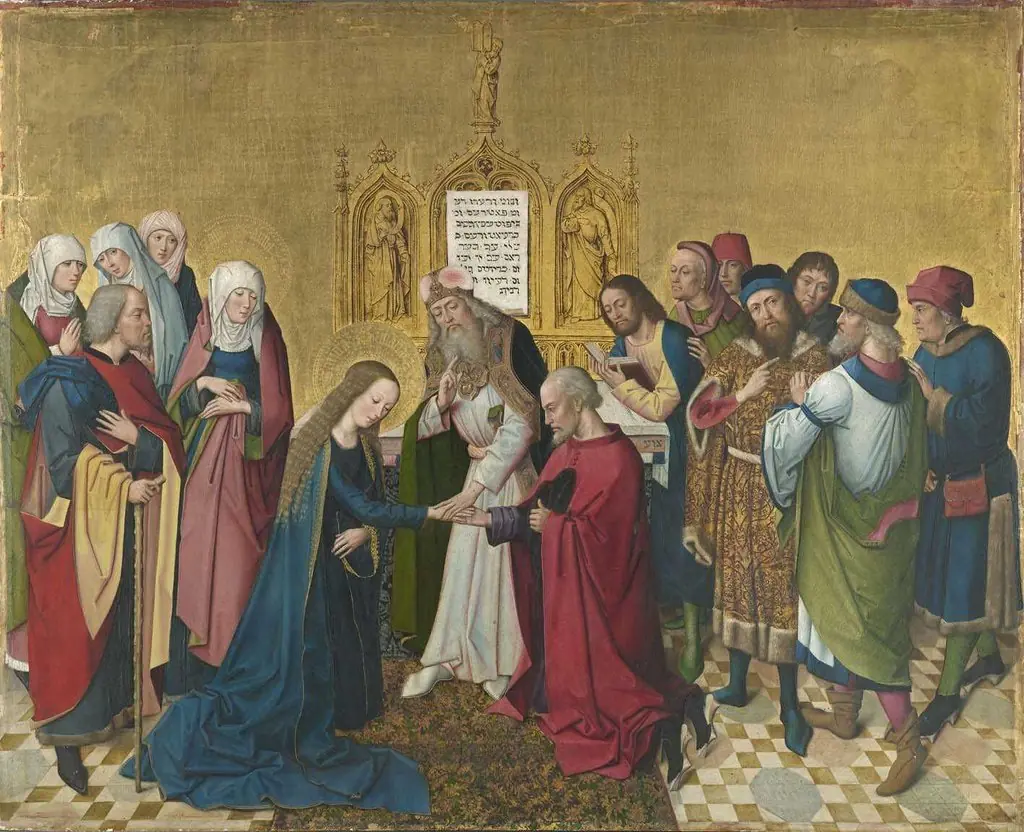 The Engagement of Mary (verso: upper half of the Coronation of Mary)
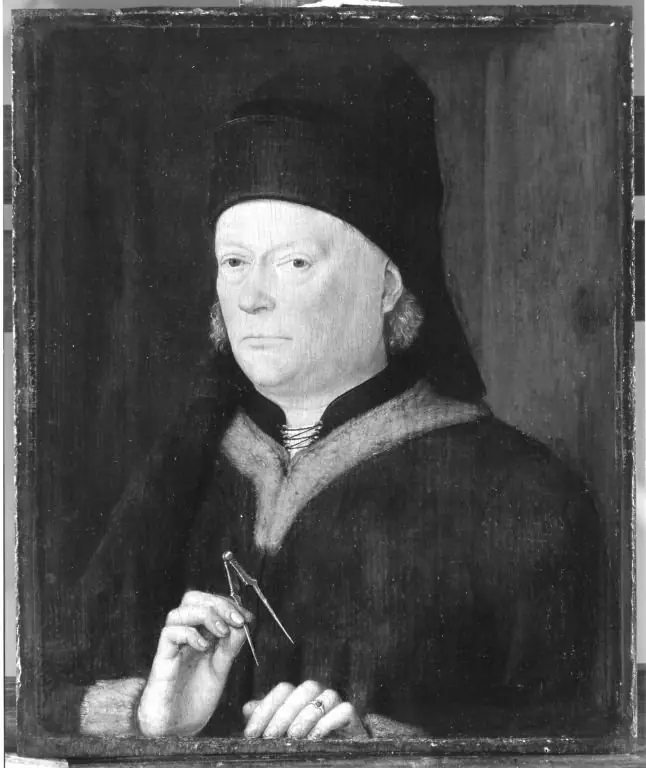 Portrait of an unknown master builder
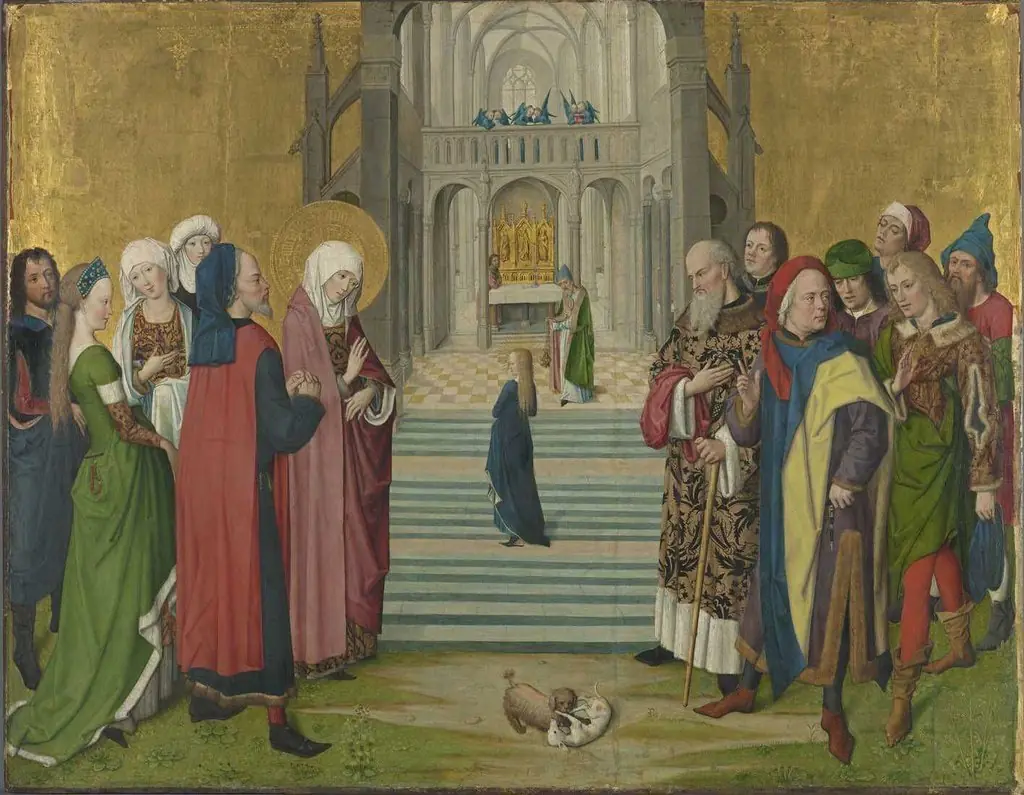 The life of Mary: the presentation of Mary in the temple
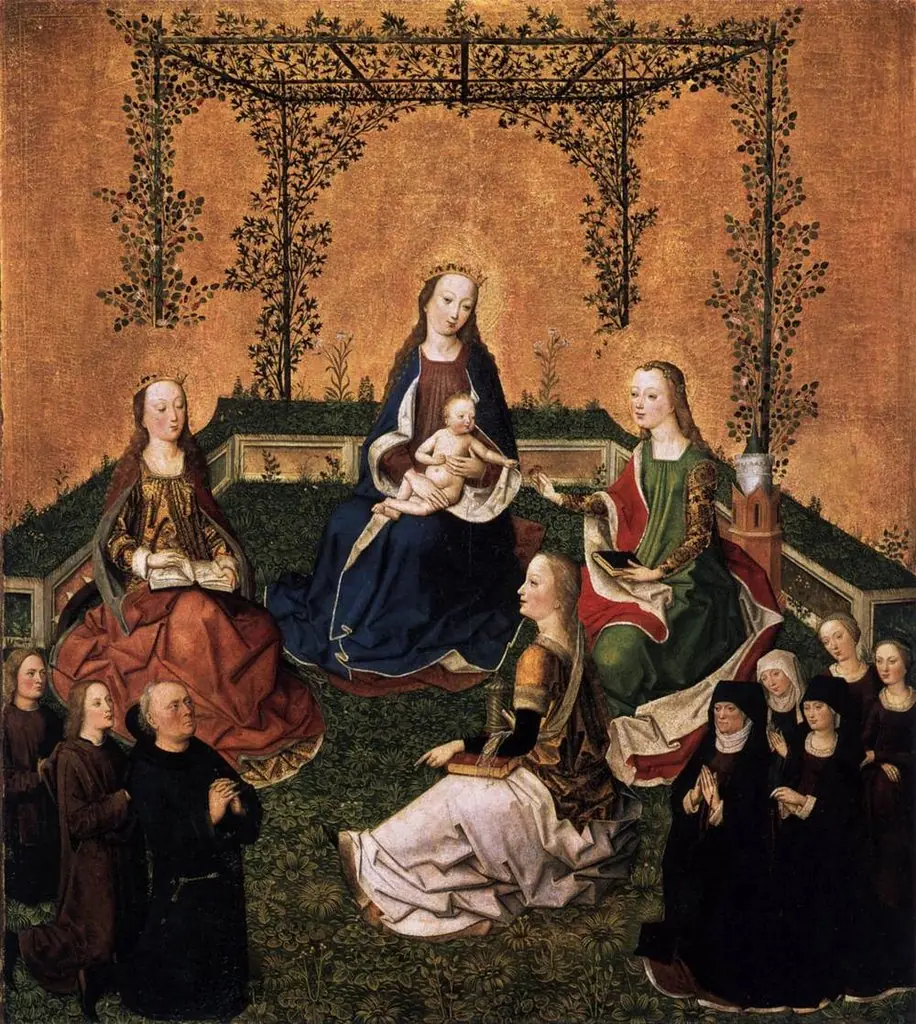 Virgin and Child with Three Saints