Artwork
Aines armen man khind fiel ...
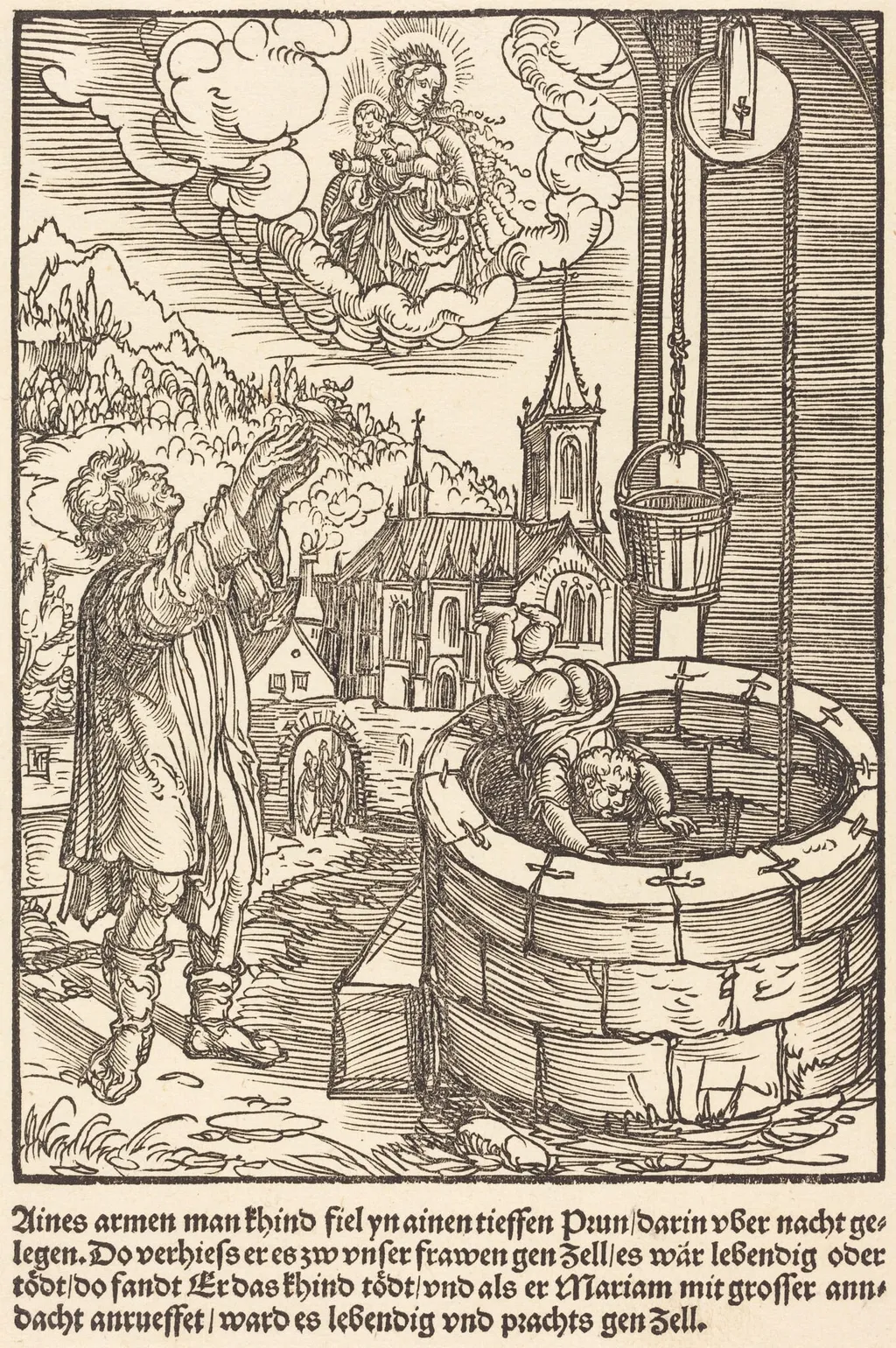
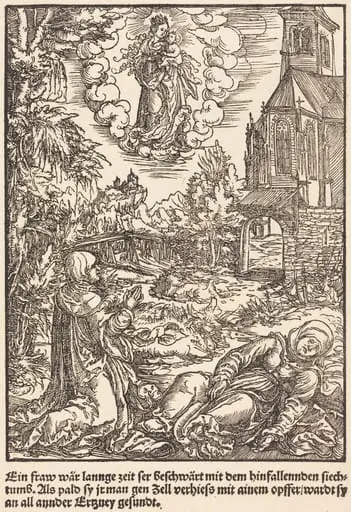
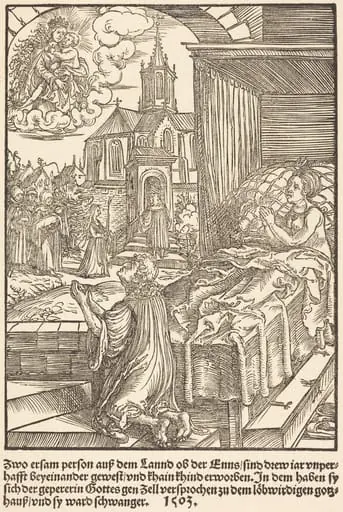
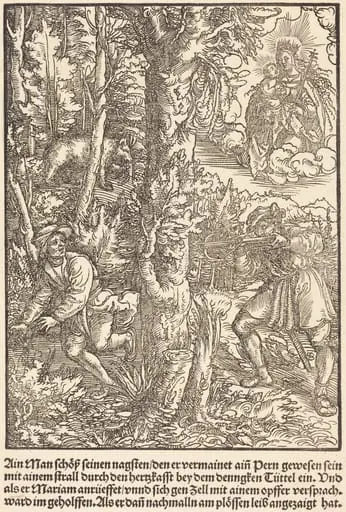
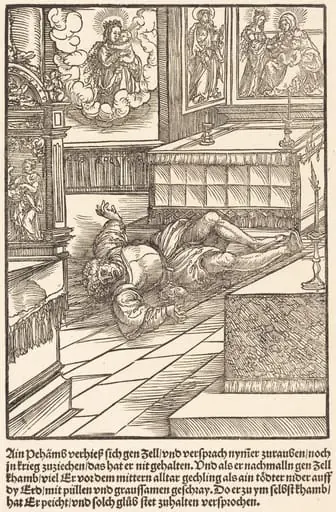
Aines armen man khind fiel ... is an ink print by the Renaissance artist Master of the Miracles of Mariazell. It dates from 1503 and is held in the collection of the National Gallery of Art.
About this work
Overview
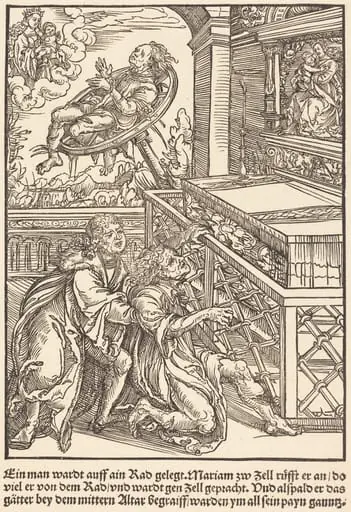
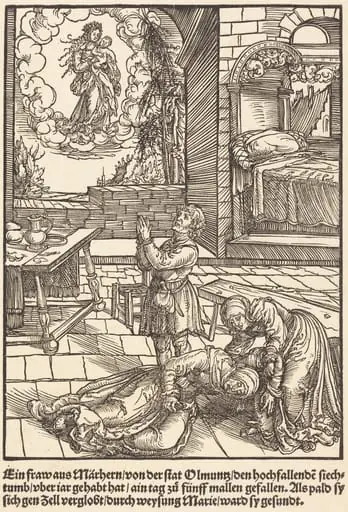
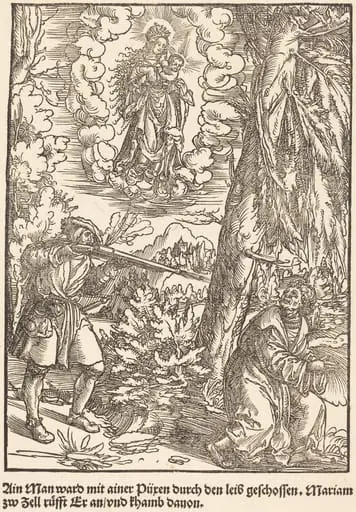
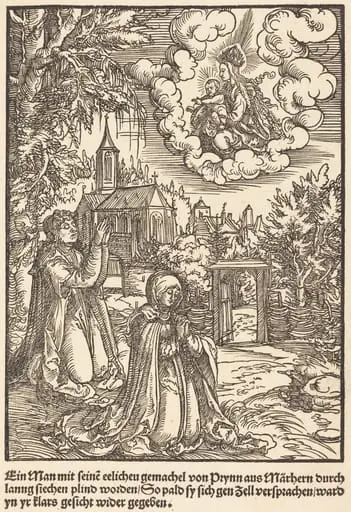
Created around 1503, this woodcut on laid paper is attributed to the anonymous artist known as the Master of the Miracles of Mariazell. The print presents a complex, multi‑layered scene that combines human figures, a well, and a distant architectural backdrop, all rendered in the characteristic linear precision of early‑sixteenth‑century Northern European woodcutting.
Subject & Meaning
The juxtaposition of earthly and heavenly elements hints at a narrative of salvation or intercession, though the precise story remains ambiguous.
At the left edge a standing man points toward a central well, from which a small figure—interpreted as a child—extends a hand upward. Above the well, a cloud formation encloses a woman and child surrounded by radiating light, suggesting a divine or miraculous intervention. The juxtaposition of earthly and heavenly elements hints at a narrative of salvation or intercession, though the precise story remains ambiguous.
Technique & Style
The image is executed in black‑and‑white relief, with fine incised lines that define both the intricate interior of the well and the distant church silhouette. The artist employs strong contrasts between dense hatching and open spaces to model volume, while the cloud and light rays are suggested through delicate stippling, a hallmark of the period’s sophisticated woodcut practice.
History & Provenance
The work is catalogued under the title “Aines armen man khind fiel …” and has been associated with the Master of the Miracles of Mariazell, an anonymous workshop active in the early 1500s in the Austrian region. It entered scholarly literature in the late twentieth century, where it was noted for its rare combination of narrative depth and technical refinement within the corpus of Central European prints.
Context
The print belongs to the broader Renaissance movement that spread north of the Alps, where artists adapted Italian humanist themes to local devotional traditions. The inclusion of a church and miraculous figures reflects contemporary interest in visualizing holy intercessions for the lay faithful, a motif common in devotional prints circulated among pilgrims.
Artist & collection

Artist
Master of the Miracles of Mariazell
Master of the Miracles of Mariazell (1500–1503) was an artist.