Artwork
Zwo ersam person auf dem Lannd ...
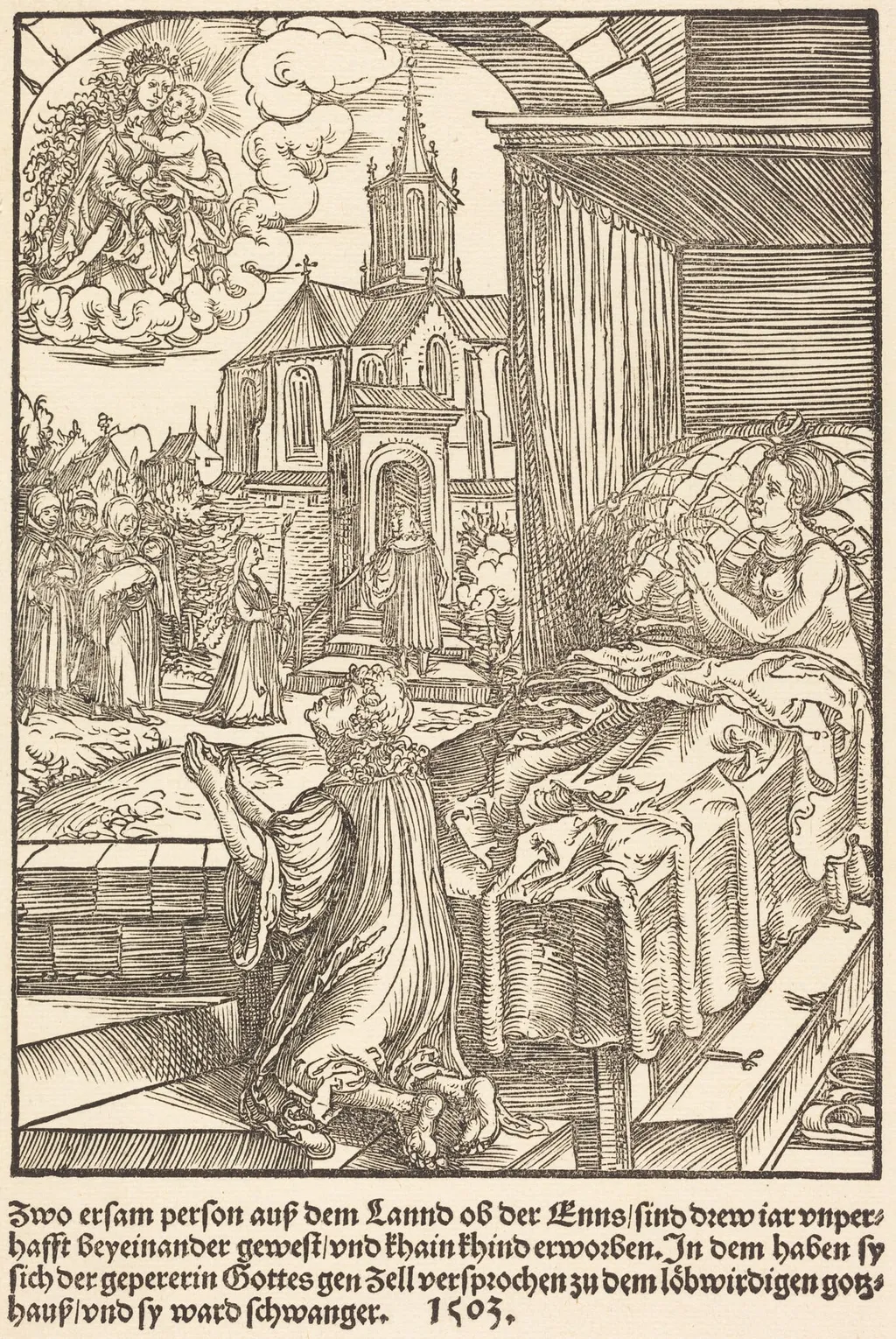
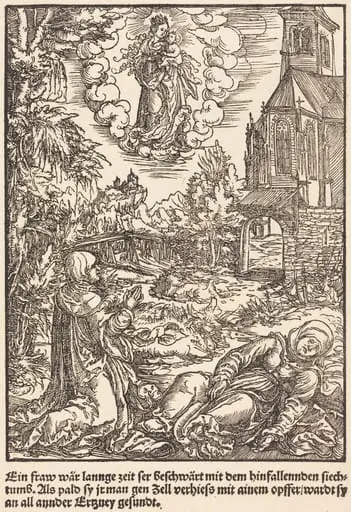
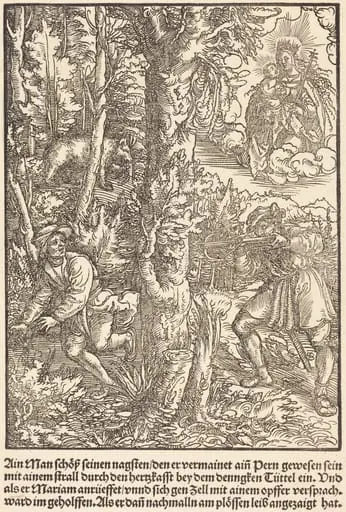
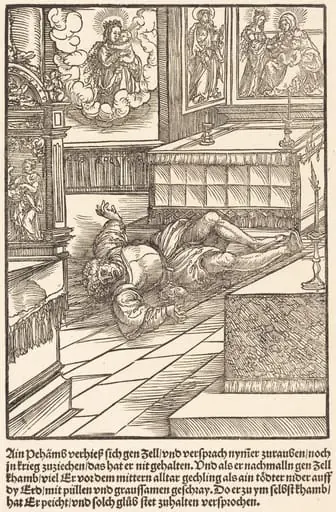
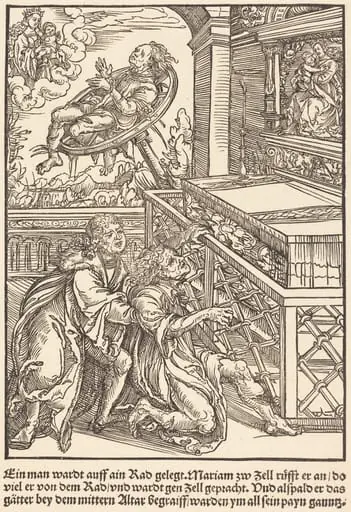
Zwo ersam person auf dem Lannd ... is an ink print by the Renaissance artist Master of the Miracles of Mariazell. It dates from 1503 and is held in the collection of the National Gallery of Art. Zwo ersam person auf dem Lannd .
About this work
Overview
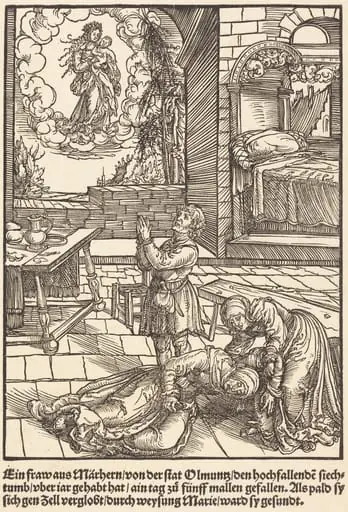
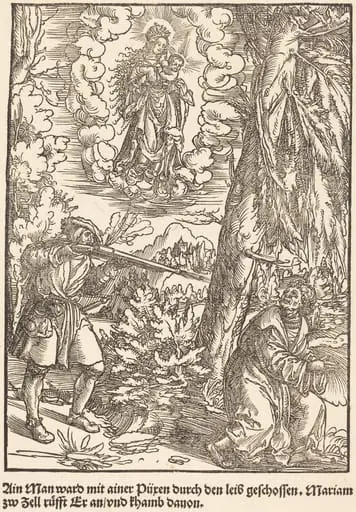
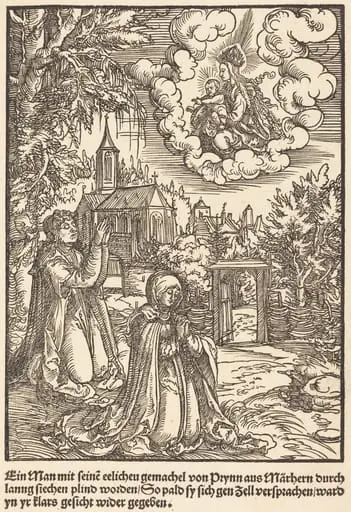
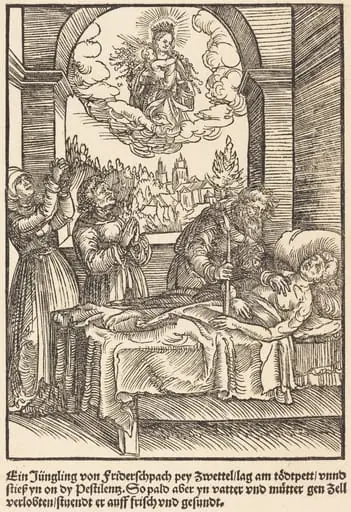
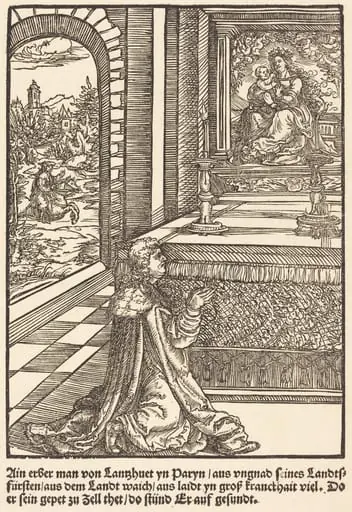
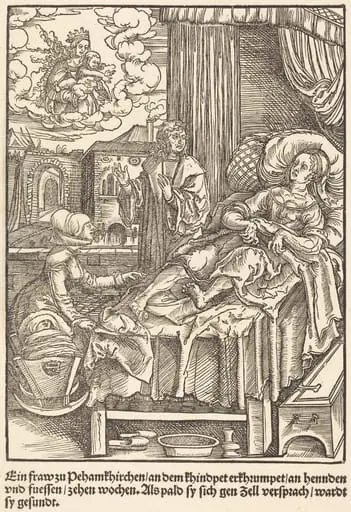
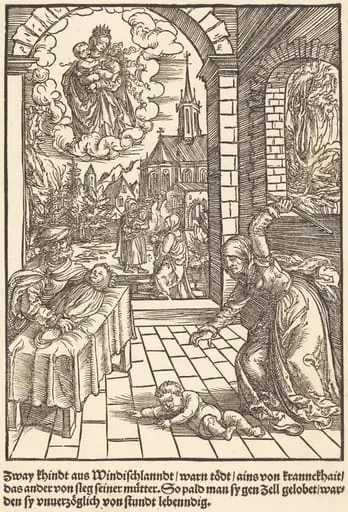
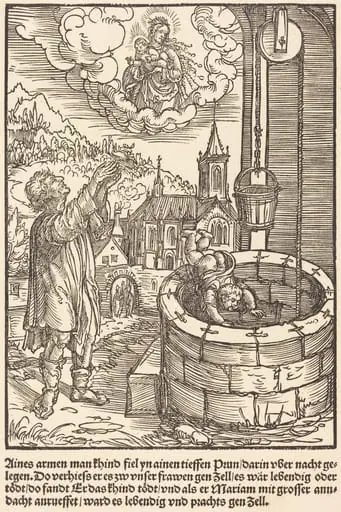
Zwo ersam person auf dem Lannd ... is a woodcut print executed on laid paper in 1503 by the anonymous artist known as the Master of the Miracles of Mariazell. The image presents a densely populated scene centered on a kneeling woman and a standing man, framed by a church with a soaring steeple and a sky populated by angels.
Subject & Meaning
The central figures appear to be a villager couple who have pledged a vow to God, a narrative hinted at by the inscription at the bottom of the print. The surrounding crowd, the church setting, and the celestial angels together suggest a devotional context, emphasizing communal piety and divine witness to the promise.
Technique & Style
Executed as a woodcut, the work relies on carved wooden blocks to produce bold, precise lines that define the figures, architecture, and aerial elements. The sharp incisions create a contrast between the bustling activity of the crowd and the stillness of the central vow, a characteristic compositional balance in early 16th‑century Northern prints.
History & Provenance
Created in the early 1500s, the print is attributed to the Master of the Miracles of Mariazell, an artist whose oeuvre is identified through stylistic similarities rather than documented commissions. The work has survived on laid paper, a common support for prints of the period, and is now held in museum collections that specialize in early Germanic graphic art.
Context
The composition reflects contemporary devotional practices in rural Central Europe, where visual narratives of vows and miracles were circulated in printed form to reinforce religious instruction. The inclusion of angels and a prominent church underscores the intertwining of earthly vows with heavenly oversight, a theme prevalent in late medieval and early Renaissance spirituality.
Artist & collection

Artist
Master of the Miracles of Mariazell
Master of the Miracles of Mariazell (1500–1503) was an artist.