Artwork
Los Apóstoles Felipe Bartolomé y Matías
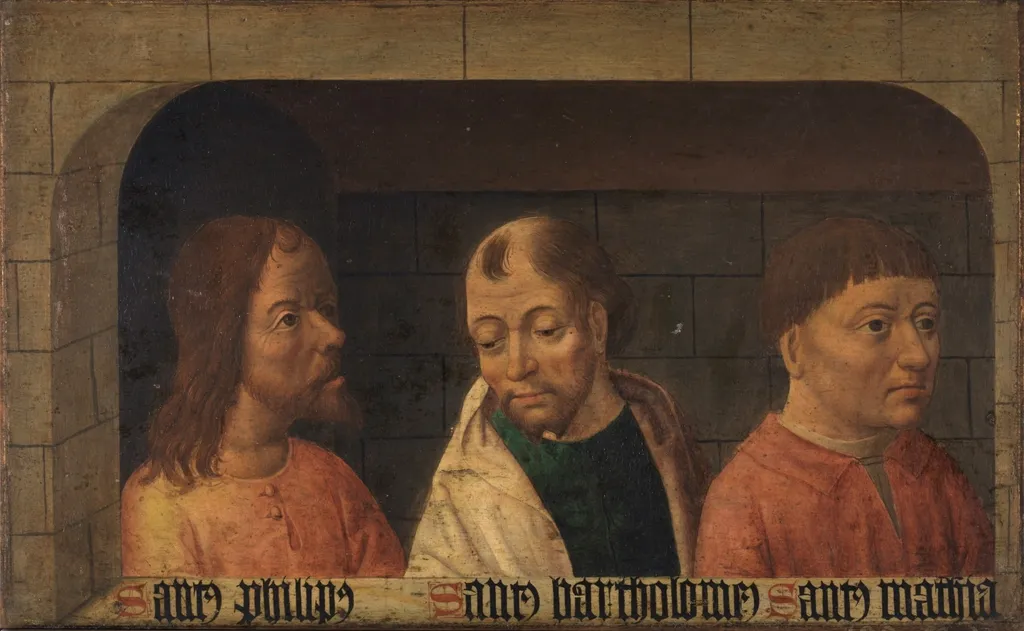
Los Apóstoles Felipe Bartolomé y Matías is a mixed painting by the Northern Renaissance artist Master of the Pacully collection. It dates from 1496 and is held in the collection of the Museo del Prado. Created in 1496, this mixed‑technique panel presents three figures identified as the apostles Philip, Bartholomew and Matthias.
About this work
Overview
Created in 1496, this mixed‑technique panel presents three figures identified as the apostles Philip, Bartholomew and Matthias. The work belongs to the oeuvre attributed to the Master of the Pacully collection and is part of the Museo del Prado’s holdings. The composition places the three saints in a linear arrangement against a dark, undulating backdrop that suggests a cavernous interior.
Subject & Meaning
The inscription of their names at the base reinforces their individual identities and collective role as witnesses to the early Christian mission.
Each figure is rendered with solemn expression, emphasizing their spiritual authority. The central apostle, Bartholomew, is distinguished by a white robe over a dark shirt and a green scarf, while Philip and Matthias are clothed in similar red garments. The inscription of their names at the base reinforces their individual identities and collective role as witnesses to the early Christian mission.
Technique & Style
The painting combines tempera and oil layers, a common practice in late‑15th‑century Iberian art, allowing for both fine detail and subtle tonal variation. The figures are modeled with careful chiaroscuro, their drapery articulated through delicate folds. The background’s muted, wave‑like texture recedes, directing focus toward the illuminated faces and garments.
History & Provenance
Attributed to the anonymous Master of the Pacully collection, the work reflects the devotional trends of late medieval Spain. It entered the Museo del Prado’s collection in the 19th century, where it has been catalogued under the reference Q60048881. Its preservation in a major national museum ensures continued scholarly access and public exhibition.
Artist & collection