Artwork
Annunciation to the Virgin
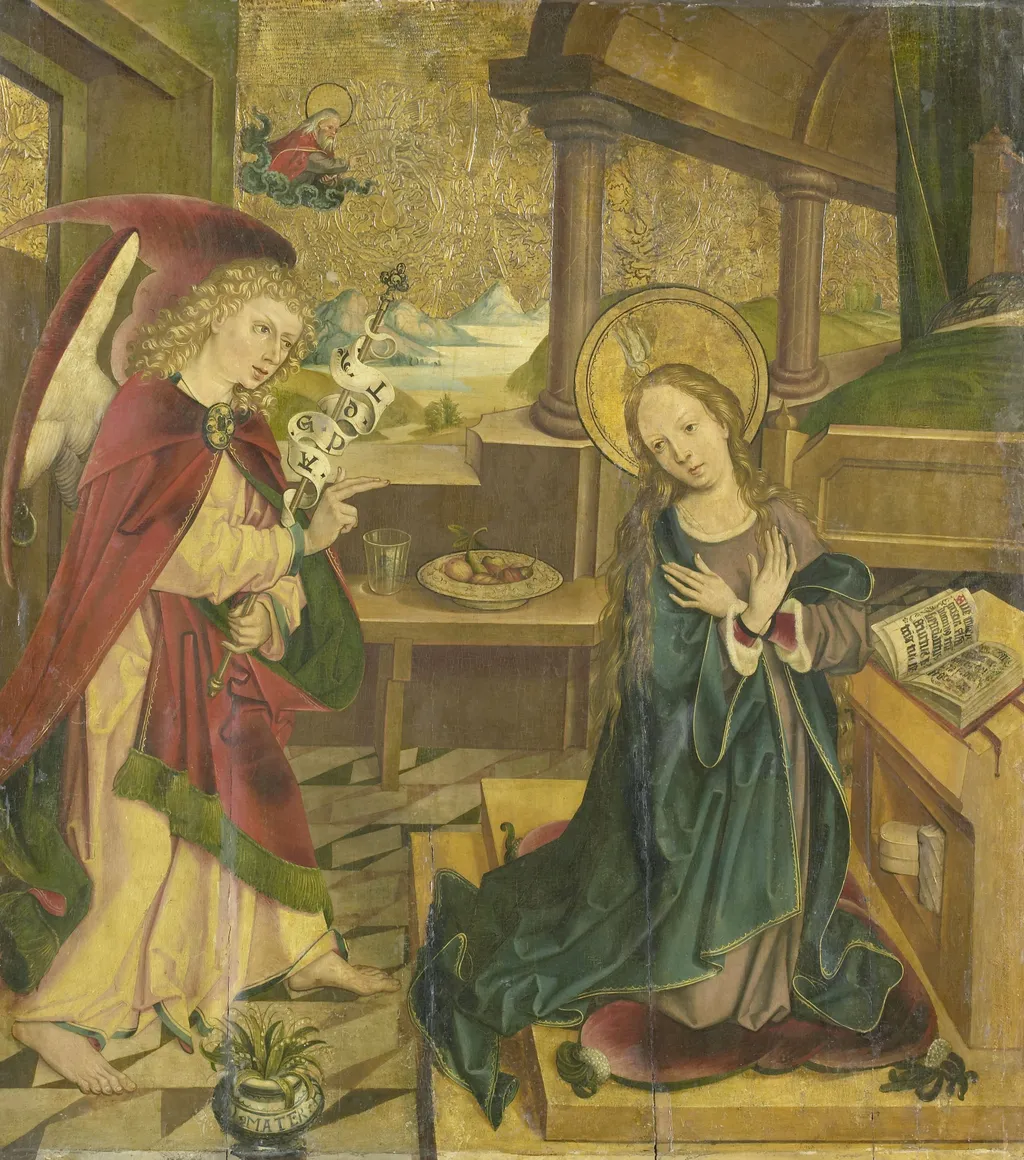
Annunciation to the Virgin is an oil painting by the Northern Renaissance artist Master of the Salemer Altar. It dates from 1500 and is held in the collection of the Rijksmuseum.
About this work
Overview
Created around 1500, this oil painting by the Master of the Salemer Altar portrays the biblical moment of the Annunciation. The work is part of the Rijksmuseum’s collection and presents the encounter between the Virgin Mary and the angel Gabriel in a domestic interior.
Subject & Meaning
The composition captures Gabriel delivering the message that Mary will bear a son. The angel, winged and clothed in a red mantle, holds a scroll bearing the greeting “Ave Maria.” Mary, dressed in green and blue garments, receives the news with clasped hands, emphasizing her humility and acceptance.
Technique & Style
The artist employs chiaroscuro, contrasting illuminated areas with deep shadows to model the figures and give them a three‑dimensional presence. Fine detailing on the angel’s wings, the texture of the fabrics, and the reflective surfaces of the table objects demonstrate a careful handling of oil paint.
Context
The painting reflects the early‑16th‑century Northern European tradition of integrating sacred narratives into familiar interior settings. By placing the holy event amid everyday objects—a table, a book, and fruit—the work bridges the divine and the domestic, a common motif in contemporary devotional art.
History & Provenance
After its creation, the panel entered various private collections before being acquired by the Rijksmuseum, where it remains on display as an example of the Master of the Salemer Altar’s religious oeuvre.
Own this work as a print
Artist & collection
Artist
This late medieval German painter made altarpieces full of gold leaf and deep reds, stiff folds in robes, and tiny, serious faces.