Artwork
The Saint Elizabeth’s Day Flood
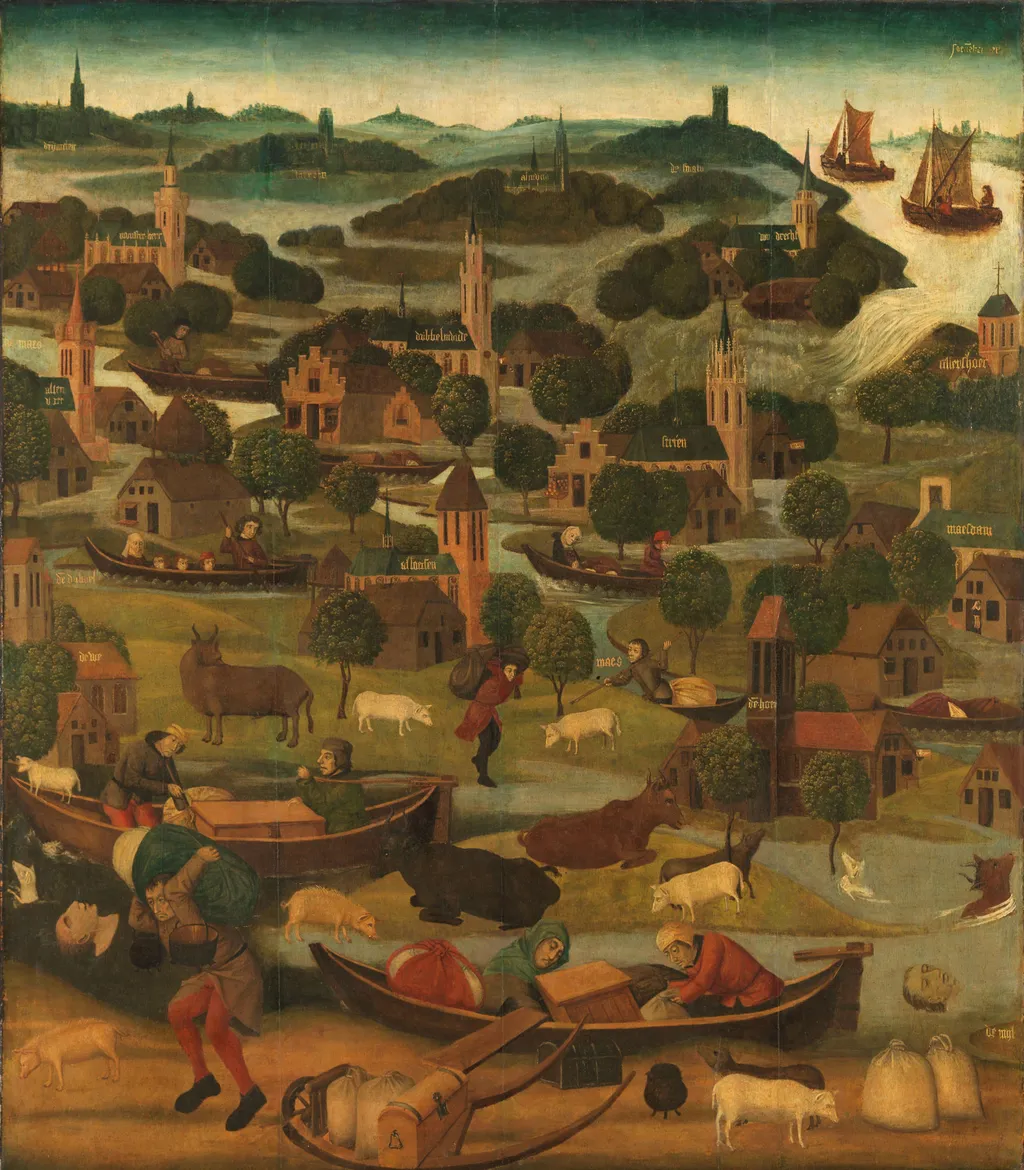
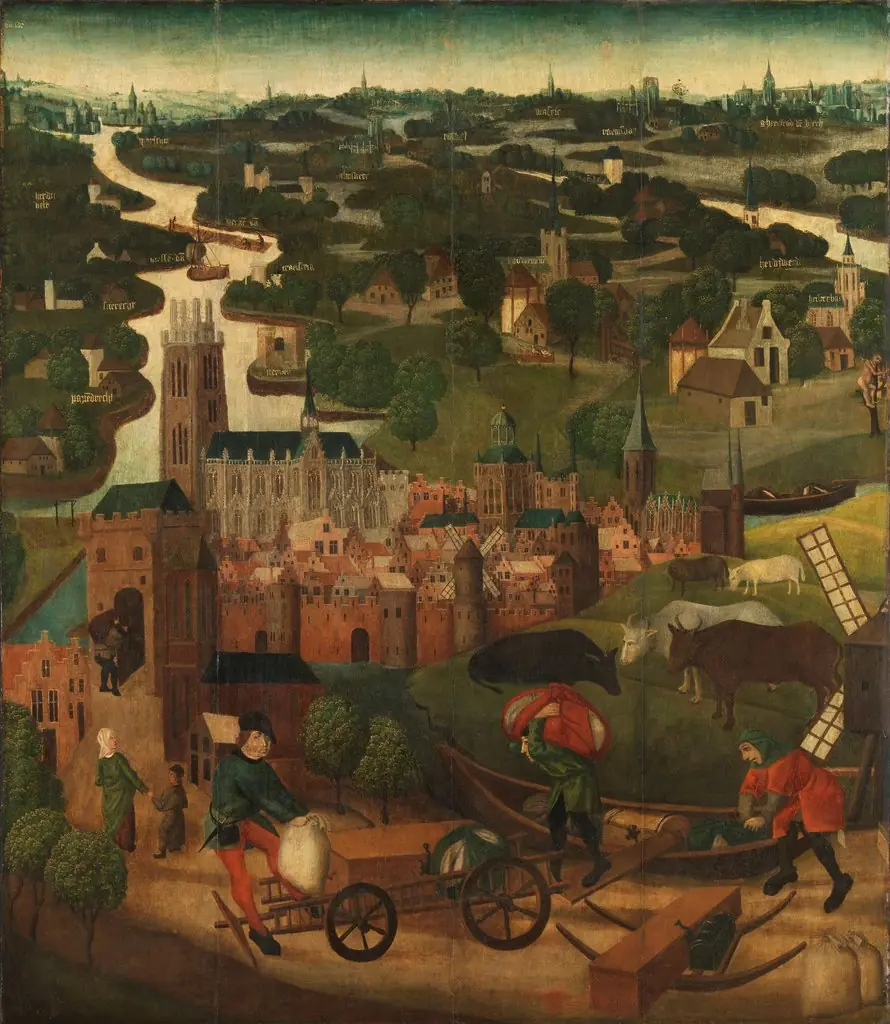
The Saint Elizabeth’s Day Flood is an oil painting by the Northern Renaissance artist Master of the St Elizabeth Panels. It dates from 1496 and is held in the collection of the Rijksmuseum.
About this work
Overview
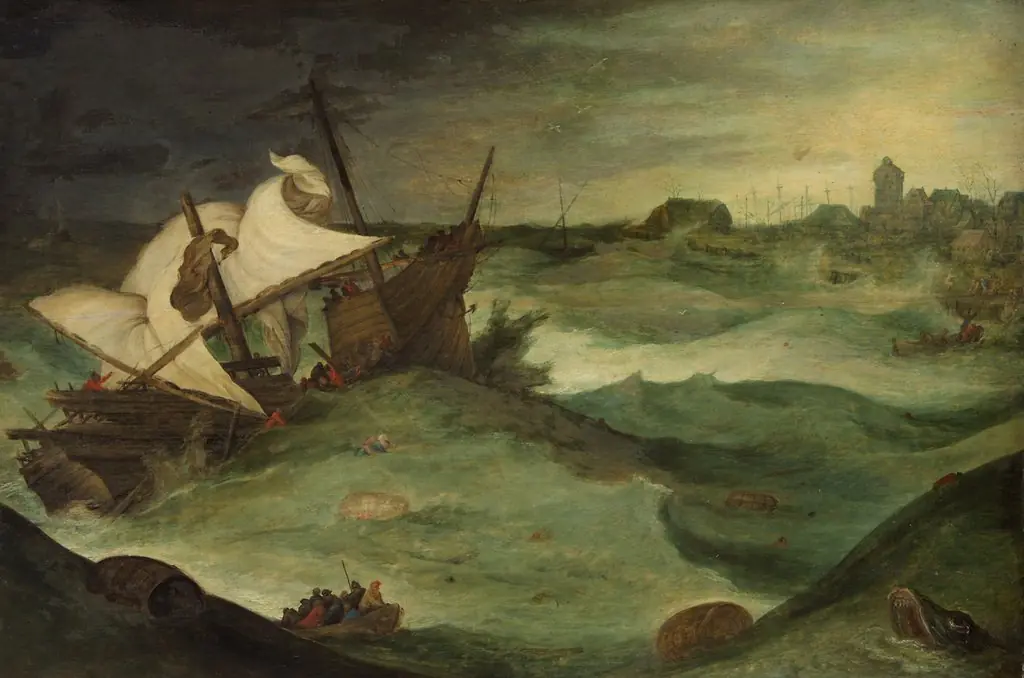
The Saint Elizabeth’s Day Flood is an oil painting executed in 1496 by the anonymous artist known as the Master of the St Elizabeth Panels. The work is part of the collection of the Rijksmuseum in Amsterdam and depicts a riverine town overwhelmed by floodwaters.
Subject & Meaning
The scene portrays a bustling settlement inundated by water, with streets turned into canals. Figures scramble with carts and bags, while livestock and boats navigate the submerged thoroughfares, suggesting a sudden, catastrophic event that affected daily life.
Technique & Style
Rendered in a muted palette of earth tones—browns, greens, and reds—the artist employs fine, meticulous brushwork to fill the composition with numerous small details, from wandering sheep to a lone rower hauling a chest, creating a dense visual narrative.
History & Provenance
Created at the close of the 15th century, the painting has remained in the Netherlands and is now housed in the Rijksmuseum, where it is displayed as part of the museum’s early Netherlandish holdings.
Context
The work likely records an actual flood that occurred on Saint Elizabeth’s Day, a date associated with regional celebrations, indicating that the disaster was a notable historical episode for the local community.
Own this work as a print
Artist & collection
Artist
Master of the St Elizabeth Panels
This Dutch painter made vivid oil panels around 1490, showing scenes of Saint Elizabeth’s life.