Artwork
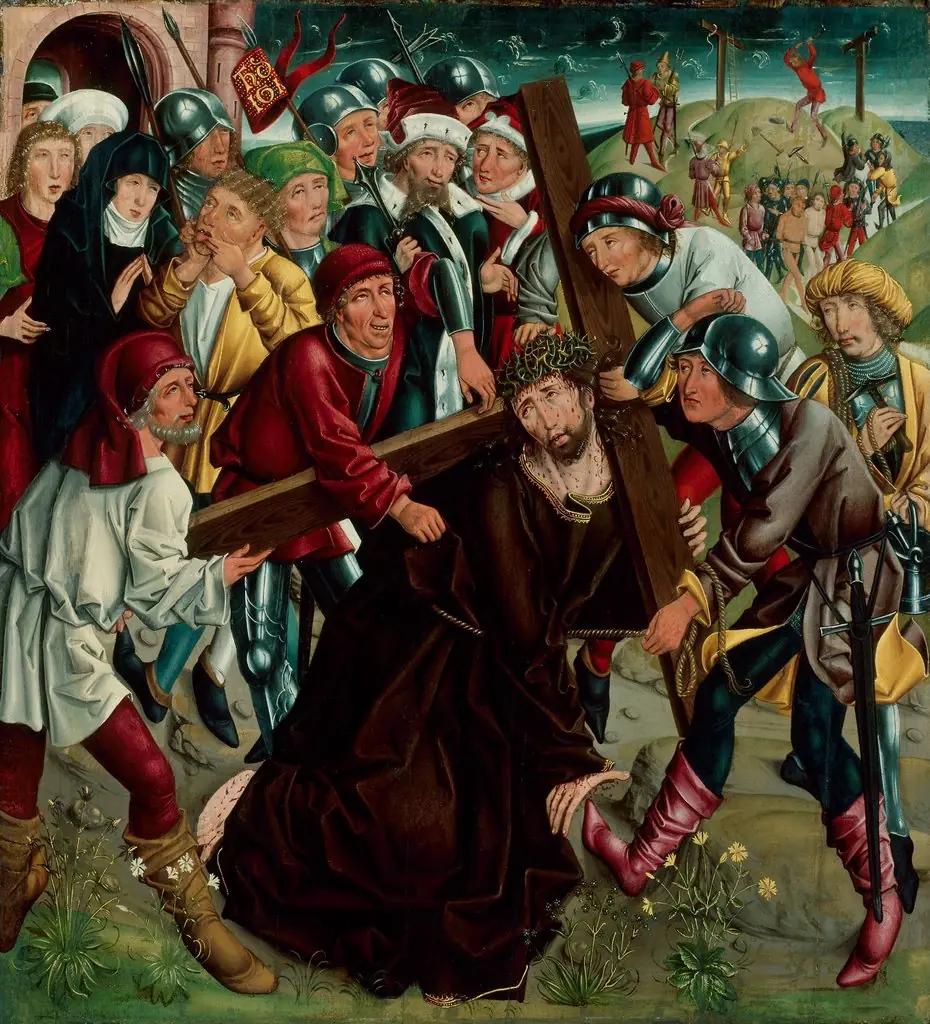
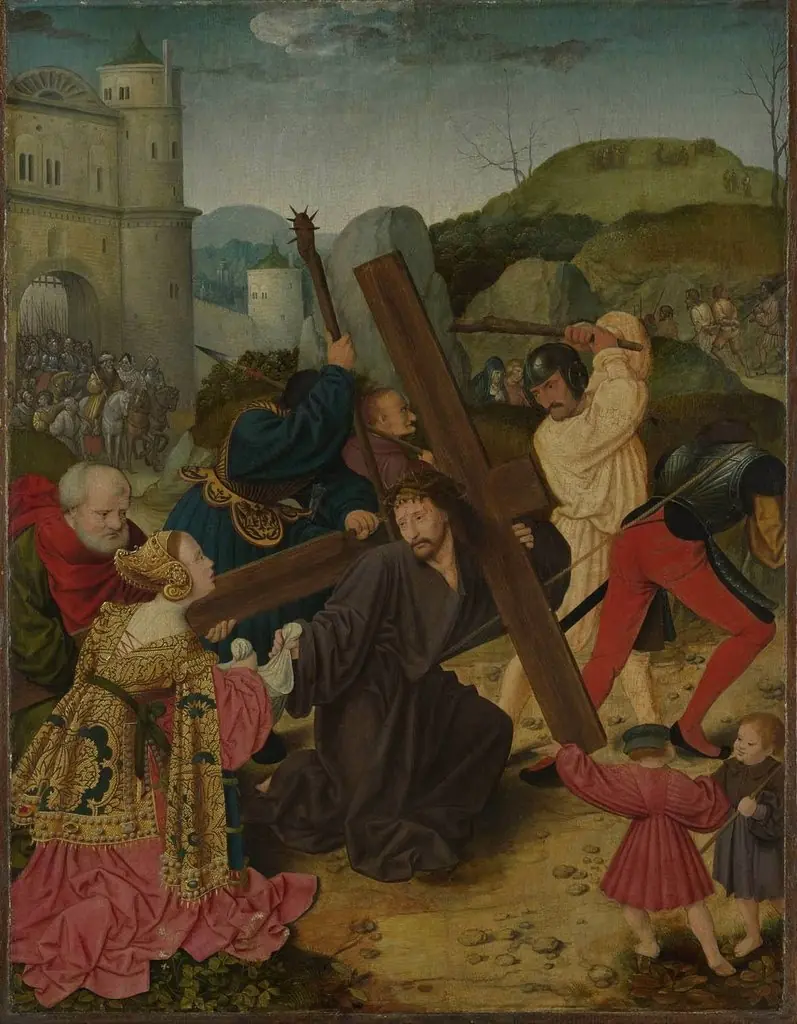
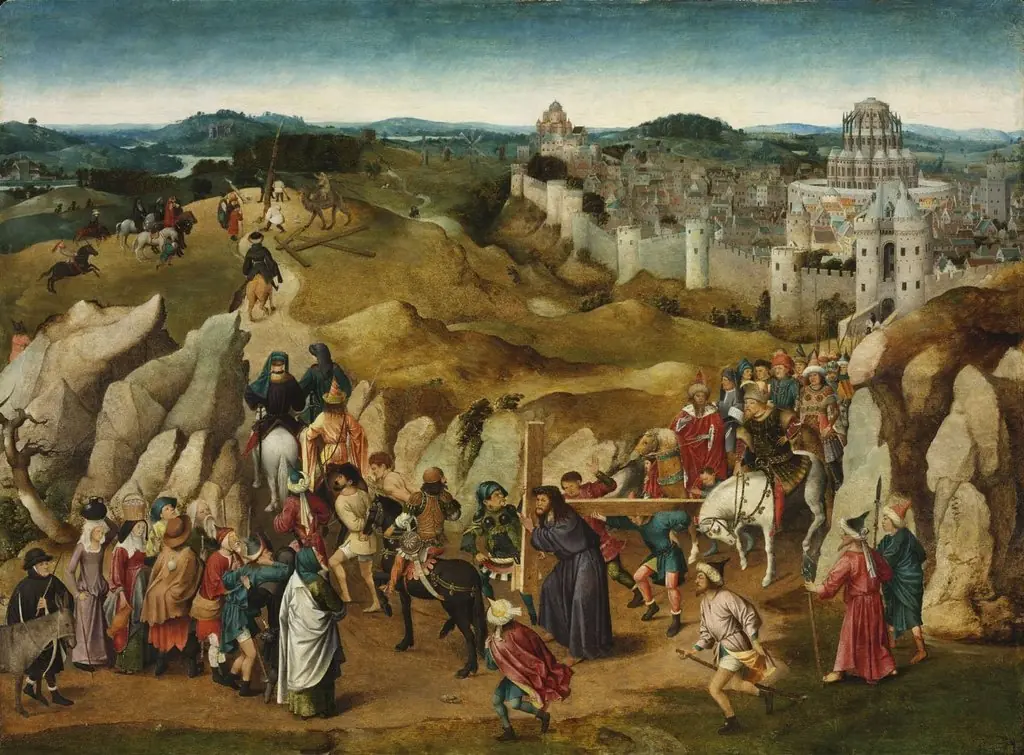
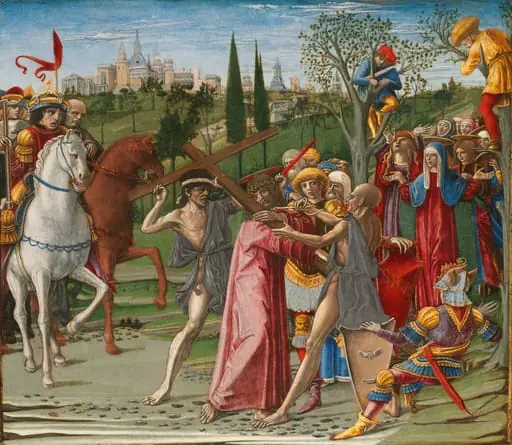
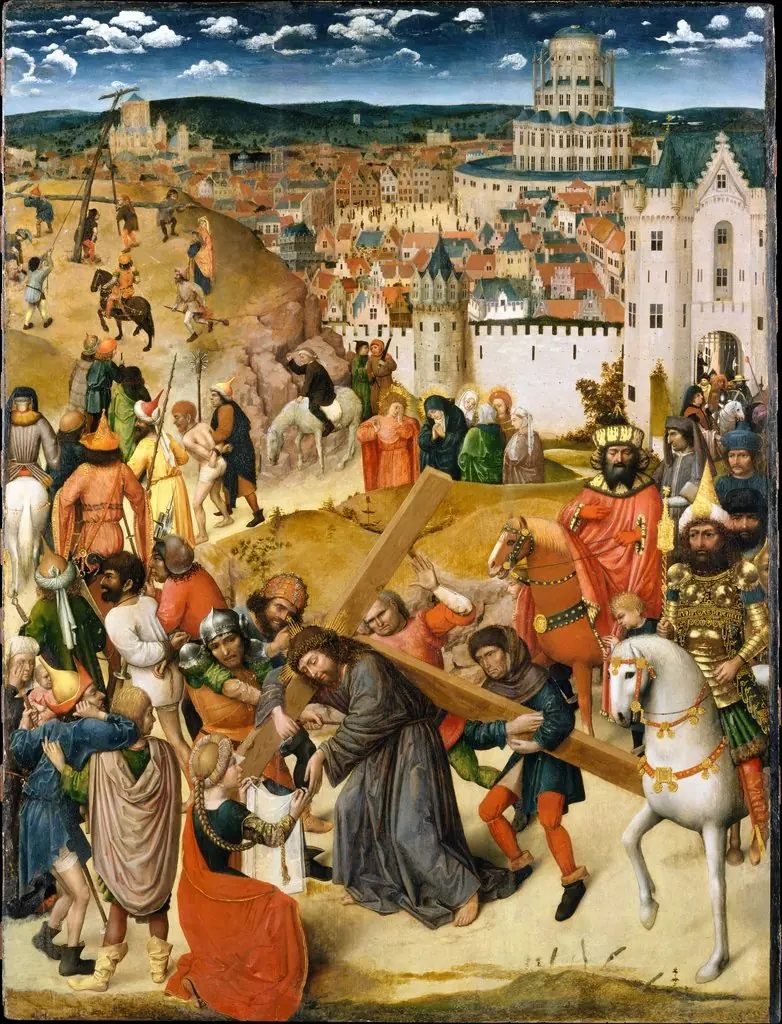
Christ Carrying the Cross, with the Entry of Christ into Jerusalem, Christ Driving the Moneychangers from the Temple, the Last Supper, Christ Crowned with Thorns, the Flagellation, Ecce Homo, the Agony in the Garden, and the Crucifixion
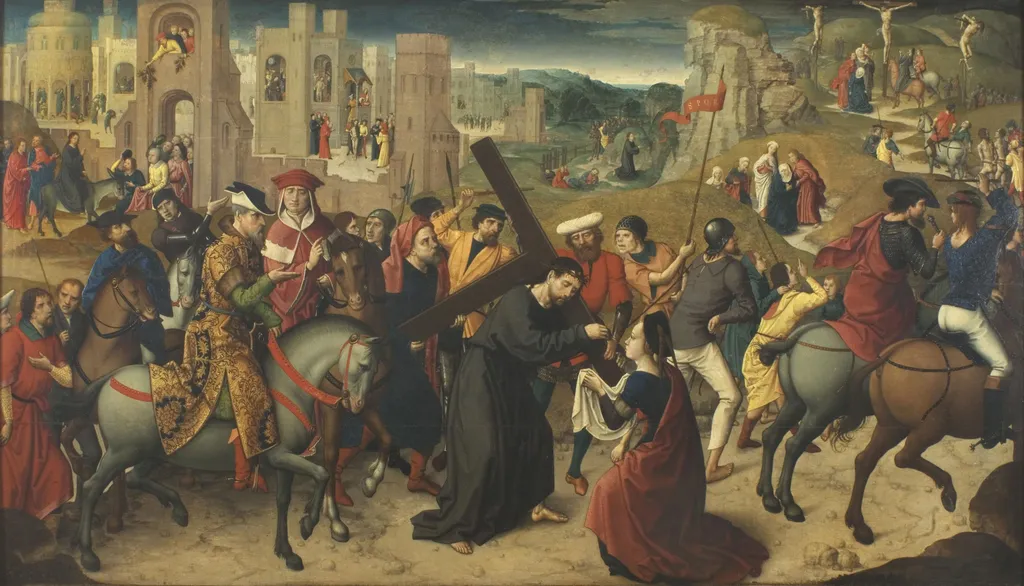
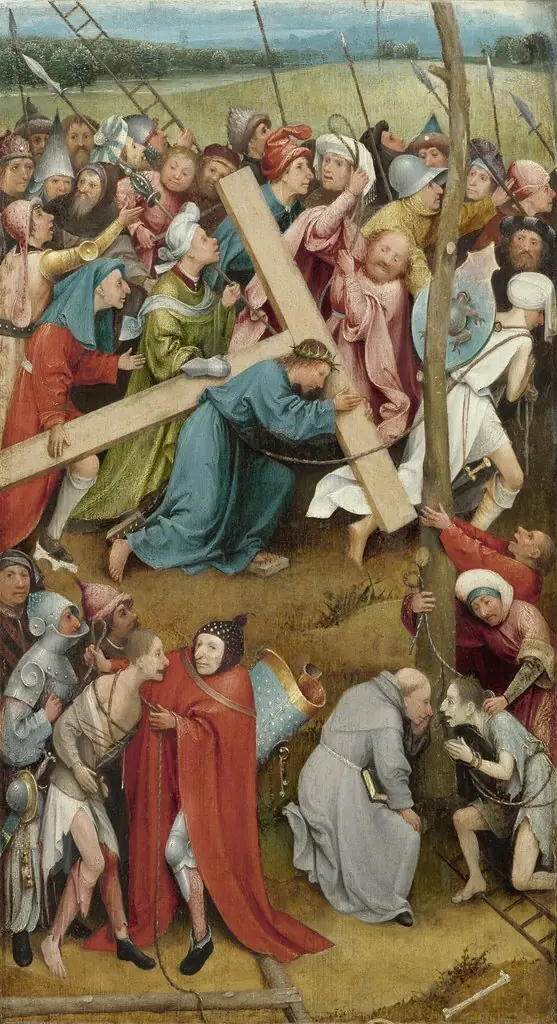
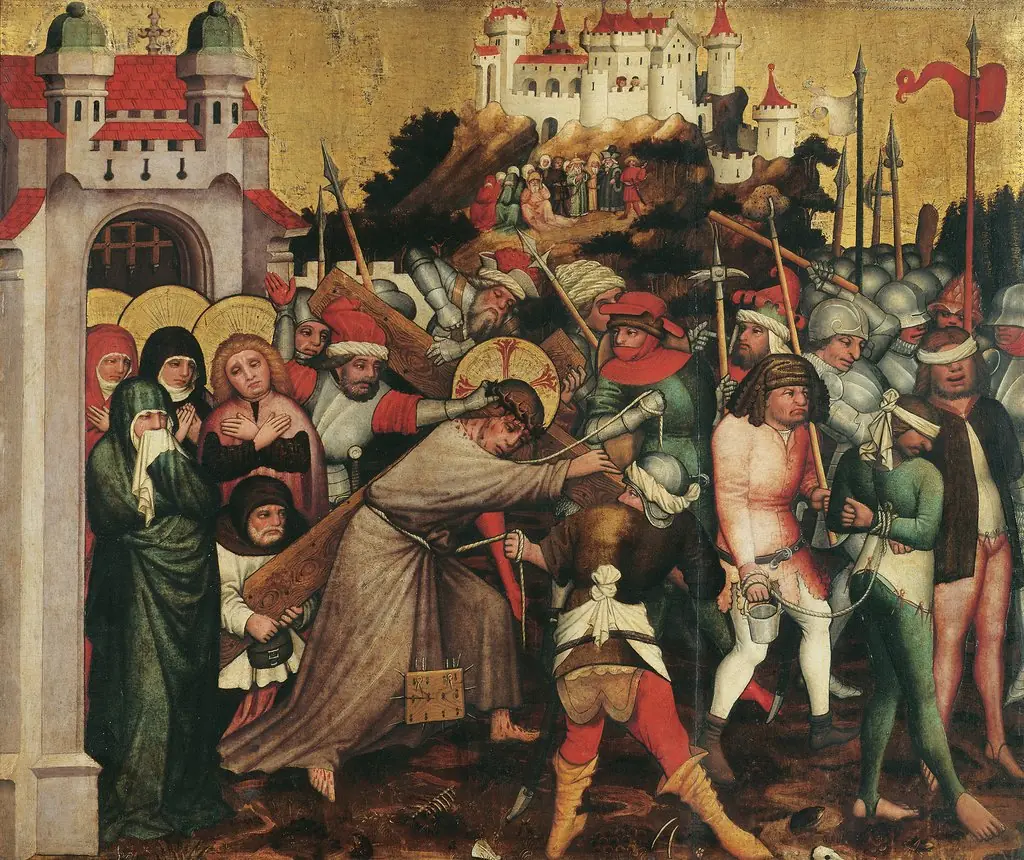
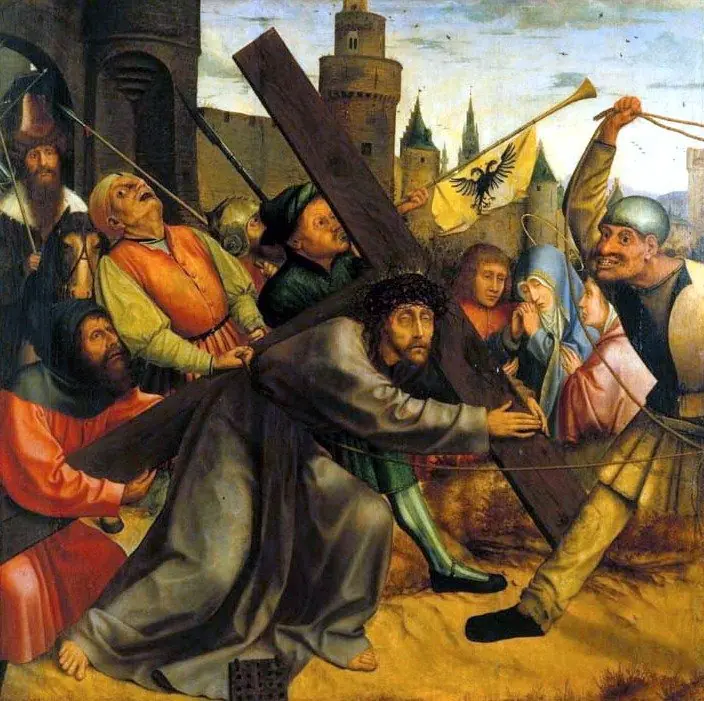
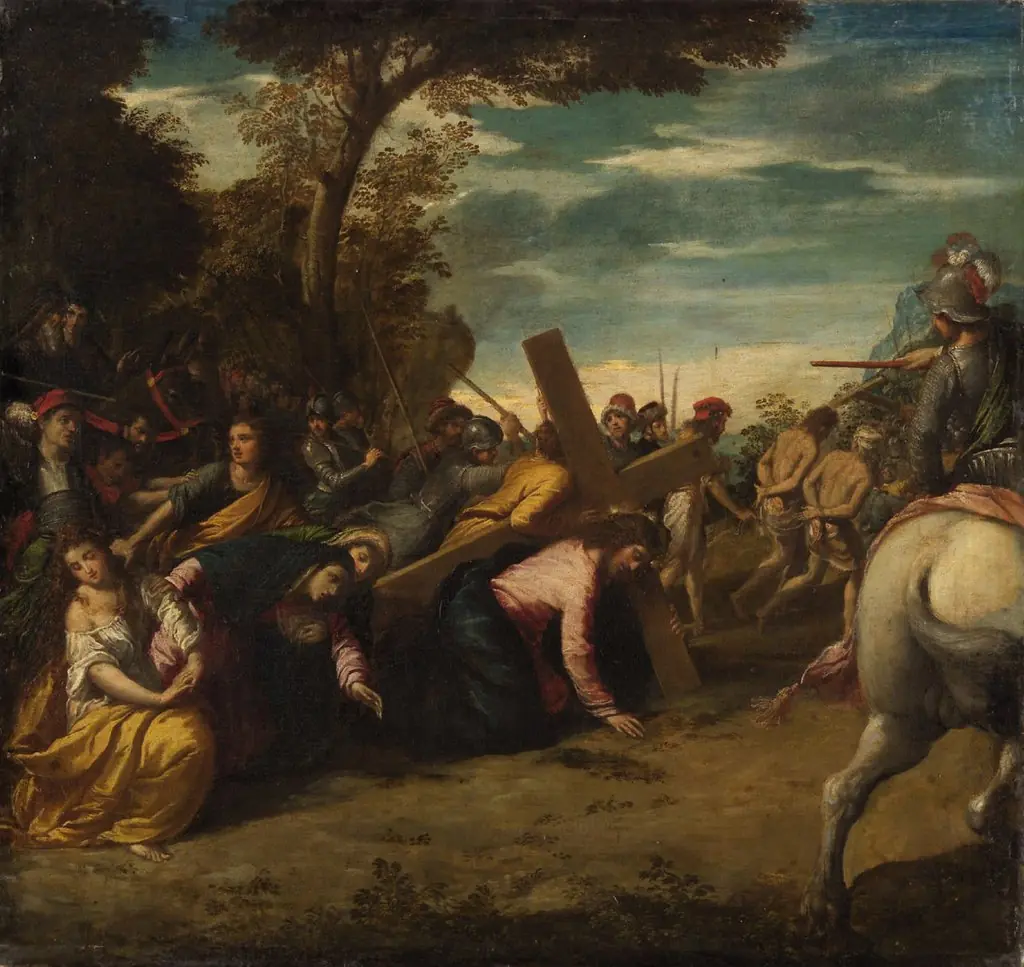
Christ Carrying the Cross, with the Entry of Christ into Jerusalem, Christ Driving the Moneychangers from the Temple, the Last Supper, Christ Crowned with Thorns, the Flagellation, Ecce Homo, the Agony in the Garden, and the Crucifixion is an oil painting by the Northern Renaissance artist Master of the Turin Adoration. It dates from 1512 and is held in the collection of the Philadelphia Museum of Art.
About this work
Overview
This oil painting, created in 1512 by the Master of the Turin Adoration, is a complex representation of multiple scenes from the life and Passion of Christ. It is currently held at the Philadelphia Museum of Art.
Subject & Meaning
The painting depicts nine distinct episodes from the narrative of Christ, including the Entry into Jerusalem, the Last Supper, and the Crucifixion, with Christ Carrying the Cross as a central focus. The crowded composition conveys a sense of turmoil and drama.
Technique & Style
The artist employs chiaroscuro, a technique using strong contrasts between light and dark, to create a dynamic and emotionally charged atmosphere. The palette is characterized by muted earth tones, contributing to the overall mood of the work.
History & Provenance
The painting was created in 1512 by the Master of the Turin Adoration, a painter active during the early 16th century. It is now part of the collection at the Philadelphia Museum of Art.
Own this work as a print
Artist & collection
Artist
This anonymous Netherlandish artist painted tiny, crowded scenes packed with dramatic Bible stories.