Artwork
Untitled
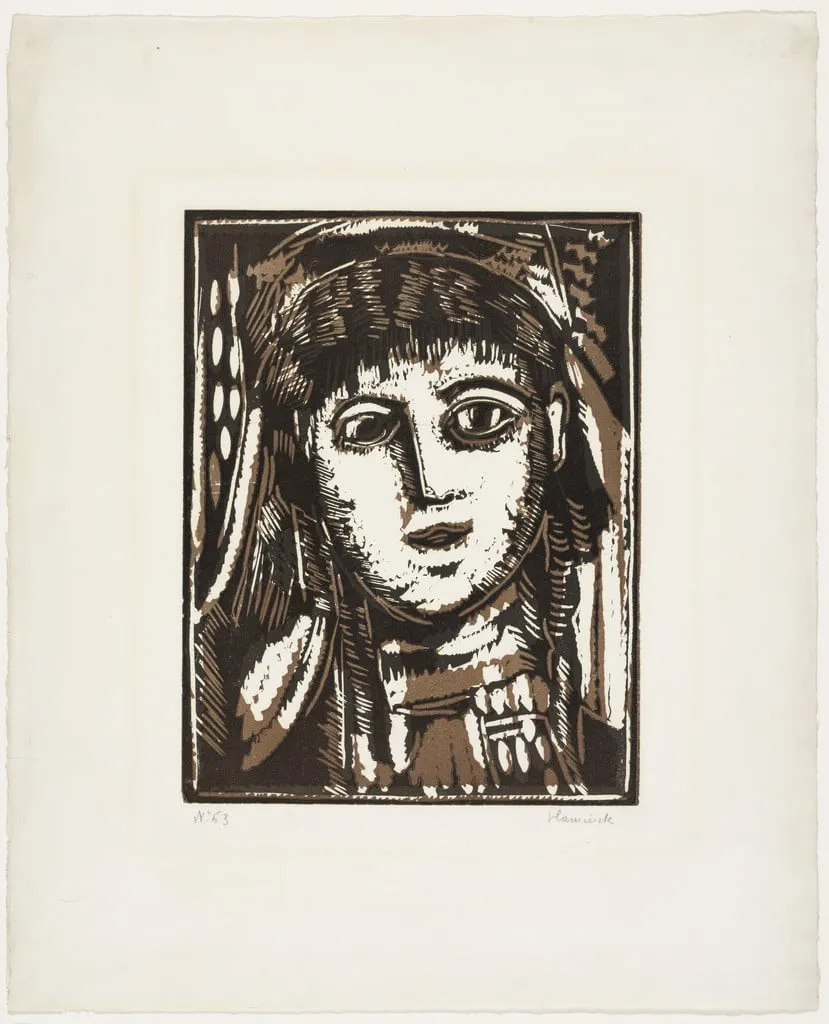
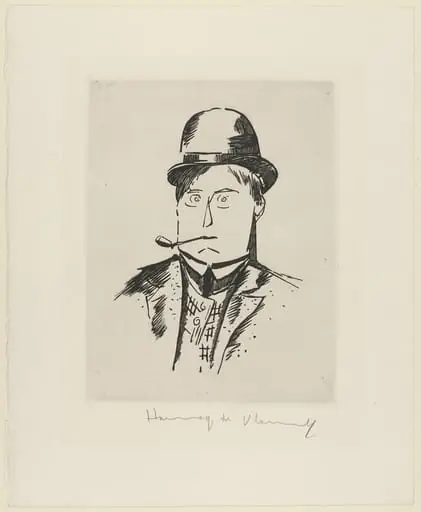
Untitled is an ink print by Maurice de Vlaminck. It dates from 1922 and is held in the collection of the Museum of Modern Art.
About this work
Overview
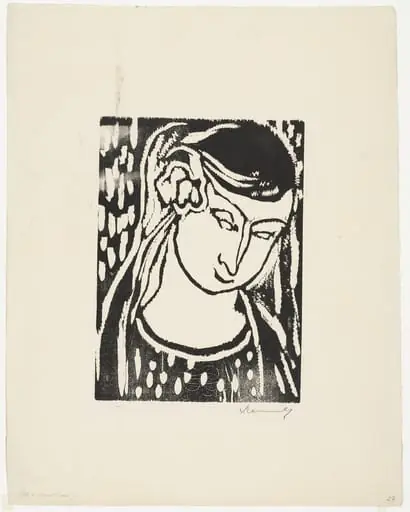
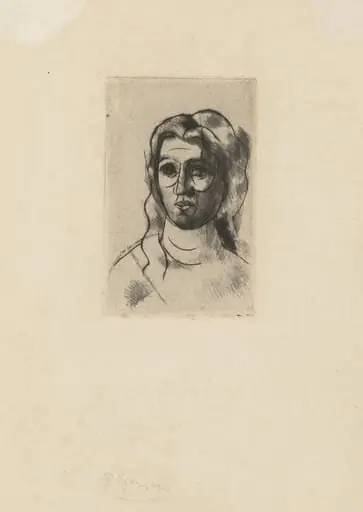
Created in 1922, this woodcut by Maurice de Vlaminck is a black-and-white print depicting a woman’s face and shoulders. Unlike his earlier Fauve paintings, this work relies on tonal contrast rather than color, using the woodcut technique to produce sharp, expressive lines. The image captures a quiet intensity, emphasizing form through bold carving and ink pressure rather than chromatic vibrancy.
Subject & Meaning
The subject is a woman rendered with solemn stillness, her gaze direct and unadorned. Her hair is rendered in dense, swirling grooves, suggesting movement or inner tension, while the angular folds of fabric around her neck add structural rigidity. The absence of color and the muted background focus attention on her presence, evoking a sense of introspection rather than narrative.
Technique & Style
Executed as a woodcut, the image was made by carving lines into a wooden block, inking the raised surfaces, and pressing paper onto it. The resulting print features stark contrasts, rough edges, and thick, hand-carved strokes. These characteristics reflect Vlaminck’s interest in primal expression, aligning with early 20th-century printmaking trends that valued directness over refinement.
History & Provenance
Though dated to 1922, this work belongs to a phase in Vlaminck’s career when he shifted from the explosive color of Fauvism toward more restrained, graphic forms. While the print’s early ownership is undocumented, it reflects his broader engagement with printmaking during the 1920s, a period when he explored monochromatic media as a counterpoint to his oil paintings.
Context
By the 1920s, the Fauve movement had dissolved, and many of its artists, including Vlaminck, turned to more personal, less sensational styles. Woodcut offered a way to retain expressive force without color. This print aligns with broader European trends in printmaking, where artists used the medium’s physicality to convey emotional weight and formal economy.
Legacy
This woodcut exemplifies Vlaminck’s later commitment to raw, tactile expression. While less celebrated than his Fauve canvases, it contributes to understanding his evolution as an artist who valued process and materiality. The work remains a quiet but significant example of how early modernists adapted print techniques to sustain expressive power beyond color.
Artist & collection
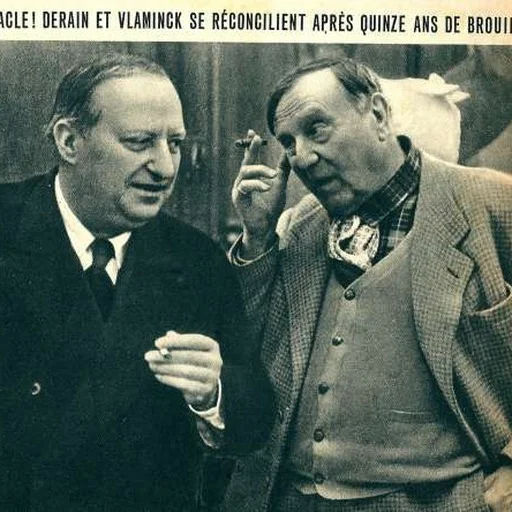
Artist
Maurice de Vlaminck (French: ; 4 April 1876 – 11 October 1958) was a French painter.