Artwork
Miguel de Unamuno
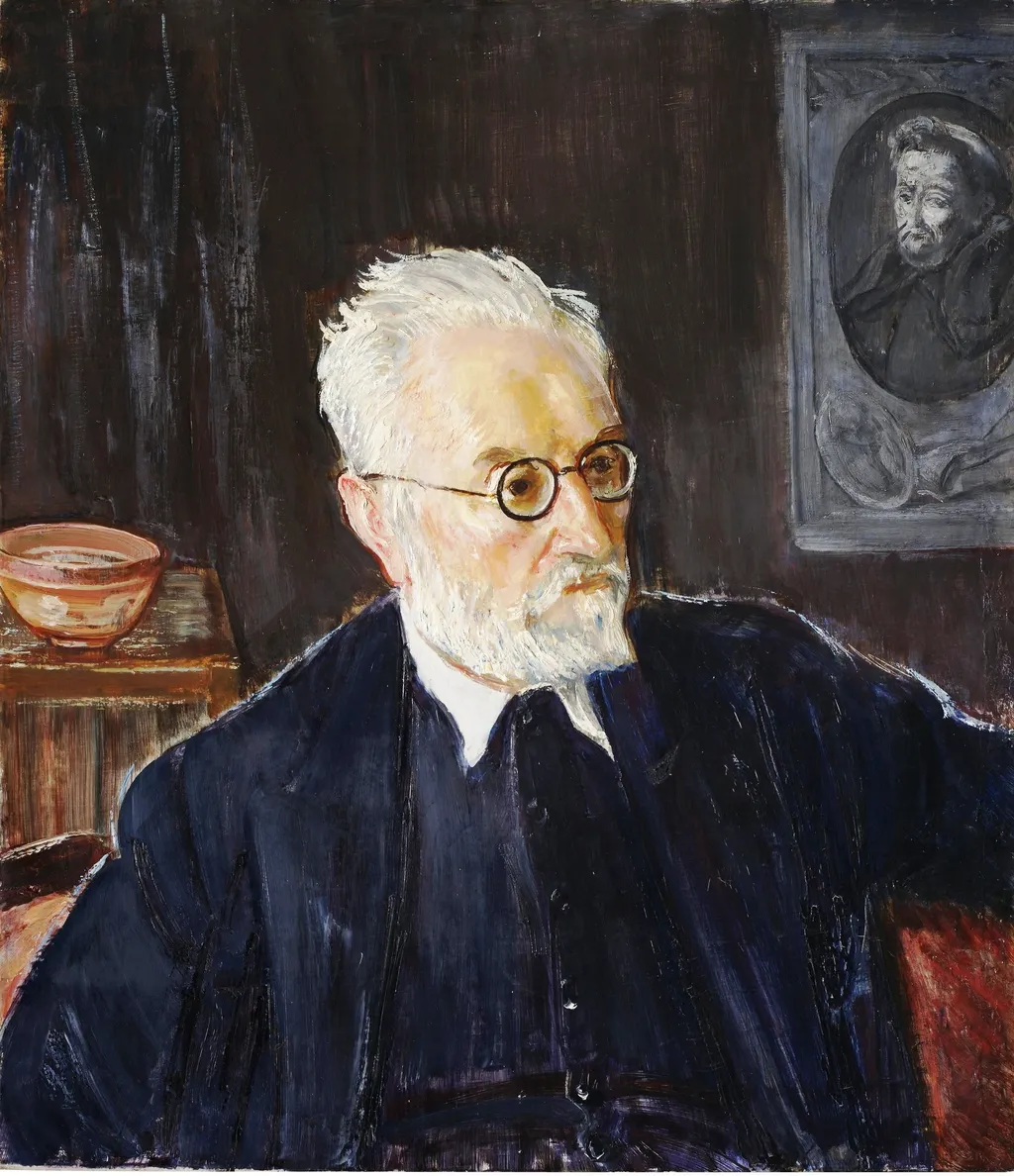
Miguel de Unamuno is an oil painting by Maurice Fromkes. It dates from 1925 and is held in the collection of the Museo del Prado.
About this work
Overview
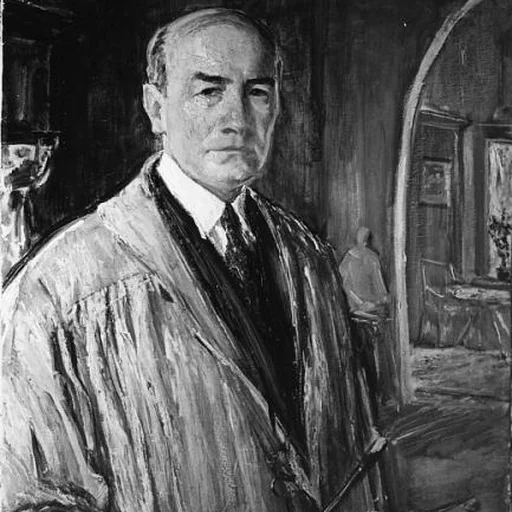
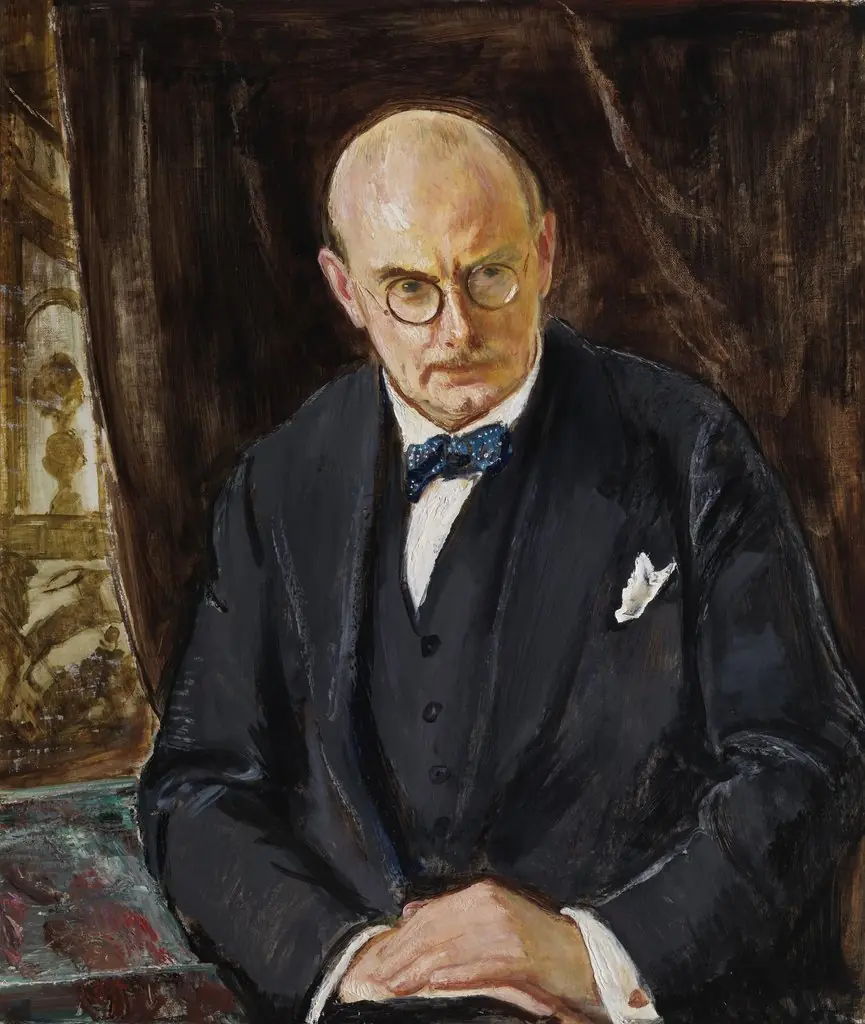
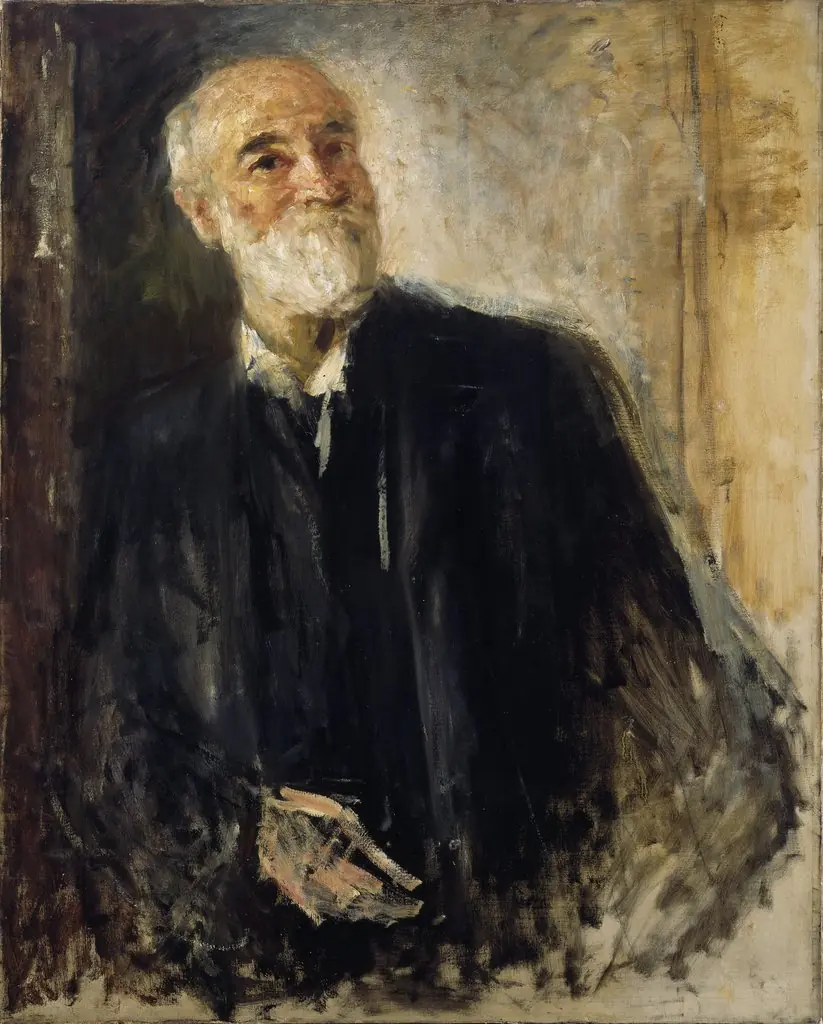
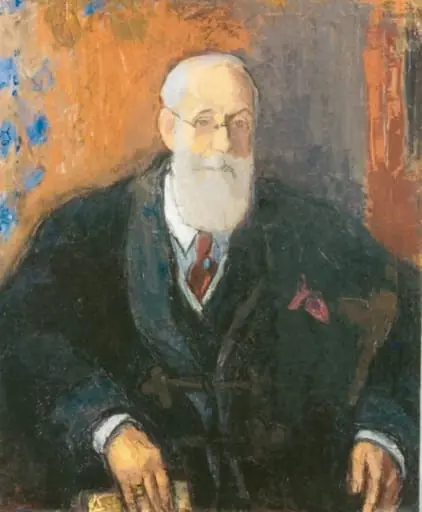
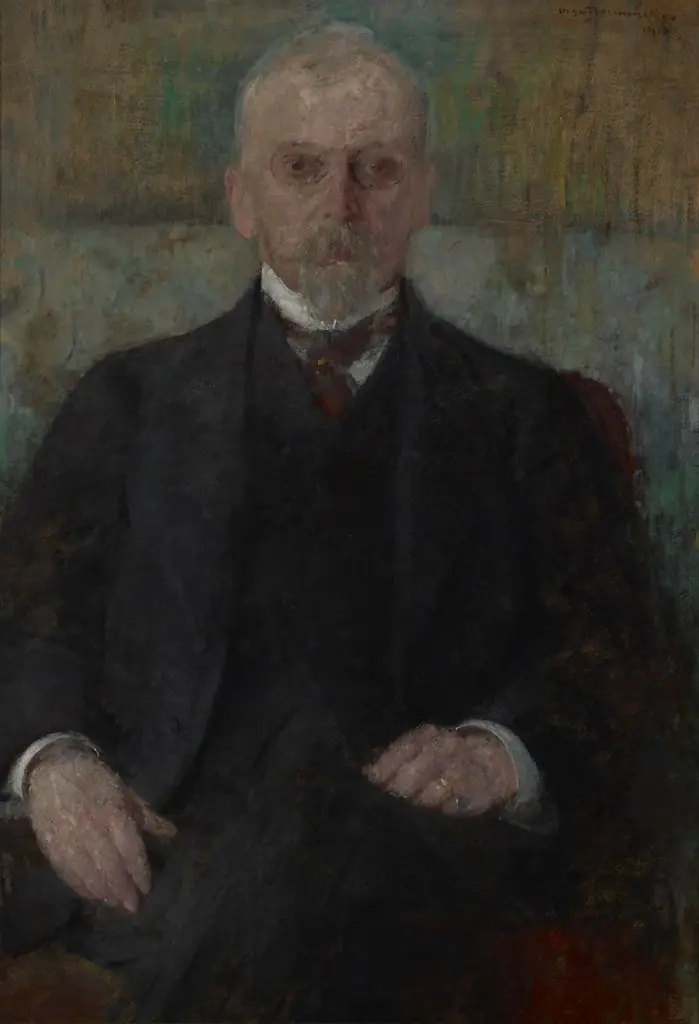
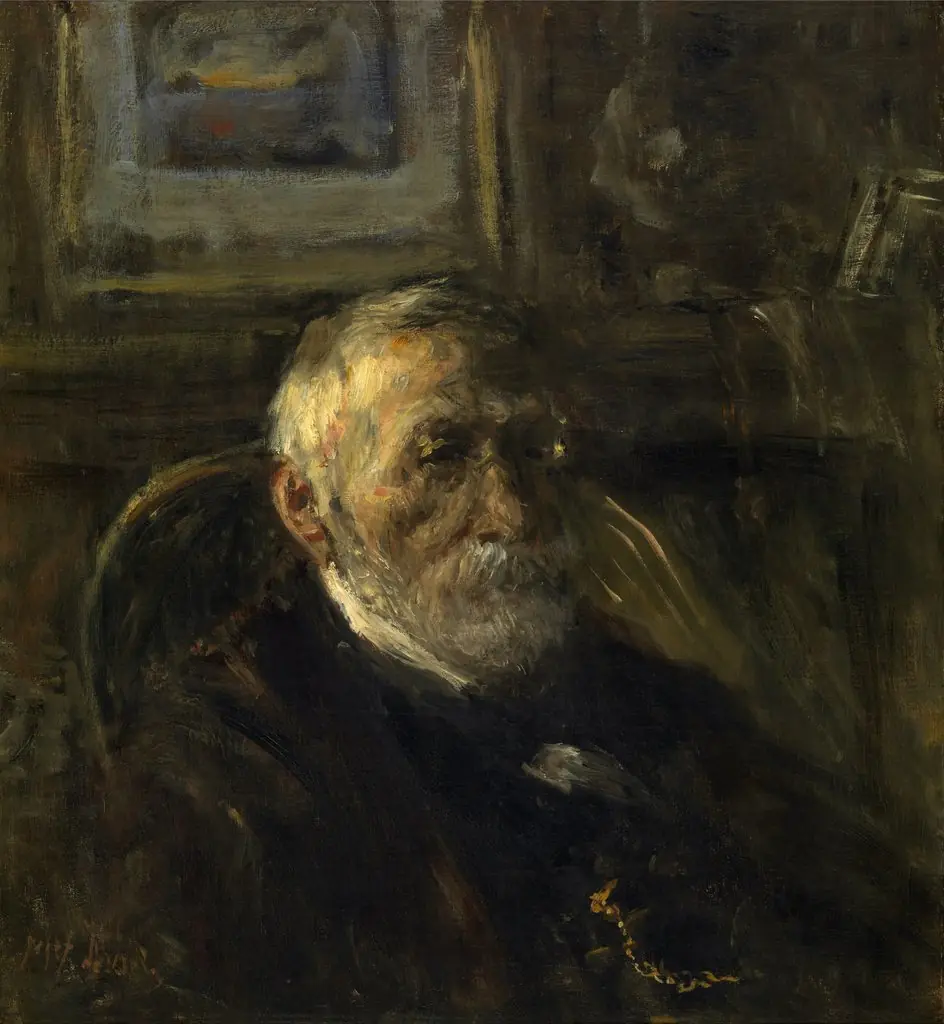
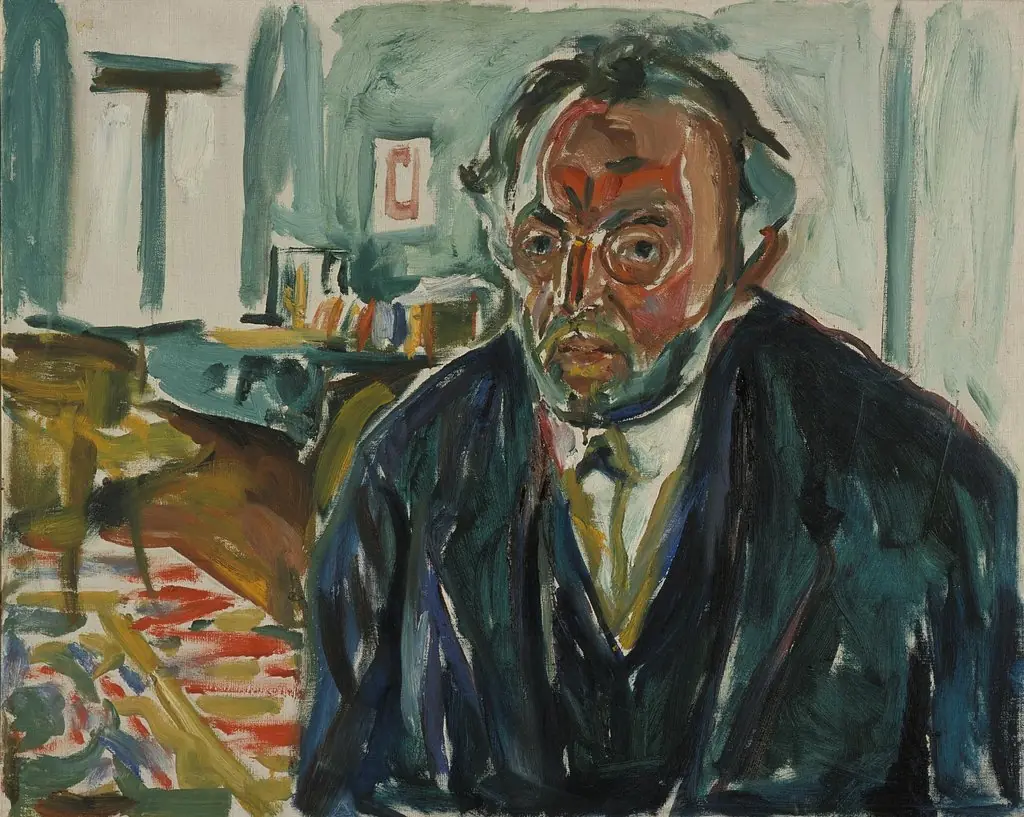
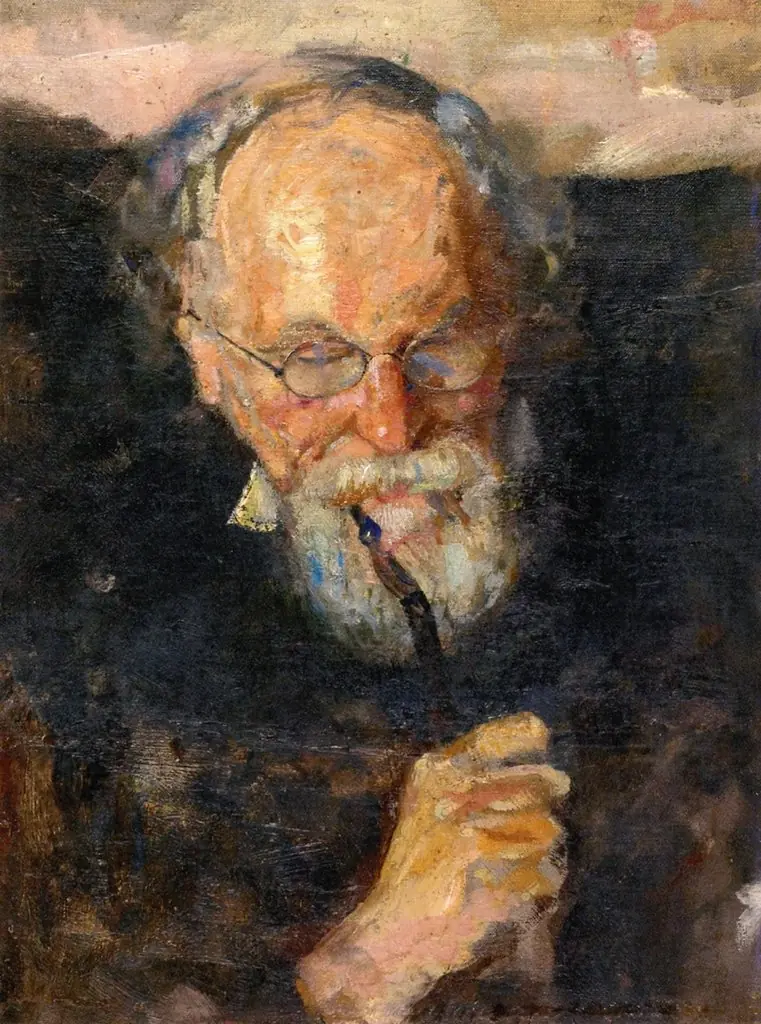
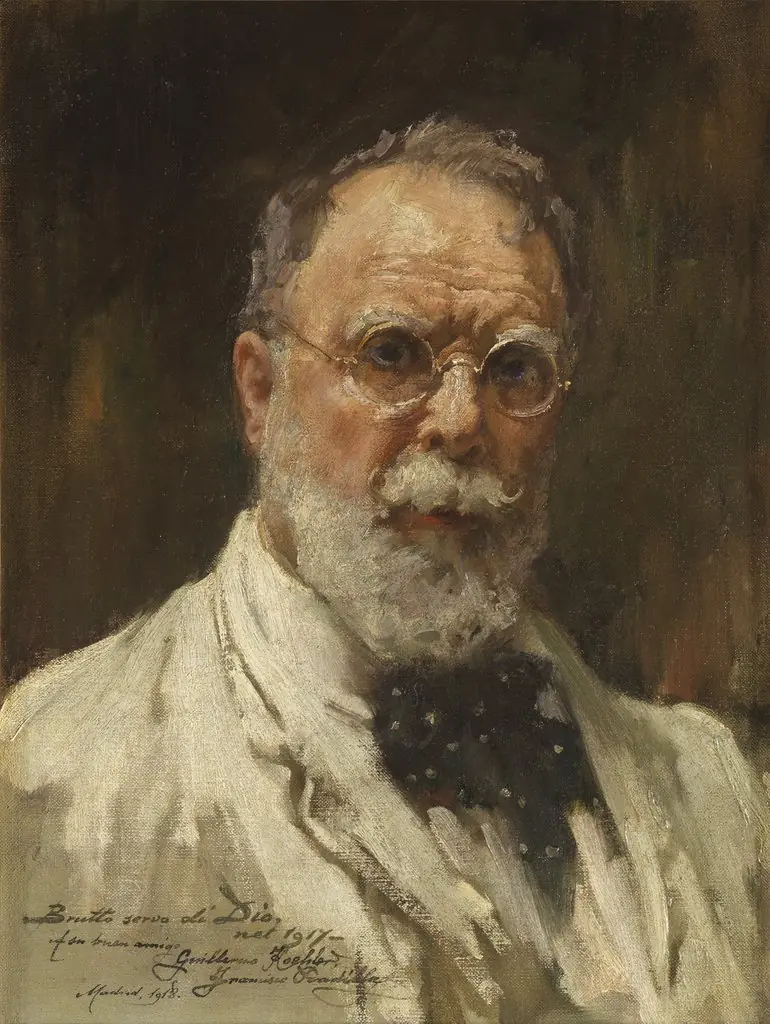
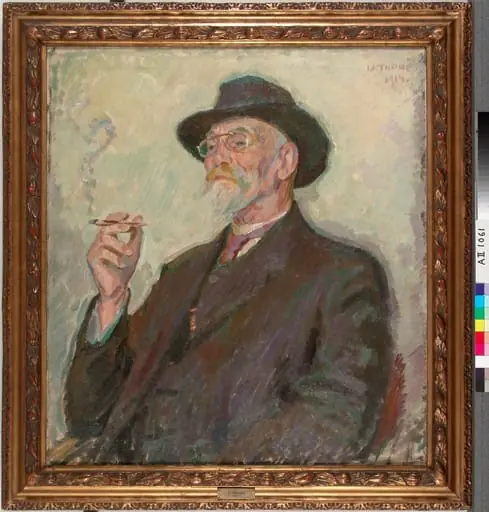
This 1925 oil painting by Maurice Fromkes portrays a middle-aged man with white hair and a beard, seated before a dark background. He wears round spectacles and a dark jacket over a white shirt. A bowl rests on a table to his left, and a framed image hangs behind him. The composition is restrained, emphasizing the figure’s presence through careful lighting and textured brushwork.
Subject & Meaning
The sitter is identified as Miguel de Unamuno, Spanish philosopher and writer. His serious expression and direct gaze convey intellectual intensity, consistent with his public persona. The bowl and framed picture may symbolize domesticity or contemplation, though their specific significance remains ambiguous. The portrait captures a moment of quiet reflection rather than ceremonial grandeur.
Technique & Style
Fromkes employs oil paint with visible, deliberate brushstrokes that model the face and fabric with subtle gradations. Chiaroscuro defines the contours of the figure, drawing attention to the eyes and glasses. The background is muted, enhancing the three-dimensionality of the subject. Texture in the jacket and hair adds tactile realism without overt embellishment.
History & Provenance
Painted in 1925, the work entered the collection of the Museo del Prado in Madrid. Its acquisition reflects the museum’s interest in 20th-century portraiture beyond Spanish national artists. While Fromkes was not a major figure in Spanish art, this portrait remains a documented representation of Unamuno during his later years, contributing to the visual archive of Spanish intellectual life.
Context
Created during the interwar period, the portrait aligns with European trends in psychological portraiture that favored introspection over idealization.
Created during the interwar period, the portrait aligns with European trends in psychological portraiture that favored introspection over idealization. Unamuno, then in his late 60s, was a prominent critic of authoritarianism and a symbol of liberal thought in Spain. The painting’s quiet demeanor contrasts with the political turbulence of the era, offering a personal counterpoint to public upheaval.
Legacy
The portrait endures as one of the few painted likenesses of Unamuno from his final decade. It is referenced in scholarly works on his life and the cultural history of early 20th-century Spain. While not widely exhibited, its presence in the Prado ensures its accessibility to researchers and visitors interested in the intersection of literature, philosophy, and visual representation.
Own this work as a print
Artist & collection