Artwork
Langdale Pikes from near Crinkle Crags
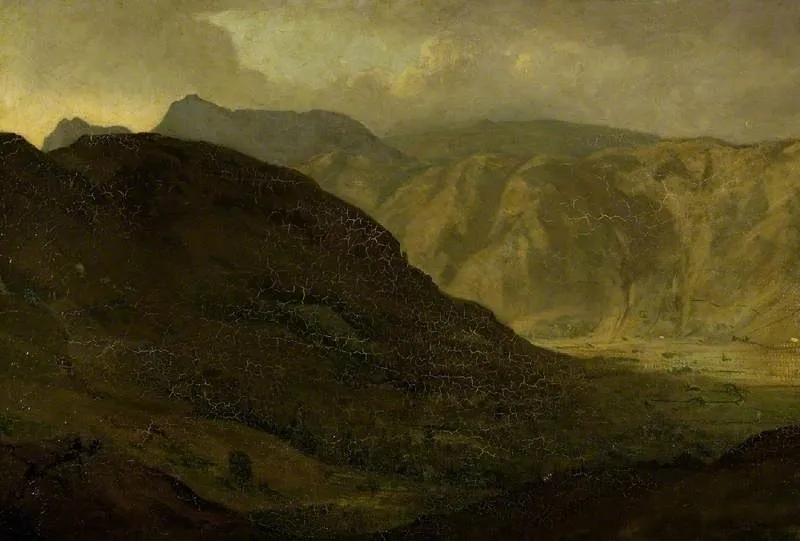
Langdale Pikes from near Crinkle Crags is an oil painting by Maurice Gray. It dates from 1913 and is held in the collection of the Fitzwilliam Museum.
About this work
Overview
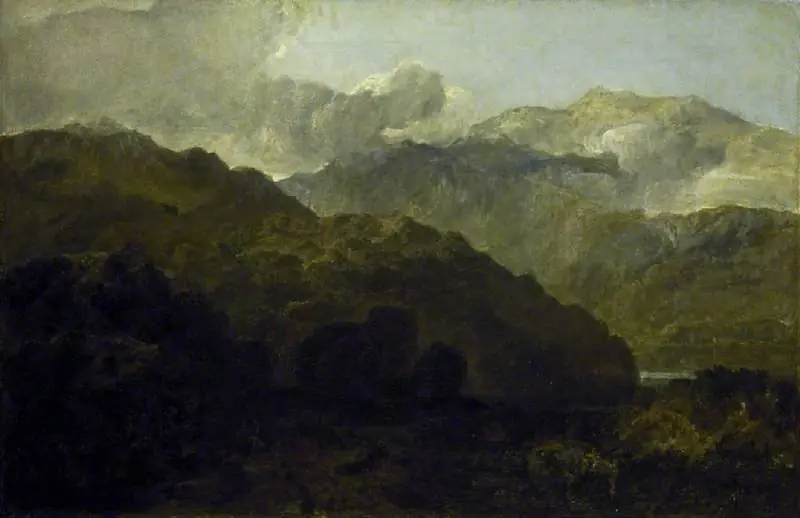
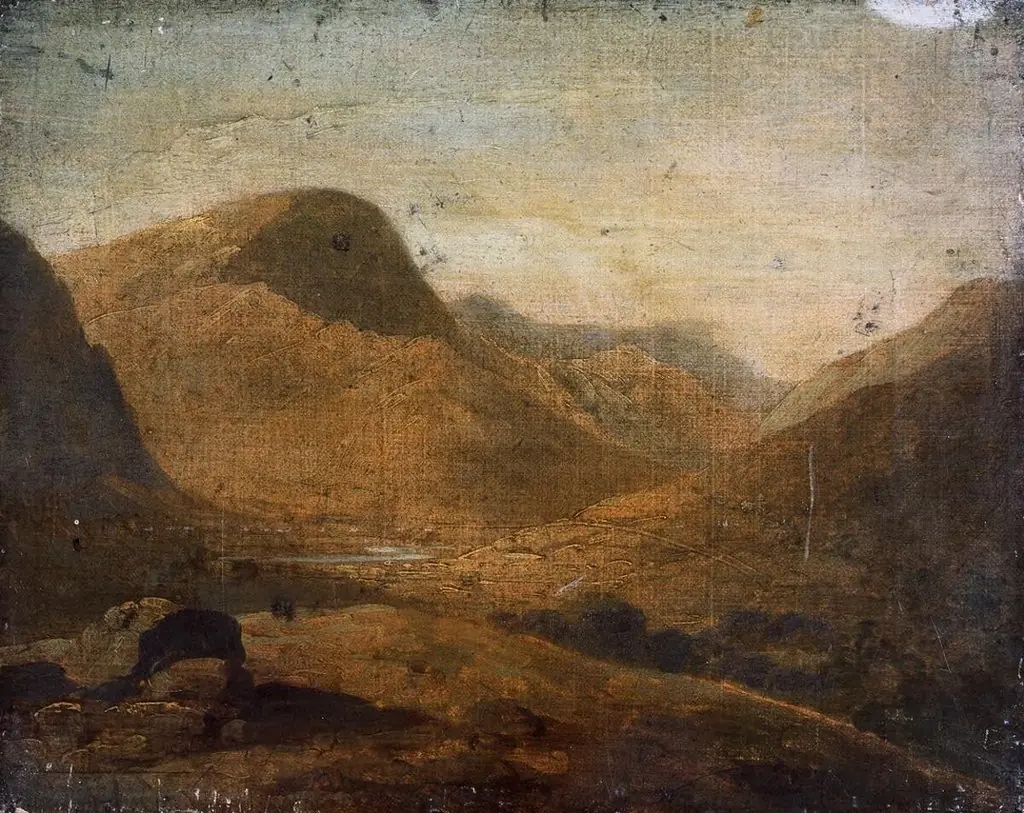
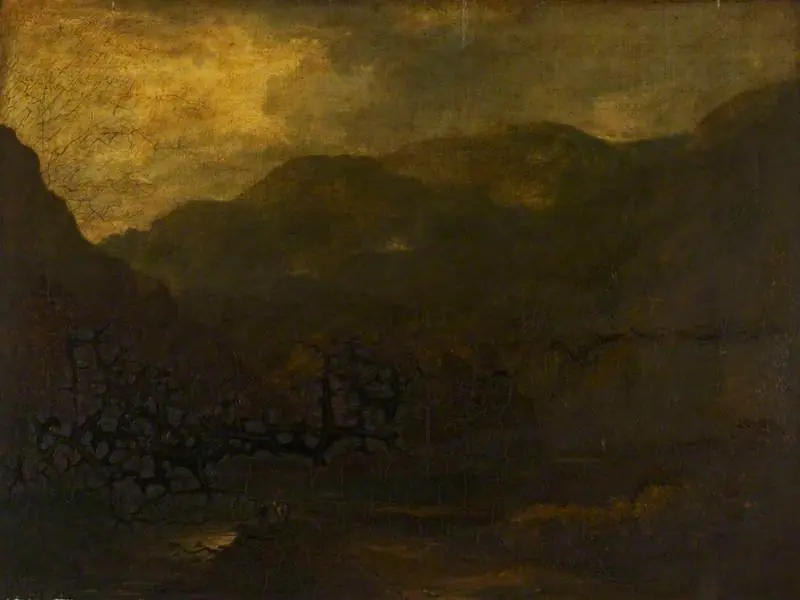
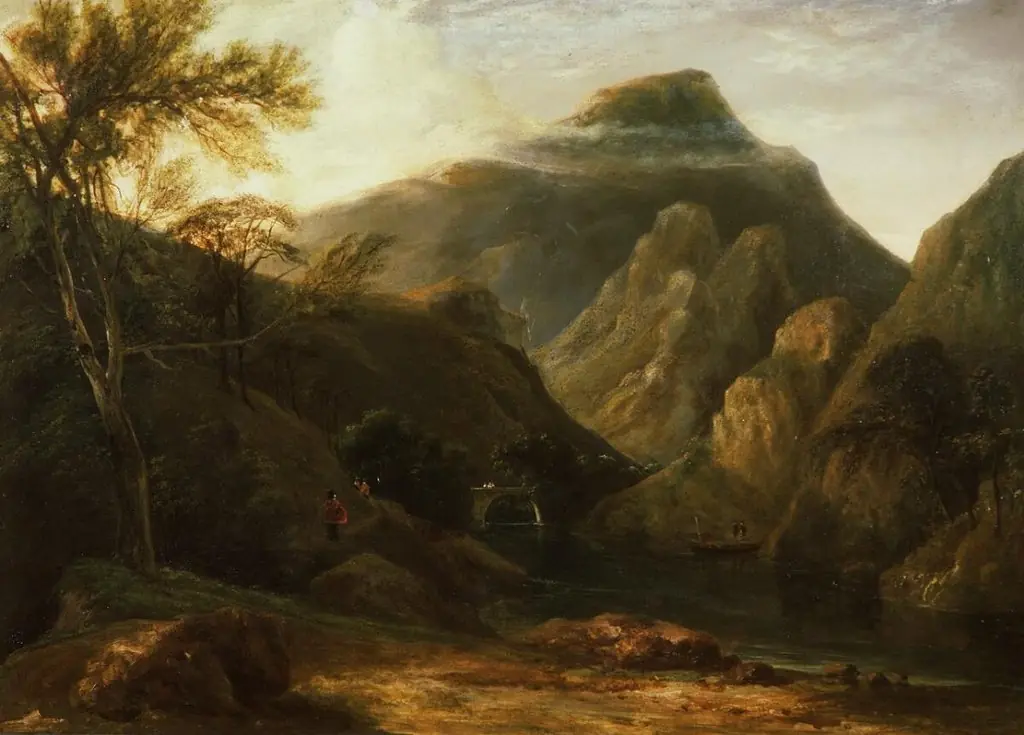
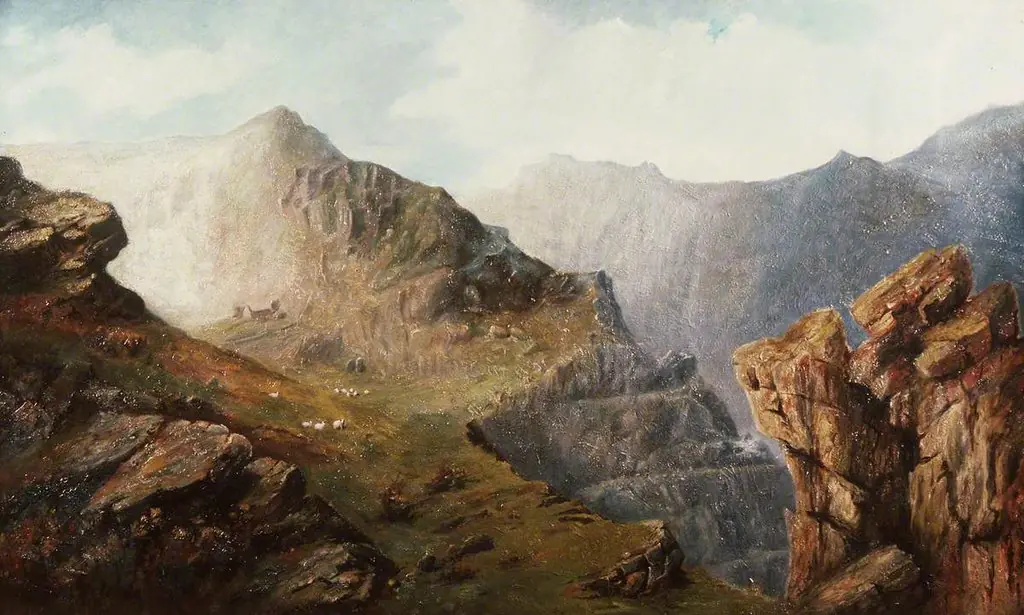
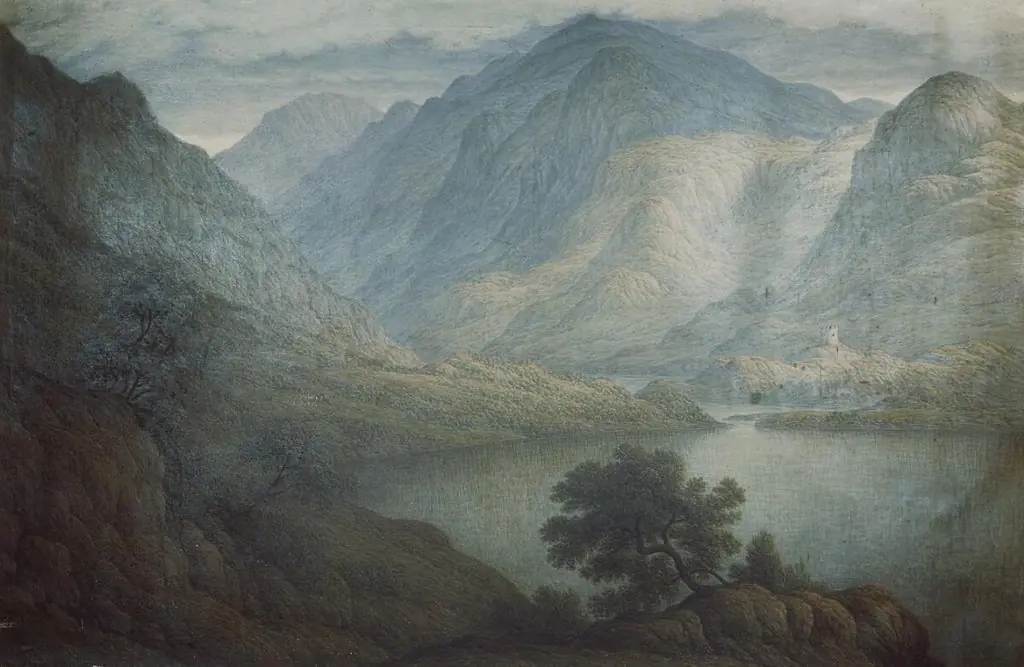
Painted around 1913, Langdale Pikes from near Crinkle Crags is an oil landscape by Maurice Gray, now in the Fitzwilliam Museum’s collection. It captures a view of the Lake District’s rugged terrain, emphasizing the quiet scale of nature over human presence. The composition balances foreground valleys with distant peaks, rendered with deliberate texture and restrained color.
Subject & Meaning
The painting presents the Langdale Pikes as distant, mist-wrapped summits rising above a quiet valley. No figures or structures interrupt the scene, reinforcing a sense of solitude and timelessness. The focus on geological form rather than narrative suggests an appreciation for landscape as a quiet, enduring presence, not a stage for human drama.
Technique & Style
Gray applied oil paint in thick, visible strokes, building surface texture to echo the rocky terrain. Muted browns and greens dominate, with subtle shifts in tone suggesting atmospheric depth. The brushwork avoids smooth blending, favoring tactile immediacy—each stroke contributing to the sense of earth’s raw, unpolished character.
History & Provenance
Created circa 1913, the painting entered the Fitzwilliam Museum’s holdings in the 20th century. Its provenance before acquisition is not widely documented, but its inclusion in the museum’s collection reflects an early 20th-century interest in regional British landscapes by lesser-known artists working outside academic traditions.
Context
Gray worked during a period when British painters were turning away from urban themes toward rural and mountainous scenery, influenced by Romantic traditions and early environmental awareness. His approach, while not aligned with major movements like Post-Impressionism, shares a quiet intensity with contemporaries who sought emotional resonance in unadorned nature.
Legacy
Though not widely exhibited beyond institutional collections, the painting remains a quiet example of early 20th-century British landscape painting that values observation over spectacle. It contributes to a broader understanding of regional artistic responses to the Lake District, distinct from the more celebrated works of the time.
Artist & collection