Artwork
Χωρίς Τίτλο
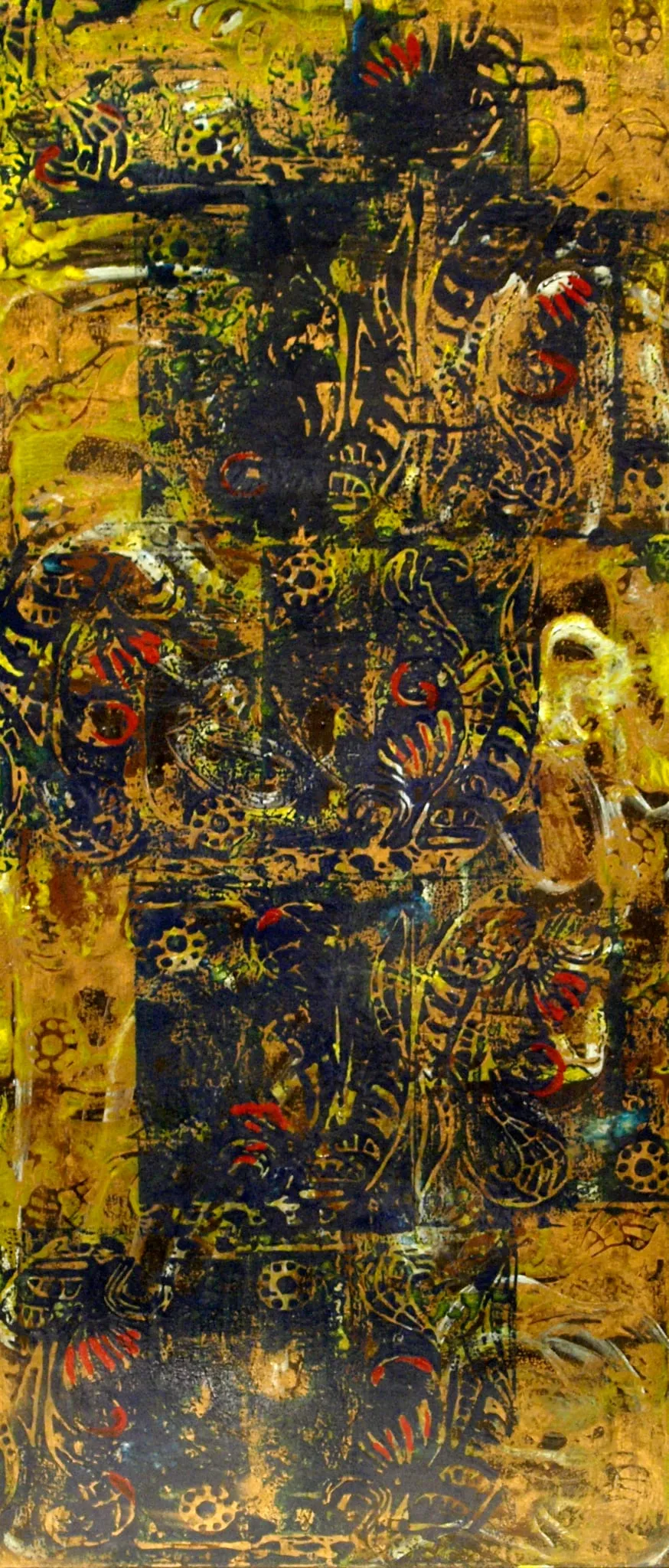
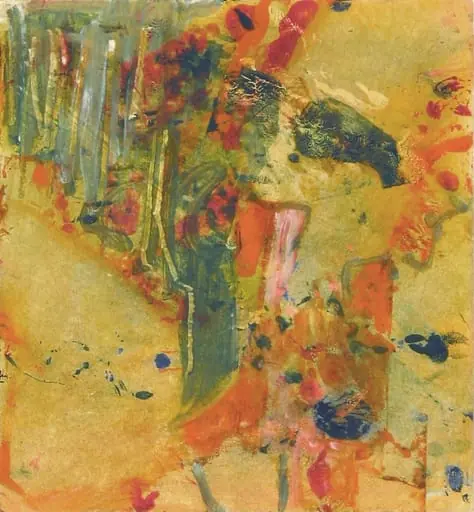
Χωρίς Τίτλο is an unspecified painting by Simela Mavridou. It dates from 1997 and is held in the collection of the Metropolitan Organisation of Museums of Visual Arts of Thessaloniki – MOMus.
About this work
Overview
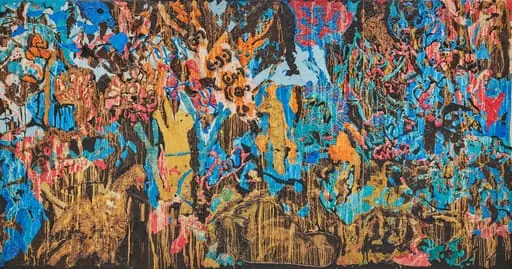
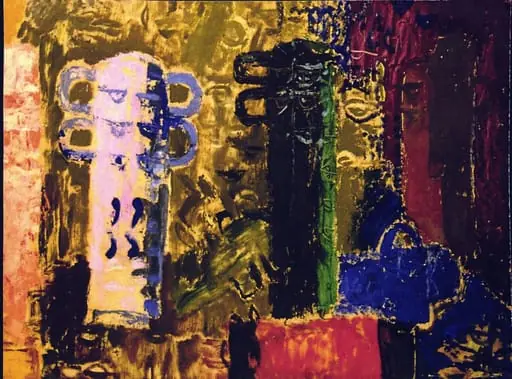
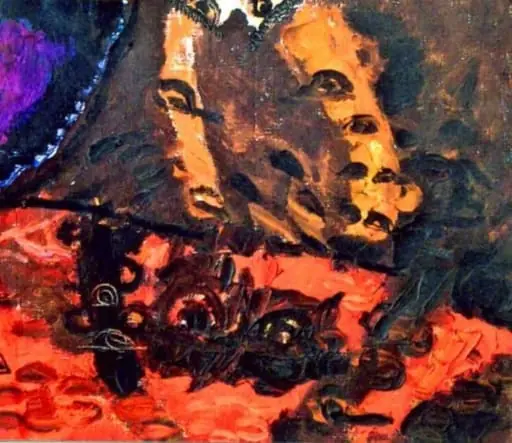
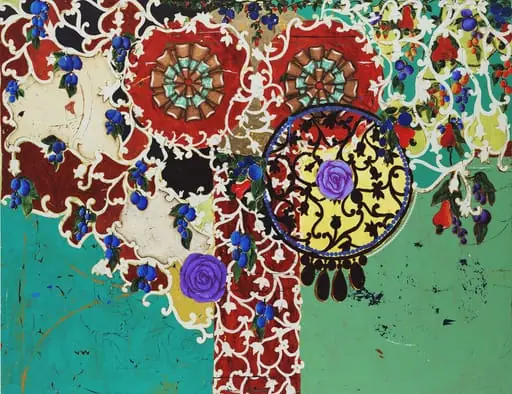
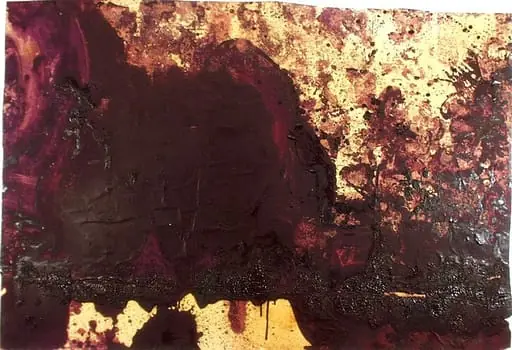
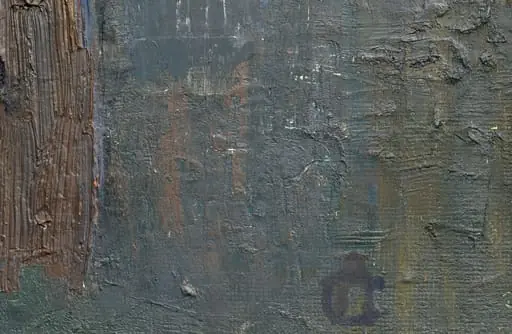
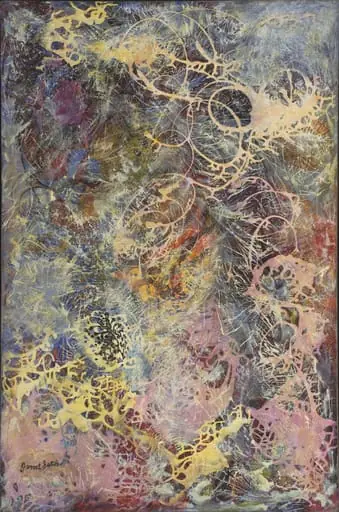
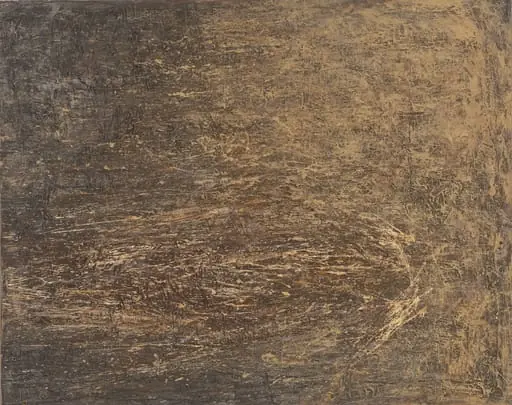
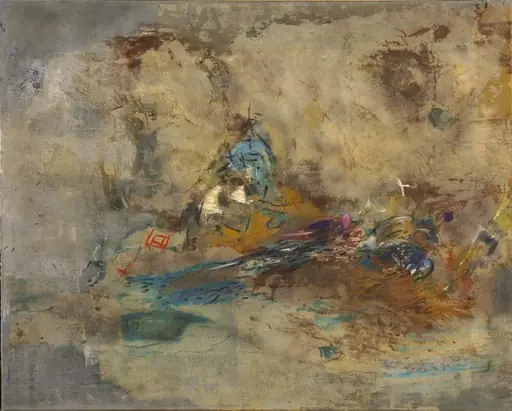
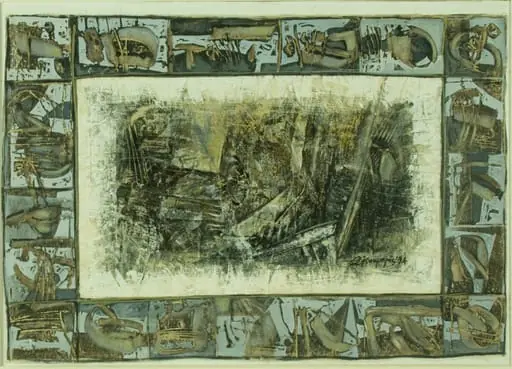
Created in 1997 by Simela Mavridou, this untitled work is part of the Museum of Ethnography’s collection. It presents an abstract composition built through layered, non-representational forms. The surface is densely worked, with paint applied in varying thicknesses and textures, suggesting a process of accumulation and revision rather than deliberate depiction.
Subject & Meaning
The painting avoids figurative elements, instead relying on gestural marks and chromatic tension to evoke mood. The absence of recognizable subjects invites interpretation through emotional resonance rather than narrative. The chaotic interplay of hues and textures may reflect internal states or memories, though the artist has not provided explicit commentary on its meaning.
Technique & Style
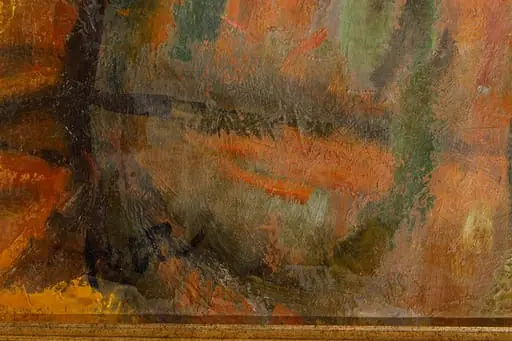
Mavridou employs a tactile approach, building the surface with thick impasto strokes, scraped passages, and uneven washes.
Mavridou employs a tactile approach, building the surface with thick impasto strokes, scraped passages, and uneven washes. Colors are applied abruptly, resisting smooth transitions. The texture varies from glossy ridges to matte abrasions, creating a physical record of the artist’s movements. The effect resembles layered materials—fabric, paper, or weathered surfaces—rather than traditional painting.
History & Provenance
The work entered the Museum of Ethnography’s collection shortly after its creation. No public exhibition history or prior ownership is documented beyond its acquisition by the institution. Its inclusion suggests an interest in contemporary Greek abstraction as part of broader cultural expression, though its origins remain tied primarily to the artist’s studio practice.
Context
Emerging in late 1990s Greece, the piece aligns with a regional shift toward expressive abstraction, away from figurative traditions. While not part of a formal movement, it reflects a broader interest in materiality and emotional intensity among post-junta artists. The work’s rawness resonates with international postwar abstraction, yet retains a distinctly personal, non-ideological character.
Legacy
Though not widely reproduced or exhibited beyond its institutional home, the painting contributes to the understanding of Greek abstract practice in the 1990s. It stands as an example of individual experimentation within a period of cultural redefinition. Its preservation in an ethnographic context underscores its value as a cultural artifact of personal expression rather than public iconography.
Artist & collection
Artist
Museum
Metropolitan Organisation of Museums of Visual Arts of Thessaloniki – MOMus
Continue through works from the same source collection.