Artwork
Autoportret cu bască și trabuc
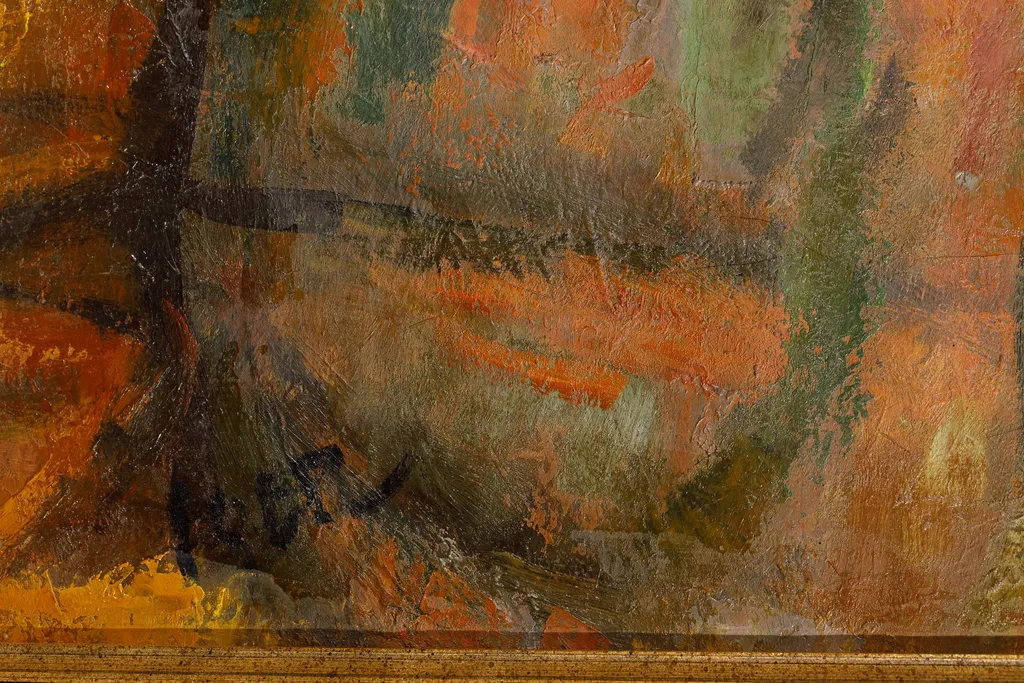
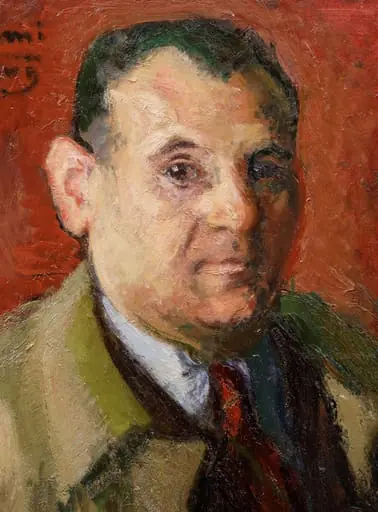
Autoportret cu bască și trabuc is an unspecified painting by Iosif Iser. It dates from 1850 and is held in the collection of the National Museum of Art of Romania.
About this work
Overview
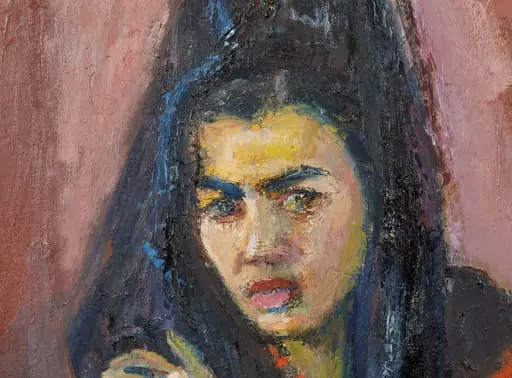
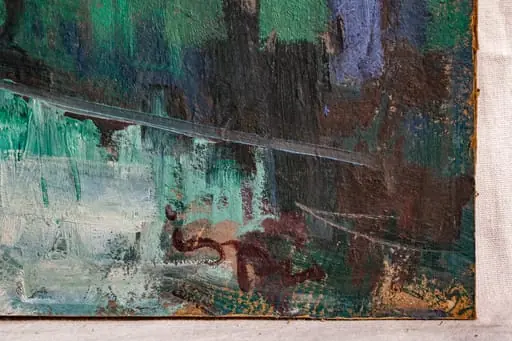
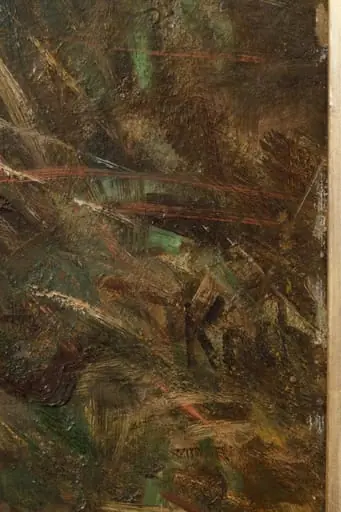
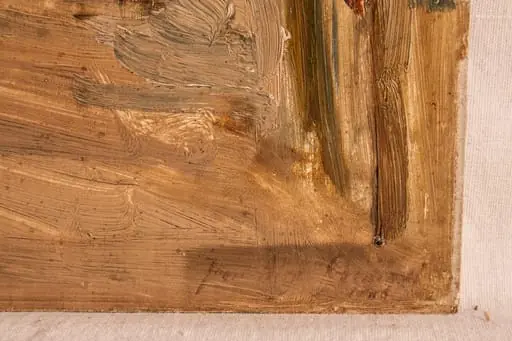
Painted around 1850 by Iosif Iser, this self-portrait is rendered in thickly applied oil paint, emphasizing physical texture over detailed representation.
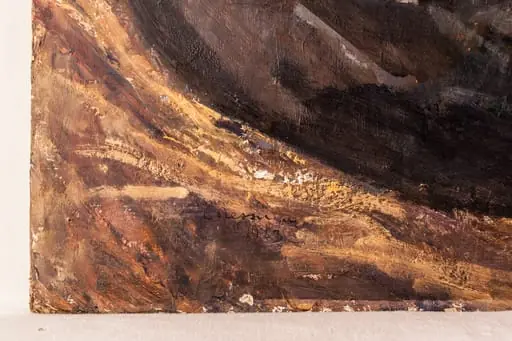
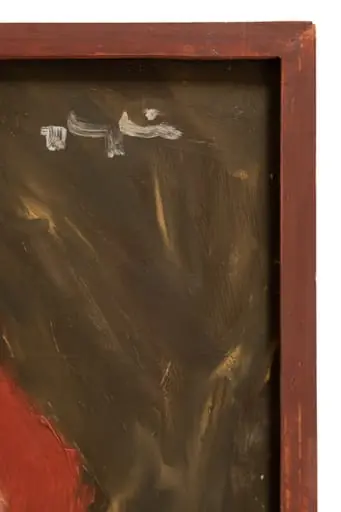
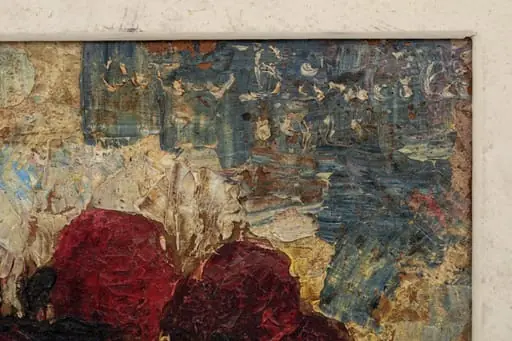
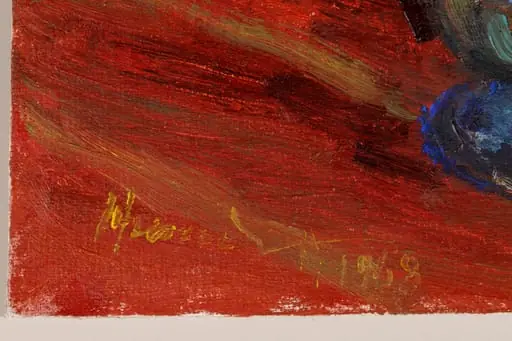
Painted around 1850 by Iosif Iser, this self-portrait is rendered in thickly applied oil paint, emphasizing physical texture over detailed representation. The composition avoids clear facial features, instead focusing on the materiality of the paint itself. Warm tones dominate, with deep reds, burnt oranges, and earthy browns forming a dense, tactile surface that invites attention to the act of painting rather than the likeness of the subject.
Subject & Meaning
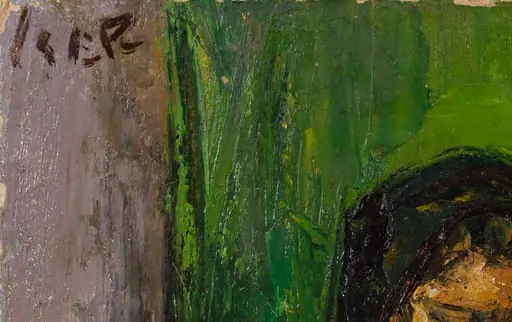
Though titled as a self-portrait, the image resists conventional identification. No distinct features of the artist are clearly rendered; instead, faint shapes in the upper left suggest the outline of a hat or profile, barely emerging from the layered pigment. The work seems less about capturing identity and more about expressing presence through gesture and material, turning the artist’s hand into the subject of the piece.
Technique & Style
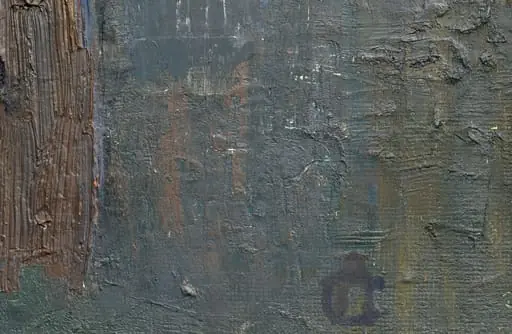
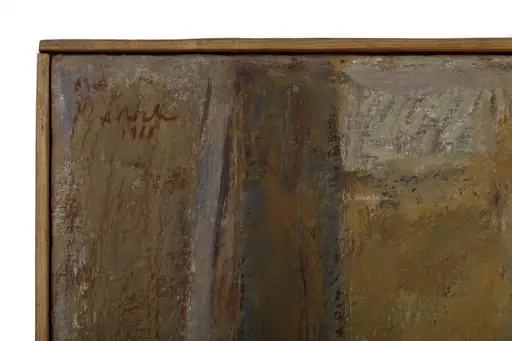
The painting employs impasto extensively, with paint applied in heavy, almost sculptural strokes that create a rough, uneven surface. The texture resembles weathered clay or dried earth, enhanced by dark, shadowed recesses that deepen the sense of volume. Brushwork is forceful and unrefined, prioritizing tactile presence over smooth finish, aligning the work with early experiments in expressive pigment handling.
History & Provenance
The painting’s early history remains undocumented, with no clear record of its commission or initial ownership. It is attributed to Iosif Iser based on stylistic analysis and period context, though few other works by him survive. Its survival suggests it may have remained in private hands or been preserved by a collector interested in unconventional portraiture rather than mainstream academic art.
Context
Created in mid-19th century Romania, the work diverges from the academic norms of the time, which favored polished realism and idealized form. Iser’s approach anticipates later movements that valued emotional expression through materiality. Its rawness reflects a broader, though underrecognized, trend among regional artists exploring personal vision beyond institutional expectations.
Legacy
Though not widely exhibited or studied, the painting stands as an early example of expressive pigment use in Romanian art. Its emphasis on texture and ambiguity influenced later generations interested in breaking from academic conventions. It remains a quiet but significant marker of individualism in a period dominated by formal portraiture traditions.
Artist & collection
Artist
Iosif Iser painted everyday life with a focus on people and places. His 1933 work *Paris. Strada Mouffetard* shows a lively street scene in Paris, while *Nud pe fotoliu* depicts a seated nude figure. His brushwork…