Artwork
Two Ladies at the Window
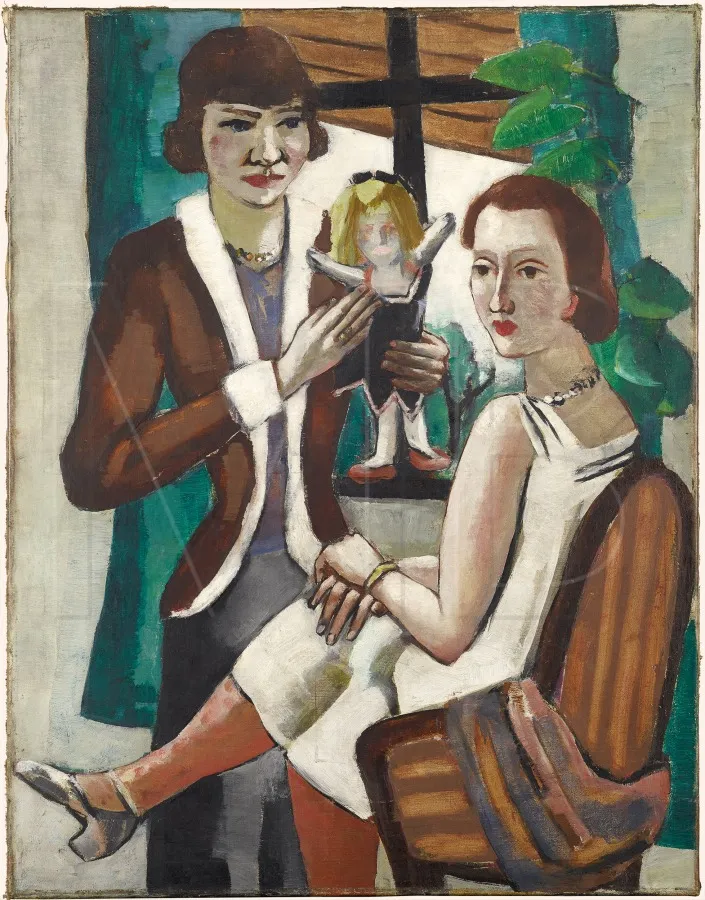
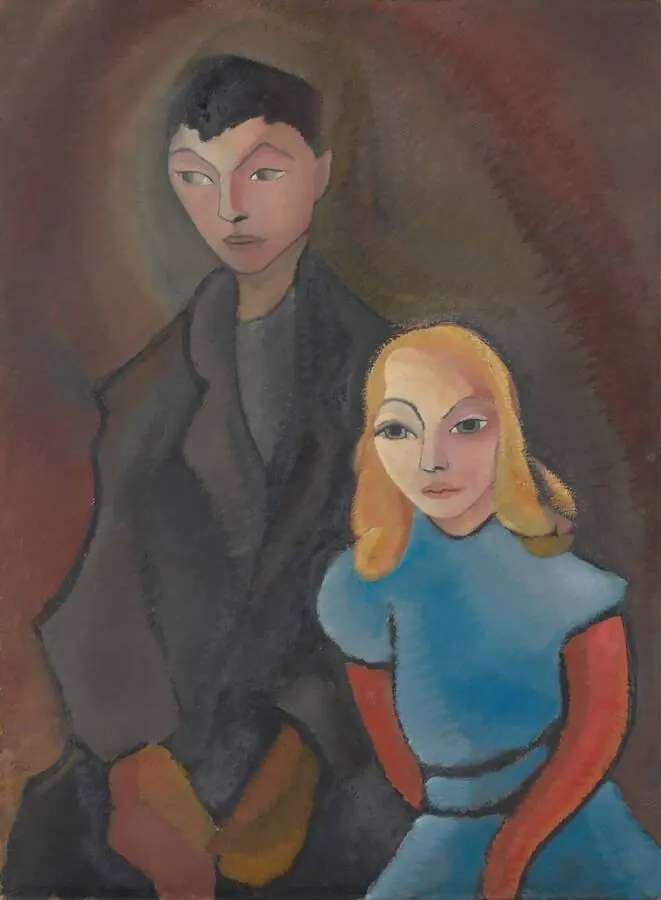
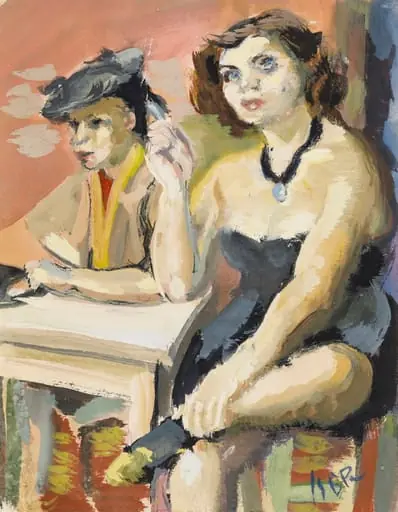
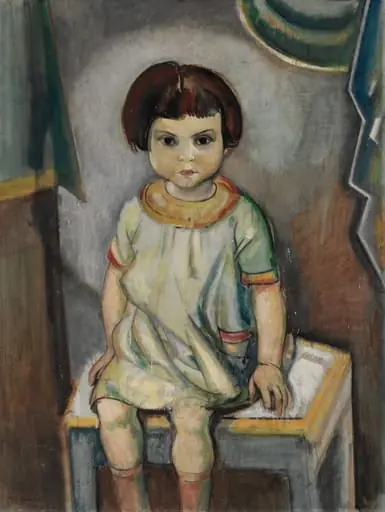
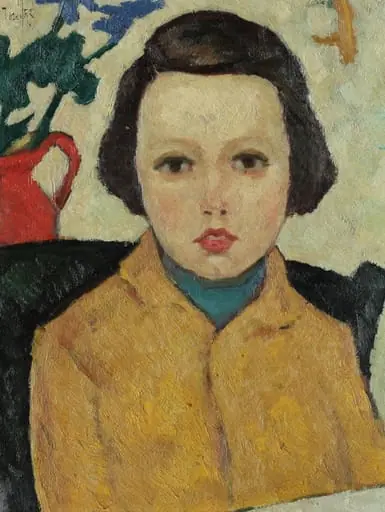
Two Ladies at the Window is an oil painting by Max Beckmann. It dates from 1928 and is held in the collection of the Städel Museum.
About this work
Overview
Painted in 1928, *Two Ladies at the Window* is an oil on canvas work by German artist Max Beckmann. It captures a quiet domestic moment, yet carries an undercurrent of psychological distance. The painting belongs to the New Objectivity movement, which rejected emotional excess in favor of precise, often unsettling realism. It is part of the permanent collection at the Städel Museum in Frankfurt.
Subject & Meaning
The setting is ordinary, but the stillness and lack of interaction evoke unease, characteristic of Beckmann’s interrogation of modern alienation.
Two women are depicted near a window, one standing with a doll, the other seated. Their postures are rigid, eyes averted, suggesting emotional detachment. The doll, dressed similarly to the standing figure, mirrors her form, hinting at themes of identity, performance, or lost innocence. The setting is ordinary, but the stillness and lack of interaction evoke unease, characteristic of Beckmann’s interrogation of modern alienation.
Technique & Style
Beckmann employs sharp contours and muted tones to define forms with clinical clarity. The lighting is flat and even, eliminating dramatic shadows, reinforcing the painting’s sense of emotional neutrality. Details like fabric folds and the doll’s clothing are rendered with precision, yet the overall composition feels deliberately constrained, as if the figures are trapped within the frame and their own silence.
History & Provenance
Created during Beckmann’s time in Frankfurt, where he taught at the Städelschule, the painting was acquired by the Städel Museum shortly after its completion. It remained in the museum’s collection through the Nazi era, when Beckmann’s work was labeled degenerate. Its survival reflects the institution’s complex relationship with modernist art during political upheaval.
Context
In late 1920s Germany, society grappled with postwar instability and shifting gender roles. The women’s attire—particularly the standing figure’s tailored, androgynous outfit—echoes contemporary changes in women’s fashion and autonomy. Beckmann’s depiction avoids sentimentality, instead presenting these figures as symbols of a culture navigating new social norms with ambiguity and restraint.
Legacy
The painting exemplifies Beckmann’s ability to transform mundane scenes into psychological studies. While not widely exhibited outside Germany, it remains a key example of New Objectivity’s quiet intensity. Its influence endures in postwar figurative art that prioritizes emotional ambiguity over narrative clarity, anchoring Beckmann’s legacy in the tension between appearance and inner life.
Artist & collection
Artist
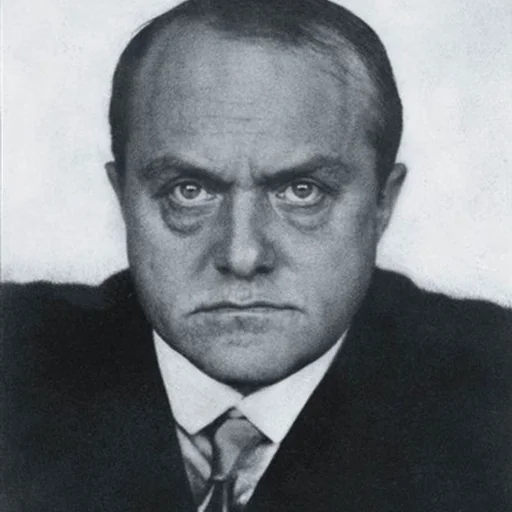
Max Carl Friedrich Beckmann (February 12, 1884 – December 27, 1950) was a German painter, draftsman, printmaker, sculptor, and writer.