Artwork
Beim Kartoffelschälen
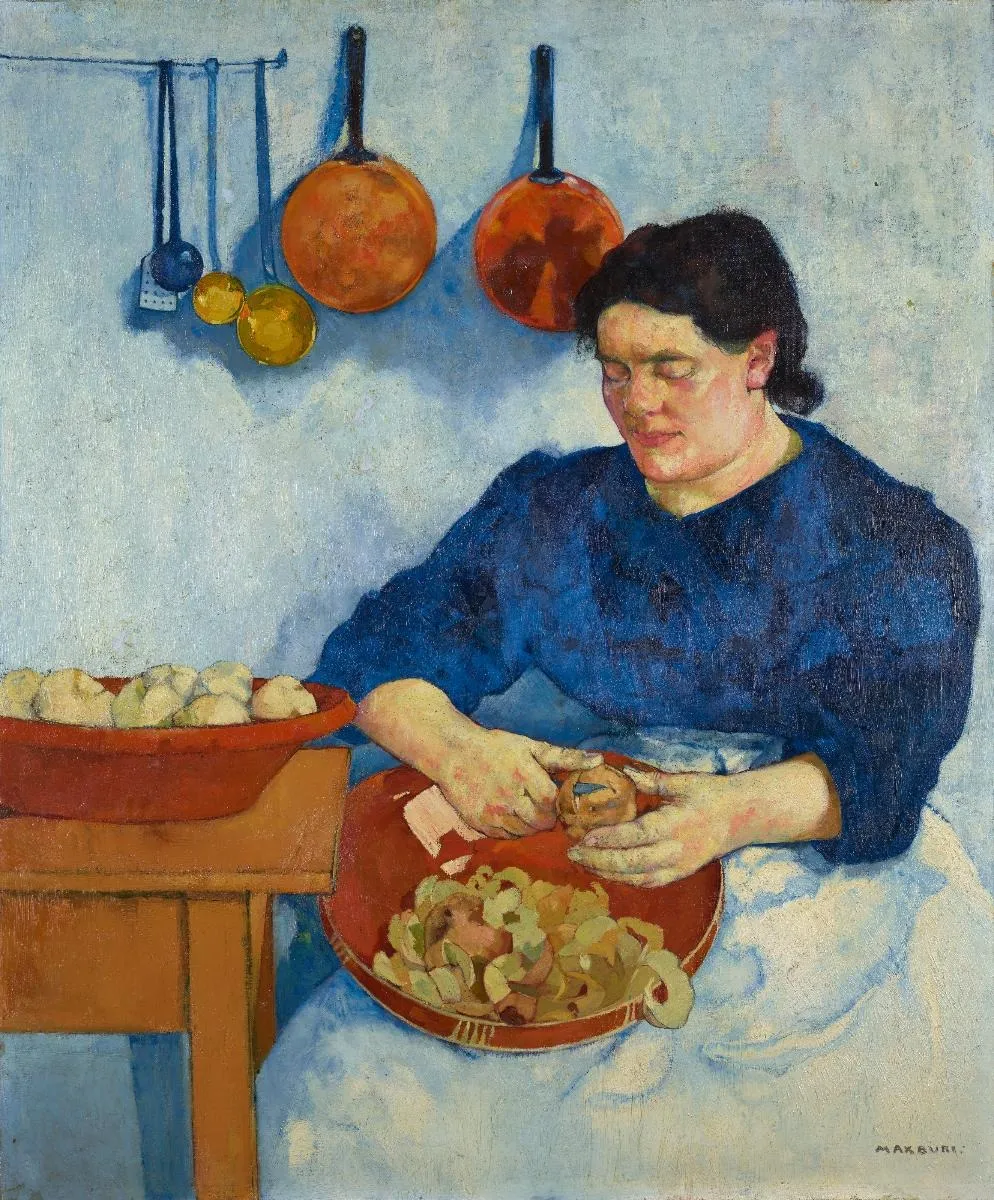
Beim Kartoffelschälen is an oil painting by the Post-Impressionist artist Max Buri. It dates from 1910 and is held in the collection of the Kunsthaus Zürich.
About this work
Overview
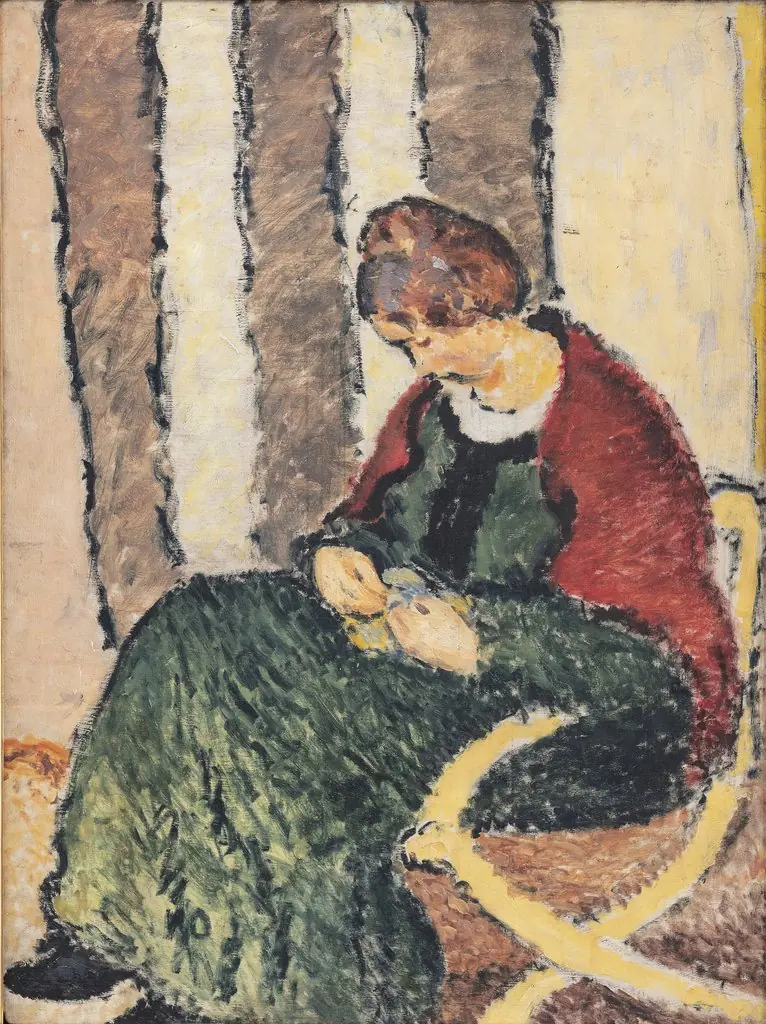
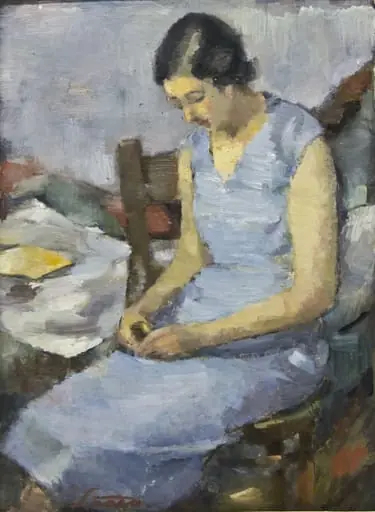
Though the title references potato peeling, the scene depicts a woman peeling apples, a detail that distinguishes it from its name.
Painted in 1910, *Beim Kartoffelschälen* is an oil work by Swiss artist Max Buri, capturing a quiet moment of domestic labor. Though the title references potato peeling, the scene depicts a woman peeling apples, a detail that distinguishes it from its name. The painting belongs to the Kunsthaus Zürich’s collection and reflects Buri’s sustained interest in rural Swiss life, rendered with restrained emotion and attention to ordinary routines.
Subject & Meaning
The painting portrays a woman engaged in the repetitive task of peeling fruit, her posture and focused gaze suggesting quiet endurance. The absence of narrative drama or symbolic embellishment emphasizes the dignity of routine work. Her simple blue dress and pulled-back hair reinforce the setting’s humility. The act itself becomes the subject — not as spectacle, but as a quiet, unremarkable rhythm of daily existence.
Technique & Style
Buri employs a muted palette and soft brushwork to convey stillness, aligning with post-impressionist tendencies toward emotional tone over realism. The light blue wall and hanging pots frame the figure without distraction, while the texture of the fruit and skin is rendered with subtle variation. Shadows are gently modeled, avoiding harsh contrast, and the composition centers the figure’s hands, drawing attention to the physicality of the task.
History & Provenance
The painting entered the Kunsthaus Zürich’s collection shortly after its creation, likely through direct acquisition or donation from the artist’s circle. Buri’s focus on rural subjects gained regional recognition in early 20th-century Switzerland, and this work remained within institutional care, preserving its original context. No significant changes in ownership or restoration are documented.
Context
In early 1900s Switzerland, artists like Buri turned away from urban modernity to depict agrarian life with empathy. This work aligns with broader European trends that elevated everyday labor as worthy of artistic attention, though without the social critique seen in French realism. Buri’s approach was personal and observational, rooted in the Swiss countryside and its rhythms, not ideological statements.
Legacy
Though not widely exhibited beyond Swiss collections, *Beim Kartoffelschälen* exemplifies Buri’s consistent thematic focus and quiet aesthetic. It contributes to a regional canon of Swiss painting that values introspection over grandeur. The work remains a reference point for studies of rural representation in early modern Swiss art, valued for its unembellished humanity.
Artist & collection
Artist
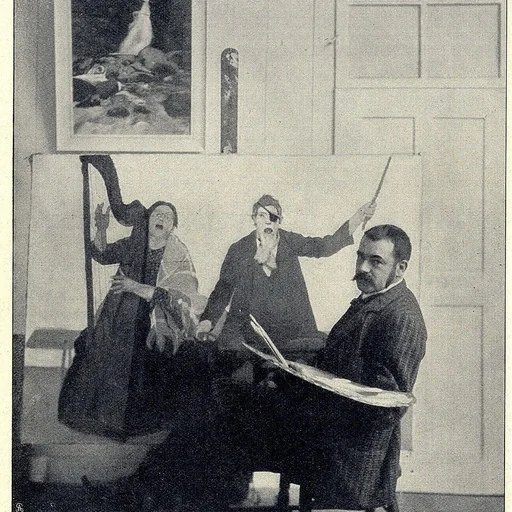
Max Alfred Buri (24 July 1868, in Burgdorf – 21 May 1915, in Interlaken) was a Swiss painter. He specialized in portraits of the local peasantry and genre scenes.