Artwork
Untitled
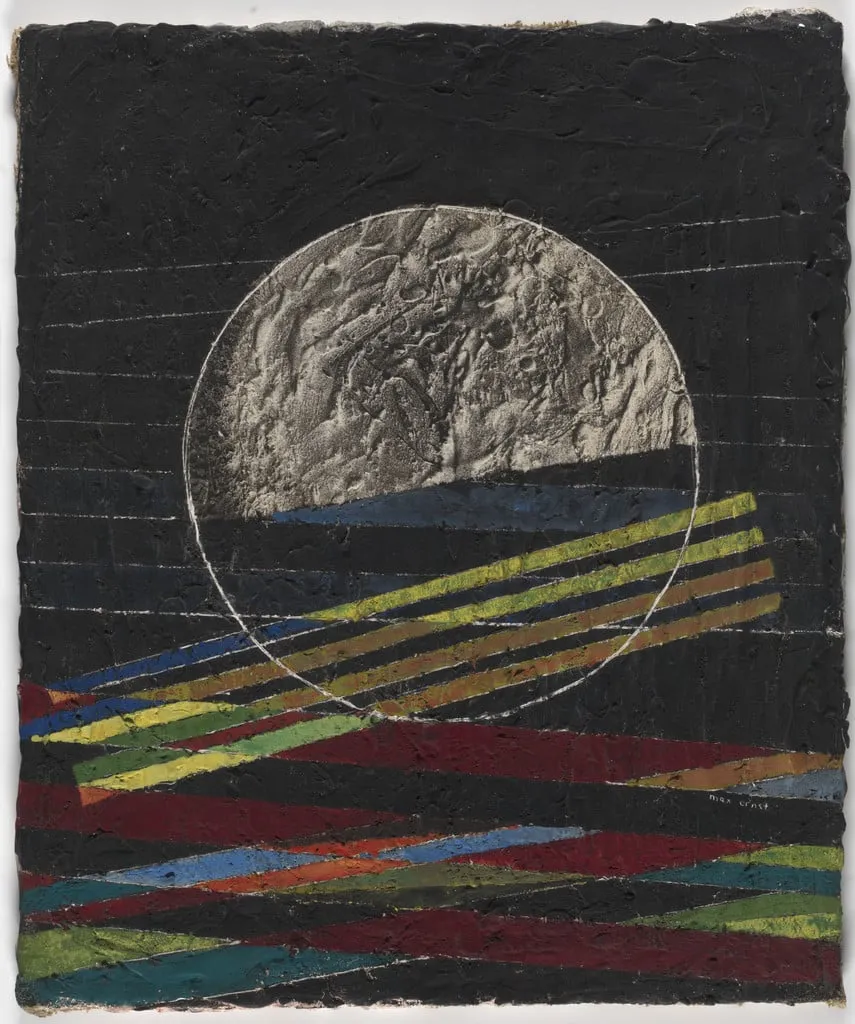
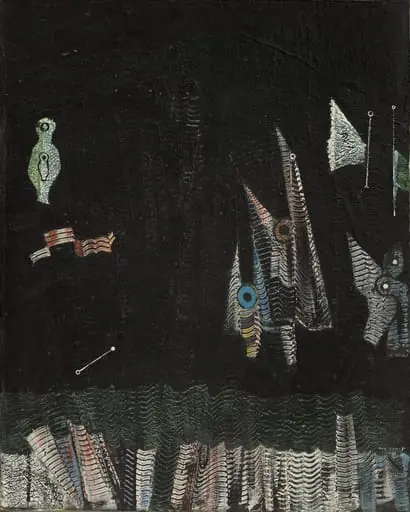
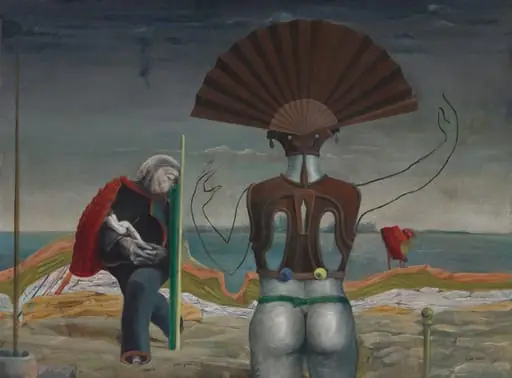
Untitled is an oil painting by the Surrealist artist Max Ernst. It dates from 1928 and is held in the collection of the Museum of Modern Art.
About this work
Overview
Painted in 1928, this work by Max Ernst combines oil, plaster, and burlap to create a textured surface that resists conventional pictorial clarity.
Painted in 1928, this work by Max Ernst combines oil, plaster, and burlap to create a textured surface that resists conventional pictorial clarity. Ernst, self-taught and deeply engaged with avant-garde movements, used material experimentation to bypass rational composition. The piece is part of The Museum of Modern Art’s collection and reflects his shift toward Surrealist concerns, prioritizing chance and tactile sensation over deliberate representation.
Subject & Meaning
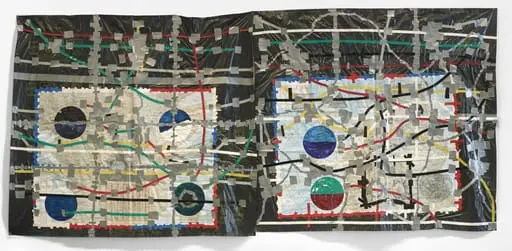
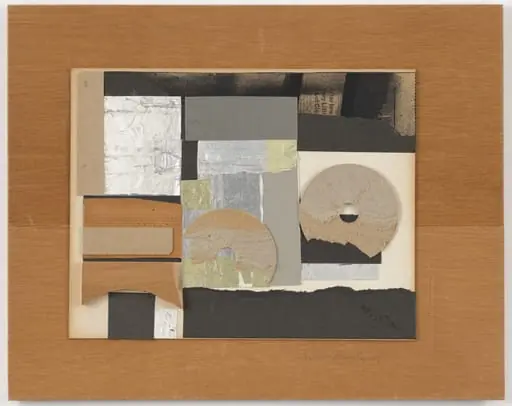
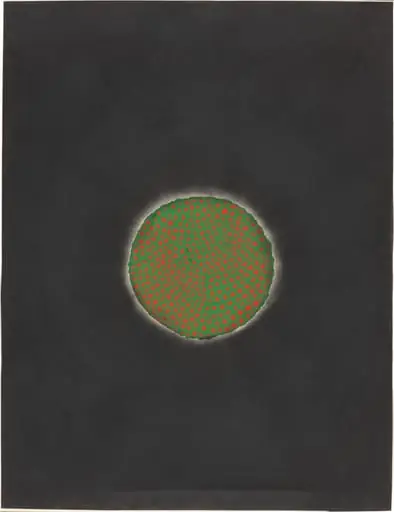
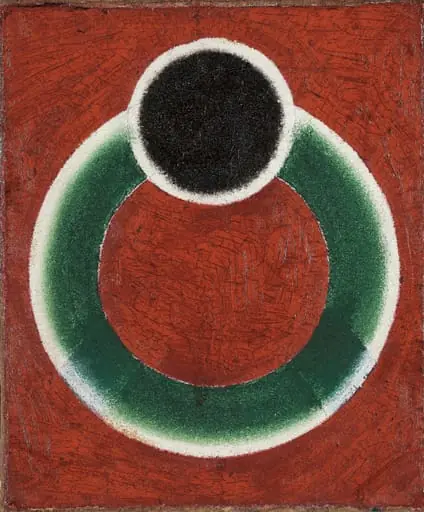
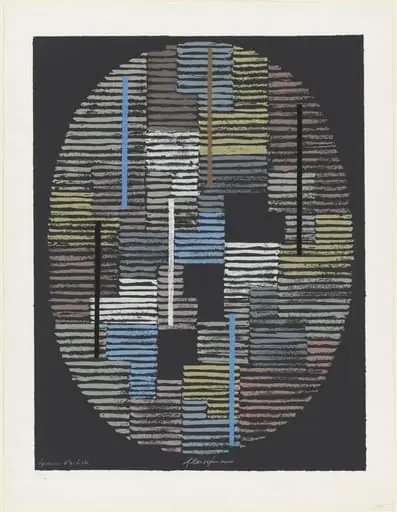
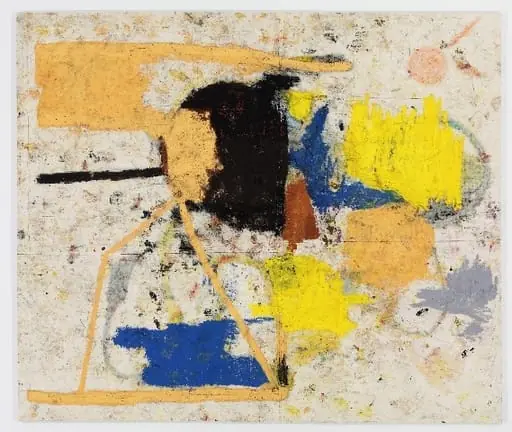
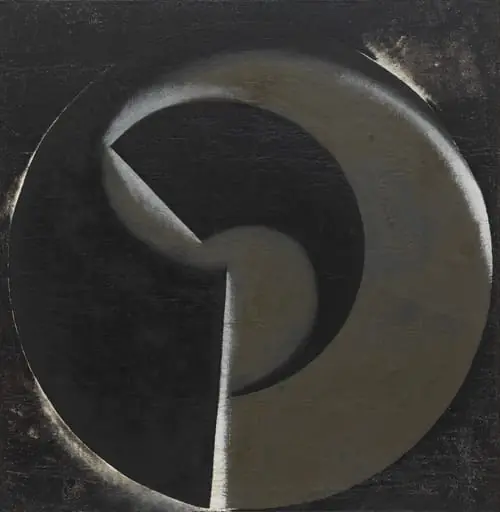
The painting offers no clear narrative or recognizable forms. Instead, it presents abstract elements—primarily a divided circular mass and fragmented stripes—as triggers for subconscious association. The stark contrast between the rough, light-gray upper half and the solid black lower half suggests a rupture or boundary, while the diagonal strokes imply motion or disruption. These elements invite interpretation through emotional resonance rather than symbolic logic.
Technique & Style
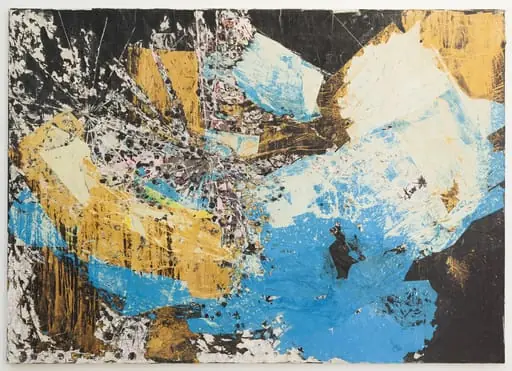
Ernst applied oil and plaster onto burlap, exploiting the fabric’s coarse weave to generate uneven texture. He layered pigments with deliberate irregularity, allowing the substrate to influence the surface. The vibrant diagonal strokes—red, blue, yellow, green—are applied with loose, gestural brushwork, contrasting with the more static, granular circle. This interplay of controlled and spontaneous methods aligns with Surrealist interests in automatism and material unpredictability.
History & Provenance
Created during Ernst’s active years in Paris, this work emerged from a period when he was refining techniques like grattage—scraping paint over textured surfaces to reveal hidden patterns. It entered The Museum of Modern Art’s collection in the mid-20th century, part of a broader institutional effort to document European Surrealist innovation. Its preservation reflects its significance in tracing the evolution of non-representational methods in modern painting.
Context
In the late 1920s, Surrealism was expanding beyond literary roots into visual art, emphasizing dream logic and unconscious production. Ernst, alongside figures like Dalí and Miró, rejected traditional aesthetics in favor of processes that bypassed conscious control. This work exemplifies that ethos: its materials and forms were shaped by physical chance and tactile experimentation, aligning with Surrealism’s broader aim to access deeper psychological layers through art.
Legacy
Ernst’s use of unconventional materials and process-driven methods influenced later movements, including Abstract Expressionism and Arte Povera. By embedding texture and materiality as carriers of meaning, he expanded the possibilities of painting beyond depiction. This work remains a reference point for artists exploring how physical substance can evoke psychological states without relying on figurative language.
Artist & collection
Artist
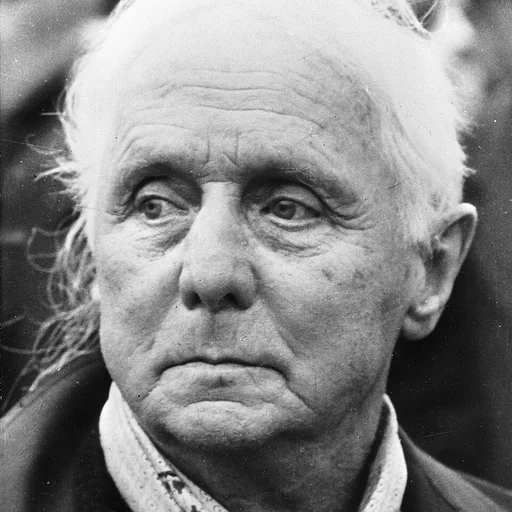
Max Ernst (; German: 2 April 1891 – 1 April 1976) was a German-born painter, sculptor, printmaker, graphic artist, and poet.