Artwork
Flying Maucauco
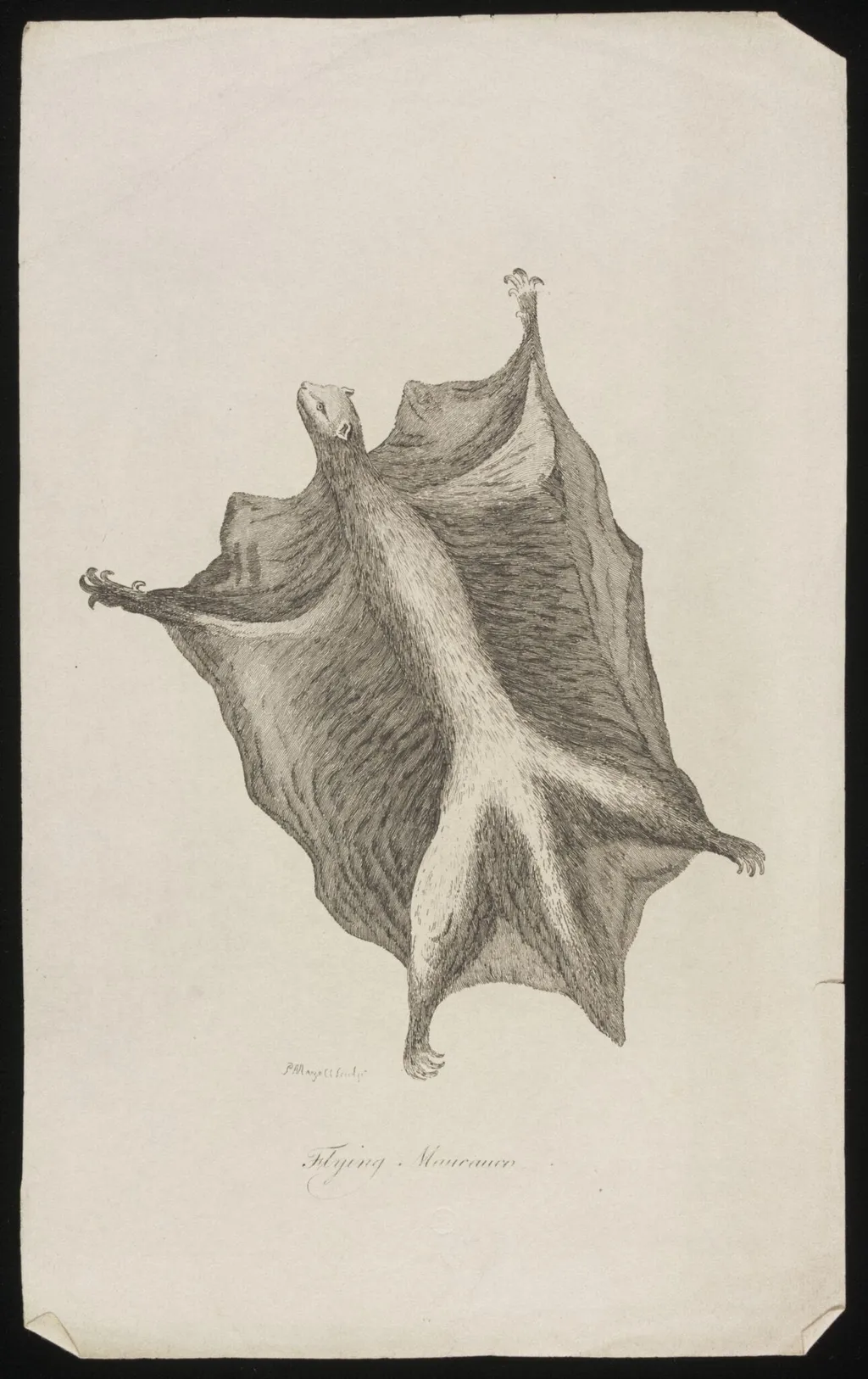
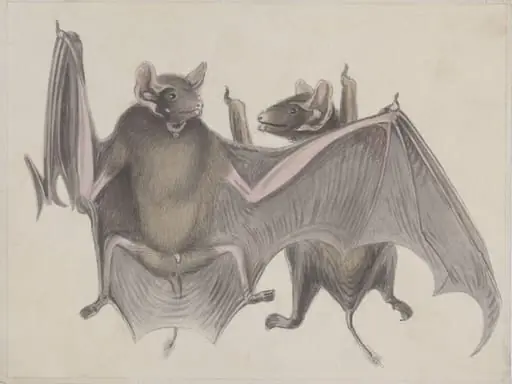
Flying Maucauco is a print by Peter Mazell. It dates from 1750 and is held in the collection of the Victoria and Albert Museum.
About this work
Overview
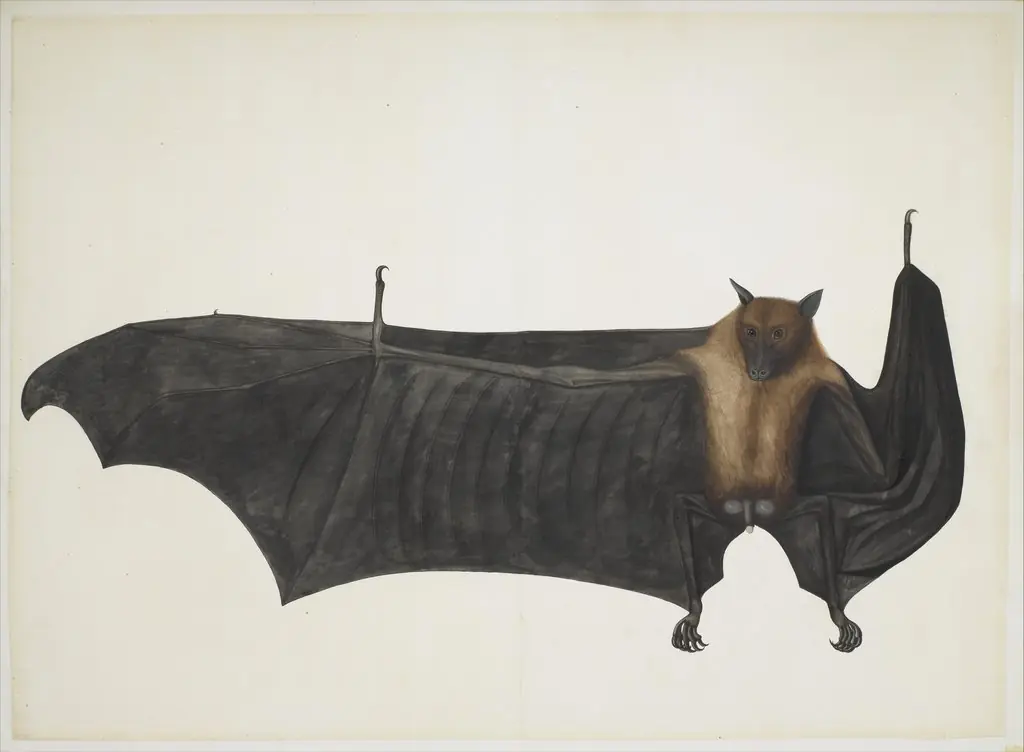
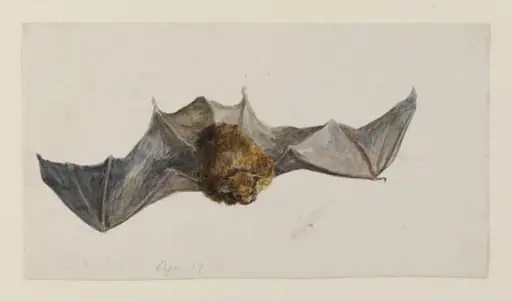
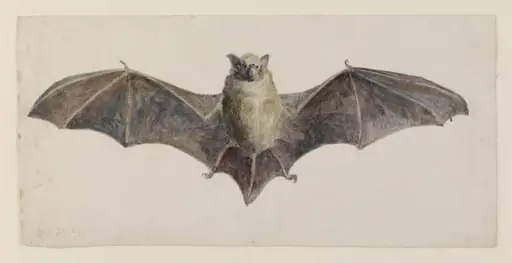
Created in 1750 by Peter Mazell, this black-and-white print portrays a gliding mammal with extended limbs and a broad membrane between them.
Created in 1750 by Peter Mazell, this black-and-white print portrays a gliding mammal with extended limbs and a broad membrane between them. The image is rendered with precise, fine linework, suggesting a scientific intent rather than decorative purpose. Though labeled 'Flying Maucauco,' the creature bears resemblance to known gliding mammals, hinting at early attempts to document unfamiliar fauna through observational drawing.
Subject & Meaning
The subject is likely a colugo or similar gliding mammal, though labeled with an obscure, possibly invented name. The focused gaze and dynamic posture imply movement and alertness, reinforcing the image as a natural history record. The use of a non-scientific term suggests the artist or publisher was working with fragmented or folkloric knowledge, blending observation with uncertainty about the animal’s true identity.
Technique & Style
Mazell employed delicate, controlled etching or engraving to capture the intricate folds of the patagium and the contours of the body. Each line serves a descriptive function, emphasizing anatomical detail over artistic flourish. The monochrome palette and lack of background isolate the figure, directing attention to its form and structure, consistent with 18th-century naturalist illustration practices.
History & Provenance
The print was later reproduced in an early 19th-century edition of *A New Cabinet Cyclopedia*, paired with an image of a slow loris. This reuse indicates its value as a reference image in popular natural history publications. Its original 1750 creation predates widespread zoological classification, placing it in a transitional period between curiosity and scientific documentation.
Context
In the mid-18th century, European naturalists were cataloging exotic species brought back from colonial expeditions. Many animals were poorly understood, leading to ambiguous illustrations and invented names. Mazell’s work reflects this era’s effort to visually record the unknown, even when accurate taxonomy was still developing.
Legacy
The print survives as an example of pre-Darwinian natural history illustration, where observation and myth occasionally intertwined. Its inclusion in later publications underscores its utility as a visual reference. Today, it offers insight into how early modern viewers interpreted unfamiliar wildlife through the lens of available knowledge and imagination.
Artist & collection
Artist
Peter Mazell knew Dublin’s narrow streets like the back of his hand. He spent his days sketching shop signs and tavern crowds, then turned those quick sketches into prints that sold for a few pennies on street corners.…