Artwork
Rat or Mouse
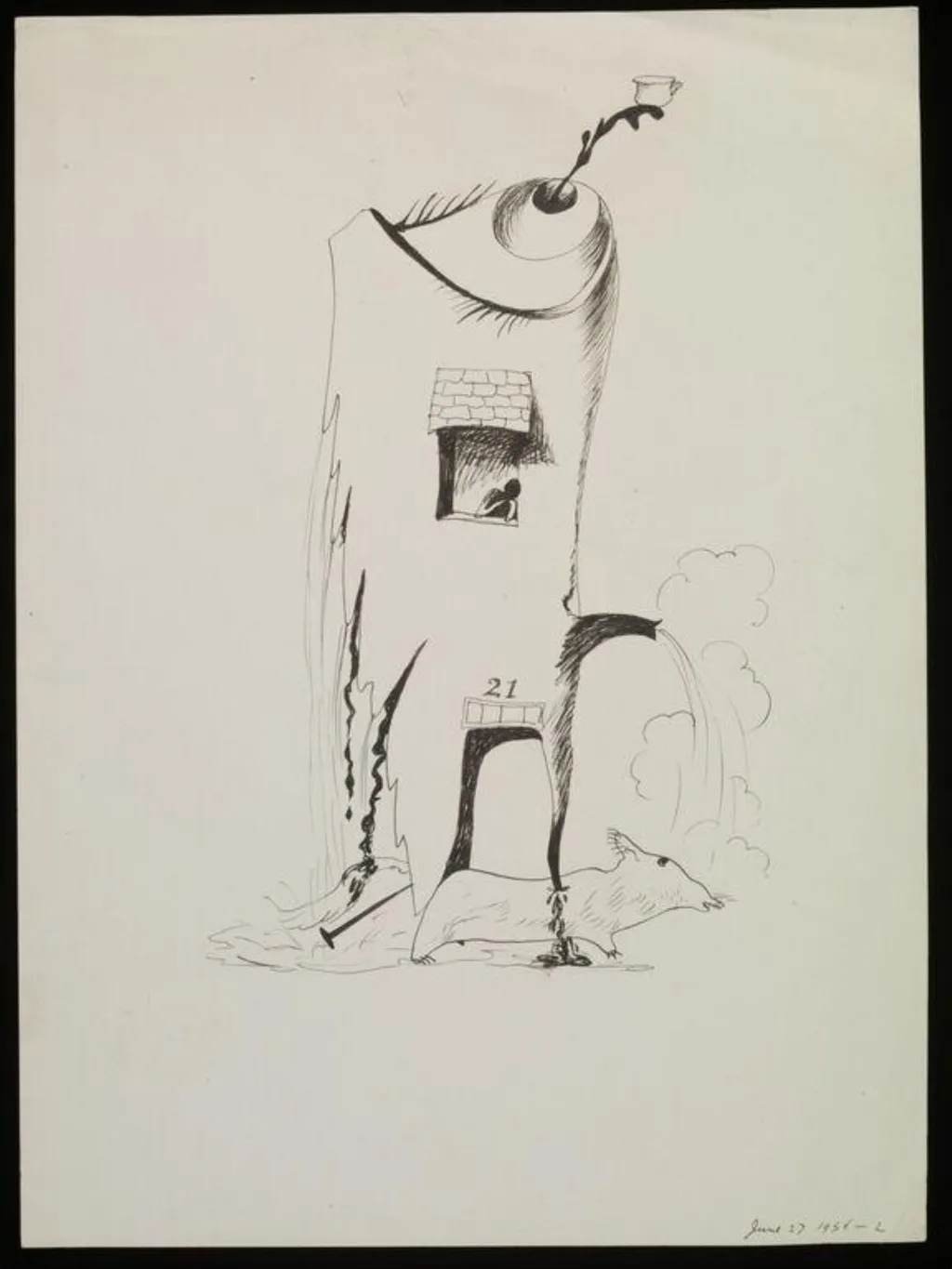
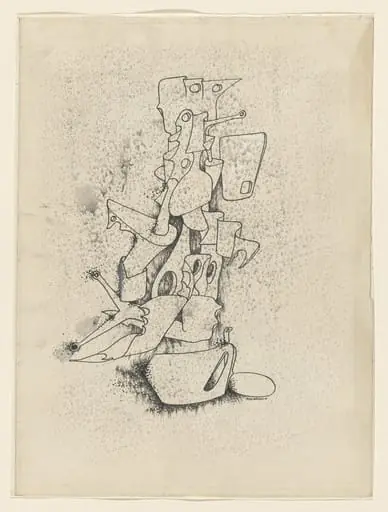
Rat or Mouse is a drawing by Reuben Mednikoff. It dates from 1936 and is held in the collection of the Victoria and Albert Museum.
About this work
Overview
Together, they employed automatic drawing as a tool for exploring the unconscious, treating art-making as a form of clinical observation.
Reuben Mednikoff, a British artist active in the 1930s, collaborated closely with Grace Pailthorpe, a surgeon and psychoanalyst. Together, they employed automatic drawing as a tool for exploring the unconscious, treating art-making as a form of clinical observation. This 1936 ink drawing, marked with a date and sequence number, reflects their systematic approach to recording spontaneous imagery generated without deliberate control.
Subject & Meaning
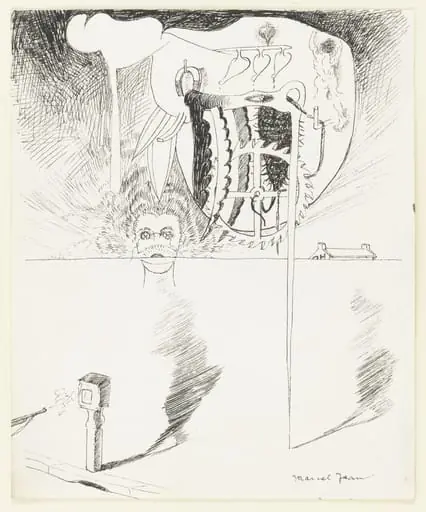
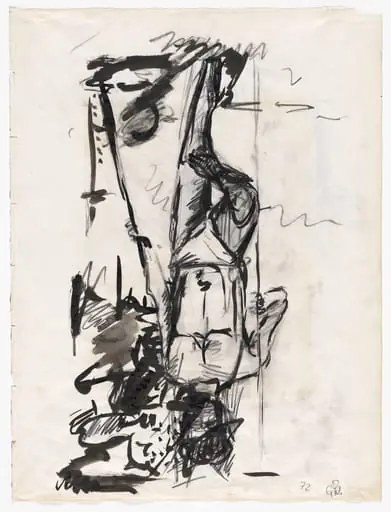
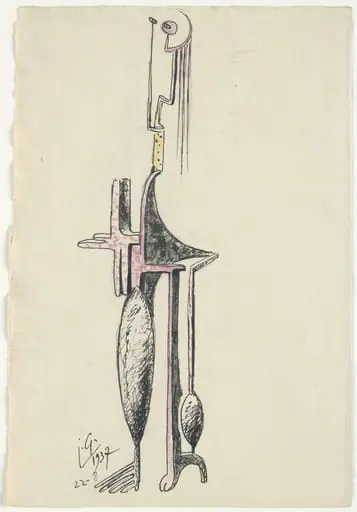
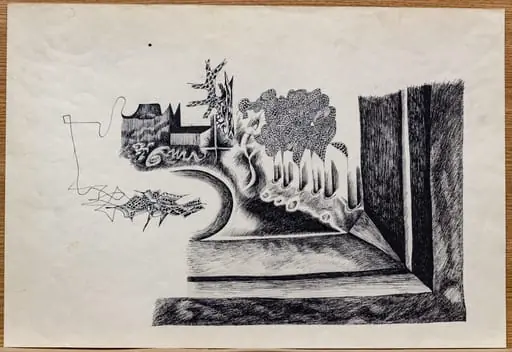
The drawing depicts a form ambiguous between rodent and abstract figure, evoking unease through distorted anatomy and unclear boundaries. Mednikoff intended such imagery to surface latent psychological content, aligning with Pailthorpe’s psychoanalytic goals. The creature’s unsettling presence suggests repressed anxieties, not as symbolic narrative but as raw output of unconscious processes, deliberately left open to interpretation.
Technique & Style
Executed in pen and ink, the work features fluid, unedited lines characteristic of automatic drawing. Mednikoff avoided premeditated composition, allowing hand movements to proceed without conscious direction. The result is a dense, organic form with no clear perspective or scale, emphasizing spontaneity over representation. The inscription on the reverse confirms the method’s rigor: each image was documented as data in a psychological experiment.
History & Provenance
Created on June 27, 1936, this drawing is one of two made by Mednikoff that day, part of a larger series produced during his partnership with Pailthorpe. The pair maintained detailed records of their sessions, preserving both images and written analyses. The work remained within their private archive until later inclusion in institutional collections, valued for its role in early psychoanalytic art practice.
Context
In mid-1930s Britain, Surrealism intersected with emerging psychoanalytic thought, particularly through figures like Pailthorpe, who sought to bridge clinical theory and creative expression. Mednikoff’s drawings emerged from this niche milieu, distinct from mainstream Surrealist exhibitions. Their work was not intended for public display but as internal documentation, reflecting a quiet, experimental strand of Surrealism grounded in psychological inquiry.
Legacy
Mednikoff and Pailthorpe’s collaborative drawings contributed to early understandings of automatic processes as tools for accessing the unconscious. Though not widely exhibited in their time, their archive influenced later discussions on art and psychoanalysis. The drawings remain significant as empirical artifacts—evidence of an attempt to visualize mental states through disciplined, non-intentional mark-making.
Artist & collection
Artist
Reuben Mednikoff made unsettling drawings in the 1930s that feel like visual diary entries.