Artwork
Prăbușirea gândului
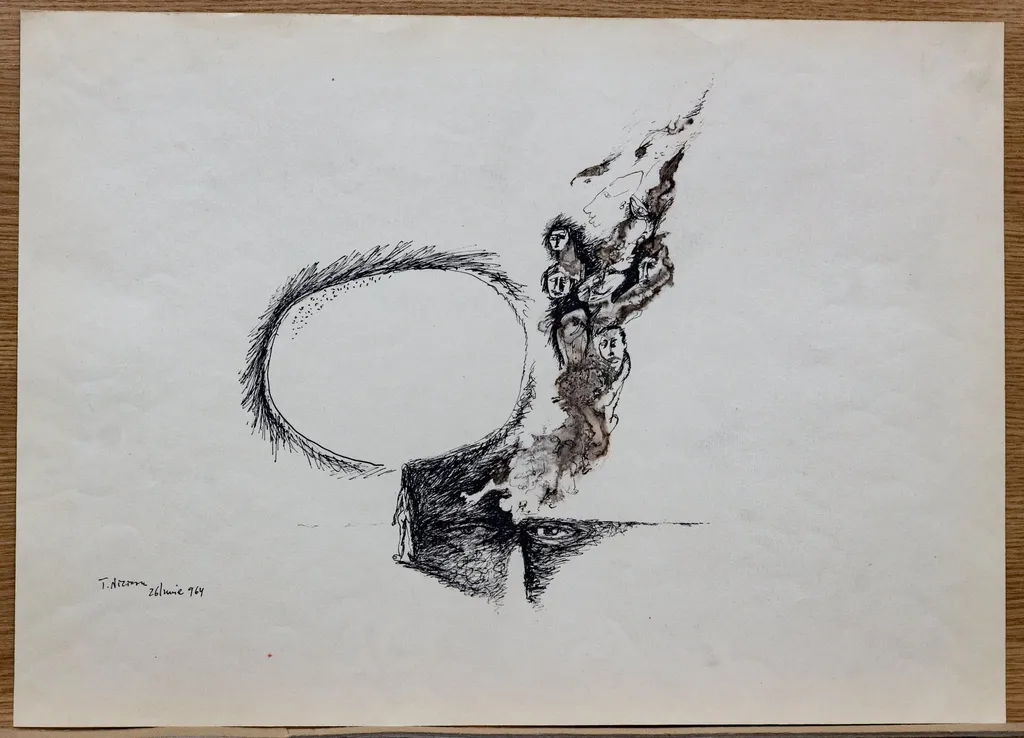
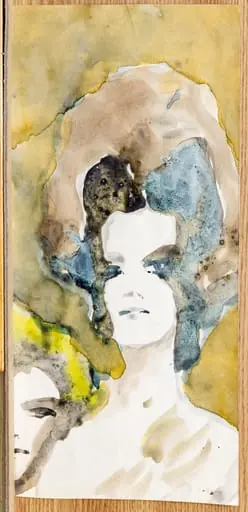
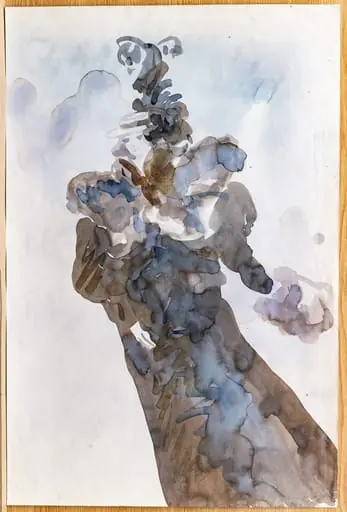
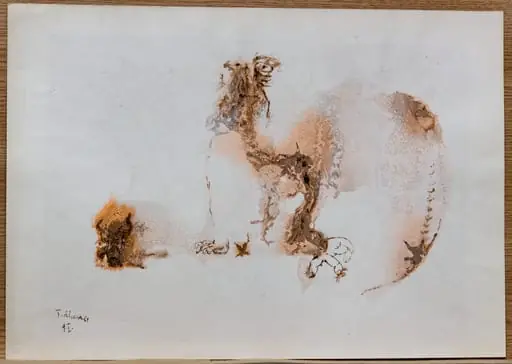
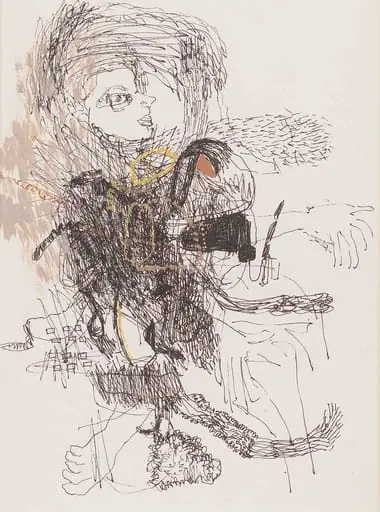
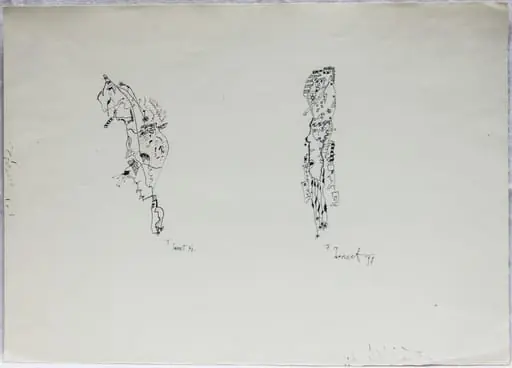
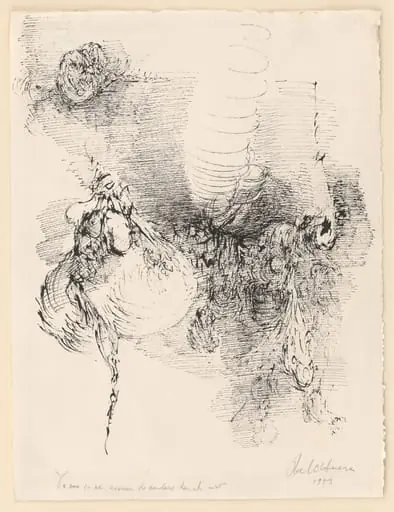
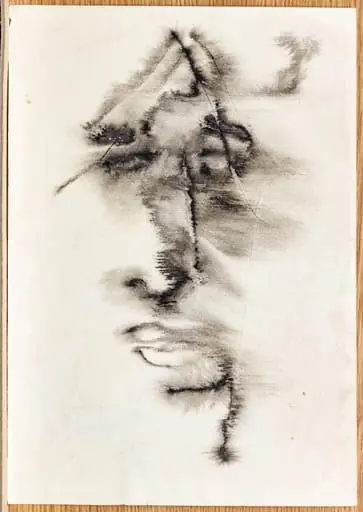
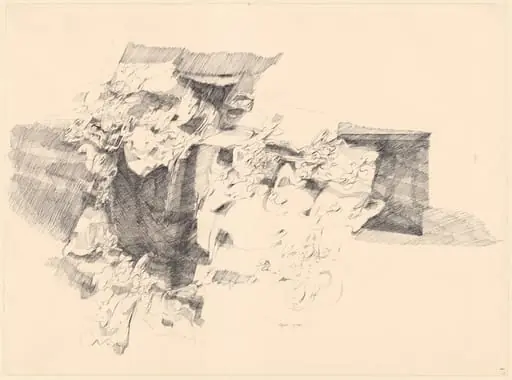
Prăbușirea gândului is a print by Tiberiu Nicorescu. It is held in the collection of the Gavrila Simion Eco-Museum Research Institute Tulcea. This ink sketch, dated 1964 and signed T.
About this work
The figure’s arms are raised, as if reaching or falling, and the ink smudges make it feel restless.
This sketch shows a loose, ink-blotted figure sitting on a bench. Its head is tilted back, and its hair looks like wild, spiky lines. The figure’s arms are raised, as if reaching or falling, and the ink smudges make it feel restless.
The artist signed it “T. Nicorescu” and dated it 1964, but the drawing itself feels raw and unfinished. The ink spreads unevenly, like it was made fast or by accident.
Look up Nicorescu, Tiberiu to see more of his work.
Overview
This ink sketch, dated 1964 and signed T. Nicorescu, presents a fragmented human form seated on a bench. The figure’s posture and the erratic spread of ink suggest urgency or emotional turbulence. The work lacks refinement, with smudges and uneven ink application giving it a provisional, almost accidental quality. Its rawness distinguishes it from polished compositions, pointing toward a personal or experimental moment in the artist’s practice.
Subject & Meaning
The figure, head tilted back and arms raised, evokes a moment of suspension—neither fully reaching nor collapsing. The wild, spiky hair and blurred contours imply inner agitation rather than a specific narrative. Without clear context, the image resists literal interpretation, instead conveying a psychological state: isolation, exhaustion, or existential disorientation. The ambiguity invites contemplation rather than explanation.
Technique & Style
Executed in ink, the drawing relies on spontaneous marks and uncontrolled bleeds rather than deliberate lines. The artist used rapid, gestural strokes that allowed the medium to spread unpredictably across the surface. This technique prioritizes immediacy over precision, aligning with expressive drawing traditions that value emotional resonance over technical finish. The absence of shading or detail reinforces its sketch-like character.
History & Provenance
The work is attributed to Tiberiu Nicorescu, a Romanian artist active in the mid-20th century. Dated 1964, it was likely created during a period of cultural constraint under communist rule, when private artistic expression often remained undocumented. Its survival as a standalone sketch suggests it was not intended for public display, possibly serving as a personal outlet amid limited creative freedom.
Context
In 1960s Romania, official art promoted socialist realism, leaving little room for abstract or emotionally charged imagery. Nicorescu’s sketch, with its unstructured form and raw execution, stands in quiet opposition to state-sanctioned aesthetics. Its existence reflects the persistence of individual expression despite institutional pressures, hinting at an underground current of introspective art-making.
Legacy
Though not widely exhibited, this drawing contributes to a broader understanding of Nicorescu’s private artistic language. Its unpolished nature offers insight into his process beyond official works, revealing a sensitivity to gesture and mood. As such, it serves as a quiet testament to the resilience of personal vision in repressive environments, influencing later interpretations of his oeuvre.
Artist & collection
Artist
Tiberiu Nicorescu made prints and paintings in mid-20th-century Romania. You’ll find his print *Îmbrățișare*—a tender embrace captured in black lines—and the delicate waiting scene in *În așteptare*. His painting…
Museum
Gavrila Simion Eco-Museum Research Institute Tulcea
Continue through works from the same source collection.