Artwork
The old oak
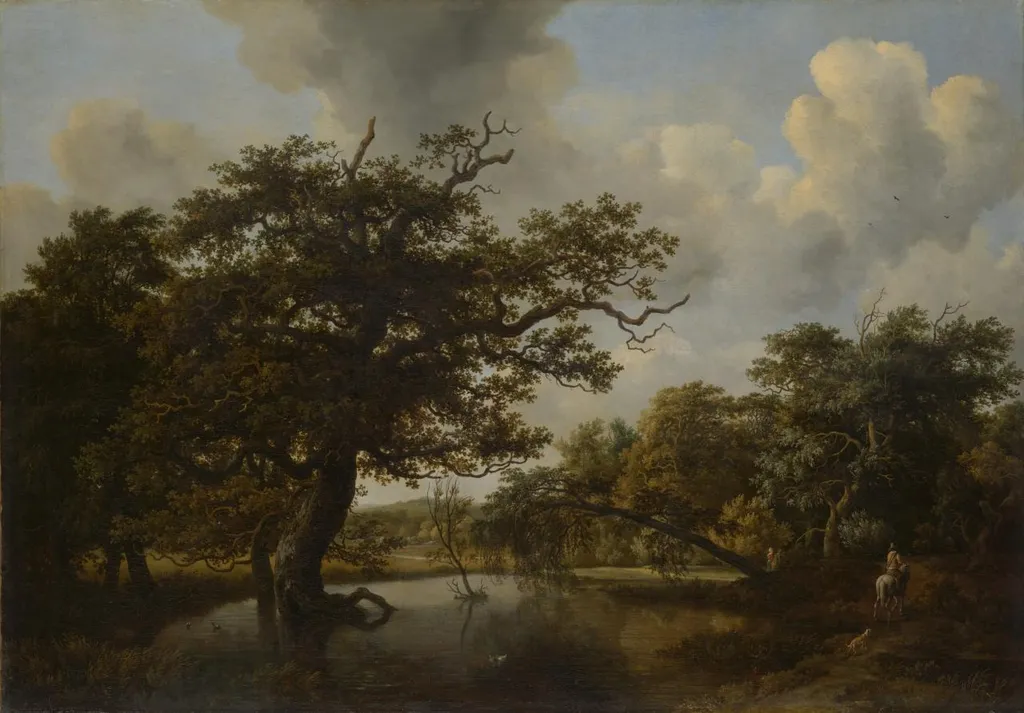
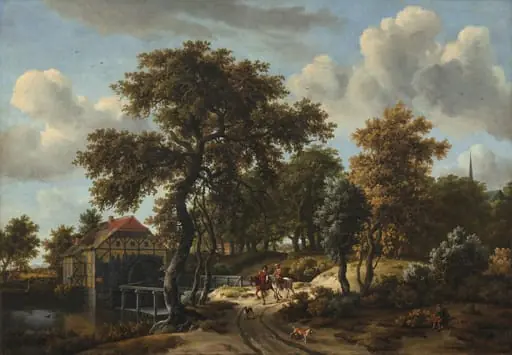
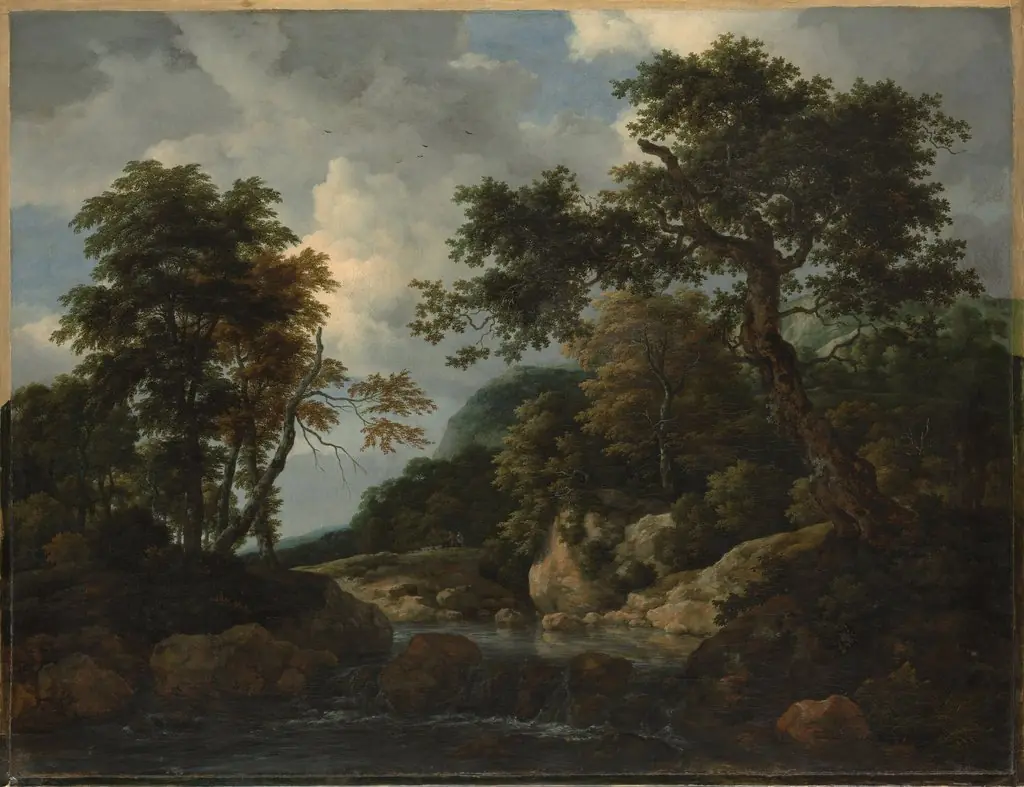
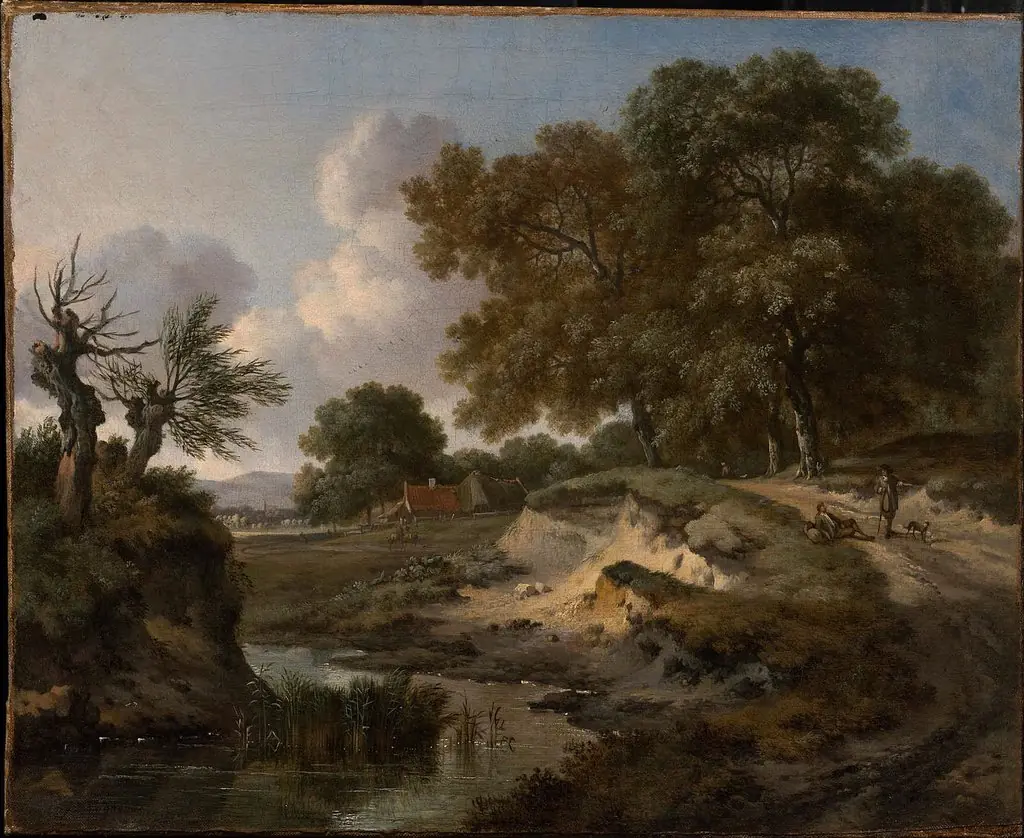
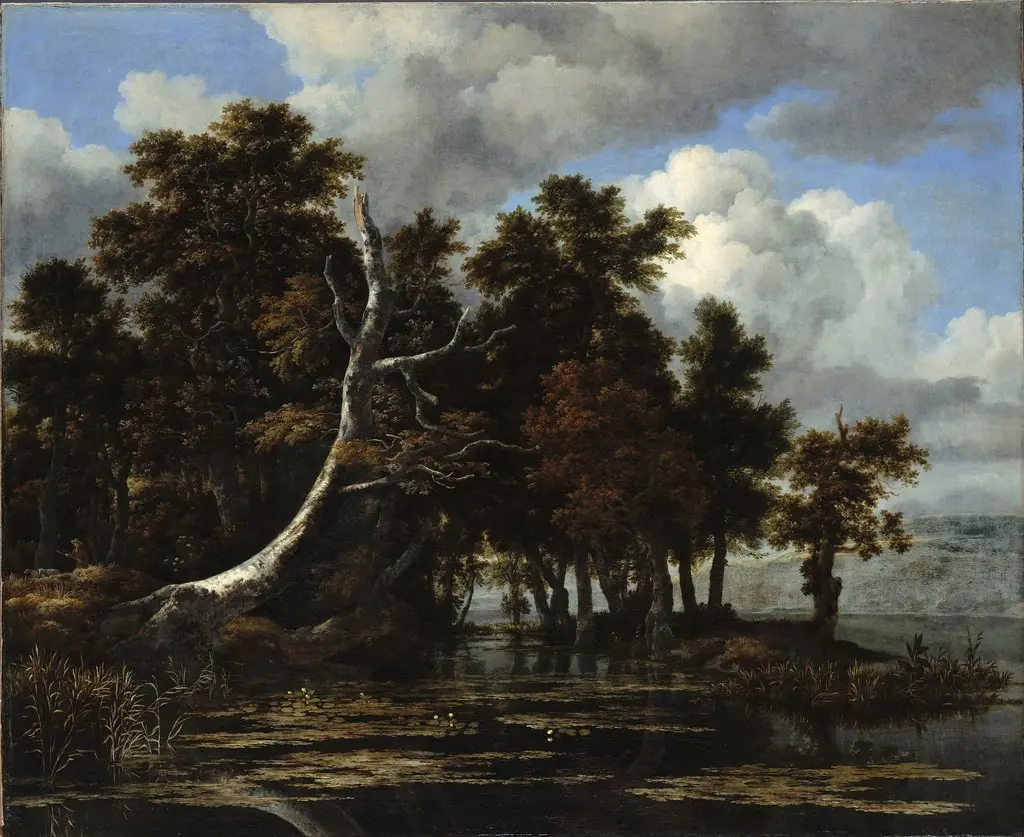
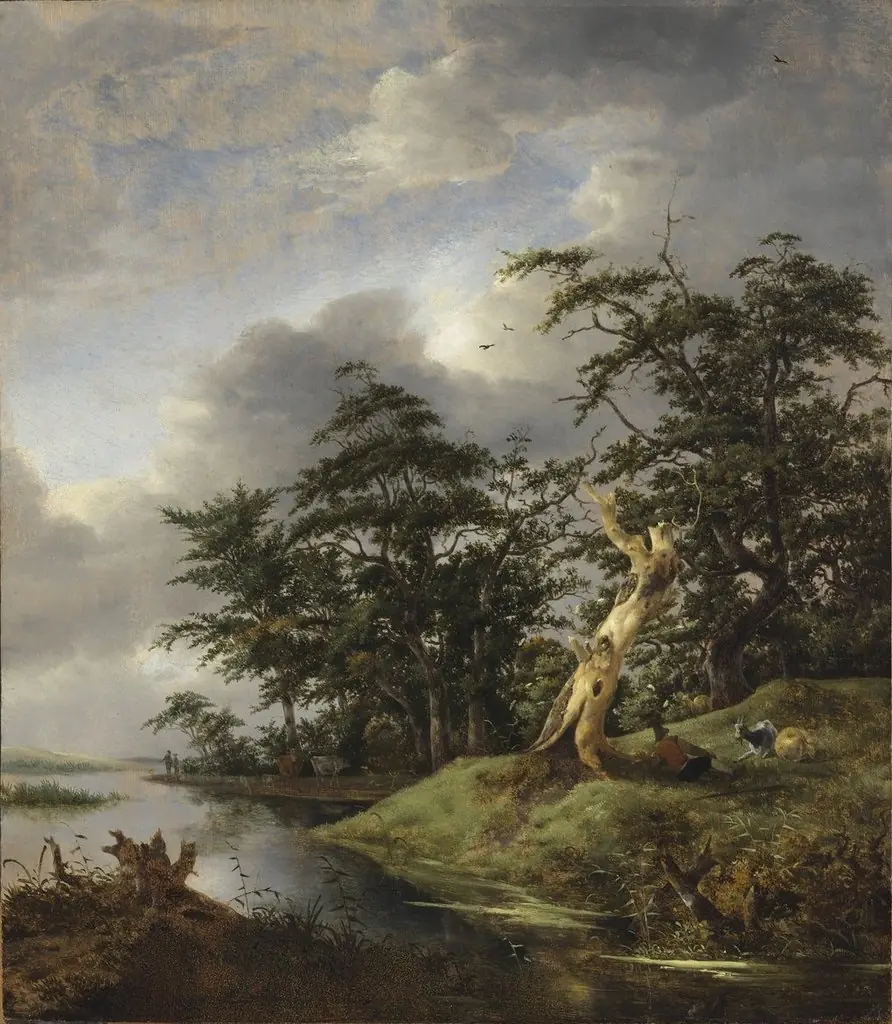
The old oak is an oil painting by Meindert Hobbema. It dates from 1662 and is held in the collection of the National Gallery of Victoria.
About this work
Overview
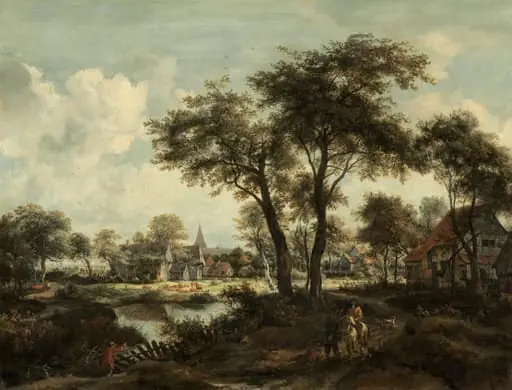
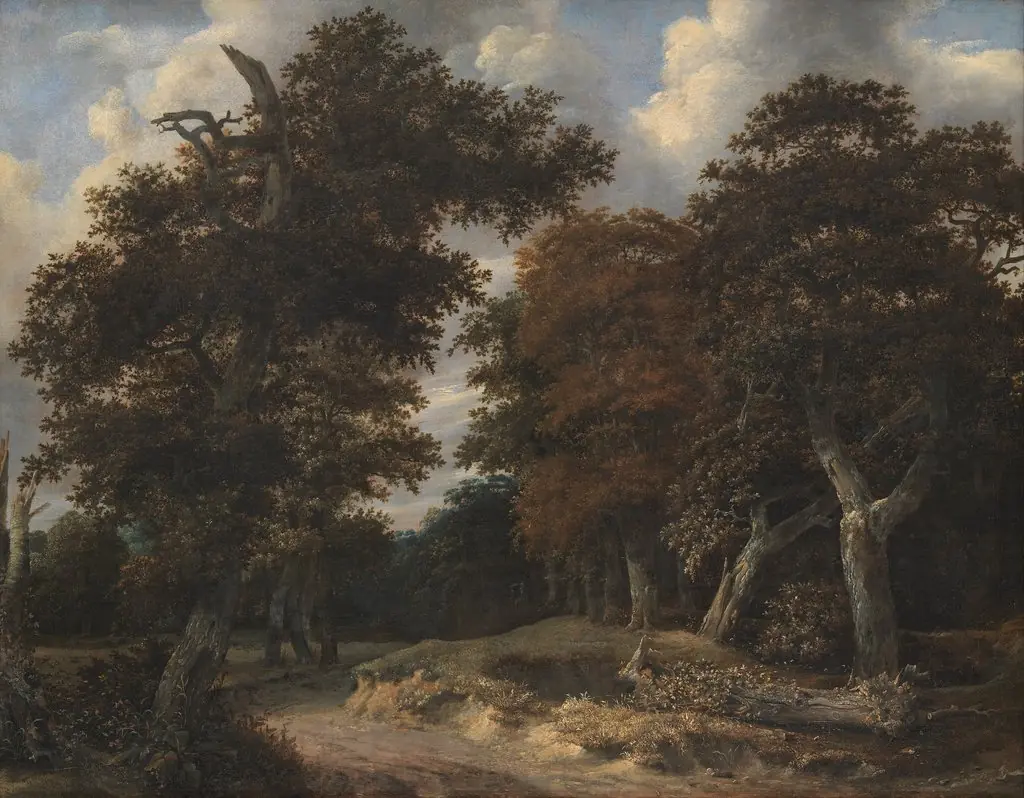
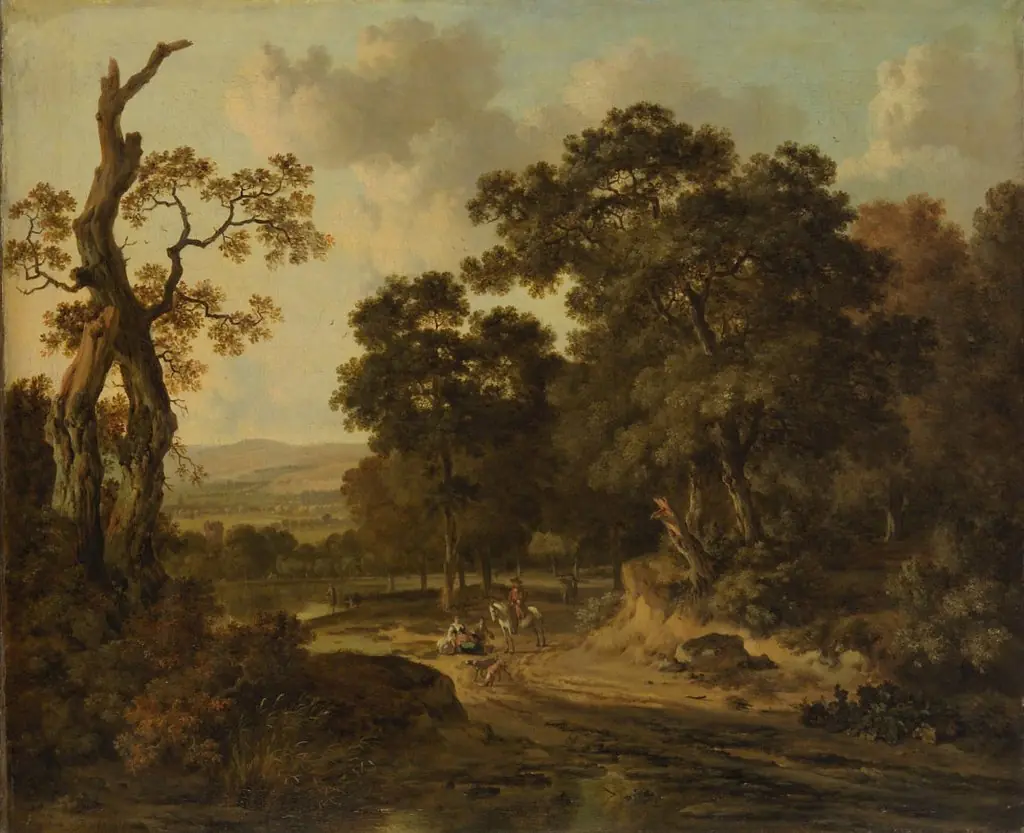
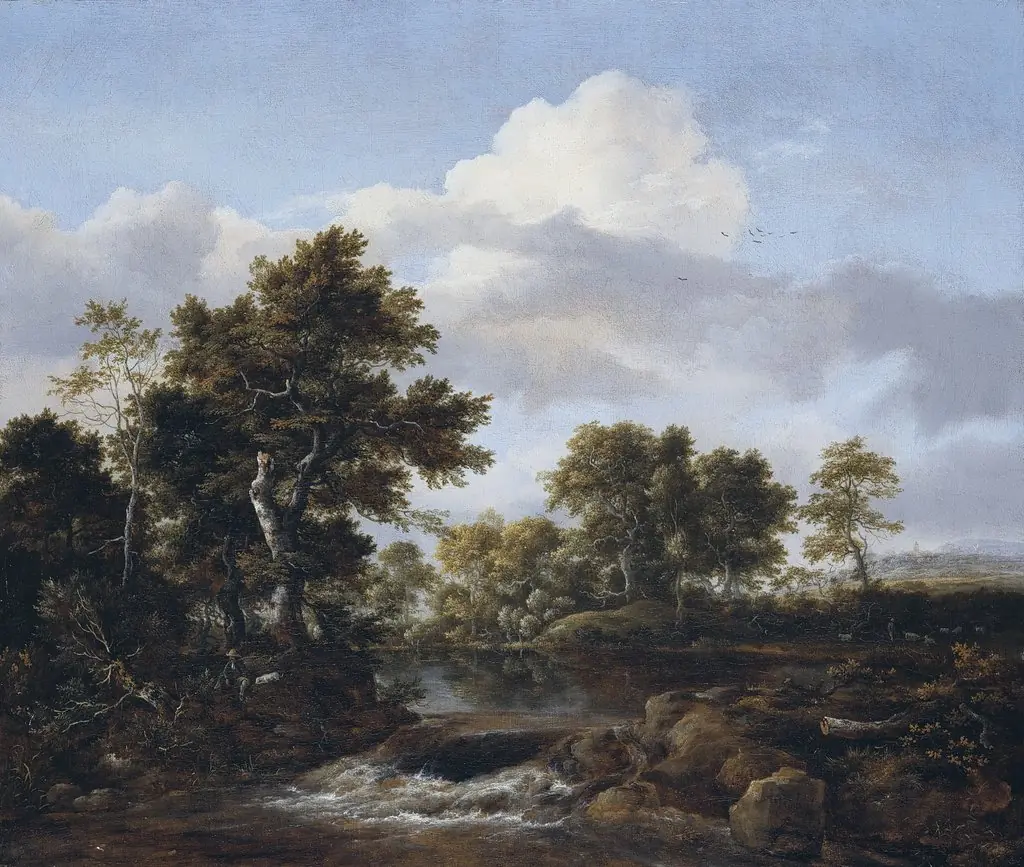
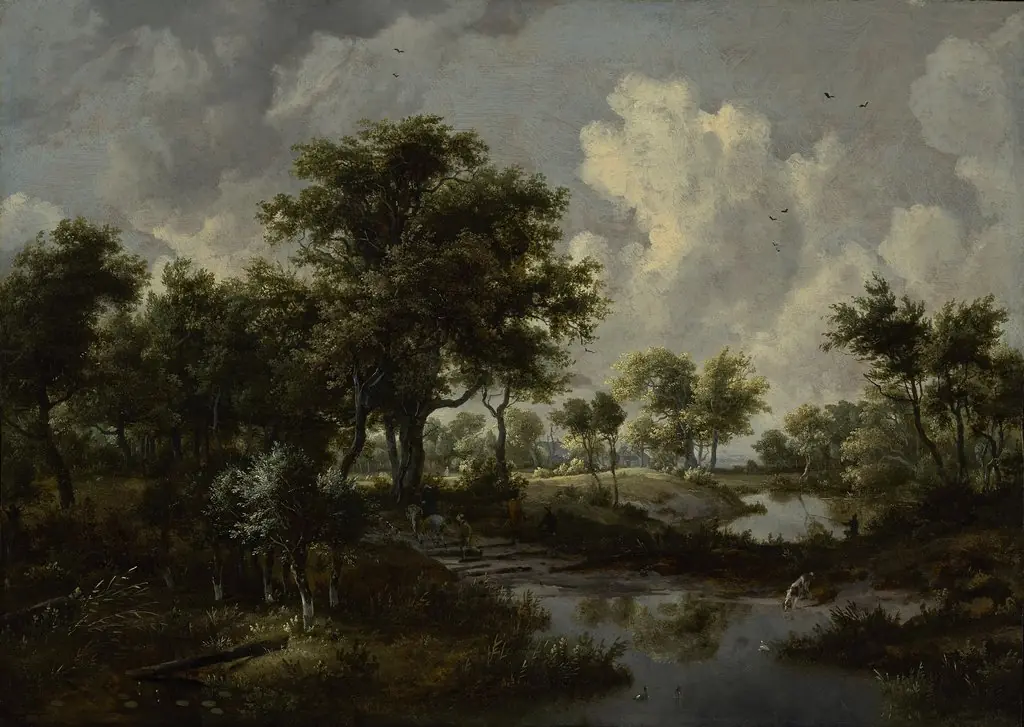
Painted in 1662, *The Old Oak* is an oil-on-canvas landscape by Meindert Hobbema, a Dutch artist known for his quiet, meticulously observed rural scenes. The work captures a tranquil woodland setting with a prominent ancient oak, a still pond, and a lone equestrian figure. It reflects Hobbema’s focus on the subtle interplay of light, vegetation, and human presence within the Dutch countryside.
Subject & Meaning
The painting centers on a massive, gnarled oak tree, its branches heavy with foliage, standing beside a calm artificial pond. A rider on a white horse, accompanied by a small dog, follows a dirt path along the right edge. The scene suggests quiet rural life—neither dramatic nor narrative—but evokes a sense of enduring nature and modest human activity within it.
Technique & Style
Hobbema employed fine brushwork to render the textured bark of the oak, the layered foliage, and the reflective surface of the pond. The composition uses receding planes to create depth, with soft atmospheric perspective in the distant trees and sky. Light falls evenly across the scene, enhancing the naturalism and quiet stillness characteristic of his mature style.
History & Provenance
Created during Hobbema’s most productive period, the painting entered the National Gallery of Victoria’s collection in the 20th century. It was likely acquired through private European dealers, as many Dutch Golden Age works were during that era. Its documented history is modest, but its consistent attribution to Hobbema and its stylistic coherence with his known oeuvre support its authenticity.
Context
Hobbema trained under Jacob van Ruisdael, whose influence is evident in the composition and attention to natural detail. In mid-17th century Holland, landscape painting flourished as a genre reflecting civic pride and a cultural fascination with the domestic environment. *The Old Oak* aligns with this trend, portraying an idealized yet unromanticized rural scene valued by contemporary collectors.
Legacy
Though Hobbema was not widely celebrated in his lifetime, his landscapes gained recognition in the 18th and 19th centuries for their serene realism. *The Old Oak* remains a representative example of Dutch landscape painting’s quiet precision. It continues to be studied for its handling of light, texture, and spatial depth, contributing to scholarly understanding of the period’s visual culture.
Artist & collection
Artist
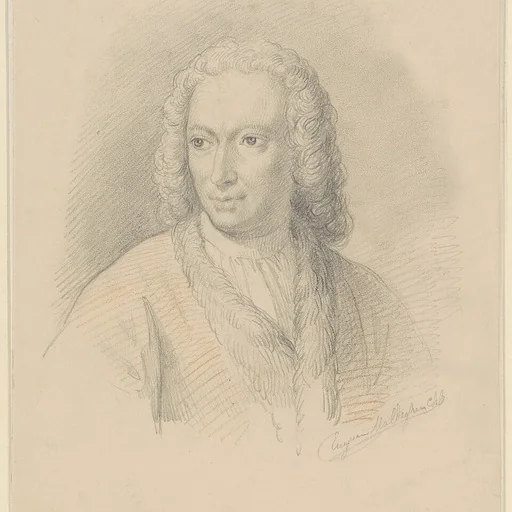
Meindert Lubbertszoon Hobbema (bapt. 31 October 1638 – 7 December 1709) was a Dutch Golden Age painter of landscapes, specializing in views of woodland, although his most famous painting, The Avenue at Middelharnis…