Artwork
The crucifixion
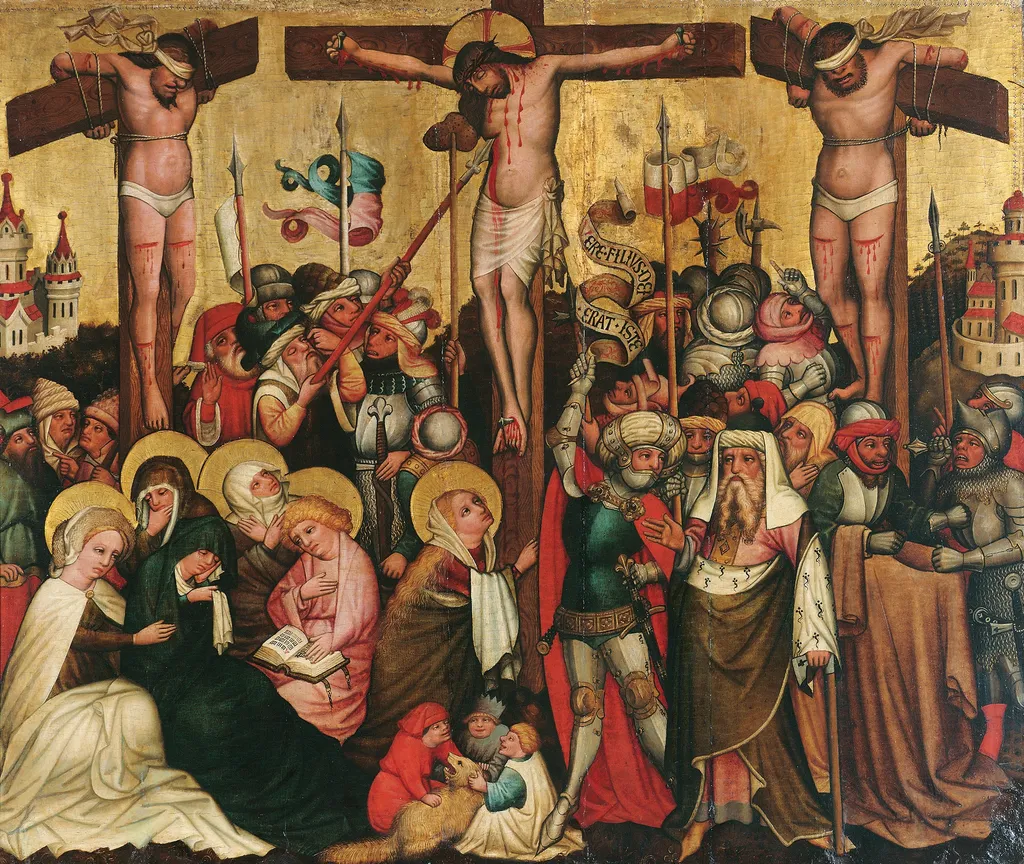
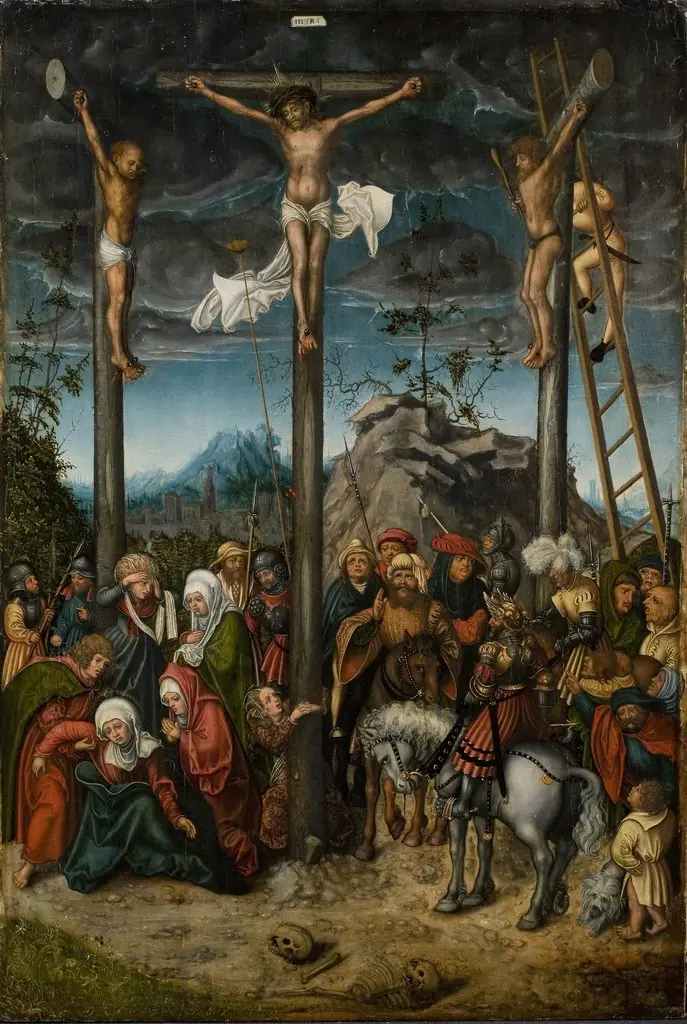
The crucifixion is an oil painting by the Northern Renaissance artist Meister von Laufen. It dates from 1457 and is held in the collection of the Kunsthistorisches Museum.
About this work
Overview
Created in 1457 by the German painter known as Meister von Laufen, this oil on panel presents a conventional depiction of the crucifixion. The work is part of the collection of Vienna’s Kunsthistorisches Museum and measures the central drama of the Passion within a crowded, urban setting.
Subject & Meaning
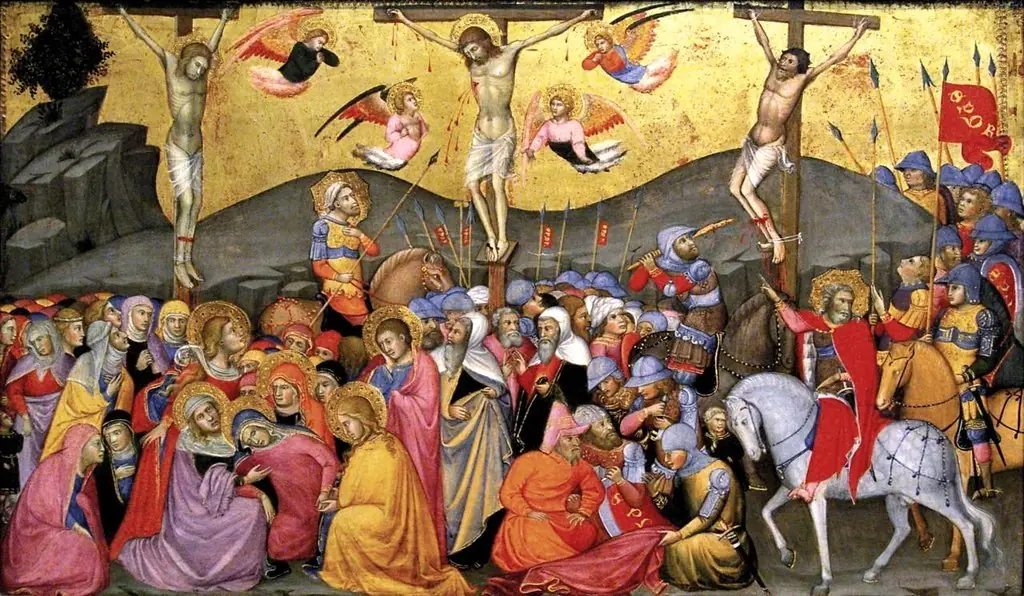
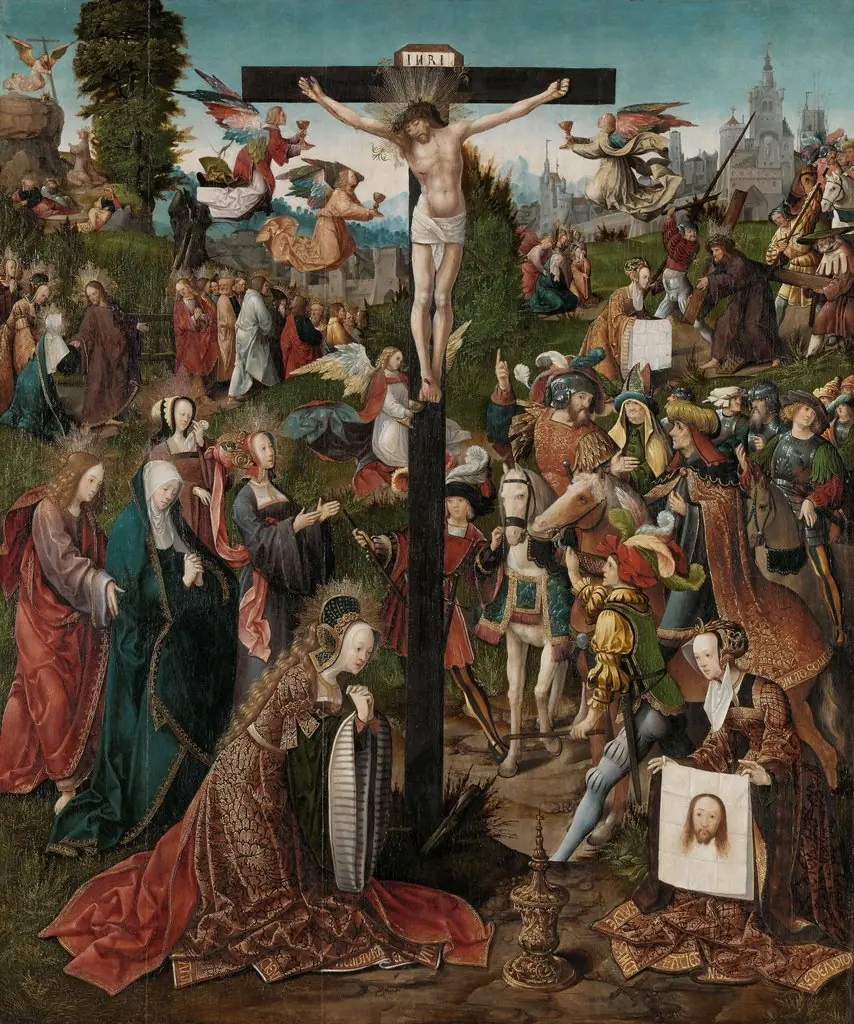
The composition centers on three nailed figures, the middle one representing Jesus Christ, flanked by two companions who also suffer wounds. Around them a multitude of onlookers—some in armor, some bearing weapons—watches the execution, underscoring the tension between sacred sacrifice and worldly violence.
Technique & Style
The artist employs strong chiaroscuro, using deep shadows against illuminated forms to model the bodies and give the scene a three‑dimensional presence. Thick impasto in the foreground and subtle glazing in the sky create texture and a muted luminosity that heightens the somber atmosphere.
Context
The painting reflects the late Gothic visual vocabulary prevalent in mid‑15th‑century German art, where devotional scenes were often set against recognizable cityscapes. The inclusion of armored figures suggests an awareness of contemporary military culture, linking the biblical narrative to the viewer’s own world.
History & Provenance
After its creation, the work entered various private collections before being acquired by the Kunsthistorisches Museum, where it has remained on public display, contributing to the museum’s representation of Northern European religious painting.
Own this work as a print
Artist & collection
Artist
A German painter active in the mid-1400s, this artist made altarpieces and devotional scenes in oil paint.