Artwork
Maternity
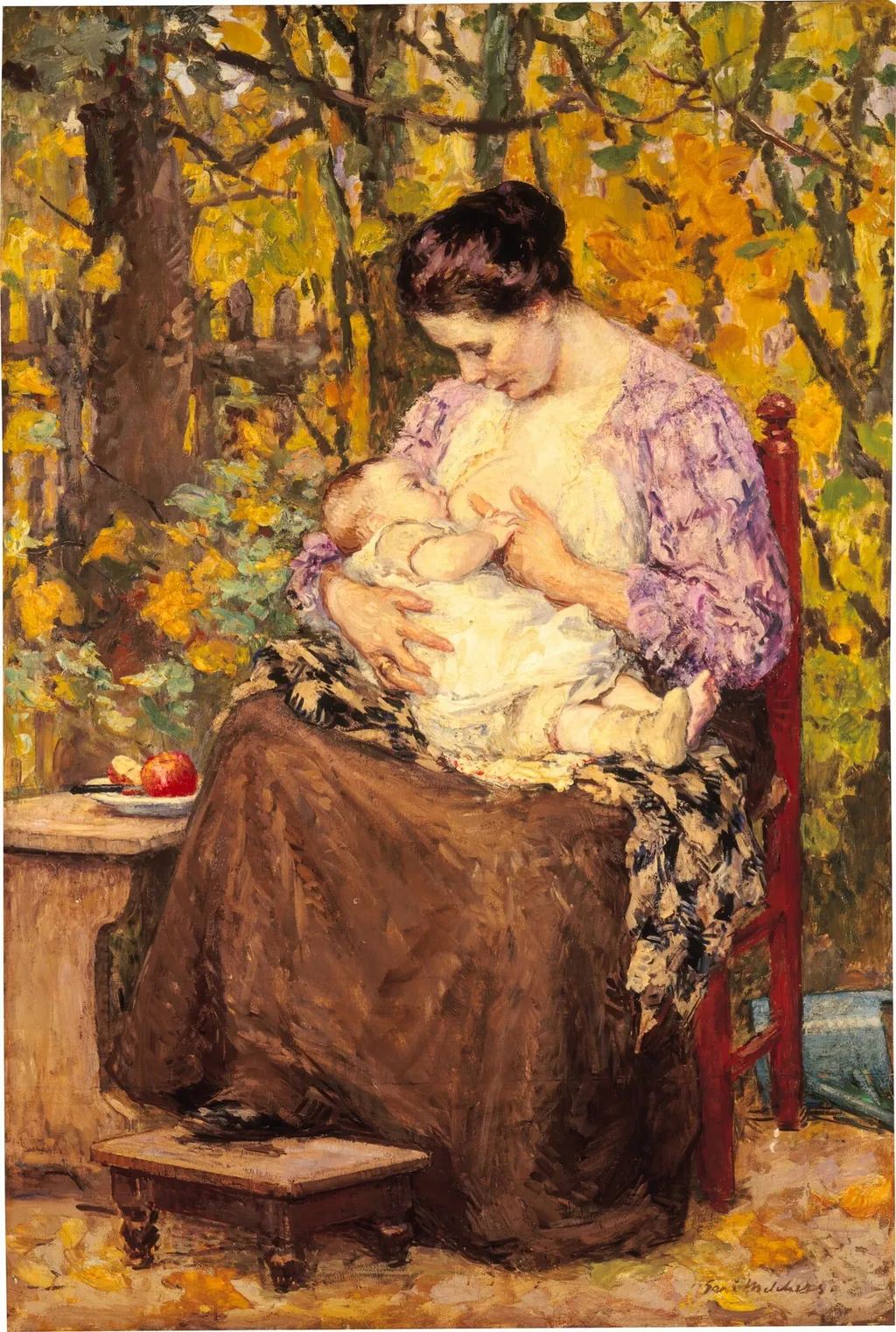
Maternity is an oil painting by the American Impressionist artist Gari Melchers. It dates from 1913 and is held in the collection of the National Gallery of Art.
About this work
Overview
A woman in a white dress cradles an infant on her lap while seated amid a garden, the surrounding foliage allowing dappled sunlight to illuminate their faces.
“Maternity,” an oil on canvas executed around 1913 by American painter Gari Melchers, depicts an intimate domestic scene. A woman in a white dress cradles an infant on her lap while seated amid a garden, the surrounding foliage allowing dappled sunlight to illuminate their faces. The work measures roughly the size of a modest easel painting and reflects Melchers’ interest in everyday moments captured in natural light.
Subject & Meaning
The composition centers on a mother and child, a timeless motif that emphasizes tenderness and the quiet bond of caregiving. The white dress suggests purity and draws attention to the figures against the green garden backdrop. The filtered light creates a serene atmosphere, inviting viewers to contemplate the ordinary yet profound experience of motherhood within a private, outdoor setting.
Technique & Style
Melchers employs loose, fluid brushwork that conveys movement and immediacy, while the application of impasto—thick, textured paint—builds depth in the highlights and shadows. This tactile surface catches the light, enhancing the luminous quality of the sun‑dappled scene. The overall style balances realism with an impressionistic handling of light and atmosphere.
History & Provenance
Created while Melchers resided in the Dutch village of Egmond, the painting reflects his immersion in the local environment. He frequently used his wife and nearby villagers as models; the woman portrayed may be a familiar figure from his community. The work remained in private collections before entering a museum setting, where it is now displayed as part of the artist’s early 20th‑century oeuvre.
Context
During the early 1910s, Melchers was exploring rural life and domestic subjects, moving away from grand historical narratives toward more personal scenes. His time in the Netherlands exposed him to the Dutch landscape and light, influencing his palette and compositional choices. “Maternity” exemplifies this period of artistic transition, merging American training with European sensibilities.
Own this work as a print
Artist & collection