Artwork
Penelope
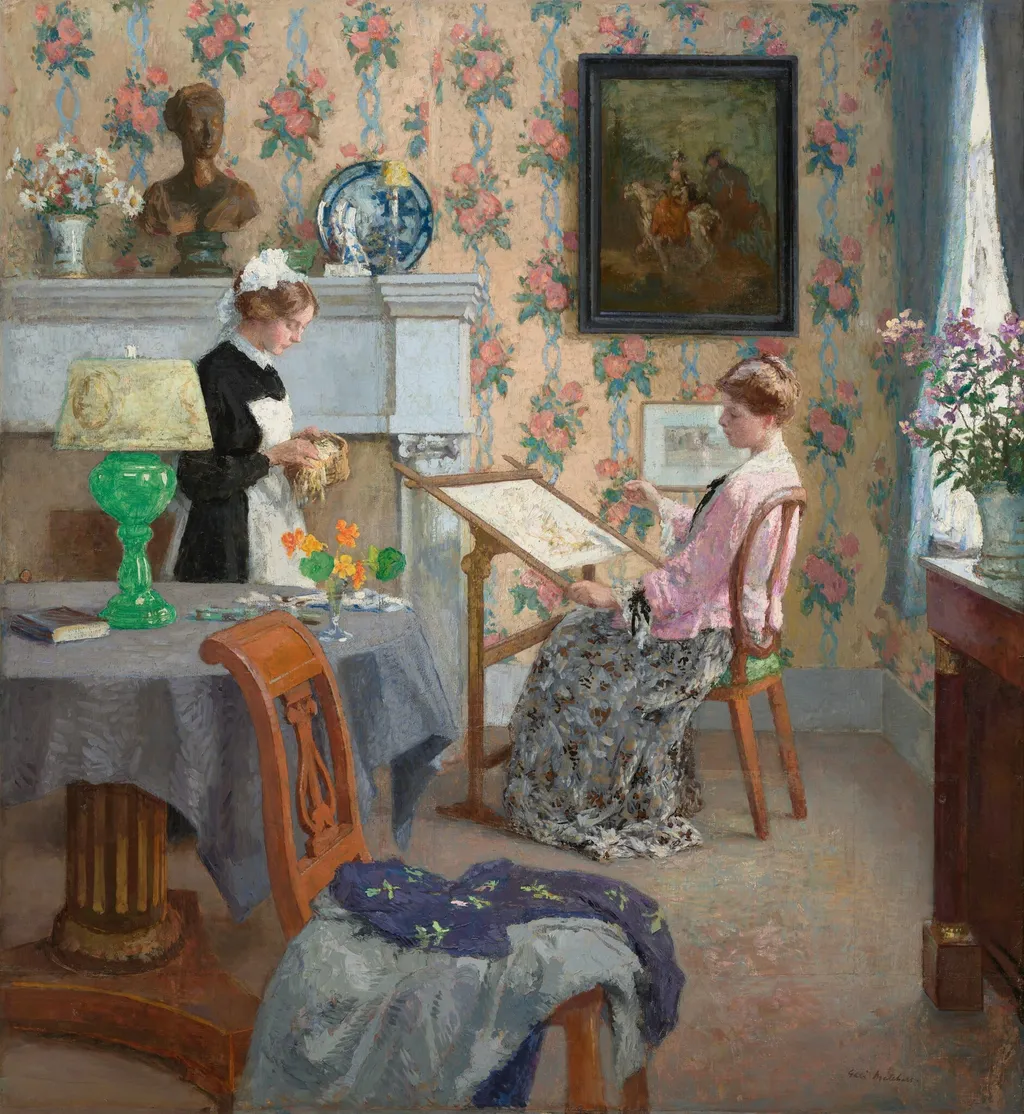
Penelope is an oil painting by the Impressionist artist Gari Melchers. It dates from 1910 and is held in the collection of the National Gallery of Art.
About this work
Overview
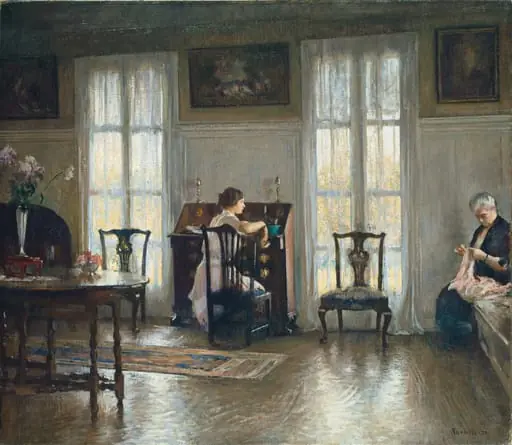
Created in 1910, this oil on canvas by American painter Gari Melchers portrays an interior domestic scene. A seated woman studies a drawing propped on an easel, while a maid stands nearby. The composition includes a table with floral arrangements, a sideboard, a fireplace crowned with a sculpted bust, and a framed picture on the wall, all set against patterned wallpaper.
Subject & Meaning
The juxtaposition of art‑making and domesticity invites reflection on the role of women in cultural production.
The work captures a quiet moment of artistic contemplation within a genteel household. The central figure’s focus on the drawing suggests an engagement with creative practice, while the presence of the maid and decorative objects underscores the social setting of early‑twentieth‑century middle‑class life. The juxtaposition of art‑making and domesticity invites reflection on the role of women in cultural production.
Technique & Style
Melchers employs a refined oil technique, rendering textures—from the soft folds of the woman's dress to the glossy surfaces of the vase—with subtle brushwork. The palette balances muted earth tones with touches of color in the flowers and wallpaper pattern, creating depth and a sense of quiet illumination that characterizes his realist approach.
History & Provenance
Painted in the year preceding World War I, the piece entered Melchers’s oeuvre during a period of prolific portrait and interior work. Documentation traces its ownership through several private collections before it was acquired by a regional museum in the mid‑20th century, where it remains on display as part of the institution’s American art holdings.
Context
At the turn of the century, American artists like Melchers were influenced by European academic traditions while adapting them to domestic subjects. This painting reflects contemporary interests in everyday scenes, aligning with broader trends in realism that emphasized accurate representation of interior spaces and the nuanced interplay of light and material.
Own this work as a print
Artist & collection