Artwork
Biserica din Densuș
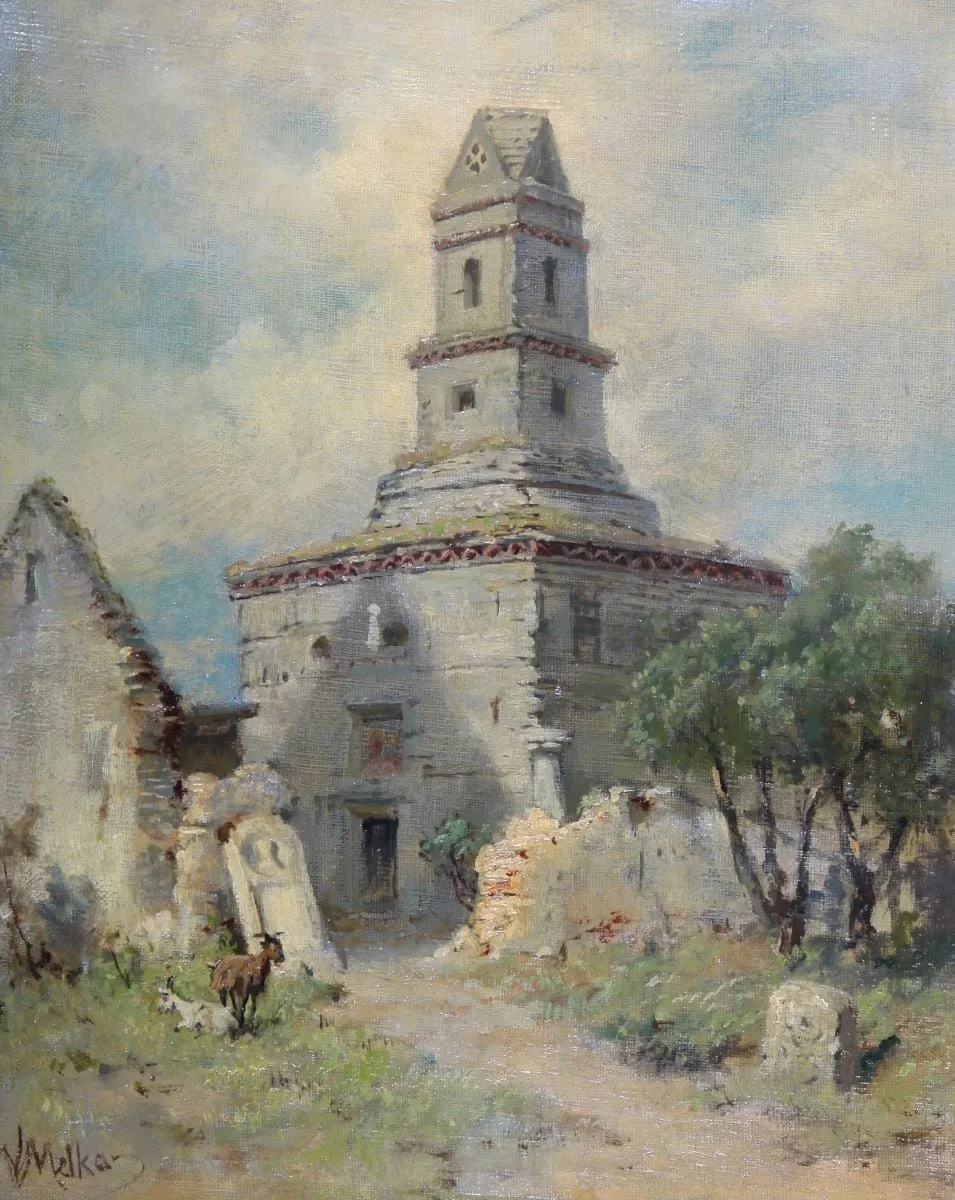
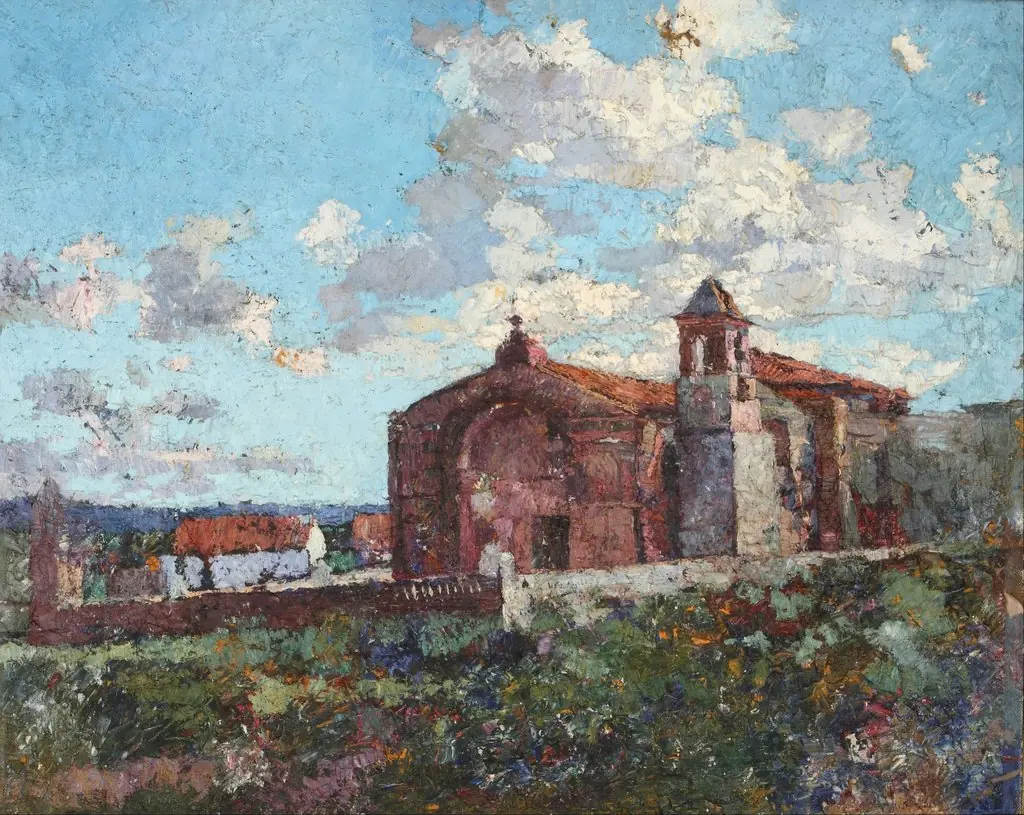
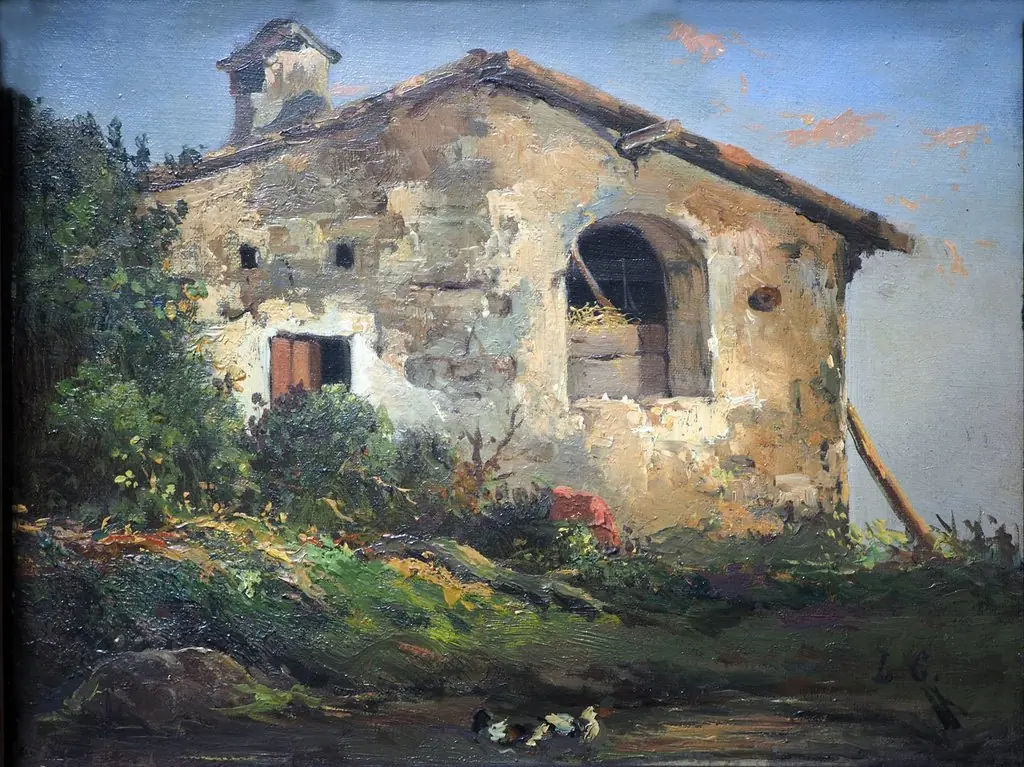
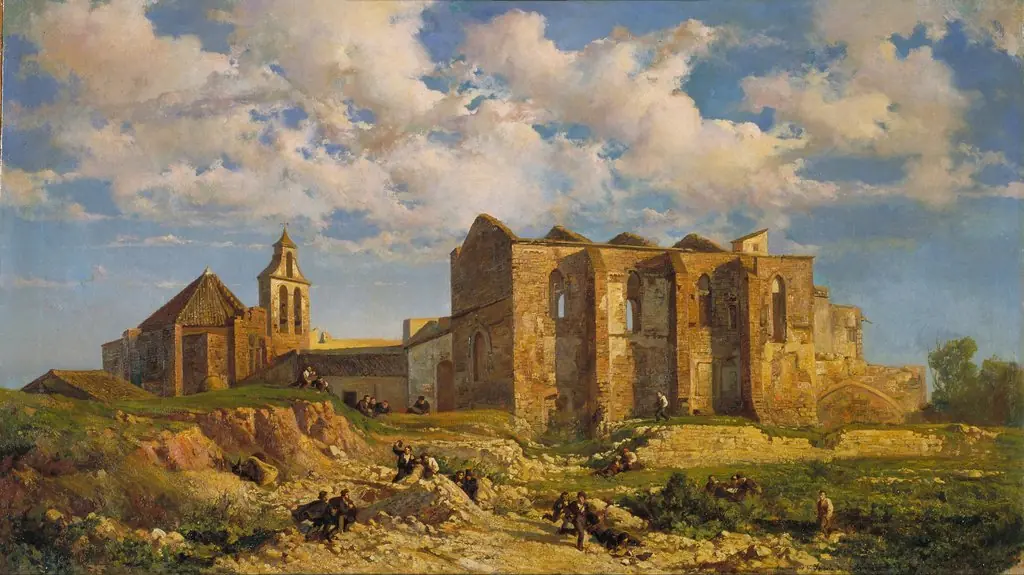
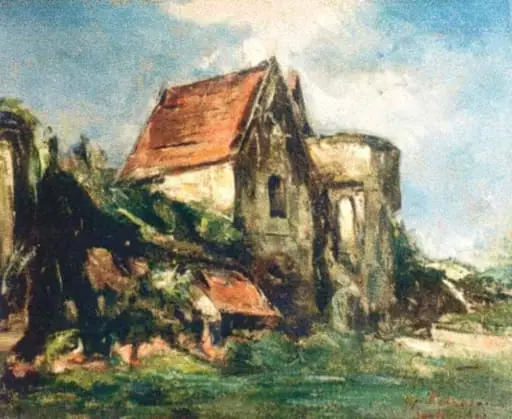
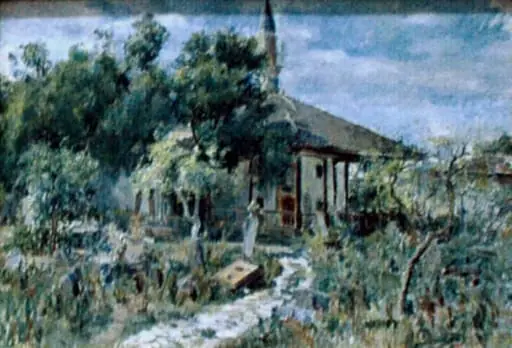
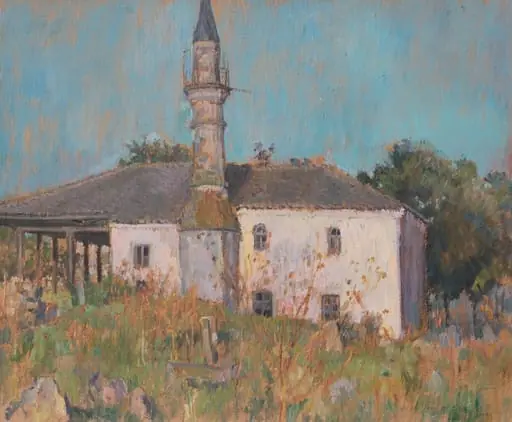
Biserica din Densuș is a print by the Academic Art artist Venceslav Melka. It is held in the collection of the Museum of Art Cluj-Napoca. This painting depicts the medieval stone church of Densuș, rendered in a quiet, observational style.
About this work
Overview
This painting depicts the medieval stone church of Densuș, rendered in a quiet, observational style.
This painting depicts the medieval stone church of Densuș, rendered in a quiet, observational style. The structure appears weathered, with partial ruin and overgrowth surrounding it. A lone goat grazes near scattered gravestones, reinforcing the sense of abandonment. The brushwork is loose and unpolished, suggesting a spontaneous study rather than a finished composition, and the palette is restrained, dominated by earth tones and soft sky blue.
Subject & Meaning
The church, once a center of religious life, now stands as a silent relic amid nature’s reclamation. The presence of gravestones and the solitary goat imply a landscape no longer shaped by human ritual. The scene evokes time’s quiet erosion—not through drama, but through stillness and decay, suggesting a transition from sacred use to forgotten memory.
Technique & Style
The artist employs loose, sketch-like brushstrokes that prioritize atmosphere over detail. Forms are suggested rather than defined, particularly in the foliage and crumbling stonework. Muted grays, browns, and muted greens dominate, with only faint hints of blue in the sky. This restrained technique enhances the sense of solitude and temporal passage, aligning with a documentary rather than idealized approach.
History & Provenance
The church of Densuș, located in Transylvania, dates to the 13th century and is among the oldest surviving wooden churches in Romania. While the painting captures its stone structure, the site has long been associated with both religious and communal history. The work likely stems from a 19th-century ethnographic or topographical study, possibly linked to regional preservation efforts of the time.
Context
In the 19th century, artists and scholars across Europe turned to rural and medieval sites as symbols of cultural authenticity. This painting reflects that trend, documenting architectural remnants before further decay or modernization. Similar works were collected by institutions like the Museum of Ethnography, which sought to preserve visual records of vanishing traditions and vernacular structures.
Legacy
The painting contributes to a broader visual archive of Transylvanian heritage, offering a quiet record of architectural endurance and decline. Its unembellished style aligns with ethnographic documentation rather than romanticized nostalgia. Today, it remains a reference point for understanding how cultural landscapes were perceived and recorded during periods of national identity formation.
Artist & collection
Artist
Venceslav Melka’s prints feel like postcards sent from a 19th-century village you never visited.