Artwork
Untitled
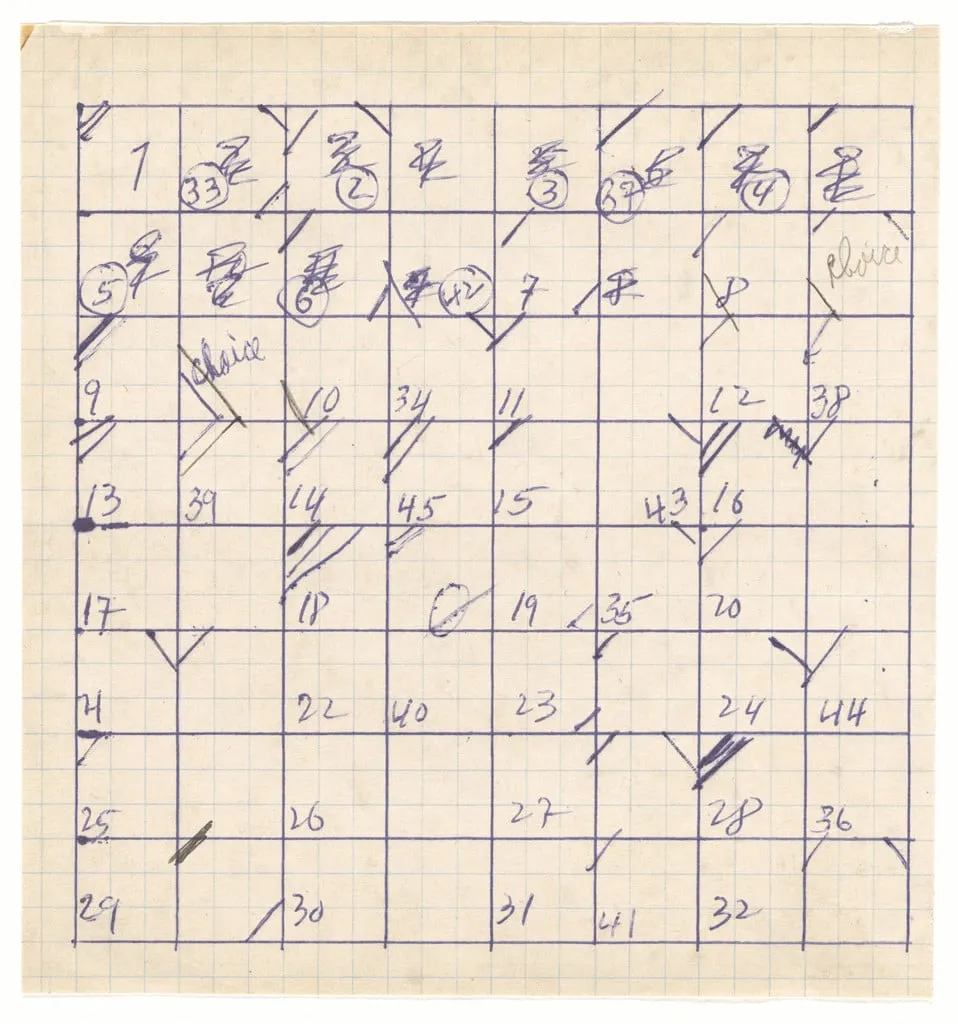
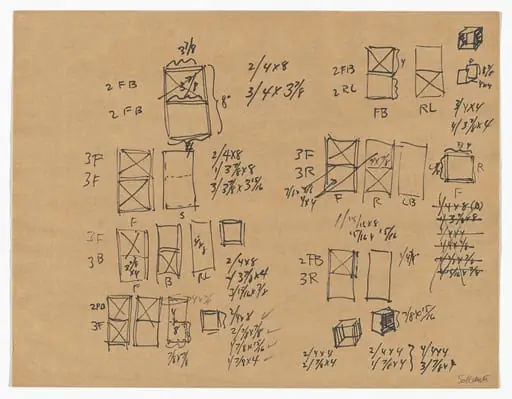
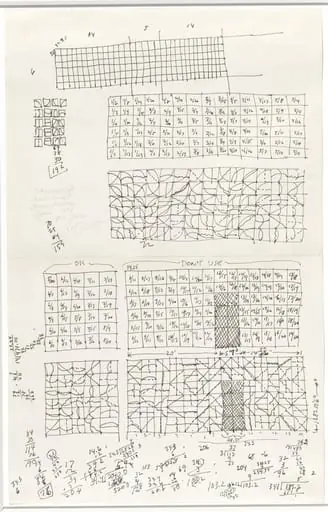
Untitled is a graphite drawing by Merce Cunningham. It dates from 1952 and is held in the collection of the Museum of Modern Art.
About this work
Overview
Unlike conventional artworks, it functions as a personal, working document—neither polished nor intended for public display.
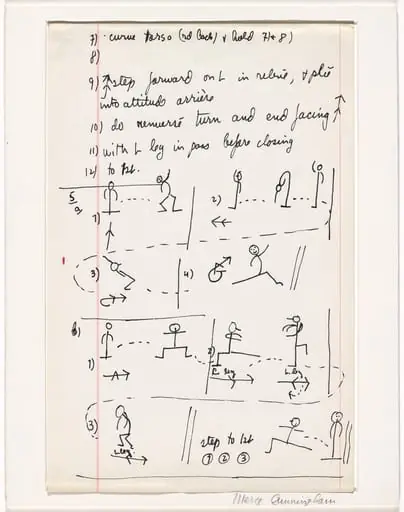
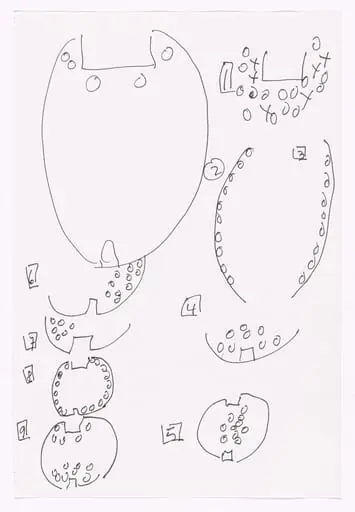
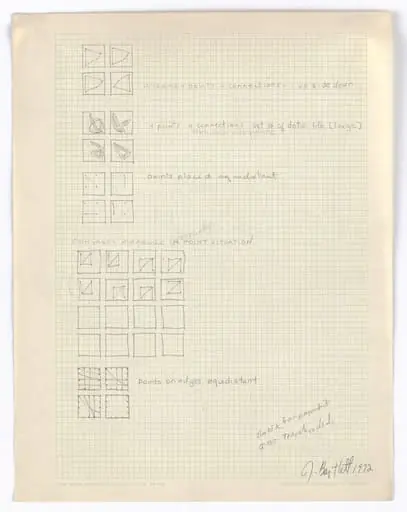
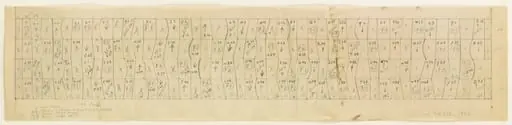
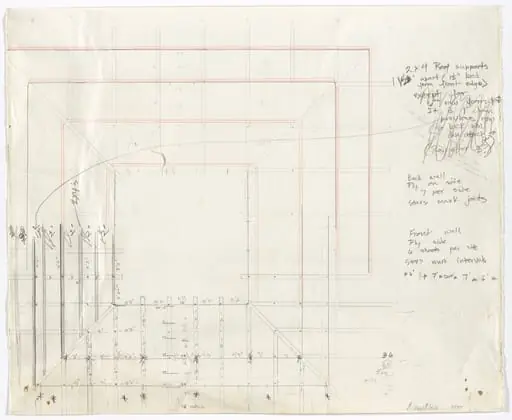
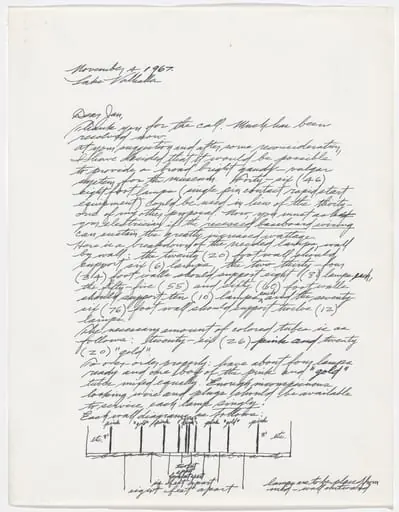
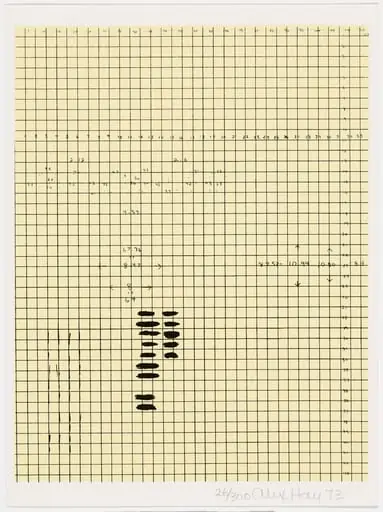
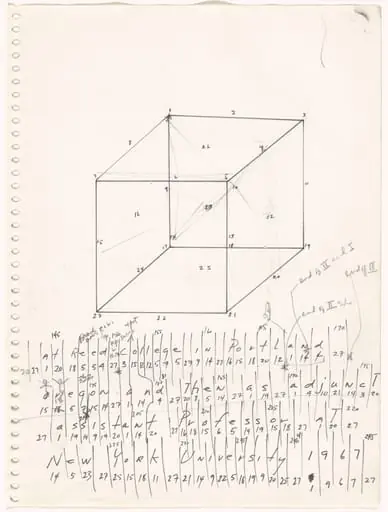
Created in 1952, this drawing by Merce Cunningham is executed in ballpoint pen and pencil on graph paper. Unlike conventional artworks, it functions as a personal, working document—neither polished nor intended for public display. Its structure is defined by a grid of squares, each containing fragments of notation, sketch, or symbol. The medium and scale suggest immediacy, reflecting the artist’s process rather than a finished composition.
Subject & Meaning
The drawing contains scattered stick figures, rudimentary shapes like chairs or heads, and numerical markings, none of which form a coherent narrative. These elements likely serve as visual cues for choreographic ideas—positions, transitions, or timing. The absence of clear symbolism points to its role as an internal tool, where movement and spatial relationships are encoded in shorthand, bridging dance and graphic notation.
Technique & Style
Cunningham used blue ballpoint pen for linear structure and pencil for lighter annotations, creating a layered, provisional texture. Lines are hurried, uneven, and unrefined, with no attempt at formal shading or composition. The grid acts as a framework for fragmentation, allowing discrete ideas to coexist without hierarchy. Cross-hatching appears sparingly, used more for emphasis than depth, reinforcing the drawing’s function as a rapid ideation tool.
History & Provenance
The work was produced during Cunningham’s early years as a choreographer, before his collaborations with John Cage gained wider recognition. It remained in his personal archive until acquired by The Museum of Modern Art, where it is preserved as part of his artistic legacy. Its inclusion in the museum’s collection reflects a broader shift in recognizing non-traditional materials as vital to understanding experimental art practices.
Context
In the early 1950s, Cunningham was developing a choreographic method that rejected narrative and emotional expression in favor of abstraction and chance operations. This drawing aligns with that approach, functioning as a visual counterpart to his use of dice or coin tosses to determine movement sequences. It reveals how dance artists of the time expanded the boundaries of artistic documentation beyond notation systems like Labanotation.
Legacy
The drawing exemplifies how artists outside traditional visual disciplines redefined the role of the sketch. It has influenced later generations of performers and designers who treat process documents as legitimate artifacts. Its preservation underscores the value of ephemeral, non-aesthetic records in understanding avant-garde practice, shifting focus from final performance to the messy, inventive labor behind it.
Artist & collection
Artist
Merce Philip Cunningham was an American dancer and choreographer who was at the forefront of American modern dance for more than 50 years.