Artwork
Sir Gilbert Scott
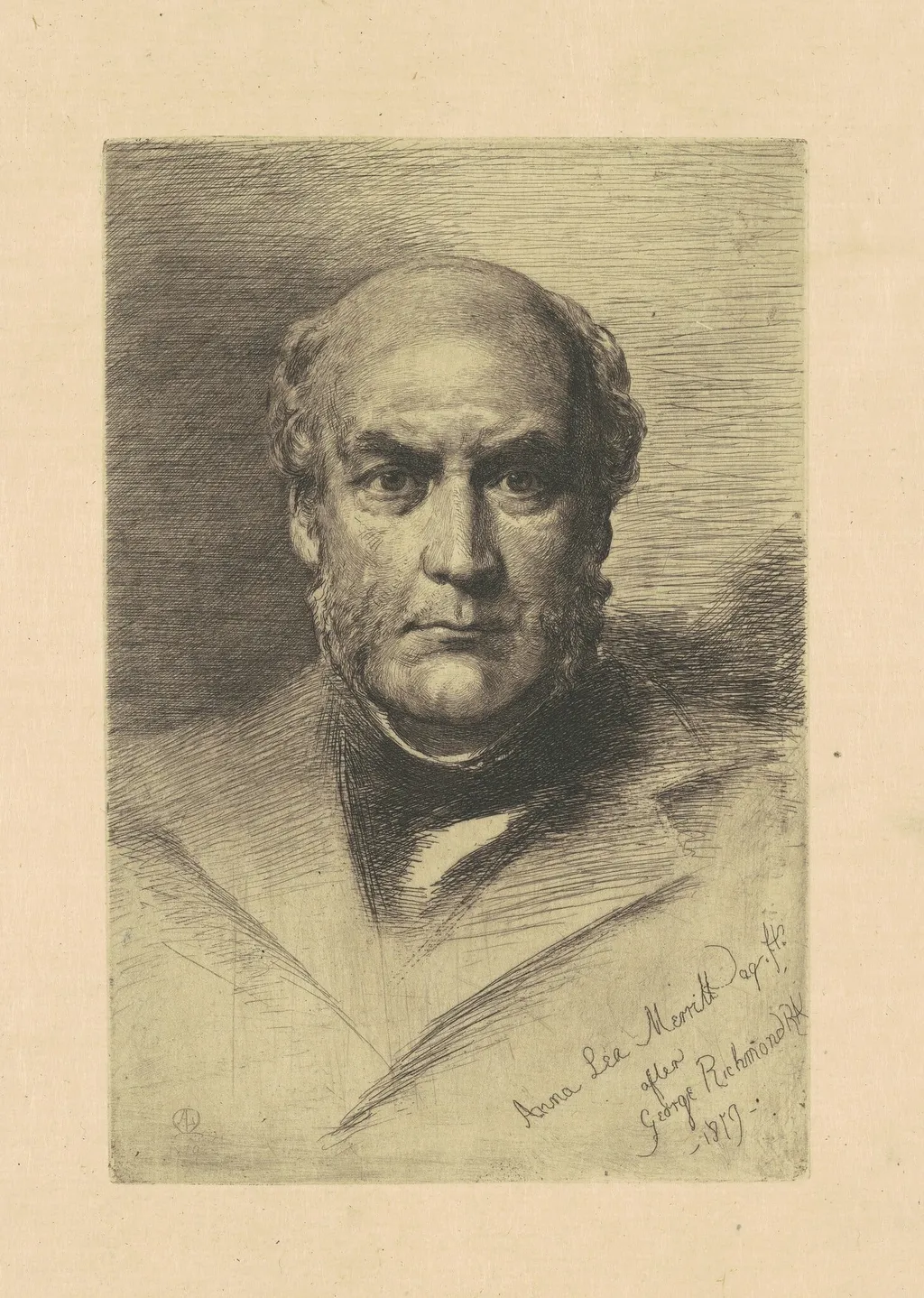
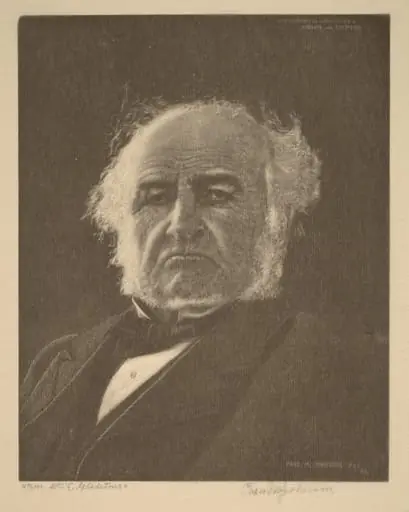
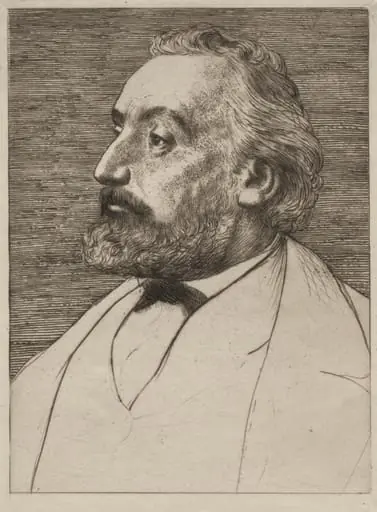
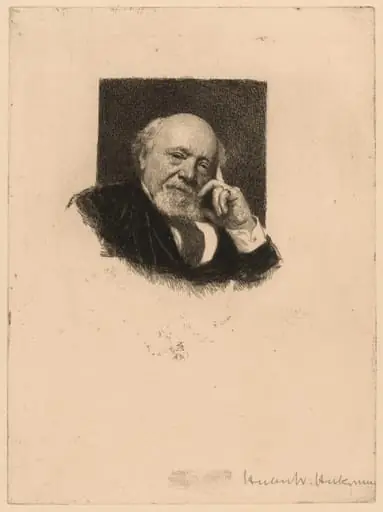
Sir Gilbert Scott is an ink print by the Impressionist artist Anna Lea Merritt. It dates from 1879 and is held in the collection of the National Gallery of Art.
About this work
Overview
Created in 1879, this black-and-white print by Anna Lea Merritt depicts Sir Gilbert Scott, a prominent English architect. Executed in etching on laid paper, the work captures the subject with restrained precision. The medium’s fine, incised lines convey texture and form without color, emphasizing the sitter’s solemn demeanor and the tactile quality of the paper’s surface.
Subject & Meaning
Sir Gilbert Scott, known for his Gothic Revival architecture, is portrayed with a direct gaze and formal attire, suggesting dignity and intellectual gravity. The high collar and bald head reinforce a sense of authority and gravitas. Merritt’s choice to render him in profile, unadorned and unsmiling, reflects a biographical rather than celebratory intent—focusing on presence over prestige.
Technique & Style
Merritt employed etching, a process involving acid-bitten lines on a metal plate to create detailed tonal gradations. The resulting print shows delicate, irregular strokes that mimic pencil sketching, lending a spontaneous yet controlled quality. The laid paper’s subtle texture enhances the tactile impression, grounding the image in material reality rather than idealized form.
History & Provenance
The print was made during Merritt’s active years in London, following her training under prominent artists and her association with the Royal Academy. It was likely produced as a personal or professional tribute to Scott, with whom she may have had indirect ties through artistic circles. No public record of early ownership exists, but the work remains within private collections.
Context
Scott’s stature as an architect lent cultural weight to the portrait, aligning it with broader efforts to document public figures through fine print.
In late 19th-century Britain, etching experienced a revival among artists seeking intimate, hand-crafted alternatives to mass-produced imagery. Merritt, one of the few women practicing the medium professionally, used it to explore portraiture with psychological nuance. Scott’s stature as an architect lent cultural weight to the portrait, aligning it with broader efforts to document public figures through fine print.
Legacy
This etching endures as a quiet example of Merritt’s skill in capturing character through line and tone. It reflects her contribution to the etching revival and offers insight into the visual culture of Victorian intellectual life. Though not widely exhibited, it remains a significant artifact of a female artist’s engagement with male-dominated professional spheres of her time.
Artist & collection