Artwork
Aeneas Becomes a God
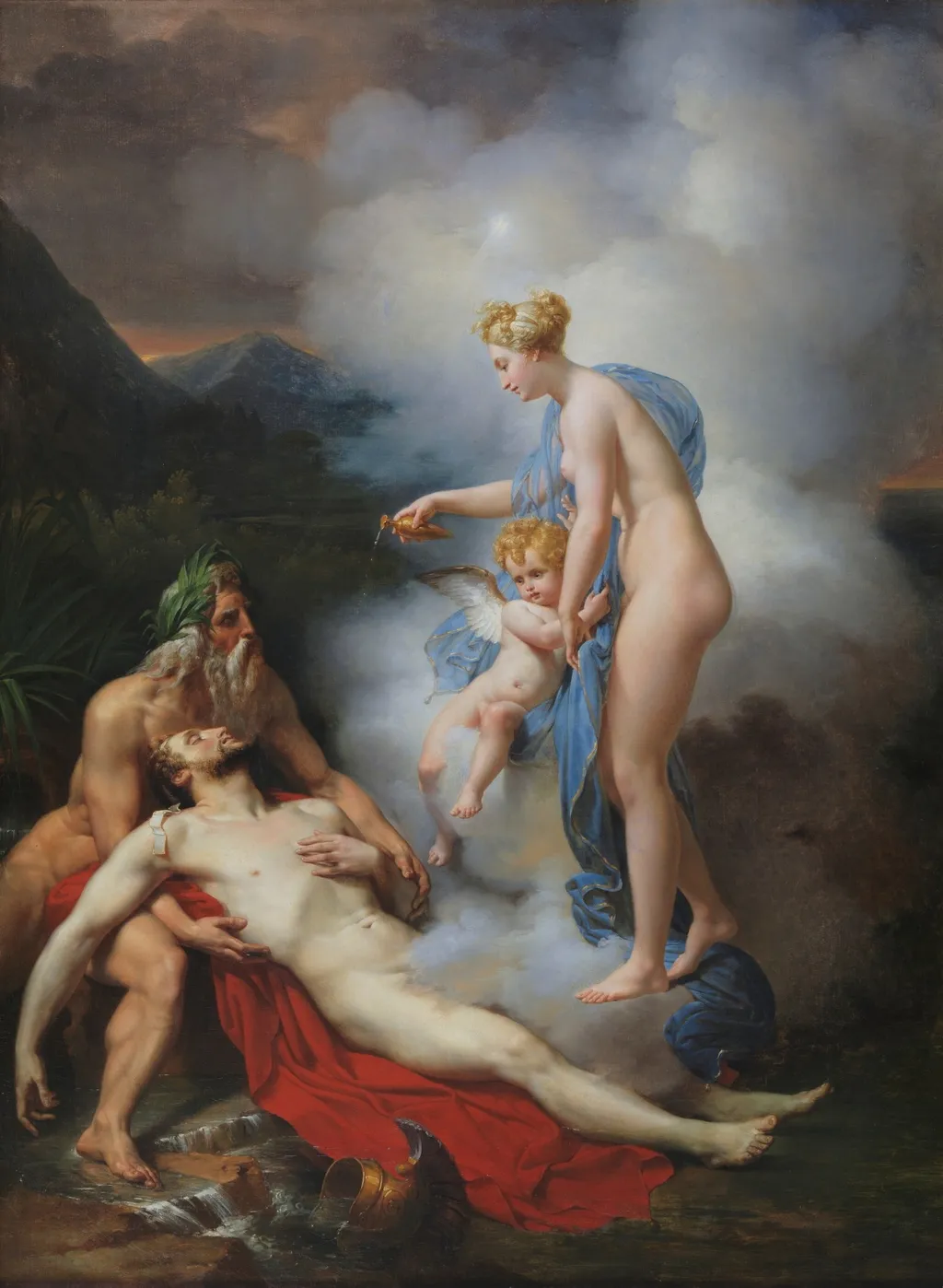
Aeneas Becomes a God is an oil painting by Merry-Joseph Blondel. It dates from 1820 and is held in the collection of the Museo del Prado.
About this work
Overview
Created in 1820, this oil painting by French artist Merry‑Joseph Blondel illustrates the moment when the Trojan hero Aeneas is transformed into a deity. The composition centers on a wounded figure on the ground, attended by an older man, while a serene female figure hovers above, cradling a winged child. The work is part of the Prado Museum’s collection.
Subject & Meaning
The scene draws on the myth of Aeneas’s apotheosis, featuring the hero alongside his mother Venus, who appears as the floating woman in blue, and Cupid, represented by the small winged child. An attendant, identified as Iapyx, leans over the injured Aeneas, emphasizing the tension between mortal suffering and divine elevation.
Technique & Style
Blondel employs a pronounced chiaroscuro, allowing a soft, luminous glow to isolate the principal figures against a storm‑laden sky. The contrast of the red shroud and the cool blues of the celestial figure heightens the emotional drama, while the diffuse lighting creates a sense of depth typical of Neoclassical history painting.
History & Provenance
A laureate of the Prix de Rome in 1803, Blondel later received the Legion of Honour and taught at the École nationale supérieure des Beaux‑Arts until his death in 1853. The painting entered the Museo del Prado’s holdings in the 19th century, where it remains on display as an example of his mature Neoclassical style.
Own this work as a print
Artist & collection
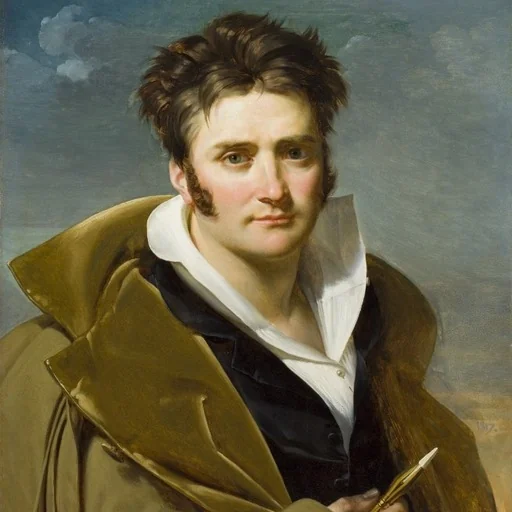
Artist
Merry-Joseph Blondel (French pronunciation: ; 25 July 1781 – 12 June 1853) was a French history painter of the Neoclassical school.