Artwork
H Beard Print Collection
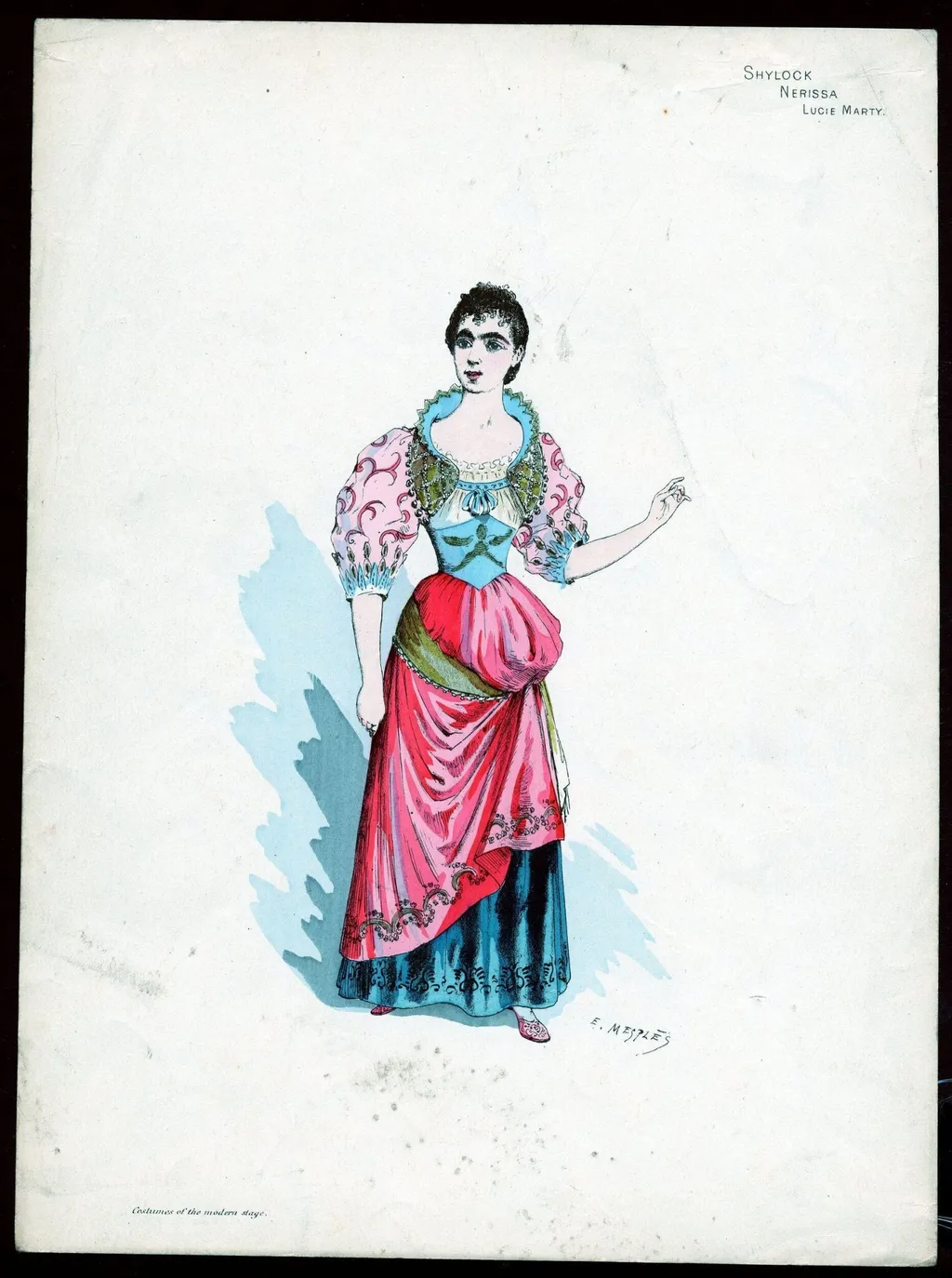
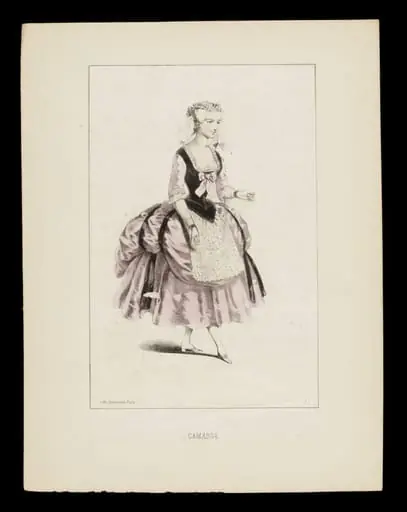
H Beard Print Collection is a print by Paul Eugene Mesples. It dates from 1850 and is held in the collection of the Victoria and Albert Museum.
About this work
Overview
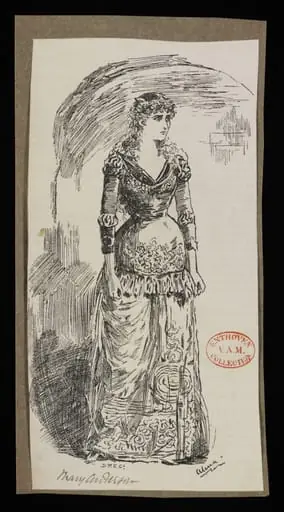
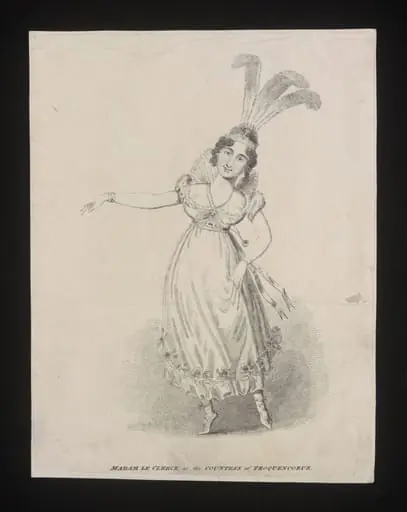
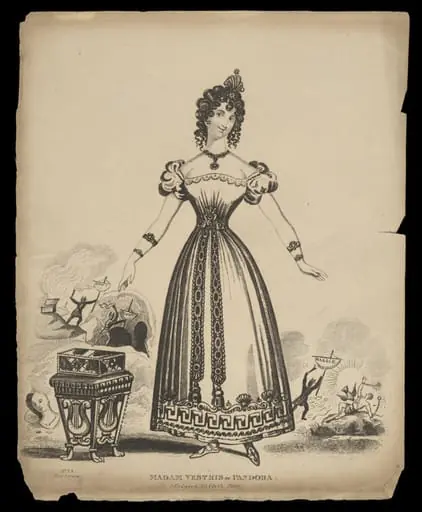
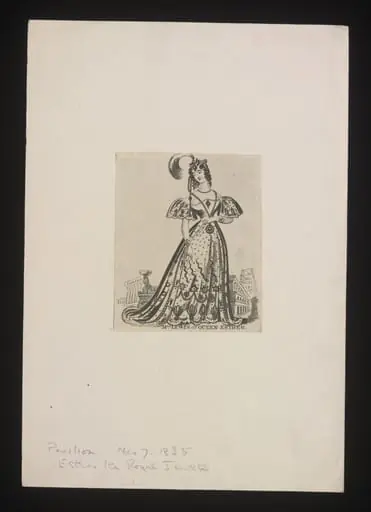
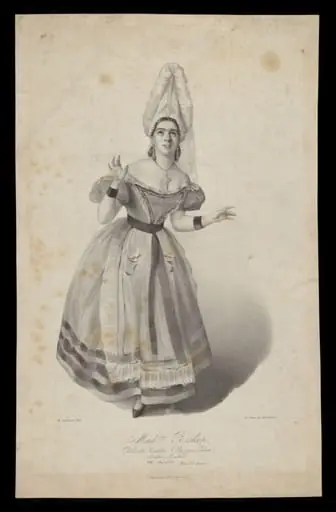
It portrays Lucie Mary in the role of Narissa from a production of Shylock, reflecting a period interest in documenting stage attire.
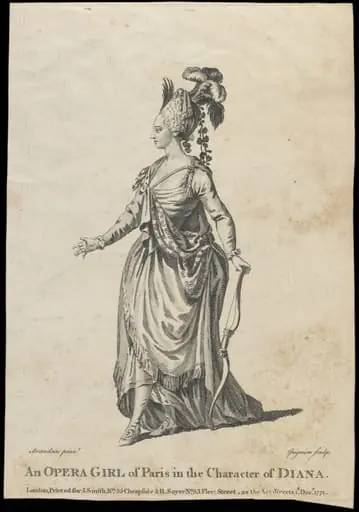
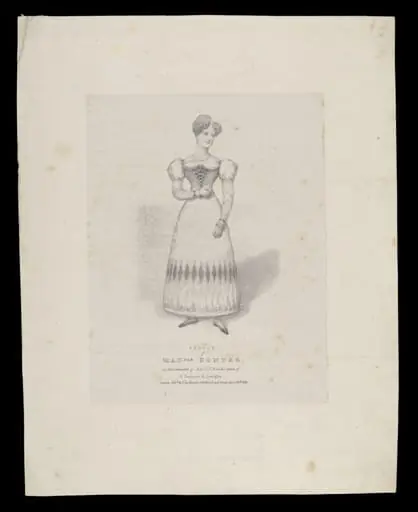
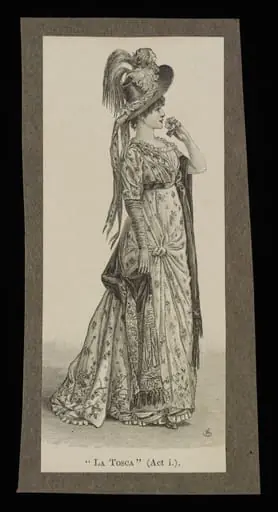
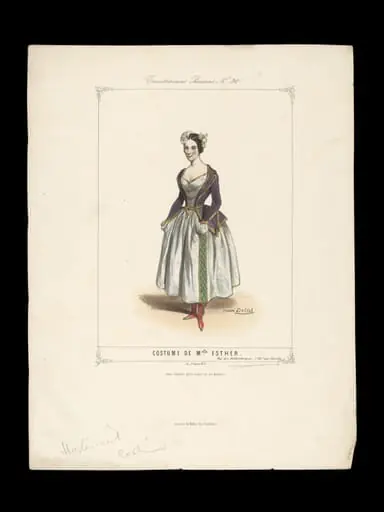
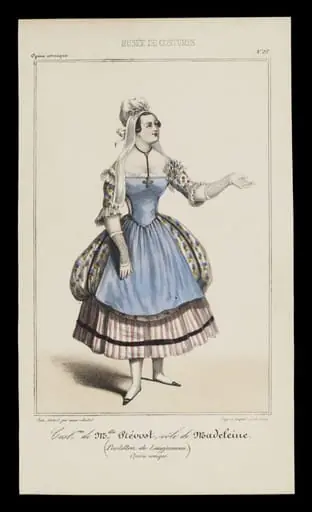
This print is part of the H Beard Print Collection, a curated set of theatrical costume illustrations from the late 19th century. It portrays Lucie Mary in the role of Narissa from a production of Shylock, reflecting a period interest in documenting stage attire. The work belongs to a series titled 'Costumes of the Modern Age,' which systematically recorded contemporary theatrical dress for archival and reference purposes.
Subject & Meaning
The print captures Lucie Mary as Narissa, a character from a 19th-century adaptation of Shakespeare’s The Merchant of Venice. Narissa’s portrayal here emphasizes the theatrical conventions of the time, blending literary tradition with contemporary fashion. The image serves less as a dramatic moment and more as a record of how actors embodied roles through costume, reflecting the era’s fascination with performance and identity.
Technique & Style
Executed as a printed illustration, the work employs fine line work and restrained color to render the costume with precision. The style is documentary rather than expressive, prioritizing clarity of detail over emotional intensity. Background elements are minimal, directing focus to the figure’s attire and posture, consistent with the series’ goal of cataloging stage dress for practical use by designers and historians.
History & Provenance
The print originates from the H Beard Print Collection, assembled by a 19th-century British collector with an interest in theatrical ephemera. It was likely produced for distribution to theater professionals or enthusiasts. The collection was later acquired by the Victoria and Albert Museum, where it remains accessible as a resource for studying the evolution of stage costume in the Victorian era.
Context
During the late 1800s, illustrated costume books became popular tools for theater practitioners and the public alike. 'Costumes of the Modern Age' aligned with broader cultural trends that valued visual documentation of performance. Such prints helped standardize and disseminate stage aesthetics, bridging the gap between live theater and printed media in an age before photography dominated visual record-keeping.
Legacy
The print endures as a historical artifact that illuminates the material culture of Victorian theater. Its inclusion in institutional collections like the V&A underscores its value as a primary source for costume historians. While no longer part of active performance practice, it continues to inform scholarly understanding of how identity, character, and fashion intersected on the 19th-century stage.
Artist & collection
Artist
Paul Eugene Mesples made late-19th-century etchings and prints in a straightforward style that sits between Realism and early modern printmaking.