Artwork
La Tosca
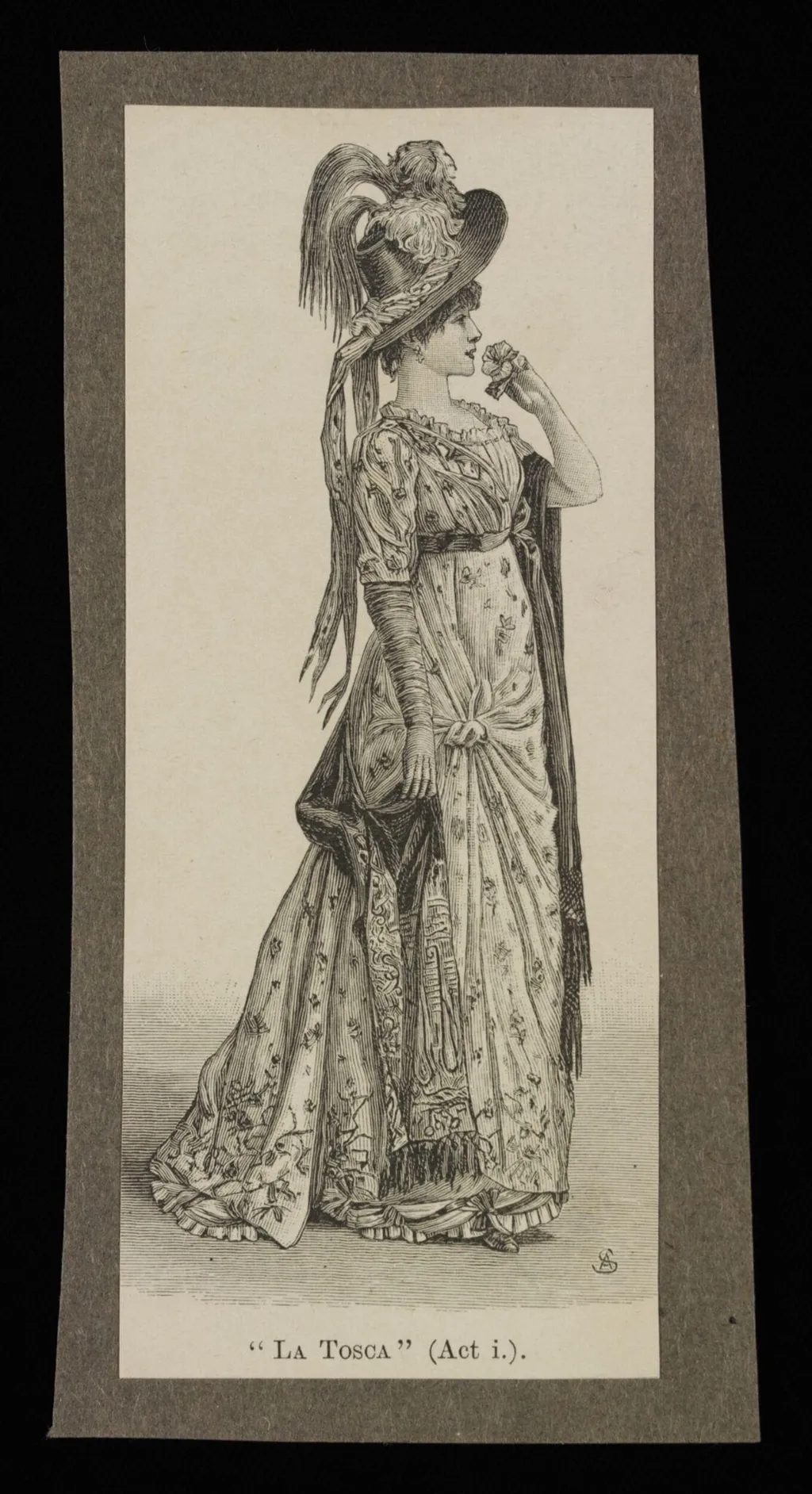
La Tosca is a print by the Impressionist artist Unknown. It dates from 1888 and is held in the collection of the Victoria and Albert Museum. The print depicts French actress Sarah Bernhardt in the role of Tosca during a performance at London’s Lyceum Theatre in the summer of 1888.
About this work
She’s frozen mid-scene, one hand clutching a dagger, the other gripping a letter.
This print shows Sarah Bernhardt on stage in a play called *La Tosca*.
She’s frozen mid-scene, one hand clutching a dagger, the other gripping a letter.
The costume is all dark velvet and gold trim—very dramatic.
Bernhardt was already famous before this 1888 London run.
She traveled the world with this play, performing in four languages.
It made *La Tosca* a hit wherever she went.
Check out the real print at the Victoria and Albert Museum.
Overview
The print depicts French actress Sarah Bernhardt in the role of Tosca during a performance at London’s Lyceum Theatre in the summer of 1888. Captured mid‑action, she holds a dagger in one hand and a letter in the other, dressed in a dark velvet costume edged with gold. The image records a specific moment from Victorien Sardou’s drama, as staged by Bernhardt’s company.
Subject & Meaning
The composition emphasizes the dramatic tension of the climactic scene: the weapon suggests imminent violence, while the letter hints at a secret message or confession. Bernhardt’s expressive pose and the stark contrast of the costume’s dark fabric against the stage lighting convey the tragic intensity central to Sardou’s narrative, underscoring the heroine’s desperate resolve.
History & Provenance
The print was produced shortly after Bernhardt’s London engagement, which formed part of her extensive 1888 world tour. After the Lyceum run, she carried the production to stages across South America, Europe, North America and Australia, performing the role in four languages. The original print is now held by the Victoria and Albert Museum.
Context
Bernhardt’s appearance in La Tosca marked a pivotal moment in her career, consolidating her reputation as an international star. The play’s success on the tour helped popularize Sardou’s work beyond France, while the visual record reflects the late‑19th‑century theatrical aesthetics of elaborate costuming and heightened melodrama.
Artist & collection

 Domestic Scene
 Giacomo and Cardinal Marco, investing Andrea, Abbot of San Zeno, with his Benefice
 The Nymph of Fontainebleau
 Portrait of a Woman
 Madonna and Child with Saints in the Enclosed Garden
 Venus and Minerva
 Family Group of Four on Sofa
 Wall painting from Room H of the Villa of P. Fannius Synistor at Boscoreale