Artwork
Grup de stânci cu un om și două vipere ; pandant. Peisaj cu grup de stânci
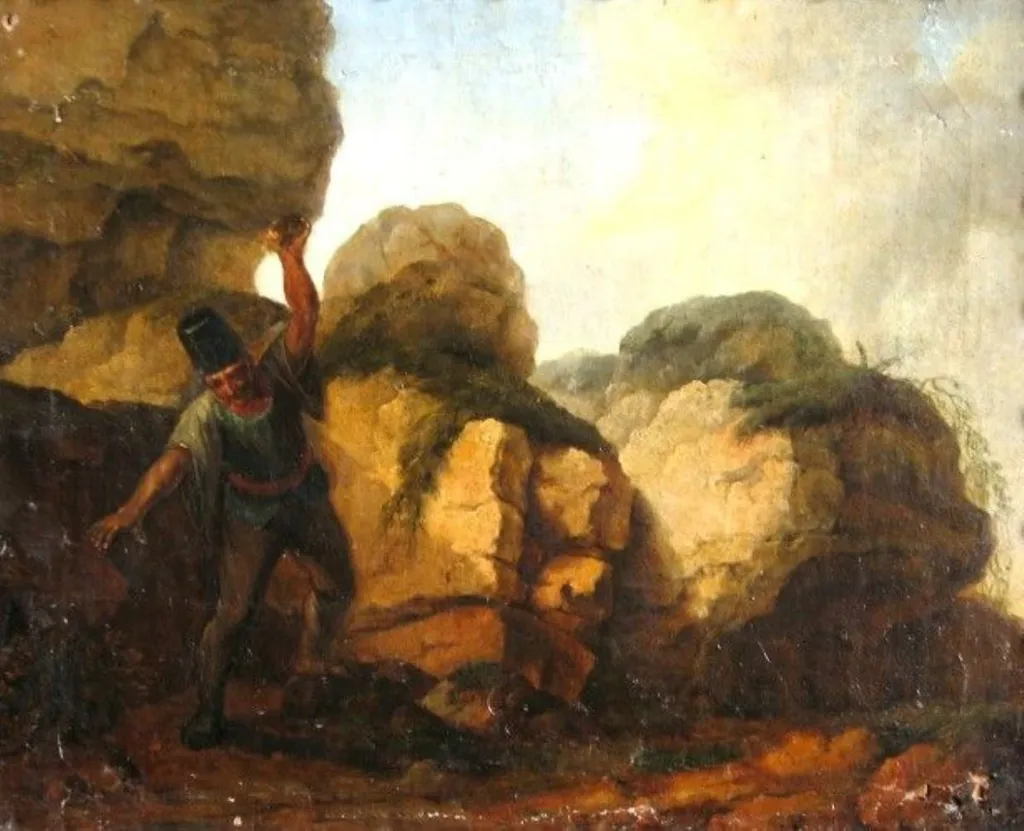
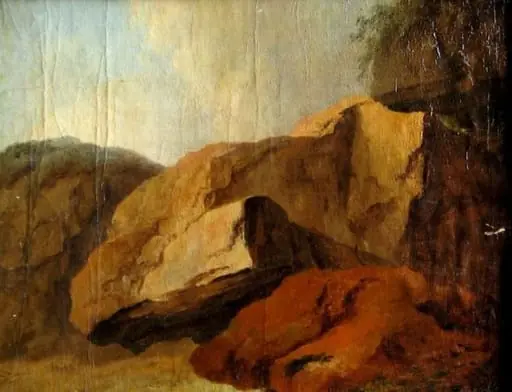
Grup de stânci cu un om și două vipere ; pandant. Peisaj cu grup de stânci is an unspecified painting by the Baroque artist Felix Meyer. It is held in the collection of the Brukenthal National Museum. This painting presents a solitary male figure before a rugged rock formation, flanked by two snakes in the foreground.
About this work
Overview
The composition directs focus to the interaction between human and serpent, suggesting a moment of confrontation or revelation.
This painting presents a solitary male figure before a rugged rock formation, flanked by two snakes in the foreground. The man raises his right arm, holding an indistinct object, while his posture and expression convey alertness or alarm. The sky is rendered in pale blue, contrasting with the earthy tones of the rocks. The composition directs focus to the interaction between human and serpent, suggesting a moment of confrontation or revelation.
Subject & Meaning
The central figure appears caught in a moment of reaction, possibly to the coiled snakes at his feet. Their realistic depiction and elevated position imply immediacy and threat. The object in his hand remains ambiguous—perhaps a tool, weapon, or ritual item—adding narrative uncertainty. The scene evokes themes of vulnerability, nature’s unpredictability, or mythic encounter, without clear allegorical or religious markers.
Technique & Style
The artist employs subtle gradations of color to model the rocks and suggest spatial depth. The sky’s soft blue contrasts with the darker, textured stone surfaces, enhancing atmospheric perspective. The snakes are rendered with precise detail, their scales and curves rendered naturally, while the figure’s simplified clothing grounds the scene in realism. Brushwork is controlled, avoiding overt drama yet sustaining tension through composition.
History & Provenance
The work is part of a pair, its companion being a landscape with similar rock formations. Both pieces likely originated in a regional artistic tradition, possibly from the late 19th or early 20th century, though the artist’s identity and exact date remain undocumented. The pairing suggests a deliberate thematic or compositional dialogue between human presence and natural form.
Context
The scene reflects a broader interest in rural or folk narratives common in Eastern European painting of the period, where nature often carried symbolic weight. Unlike grand mythological subjects, this work presents an intimate, ambiguous moment—neither clearly biblical nor heroic—hinting at local storytelling traditions or personal symbolism rooted in the artist’s environment.
Legacy
Though not widely exhibited or studied, the painting contributes to a quieter strand of regional art that prioritizes mood over narrative clarity. Its restrained drama and focus on elemental encounters between human and natural forces resonate with later 20th-century tendencies toward psychological landscape, preserving a sense of quiet unease in the face of the wild.
Artist & collection

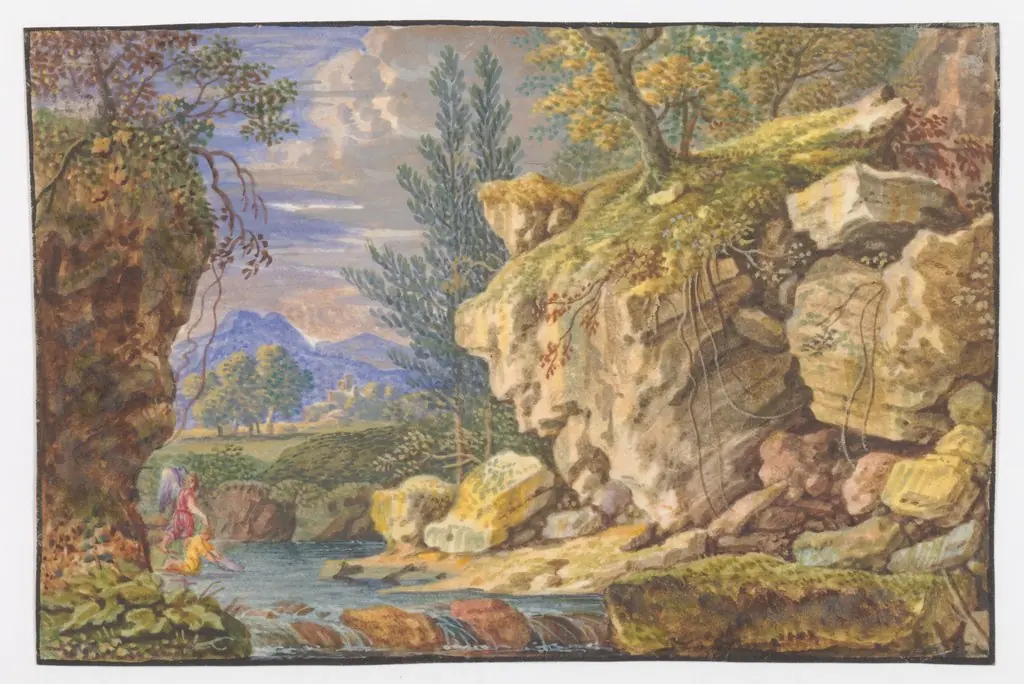
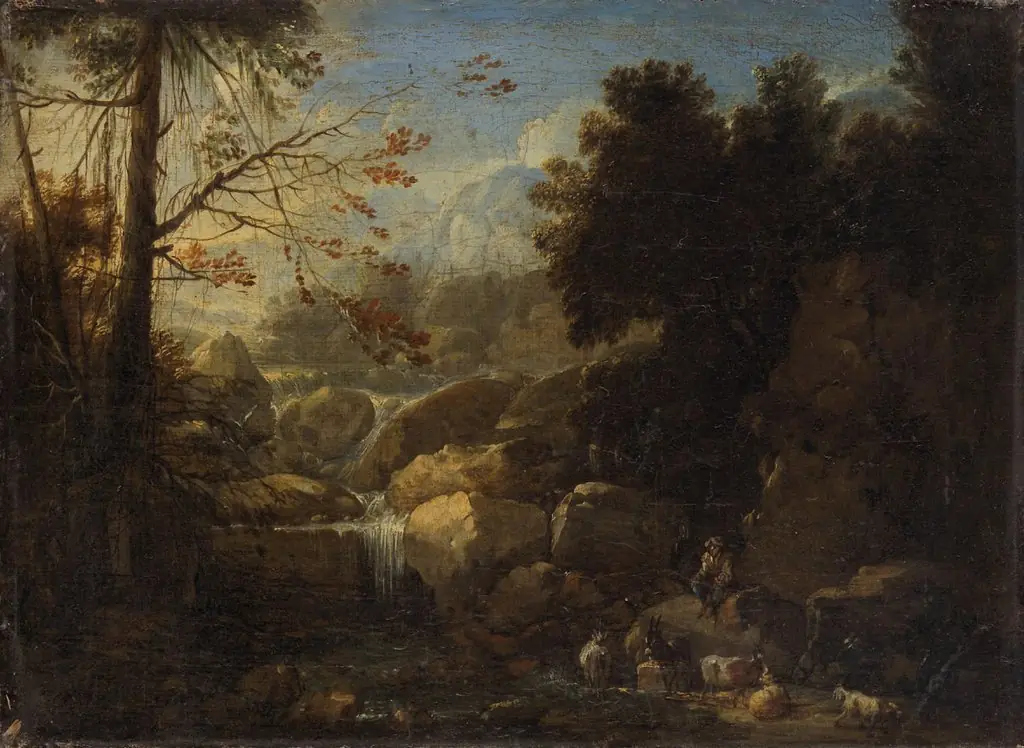
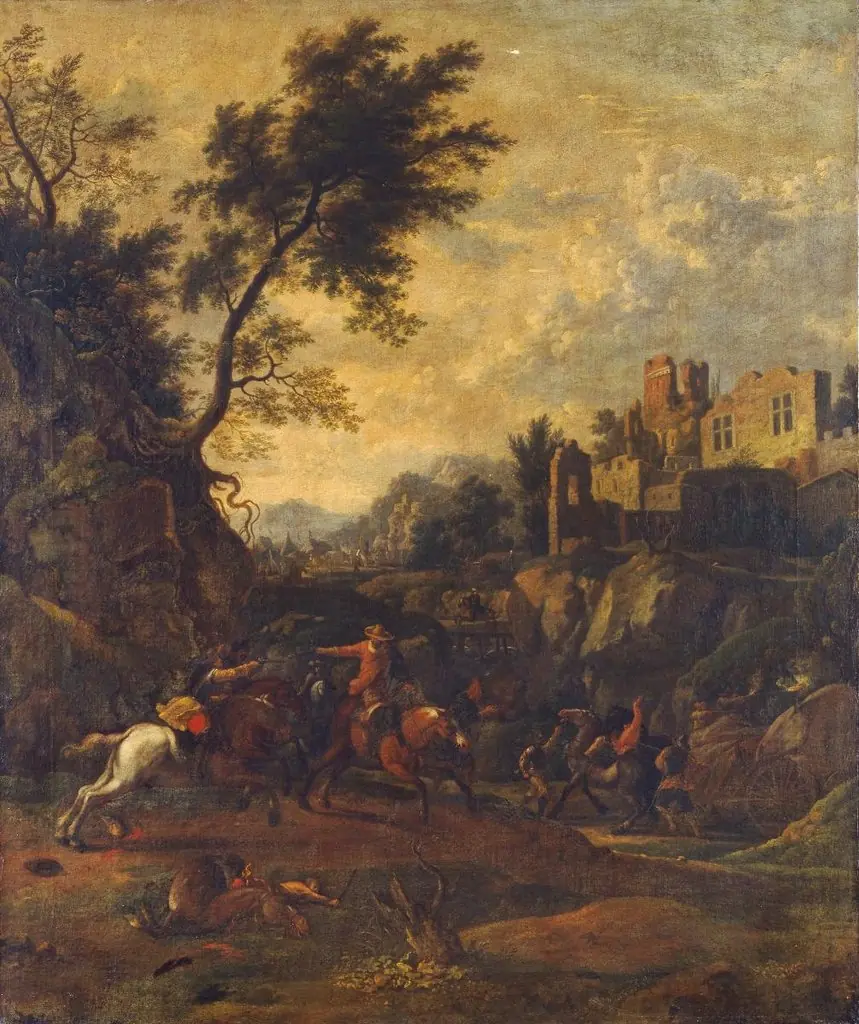
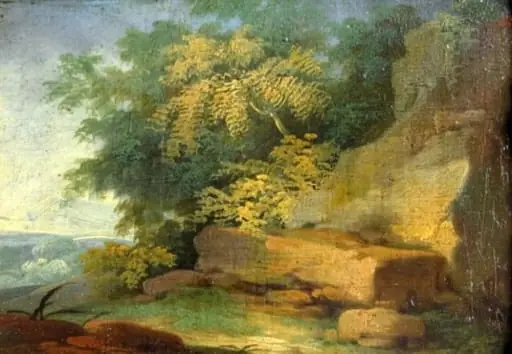 Peisaj stâncos ; pandant: Peisaj cu stânci
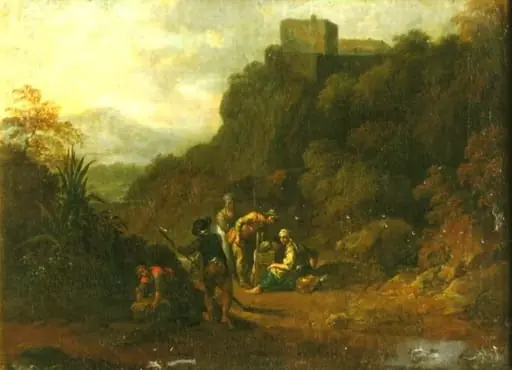 Peisaj cu castel pe deal; pandant: Peisaj de munte cu fortificații
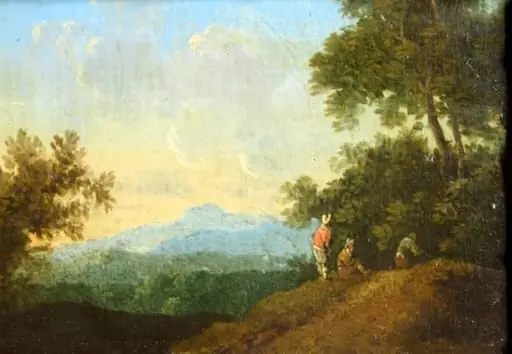 Mic peisaj deluros; pandant: Mic peisaj cu copaci
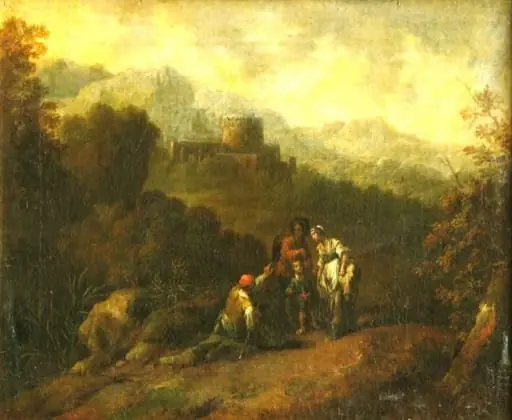 Peisaj de munte cu fortificații; pandant: Peisaj cu castel pe deal
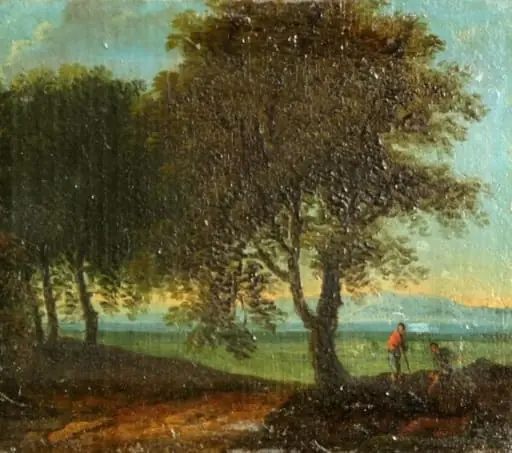 Mic peisaj cu copaci; pandant: Mic peisaj deluros
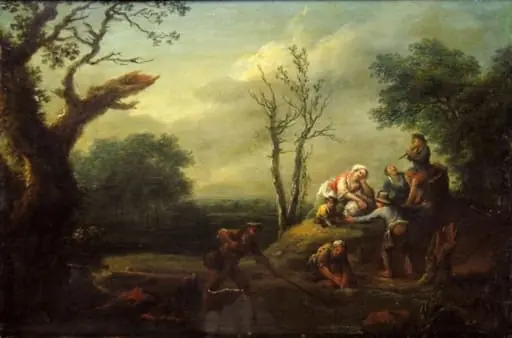 Peisaj cu pescari și băiat cu flaut; pandant: Peisaj cu pescari