Artwork
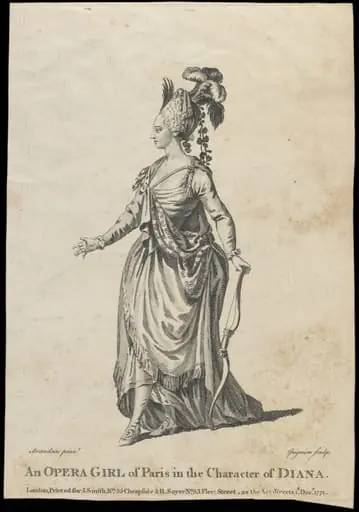
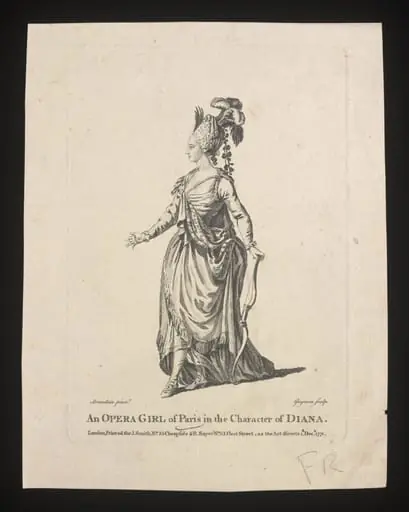
An Opera Girl of Paris in the Character of Flora
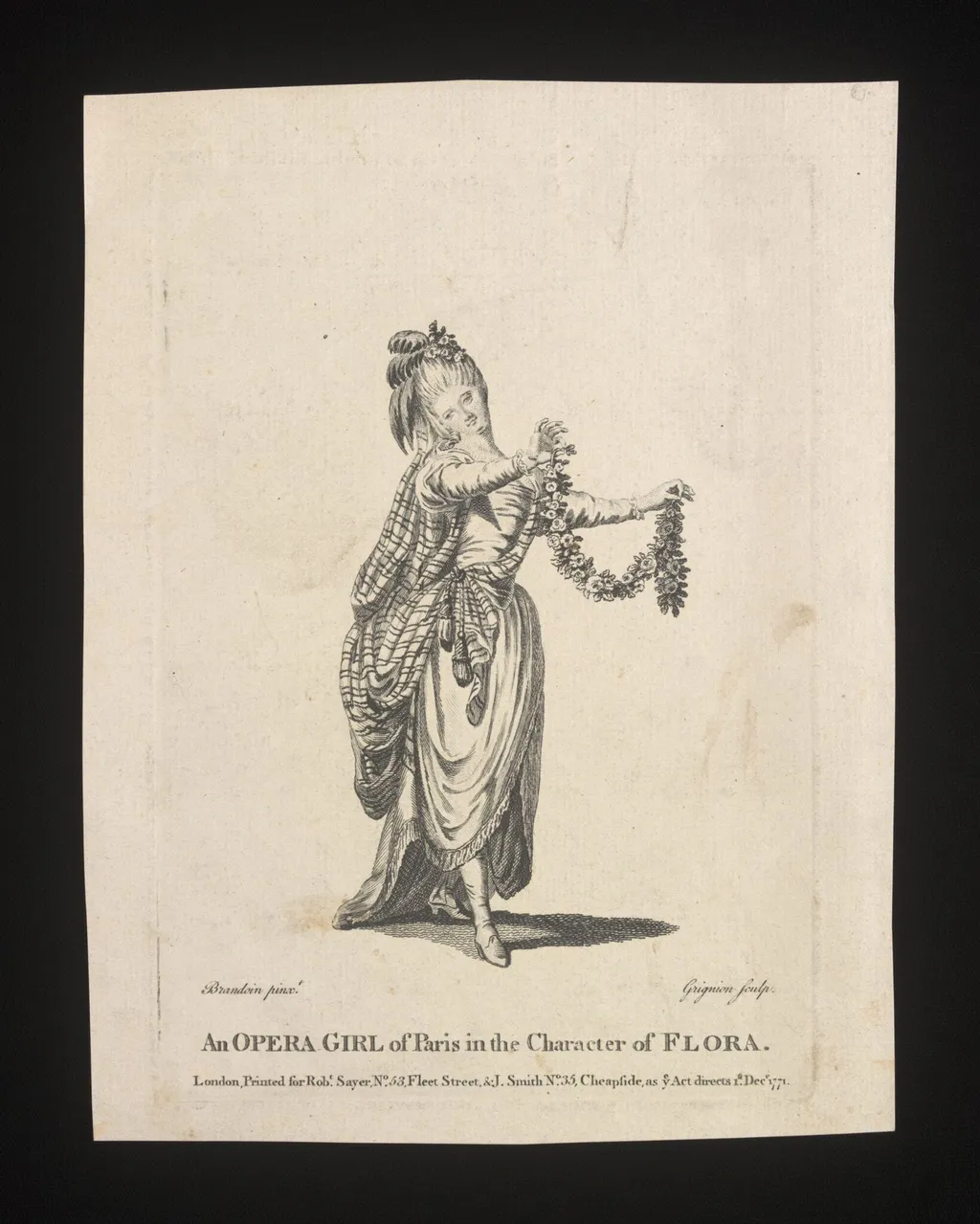
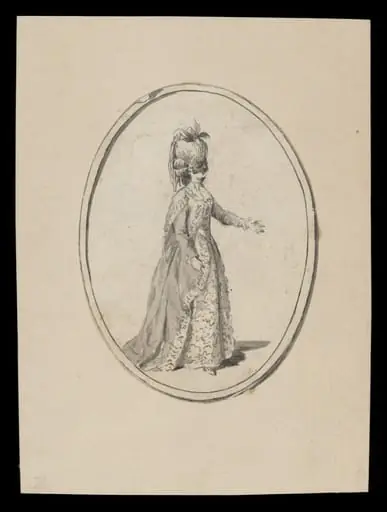
An Opera Girl of Paris in the Character of Flora is a print by the Romanticist artist Michel Vincent Brandoin. It dates from 1 and is held in the collection of the Victoria and Albert Museum.
About this work
This print is titled An Opera Girl of Paris in the Character of Flora. It was created by Michel Vincent Brandoin.
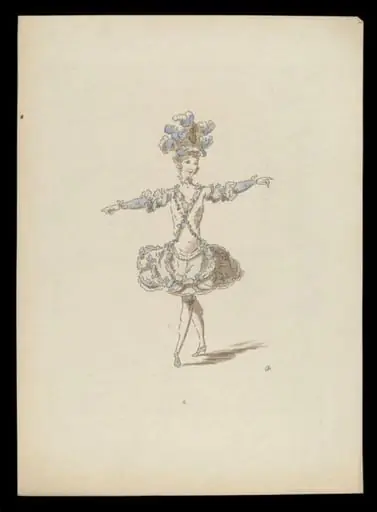
The print depicts an Opera singer of Paris Opera. It was published for J. Smith, London, on 1st December 1771, and is part of the Harry Beard Collection.
To learn more about the style and period of this work, look up the movement: Romanticism.
Overview
The work resides today in the Harry Beard Collection, a repository of 18th-century theatrical imagery.
This print, created by Michel Vincent Brandoin and published in London on December 1, 1771, portrays a performer from the Paris Opera in the role of Flora, a mythological figure associated with flowers and spring. Commissioned by publisher J. Smith, it was produced as part of a series capturing contemporary theatrical figures. The work resides today in the Harry Beard Collection, a repository of 18th-century theatrical imagery.
Subject & Meaning
The subject is a female opera singer embodying Flora, the Roman goddess of blossoms and renewal. By casting a real performer in this mythological role, the print blurs the line between stage fiction and lived identity, reflecting the era’s fascination with theatrical personas. Flora’s association with beauty and transience may have subtly commented on the fleeting nature of fame in the opera world.
Technique & Style
Executed as a fine-line engraving, the print employs delicate hatching and precise contours to render the singer’s costume and posture. The composition emphasizes elegance and theatricality, typical of late 18th-century British printmaking. Though influenced by French operatic culture, the style aligns with London’s commercial print trade, which catered to public interest in continental performance.
History & Provenance
The print was issued by J. Smith, a London publisher known for distributing theatrical portraits. It entered the Harry Beard Collection, assembled in the early 20th century by a noted British collector of opera ephemera. The collection was later acquired by the Victoria and Albert Museum, preserving the print as a document of 18th-century performance culture and print distribution networks.
Context
In 1771, Parisian opera was a cultural touchstone across Europe, and London audiences eagerly consumed imagery of its stars. Prints like this one served as affordable souvenirs, bridging the gap between elite theater and the public. Though Romanticism would later emphasize emotional depth, this work reflects the earlier, more formal aesthetic of theatrical portraiture, rooted in observation rather than idealization.
Legacy
The print survives as a record of how opera performers were commodified and circulated in print form. It contributes to understanding the role of visual media in shaping public perception of artists before photography. While not widely known today, it remains a valuable artifact for scholars studying the intersection of theater, print culture, and gender representation in the 18th century.
Artist & collection