Artwork
An Opera Girl of Paris in the Character of Diana
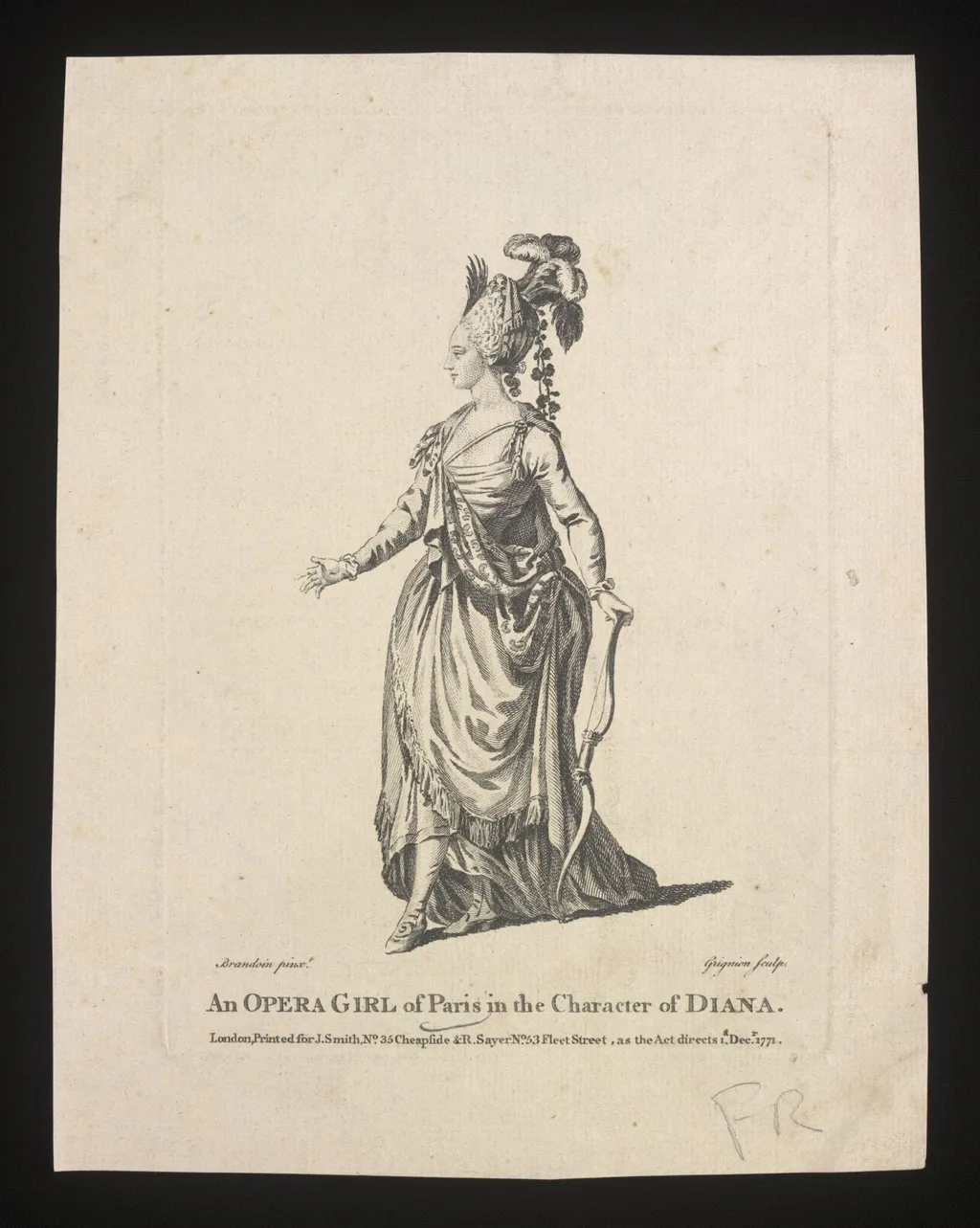
An Opera Girl of Paris in the Character of Diana is a print by the Romanticist artist Michel Vincent Brandoin. It dates from 1 and is held in the collection of the Victoria and Albert Museum. This 1771 print, produced in London for J.
About this work
The artist chose a dramatic role for the singer—hunting goddess, moon, bow—so the image feels a little theatrical.
This print shows a Paris Opera singer dressed as Diana, the Roman goddess. It’s a single sheet from 1771, made for London buyers. The artist chose a dramatic role for the singer—hunting goddess, moon, bow—so the image feels a little theatrical.
It’s one of the earliest Romantic prints in the Victoria and Albert’s Harry Beard Collection. Romanticism loved bold moods and costumes, so this piece fits right in.
Look up the Victoria and Albert Museum’s portrait prints next.
Overview
This 1771 print, produced in London for J. Smith, portrays a performer from the Paris Opera in the guise of Diana, Roman goddess of the hunt. Created as a single-sheet engraving, it was intended for the British market, reflecting transnational interest in French theatrical culture. Part of the Harry Beard Collection at the Victoria and Albert Museum, it stands as an early example of Romantic-era portraiture in print form, capturing performance as a vehicle for mythic identity.
Subject & Meaning
The subject is a female opera singer embodying Diana, a figure associated with the moon, wilderness, and archery. The choice of role elevates the performer beyond mere entertainment, linking her to classical ideals of purity and strength. The theatrical costume and pose suggest a moment of staged drama, blurring the line between real performer and mythic archetype. This transformation reflects 18th-century fascination with allegory and the symbolic power of classical mythology in public performance.
Technique & Style
Executed as a line engraving, the print employs fine, controlled strokes to render the figure’s elaborate costume and dramatic posture. The composition emphasizes verticality and gesture, drawing attention to the bow and flowing drapery. Lighting is stylized rather than naturalistic, enhancing the theatrical mood. The absence of detailed background focuses attention on the figure, aligning with emerging Romantic tendencies to prioritize emotional resonance over topographical accuracy.
History & Provenance
Printed in London on December 1, 1771, the image was distributed as a commercial print for English collectors interested in continental opera. It entered the Harry Beard Collection, assembled in the 19th century, and was later acquired by the Victoria and Albert Museum. Its survival as a single sheet suggests it was valued as a collectible rather than a mass-produced illustration, preserving its original form and context.
Context
In the late 18th century, Parisian opera was a cultural export, admired across Europe for its spectacle and vocal artistry. British audiences consumed images of its stars as symbols of continental refinement. This print reflects a broader trend of translating live performance into portable imagery, catering to a growing middle-class interest in theater and classical mythology. It also signals the early stirrings of Romanticism’s preference for emotional intensity and mythic subject matter.
Legacy
As one of the earliest Romantic prints in the Harry Beard Collection, it illustrates the transition from neoclassical restraint to expressive, character-driven portraiture. Its preservation highlights the museum’s commitment to documenting performance culture through ephemeral media. While not widely known today, it remains a quiet testament to how opera stars were mythologized in print, shaping public perception of artistry and identity in the pre-photographic age.
Artist & collection

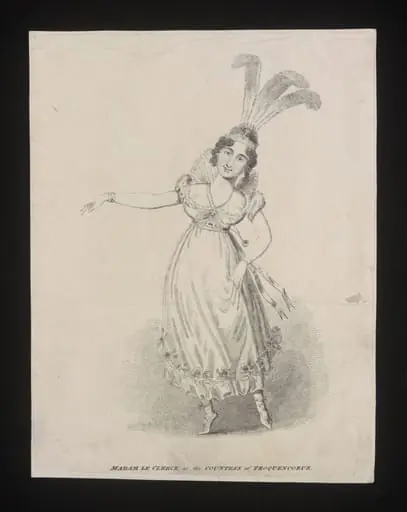 Madam Le Clerck as the Countess of Troquencoeur
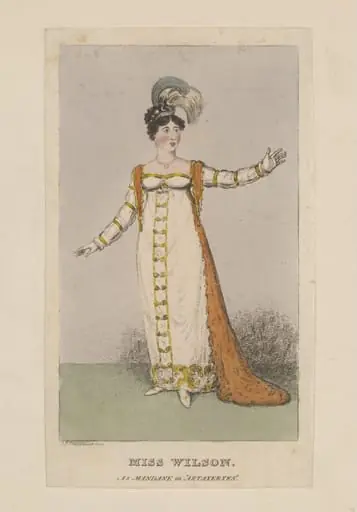 H Beard Print Collection
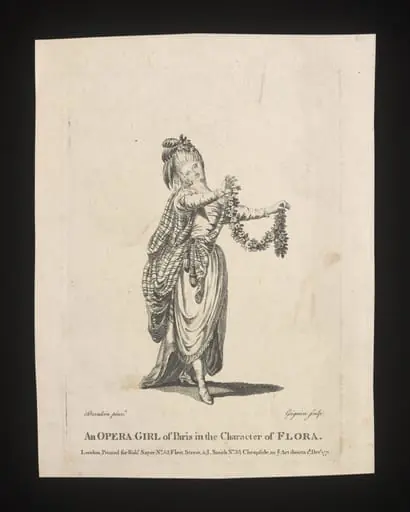
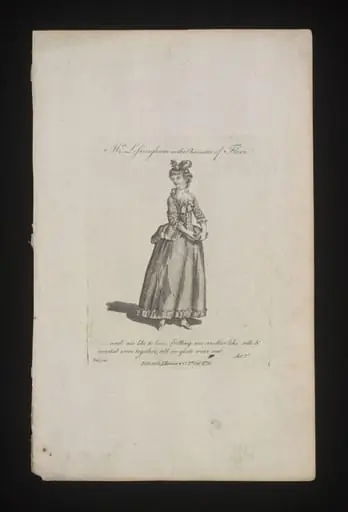 Mrs Lessingham in the character of Flora
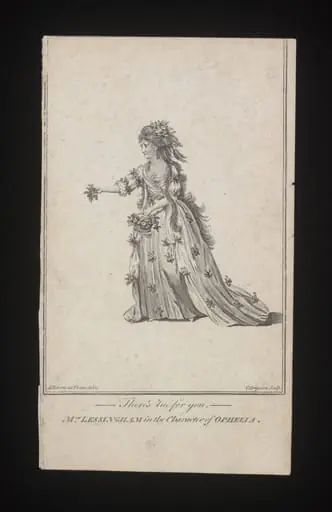 Mrs Lessingham in the character of Ophelia
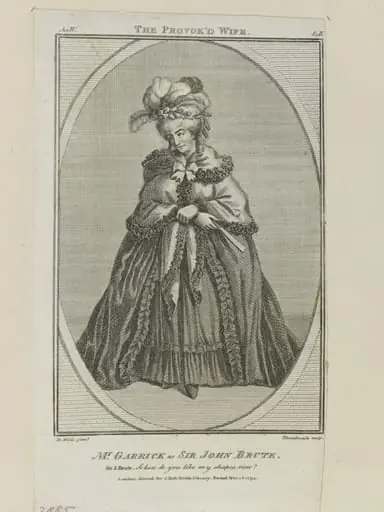 Mr. Garrick as Sir John Brute
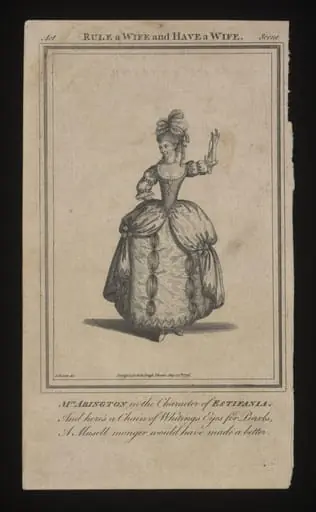 H Beard Print Collection
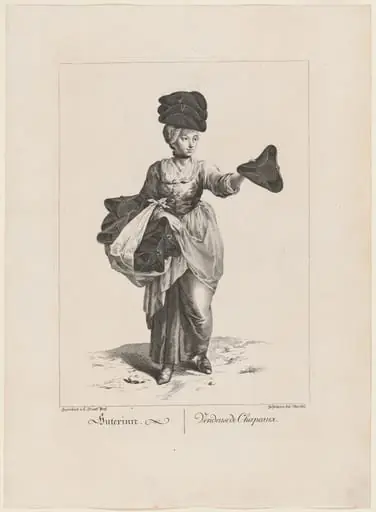 Huterinn/Vendeuse de Chapeaux. (Hat Seller)
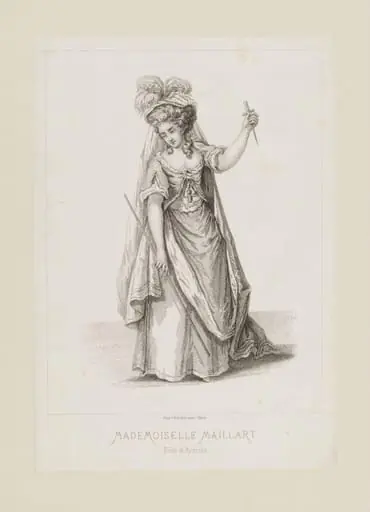 H Beard Print Collection
 Print Collection
 H Beard Print Collection