Artwork
Portrait of a Woman (Marianna Panciatichi, marchesa Paolucci delle Roncole, 1835–1919, or her sister-in-law, Beatrice Ferrari-Corbelli di Reggio, contessa di Lucciano)
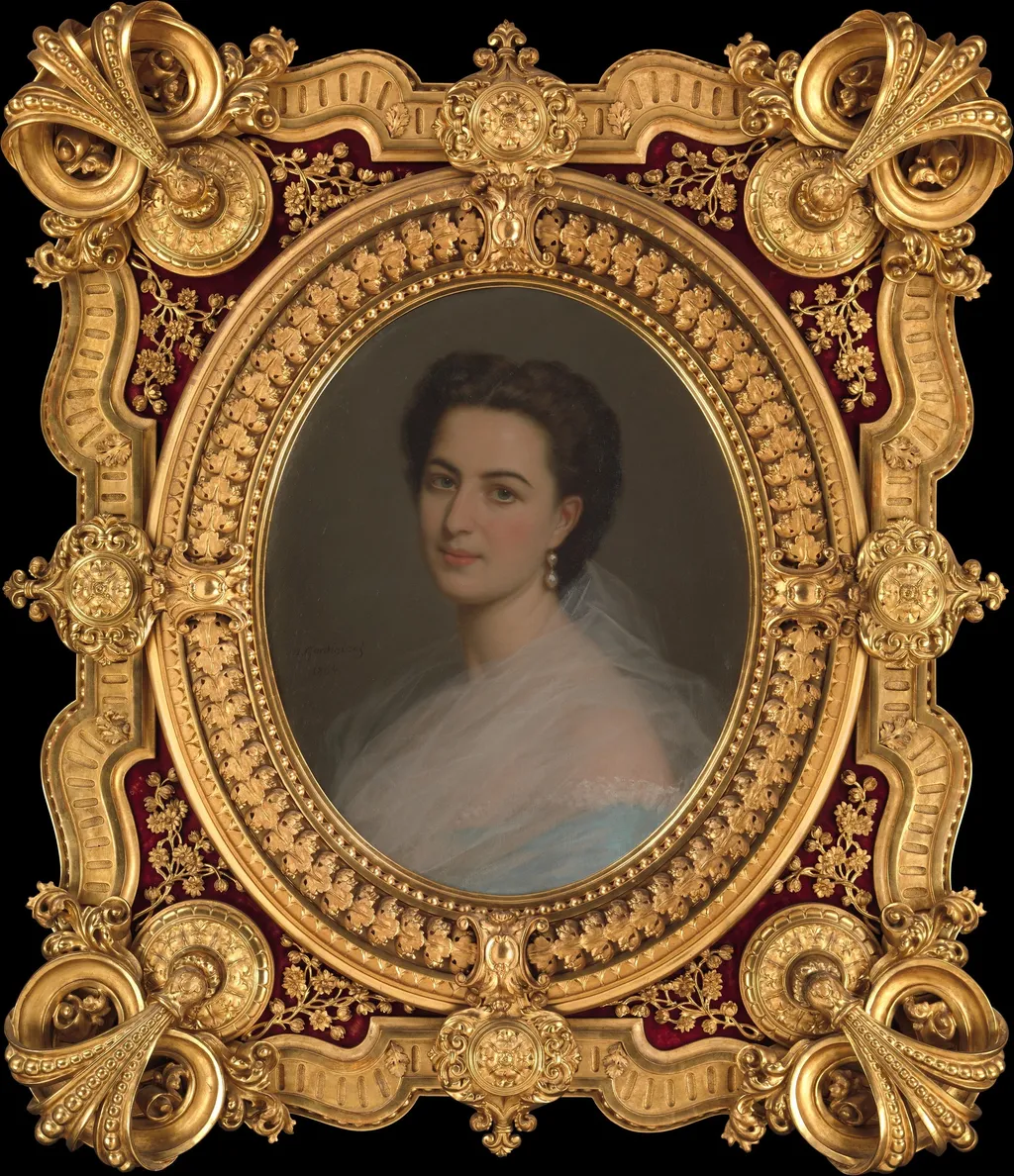
Portrait of a Woman (Marianna Panciatichi, marchesa Paolucci delle Roncole, 1835–1919, or her sister-in-law, Beatrice Ferrari-Corbelli di Reggio, contessa di Lucciano) is an oil painting by the Realist artist Michele Gordigiani. It dates from 1864 and is held in the collection of the Metropolitan Museum of Art.
About this work
Overview
The painting exemplifies 19th-century portraiture, showcasing the artist's ability to render individual likeness and the refined fashion of the period.
Michele Gordigiani's *Portrait of a Woman*, an oil painting from 1864, presents an elegant depiction of an unidentified female sitter. This work is held in the collection of The Metropolitan Museum of Art. The painting exemplifies 19th-century portraiture, showcasing the artist's ability to render individual likeness and the refined fashion of the period. It remains a notable example of Gordigiani's oeuvre, reflecting the artistic trends and social customs of its time.
Subject & Meaning
The identity of the woman portrayed in this painting is uncertain, with scholarly research suggesting she is either Marianna Panciatichi, marchesa Paolucci delle Roncole, or her sister-in-law, Beatrice Ferrari-Corbelli di Reggio, contessa di Lucciano. Despite the ambiguity, the portrait serves as a formal representation of a woman from a distinguished family. Such commissions were customary for documenting social standing and personal appearance, embodying the cultural values of the era's elite.
Technique & Style
Gordigiani rendered the sitter in a light-toned dress, complemented by a dark shawl, set against a deep background that accentuates her form. The artist skillfully utilized subtle gradations of light and shadow to model her facial features and the drapery of her attire, achieving a sense of volume and realism. Colors transition smoothly, particularly in her garments and the backdrop, contributing to the painting's polished finish. The artwork is presented within an elaborate gold frame, adorned with intricate scrollwork and floral designs typical of 19th-century decorative framing.
Artist & collection