Artwork
Noir (Μαύρο)
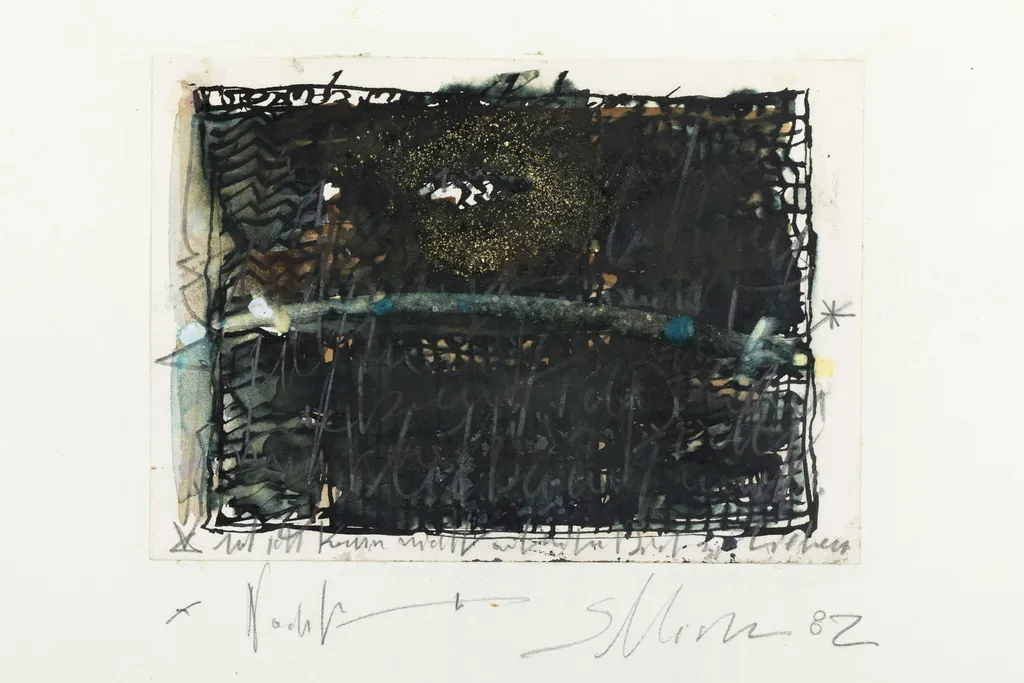
Noir (Μαύρο) is an unspecified work on paper by the Contemporary Abstract artist Sotirios Michou. It dates from 1982 and is held in the collection of the Metropolitan Organisation of Museums of Visual Arts of Thessaloniki – MOMus.
About this work
This piece is part of a series where he played with dark colors and bold shapes.
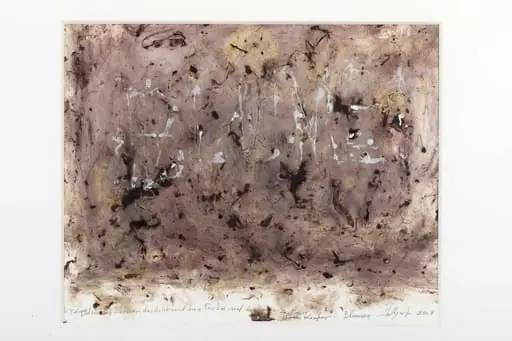
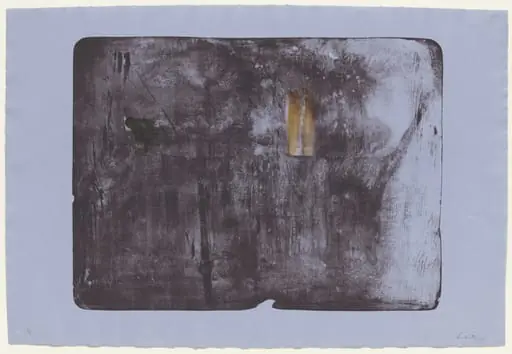
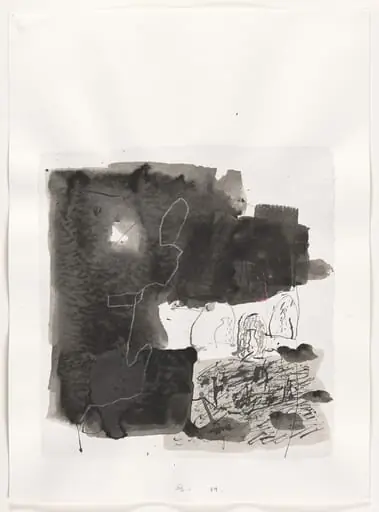
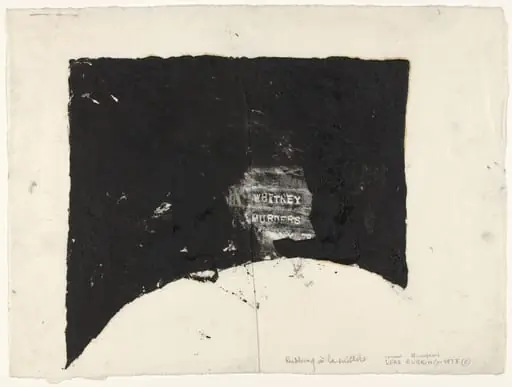
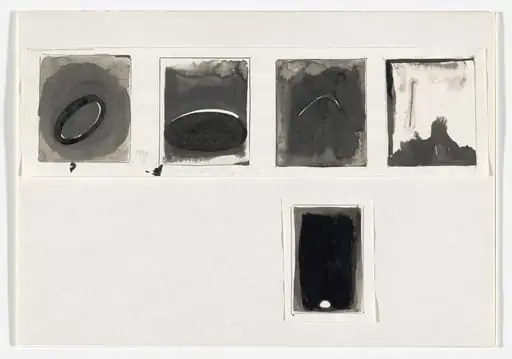
This watercolor shows a black shape on a white background. It looks simple, almost like a shadow. But it’s not a shadow—just deep black watercolor on paper.
Michou painted this in 1982. He used watercolor in a way that feels fresh. The black isn’t flat. It shifts under light, like wet ink soaking into the paper.
His work often mixes geometry with feeling. This piece is part of a series where he played with dark colors and bold shapes. See more at Michou, Sotirios (1936-2010).
Overview
Sotirios Michou, active from the 1960s until his death in 2010, explored diverse media including watercolor, collage, photography, and ceramics. His practice evolved from figurative sketches to increasingly abstract compositions. This 1982 watercolor, part of a series focused on dark forms, exemplifies his shift toward minimalism and material sensitivity, where pigment and paper interact as primary subjects.
Subject & Meaning
The work presents a single, irregular black form on unprimed paper, resisting clear representation. It is neither a shadow nor an object, but a presence defined by absence. Michou’s use of pure black suggests contemplation of void, silence, or the unseen—themes recurring in his later textual works. The shape’s ambiguity invites interpretation without resolution, aligning with his interest in conceptual unity across media.
Technique & Style
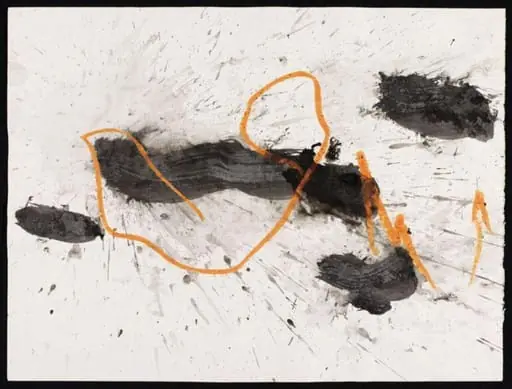
Michou applied watercolor with deliberate wet-on-wet techniques, allowing the black pigment to bleed and pool unevenly across the paper’s surface. The result is a dynamic field of tonal variation, where edges dissolve and depth emerges through texture rather than line. This method rejects flatness, emphasizing the physicality of the medium and the unpredictability of its behavior on absorbent support.
History & Provenance
Created in 1982, this watercolor belongs to a body of work held by MOMus-Museum of Contemporary Art, documenting Michou’s career across four decades. It emerged during a period when he was consolidating his abstract language, following earlier figurative phases. The piece was likely produced alongside his photographic collages and ceramic experiments, reflecting his interdisciplinary approach at mid-career.
Context
In early 1980s Greece, Michou’s work diverged from dominant national narratives in art, favoring introspective abstraction over political or folkloric themes. His engagement with minimalism and material process paralleled international trends, yet remained rooted in personal inquiry. The focus on black as a chromatic and conceptual anchor distinguished his practice from contemporaries who favored color or overt symbolism.
Legacy
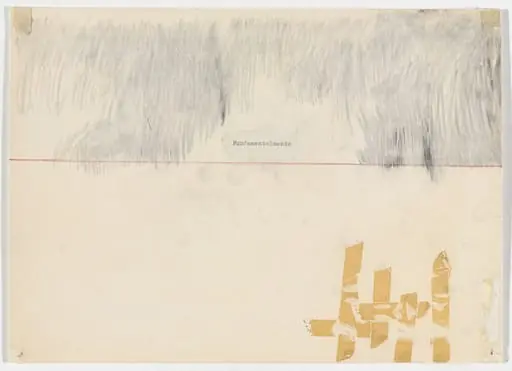
Michou’s watercolors from this period influenced later Greek artists interested in material restraint and conceptual depth. His integration of text, image, and process anticipated broader shifts in postmodern Greek art. Though understated, works like this one established a quiet but persistent dialogue between form, medium, and meaning that continues to inform contemporary practices in Athens.
Artist & collection
Museum
Metropolitan Organisation of Museums of Visual Arts of Thessaloniki – MOMus
Continue through works from the same source collection.