Artwork
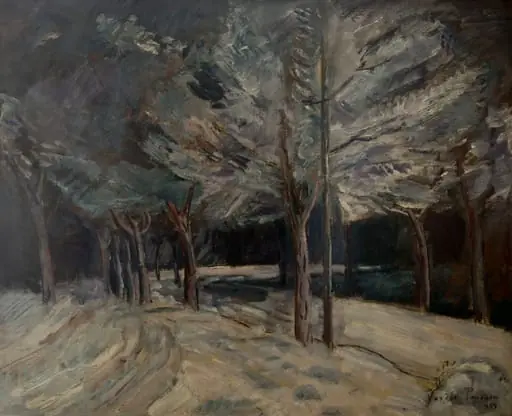
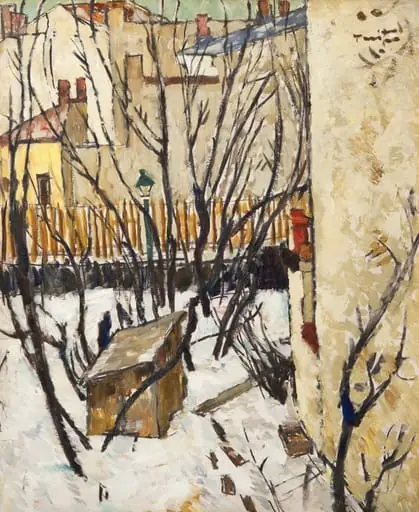
Peisaj de iarnă (Casă printre brazi)
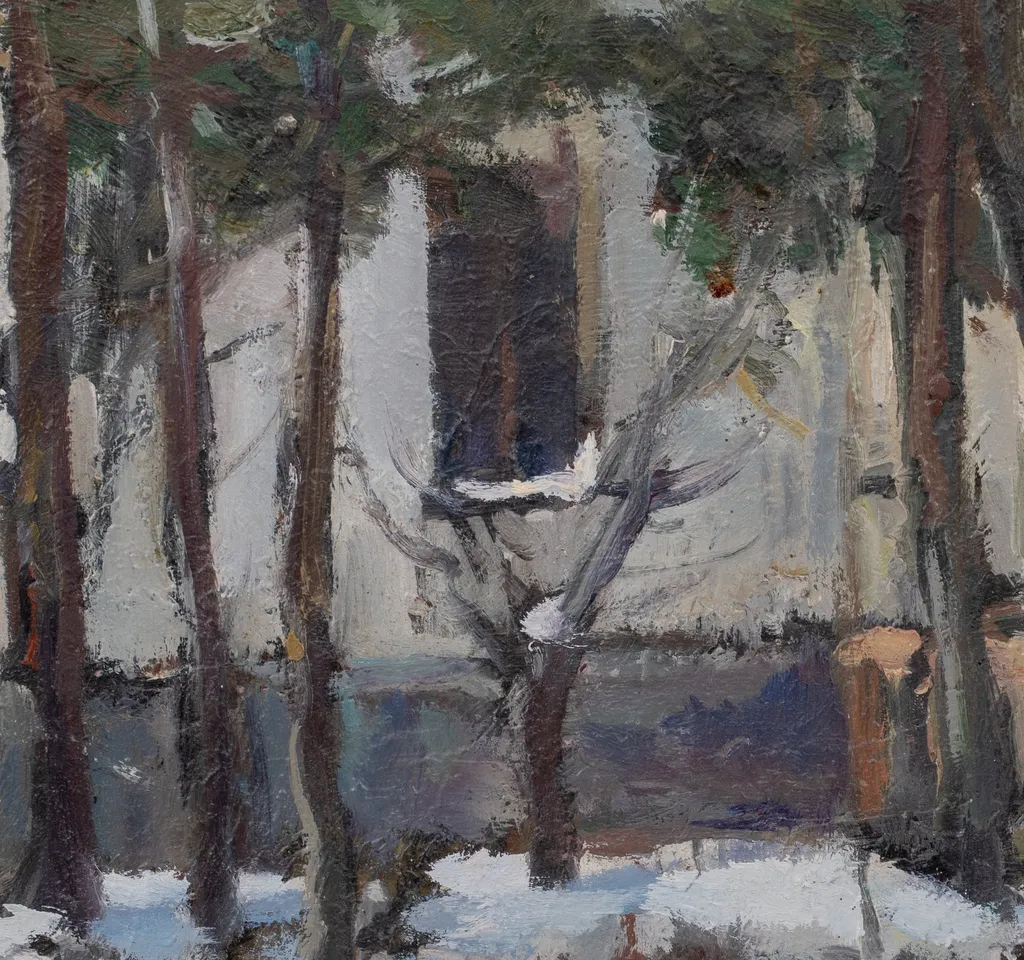
Peisaj de iarnă (Casă printre brazi) is a print by Mihăilescu-Craiu Victor. It dates from 1944 and is held in the collection of the Moldova National Museum Complex.
About this work
Overview
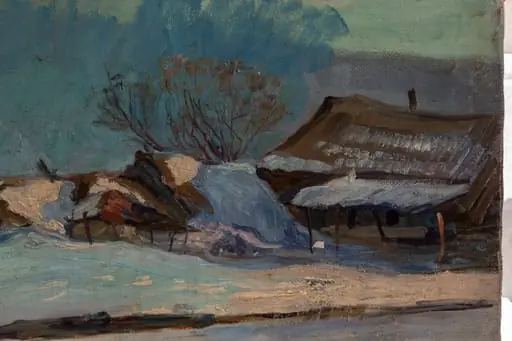
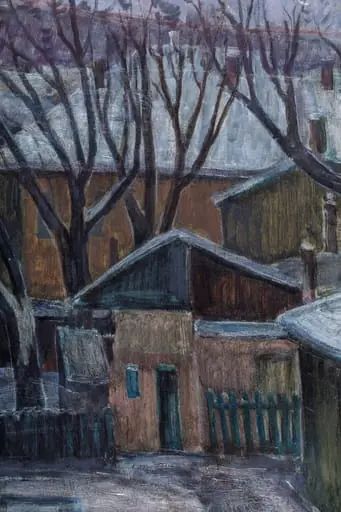
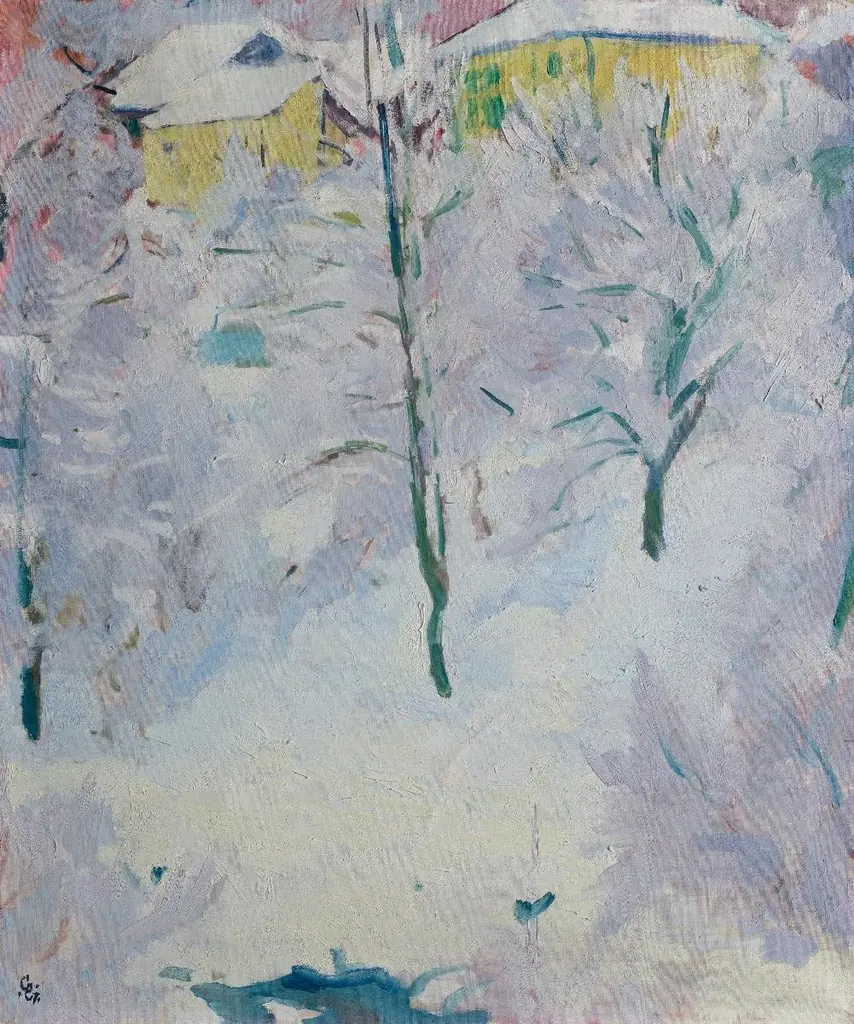
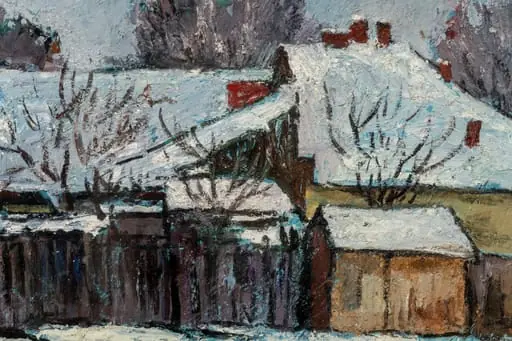
The surface is built up with thick, aggressive brushwork, creating a tactile, almost sculptural quality that emphasizes materiality over realism.
Painted around 1944 by Mihăilescu-Craiu Victor, this landscape captures a wintry scene with minimal detail and heightened texture. The composition centers on a shadowed central space flanked by two tall, dark forms suggesting tree trunks. A faint outline of a structure emerges in the middle ground, barely defined. The surface is built up with thick, aggressive brushwork, creating a tactile, almost sculptural quality that emphasizes materiality over realism.
Subject & Meaning
The painting depicts a solitary winter landscape, devoid of human presence or clear narrative. The obscured house among the pines evokes isolation and quiet endurance, common themes in postwar Romanian art. The lack of detail and muted palette suggest introspection rather than depiction, turning the scene into an emotional landscape where nature feels both imposing and indifferent.
Technique & Style
Thick layers of paint, applied with forceful strokes and occasional scraping, create a heavily textured surface. The artist favored dark earth tones—charcoal, umber, and slate—with subtle accents of pale blue and white to suggest snow and sky. This impasto technique prioritizes physical presence over clarity, resulting in a raw, immediate quality that reflects urgency and experimentation rather than polished finish.
History & Provenance
Created during the final years of World War II, the work emerged from a period of political and social upheaval in Romania. Little is documented about its early ownership, but it remains within the known corpus of Mihăilescu-Craiu’s wartime output. Its survival and preservation reflect its significance as a personal, non-conformist response to the era’s constraints.
Context
In mid-1940s Romania, official art promoted idealized realism, yet some artists turned to expressive abstraction as a form of quiet resistance. This painting aligns with that undercurrent—its roughness and ambiguity contrast sharply with state-sanctioned imagery. It reflects a broader regional trend where landscape became a vessel for inner states, not national mythmaking.
Legacy
Though not widely exhibited during the artist’s lifetime, this work has since been recognized as an early example of expressive landscape in Romanian modernism. Its emphasis on materiality and emotional tone influenced later generations who sought to break from academic conventions. It stands as a quiet testament to artistic autonomy amid political pressure.
Artist & collection
Artist
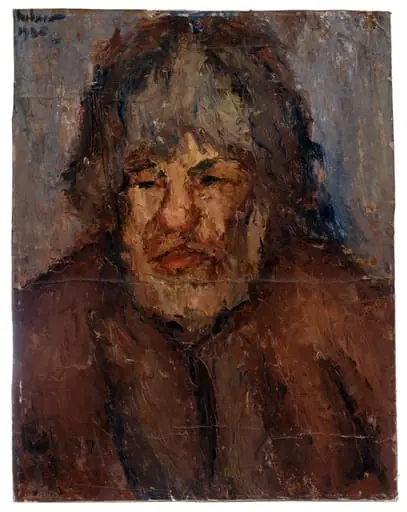
Victor M. Craiu painted Romanian landscapes and figure scenes using thick, choppy brushstrokes that give his surfaces a restless energy. In prints like *Strămoșul* and *Peisaj urban*, he layered bold autumn greens,…
 Flori de toamnă
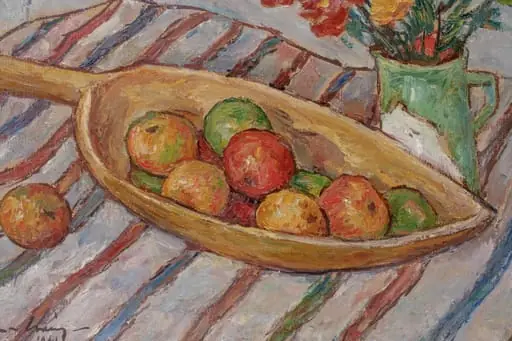
 Natură statică
 Strămoșul
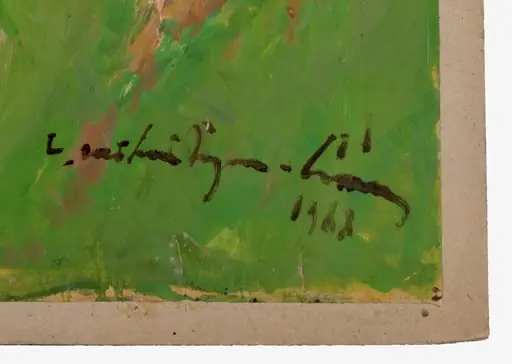 Studiu de peisaj cu un drum pe care merge o căruță trasă de cai. În prim-plan, căruța văzută din spate, dreapta. În căruță, un bărbat cu căciulă neagră și haină gri, o femeie cu batic alb și haină brun-ocru și o fetiță cu batic alb cu verde-roșu, așezată în spatele celor doi, lângă două butoaie. Drumul taie ca o diagonală lucrarea; de-o parte și de alta, iarbă. Linia orizontului foarte ridicată, după care se vede un copac verde, dealul albastru în depărtare și cerul. Semnat și datat cu brun, dreapta jos: V. Mihăilescu Craiu 1968.
 Natură statică cu flori
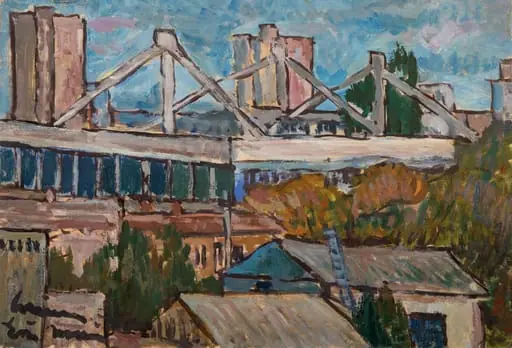 Peisaj urban; în prim-plan, acoperișuri de case și vegetație. În plan îndepărtat, o hală de producție care are pe acoperiș grinzi verticale care susțin alte grinzi de-o parte și de alta, celălalt capăt având punct de sprijin marginile construcției. Două coșuri apar în spatele halei. Colorat în gri. Tușă păstoasă. Semnat cu negru, stânga jos: Craiu.
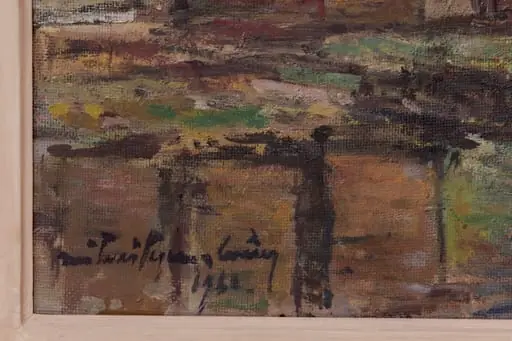 Peisaj industrial pe Valea Bistriței
 Natură moartă cu mere și flori