Artwork
Portret de băiat
Portret de băiat is a print by Mihăilescu-Craiu Victor. It dates from 1945 and is held in the collection of the Moldova National Museum Complex.
About this work
If you’re curious about where this empty canvas comes from, look up the Museum of Ethnography.
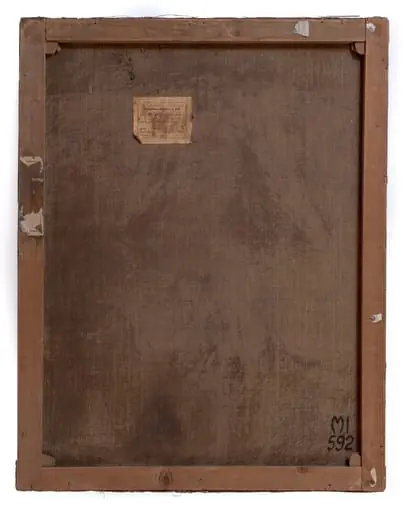
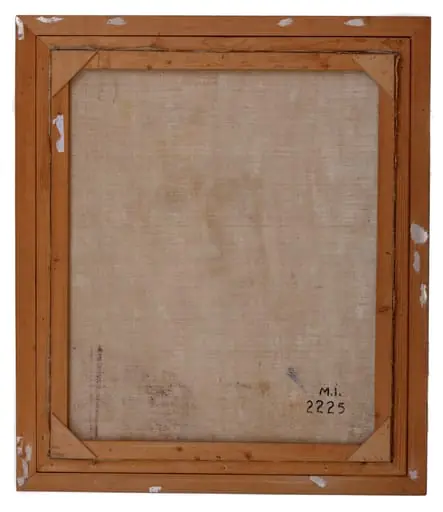
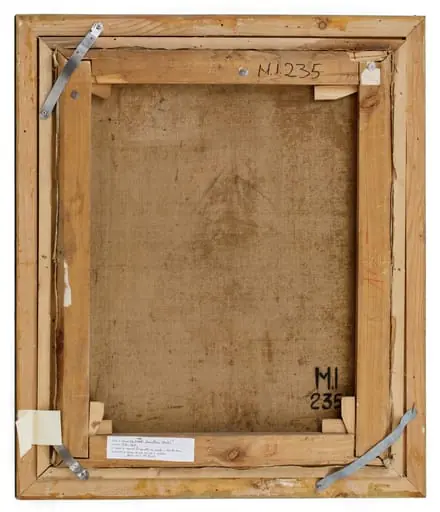
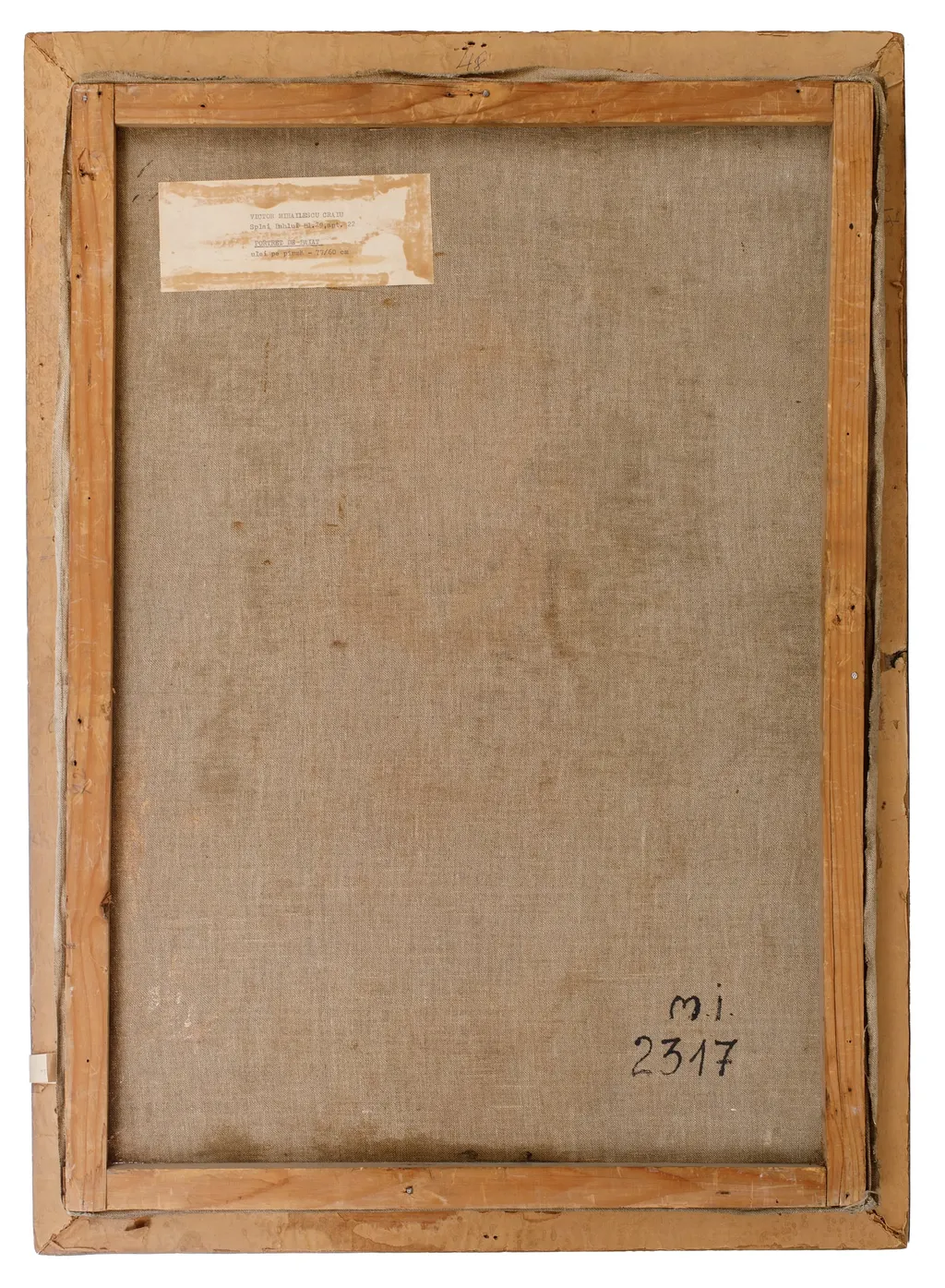
This is a blank canvas stretched over a wooden frame. The wood is light brown, showing some wear and age. The canvas itself is plain, with no visible paint or image—just a smooth, beige surface.
The frame has a small label near the top, but the text is too blurry to read clearly. In the bottom right corner, someone wrote "M.I. 2317" in pencil.
If you’re curious about where this empty canvas comes from, look up the Museum of Ethnography.
Overview
This unmarked canvas, stretched over a weathered wooden frame, is attributed to Mihăilescu-Craiu Victor around 1945. Despite its appearance as an empty support, it is cataloged as a finished work. The frame shows signs of age, with light brown wood bearing traces of use. A faint pencil inscription in the lower right reads 'M.I. 2317,' while a blurred label near the top remains illegible.
Subject & Meaning
The work bears no figurative or representational content, challenging conventional expectations of portraiture. Its title, 'Portret de băiat,' suggests an intended reference to a boy, yet no image exists to fulfill this. The absence may reflect a conceptual gesture, a deliberate void, or a record of an unexecuted plan, leaving interpretation open to context rather than visual form.
Technique & Style
The canvas is prepared with a smooth, uniform beige surface, free of brushwork, pigment, or texture. The wooden frame is untreated and shows natural wear, emphasizing materiality over artistic intervention. The lack of composition or color aligns with minimal or anti-art tendencies, though no stylistic movement is explicitly documented in connection to this object.
History & Provenance
The work entered the collection of the Museum of Ethnography, where it is cataloged under the identifier M.I. 2317. Its origin as a finished piece, rather than a preparatory study, remains unexplained in available records. The blurred label on the frame and the penciled notation suggest institutional handling, but its path from artist to museum is undocumented.
Context
Created in postwar Romania, the piece emerges during a period of political and cultural upheaval. While many artists responded with overt symbolism or socialist realism, this work’s emptiness may reflect personal resistance, material experimentation, or the constraints of scarce resources. Its survival in a museum collection implies recognition, however ambiguous, of its significance.
Legacy
As an unadorned object preserved in a museum, it invites reflection on the boundaries of art and the role of context in defining meaning. It stands as a quiet counterpoint to traditional portraiture, prompting questions about intention, preservation, and the authority of institutional classification over visual absence.
Artist & collection
Artist
Victor M. Craiu painted Romanian landscapes and figure scenes using thick, choppy brushstrokes that give his surfaces a restless energy. In prints like *Strămoșul* and *Peisaj urban*, he layered bold autumn greens,…
 Flori de toamnă
 Natură statică
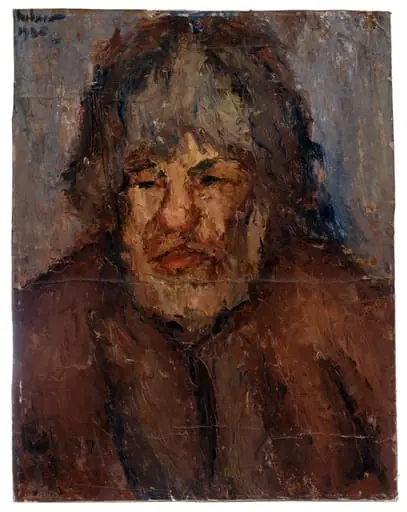 Strămoșul
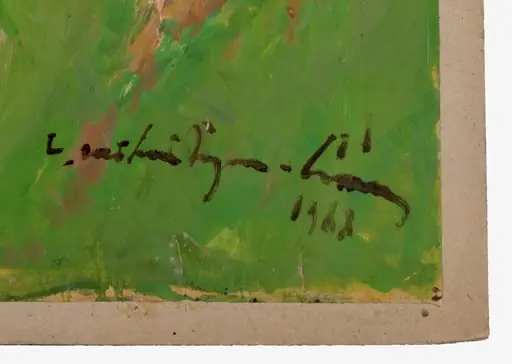 Studiu de peisaj cu un drum pe care merge o căruță trasă de cai. În prim-plan, căruța văzută din spate, dreapta. În căruță, un bărbat cu căciulă neagră și haină gri, o femeie cu batic alb și haină brun-ocru și o fetiță cu batic alb cu verde-roșu, așezată în spatele celor doi, lângă două butoaie. Drumul taie ca o diagonală lucrarea; de-o parte și de alta, iarbă. Linia orizontului foarte ridicată, după care se vede un copac verde, dealul albastru în depărtare și cerul. Semnat și datat cu brun, dreapta jos: V. Mihăilescu Craiu 1968.
 Natură statică cu flori
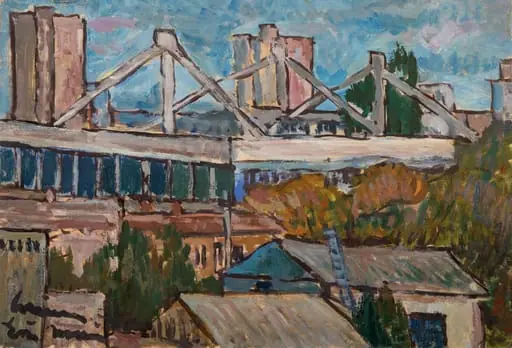 Peisaj urban; în prim-plan, acoperișuri de case și vegetație. În plan îndepărtat, o hală de producție care are pe acoperiș grinzi verticale care susțin alte grinzi de-o parte și de alta, celălalt capăt având punct de sprijin marginile construcției. Două coșuri apar în spatele halei. Colorat în gri. Tușă păstoasă. Semnat cu negru, stânga jos: Craiu.
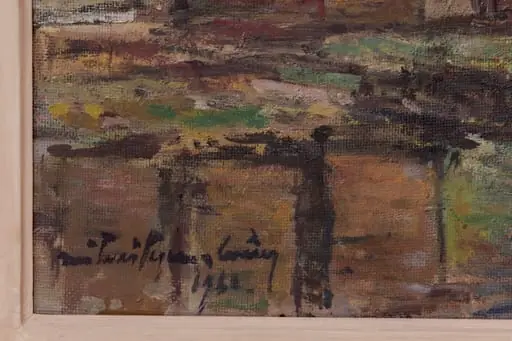 Peisaj industrial pe Valea Bistriței
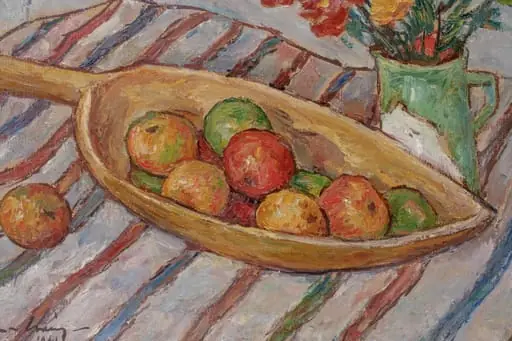 Natură moartă cu mere și flori