Artwork
Portret de bătrână
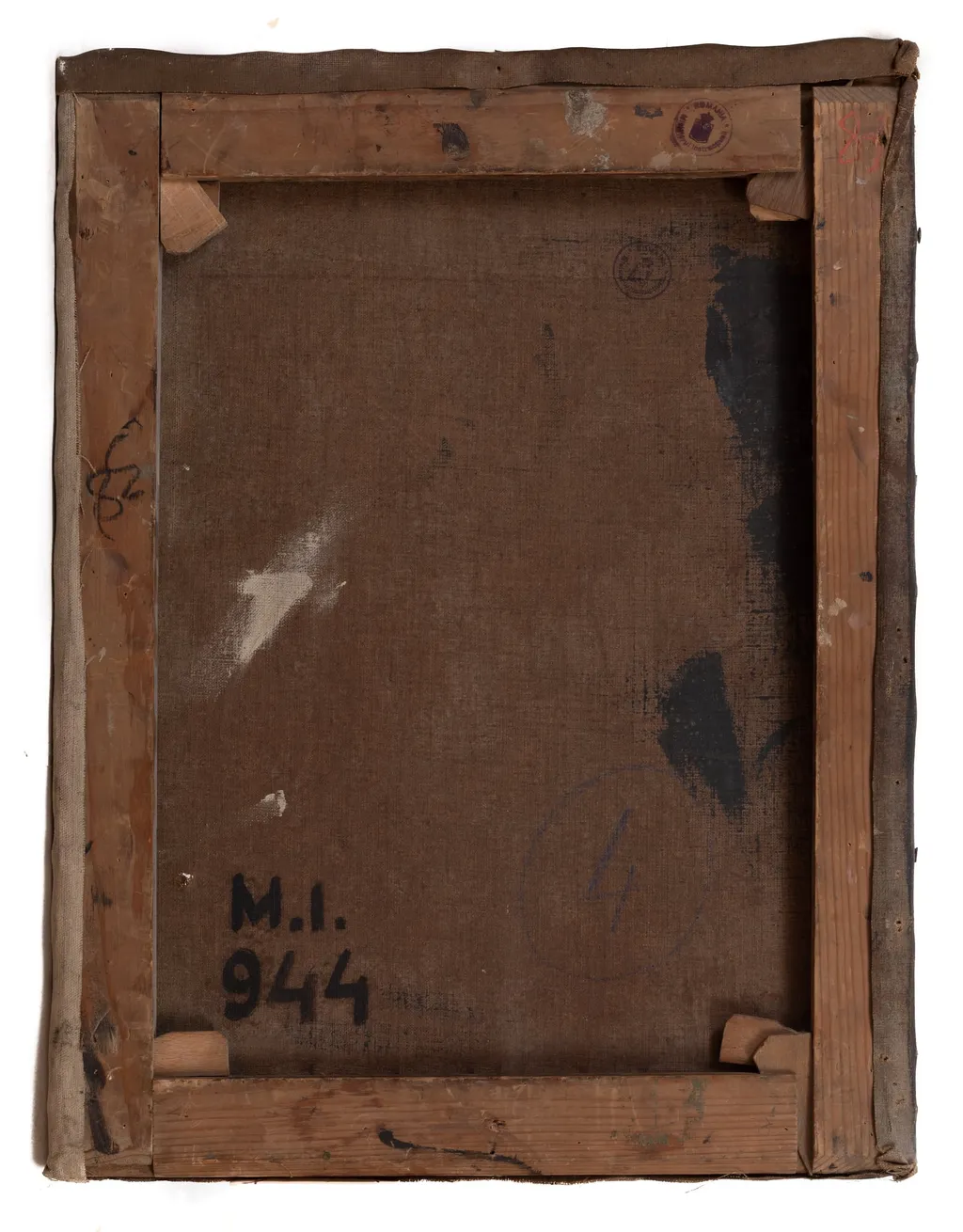
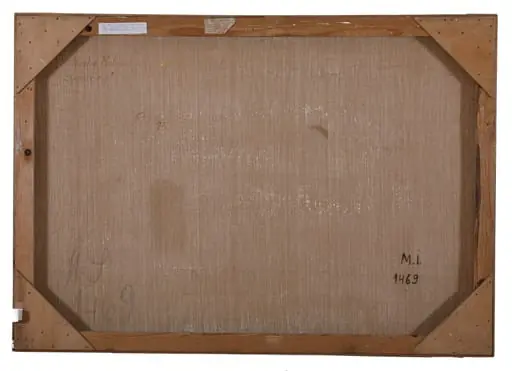
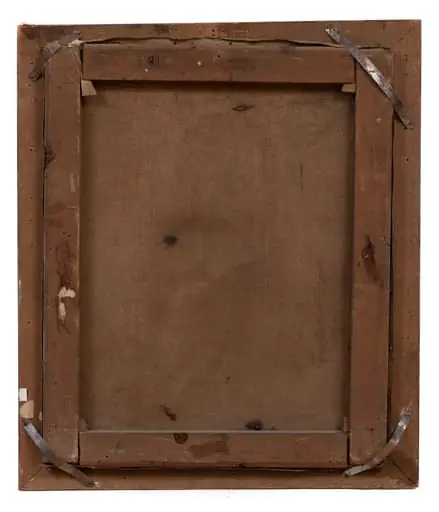
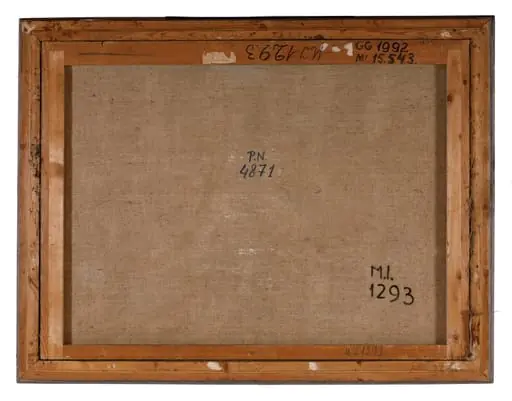
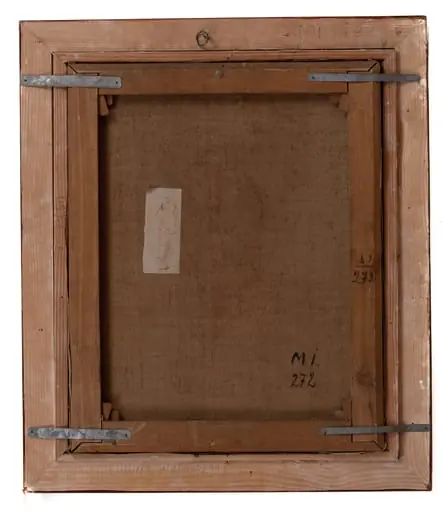
Portret de bătrână is a print by Mihăilescu I.. It is held in the collection of the Moldova National Museum Complex. This artifact consists of a fragmentary painted panel on wood, severely degraded by time and handling.
About this work
Overview
The surface is largely bare, with only faint traces of pigment remaining—a pale smudge in the upper left and a blurred dark form near the center.
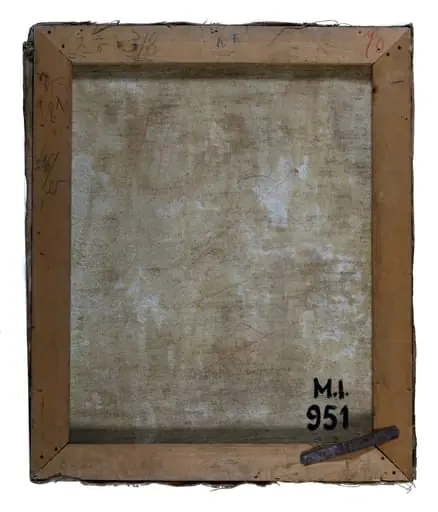
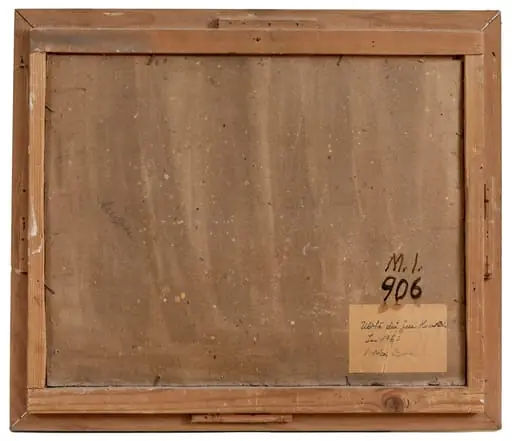
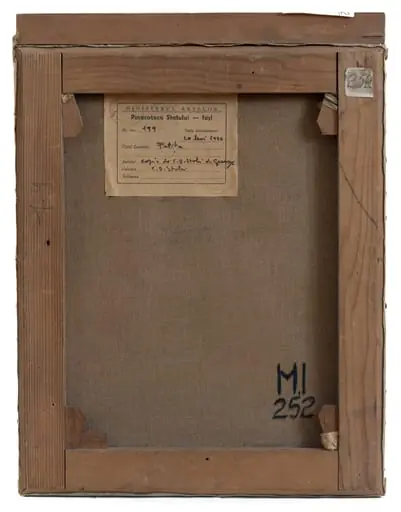
This artifact consists of a fragmentary painted panel on wood, severely degraded by time and handling. The surface is largely bare, with only faint traces of pigment remaining—a pale smudge in the upper left and a blurred dark form near the center. The original frame is crude, bearing remnants of adhesive and historical labels. A faint inscription, 'M.I. 944,' appears in the lower corner, possibly the artist’s mark or inventory code.
Subject & Meaning
The subject appears to be a female elder, though details are lost beneath layers of wear. The ghostly outlines suggest a seated or frontal portrait, common in folk or devotional traditions. Without clear facial features or context, the image’s original purpose—whether familial commemoration, religious veneration, or domestic decoration—remains speculative, rooted in everyday visual culture rather than formal artistry.
Technique & Style
The painting was executed in simple, opaque pigments on a wooden support, likely using locally available materials. The brushwork, now indistinct, was probably direct and unrefined, typical of non-academic artisans. The heavy abrasion indicates prolonged exposure to environmental conditions and physical handling, suggesting the piece was once part of active domestic or ritual use rather than preserved display.
History & Provenance
The presence of old labels and adhesive residue implies the object passed through multiple hands or institutions. The initials 'M.I. 944' may denote a collector’s catalog entry or workshop identifier, possibly from the late 19th or early 20th century. Its survival in fragmented form suggests it was not valued as fine art at the time, but retained as a relic of domestic or regional life.
Context
This work aligns with vernacular portraiture traditions found in rural Eastern Europe, where painted panels served personal or communal functions. Unlike formal studio portraits, such pieces were often made by itinerant painters or family members, using modest means. Their deterioration reflects both material limitations and the transient nature of objects tied to daily life rather than institutional preservation.
Legacy
Though lacking artistic fame, the piece contributes to understanding how ordinary people engaged with visual representation. Its survival, however incomplete, offers insight into the material culture of communities that rarely left written records. Institutions like the Museum of Ethnography preserve such fragments not for their aesthetic polish, but for their testimony to lived experience.
Artist & collection
Artist
This Romanian printmaker had a habit of sketching in the back of cafés, napkins tucked under coffee cups between bites of cheap pastry.