Artwork
Neapolitan night
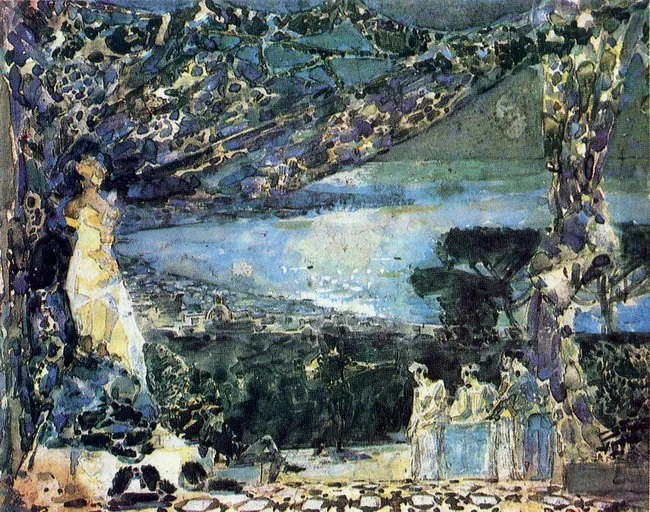
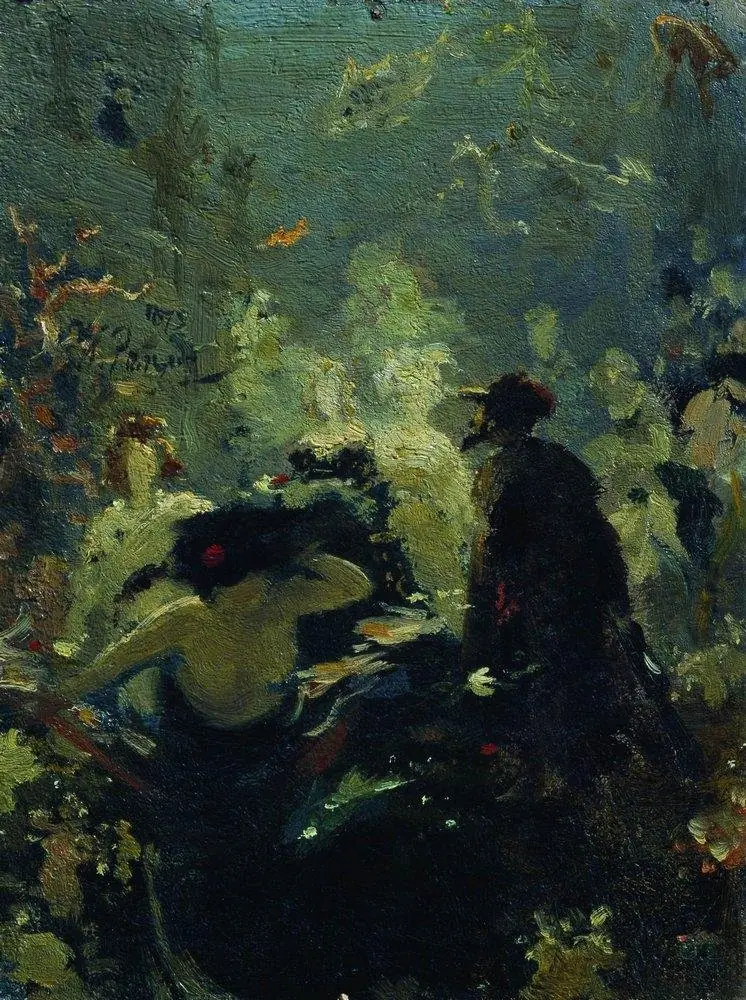
Neapolitan night is an unspecified painting by the Post-Impressionist artist Mikhail Vrubel. It dates from 1896 and is held in the collection of the Tretyakov Gallery.
About this work
Overview
Painted in 1896 by Mikhail Vrubel, *Neapolitan Night* is a nocturnal scene that reflects the artist’s engagement with Symbolist themes during his time in Italy.
Painted in 1896 by Mikhail Vrubel, *Neapolitan Night* is a nocturnal scene that reflects the artist’s engagement with Symbolist themes during his time in Italy. Though rooted in the broader currents of Post-Impressionism, the work diverges from naturalism through its emotional tone and stylized forms. Vrubel, primarily known for his contributions to Russian art, produced this piece during a period of personal and artistic transition, blending observed reality with introspective atmosphere.
Subject & Meaning
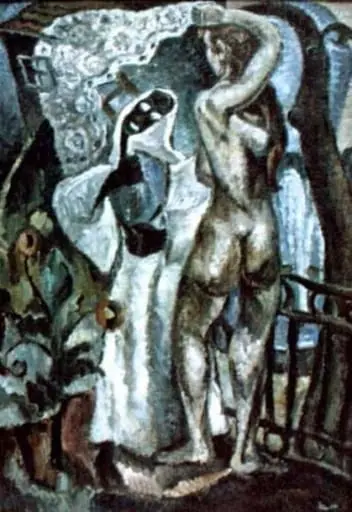
A solitary woman in a white gown stands motionless in the foreground, her silhouette softened by moonlight. Her stillness and isolated position suggest contemplation or inner solitude, evoking a quiet psychological presence rather than a narrative. The absence of clear identity or action invites interpretation as a symbol of melancholy, memory, or the elusive nature of the night. The urban backdrop, though indistinct, anchors her in a specific place without anchoring her in a story.
Technique & Style
Vrubel employs muted, cool tones to render the night, with subtle gradations of blue, gray, and indigo creating depth without sharp definition. The woman’s white dress, rendered with thin, luminous layers, contrasts against the shadowed cityscape, acting as both focal point and atmospheric bridge. Brushwork is deliberate yet fluid, avoiding Impressionist spontaneity in favor of controlled, almost sculptural modeling that enhances the painting’s dreamlike stillness.
History & Provenance
Created during Vrubel’s stay in Naples, the painting was brought back to Russia and entered the collection of the Tretyakov Gallery in Moscow by 1900. It remained relatively obscure compared to his mythological and religious works, but its quiet intensity attracted later scholars interested in his lesser-known landscapes and figure studies. The painting has been consistently held in the gallery’s permanent collection since its acquisition.
Context
Vrubel painted *Neapolitan Night* amid a broader European fascination with night as a psychological and aesthetic domain, paralleling Symbolist interests in mood over matter. While in Italy, he distanced himself from the theatricality of his earlier works, turning toward intimate, subdued subjects. The painting reflects his engagement with Southern Italian light and architecture, filtered through a Russian sensibility that prioritized inner resonance over topographical accuracy.
Legacy
Though not among Vrubel’s most widely exhibited works, *Neapolitan Night* is recognized for its quiet innovation in blending Symbolist introspection with observational detail. It exemplifies his capacity to transform mundane scenes into meditative spaces, influencing later Russian artists who sought emotional depth beyond realism. The painting remains a quiet anchor in the Tretyakov’s collection, offering a counterpoint to his more flamboyant compositions.
Artist & collection
Artist
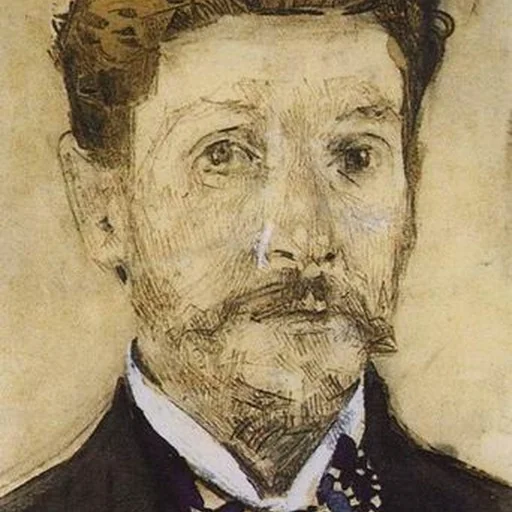
Mikhail Aleksandrovich Vrubel (Russian: Михаил Александрович Врубель; March 17, 1856 – April 14, 1910) was a Russian painter, draughtsman, and sculptor.