Artwork
Cea mai nouă Olympia
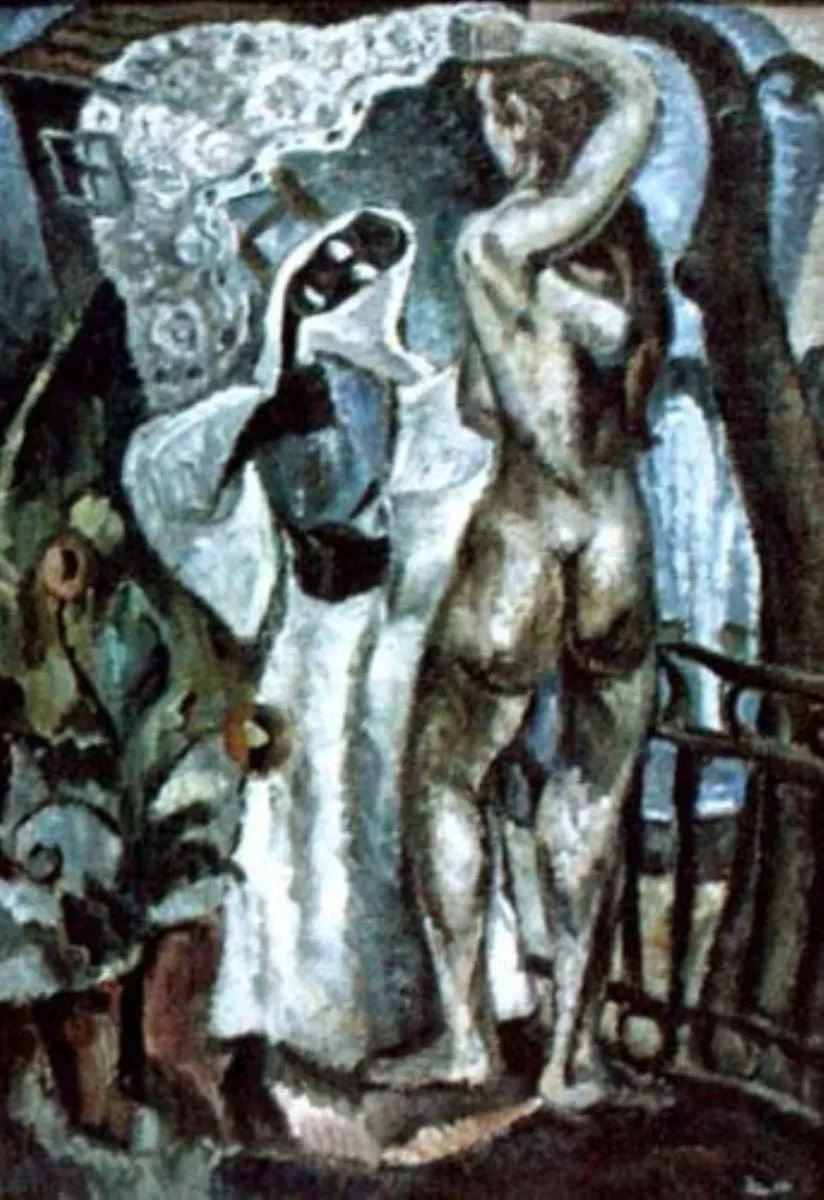
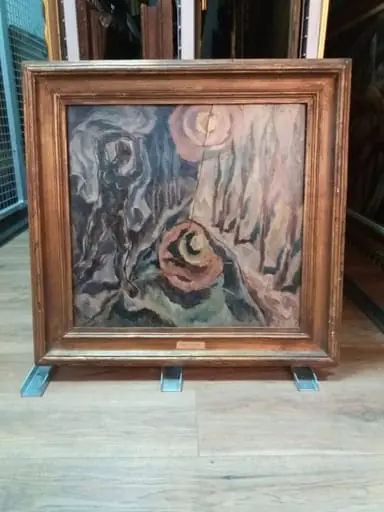
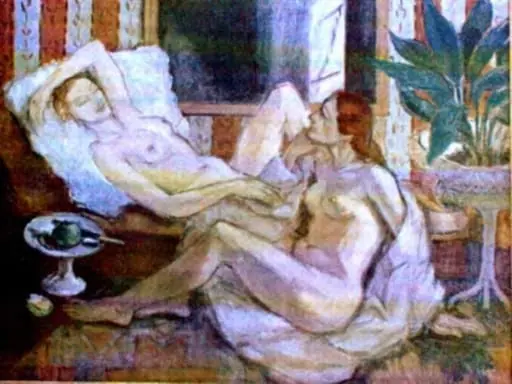
Cea mai nouă Olympia is an unspecified painting by Corneliu Michăilescu. It dates from 1930 and is held in the collection of the National Museum of Art of Romania.
About this work
Overview
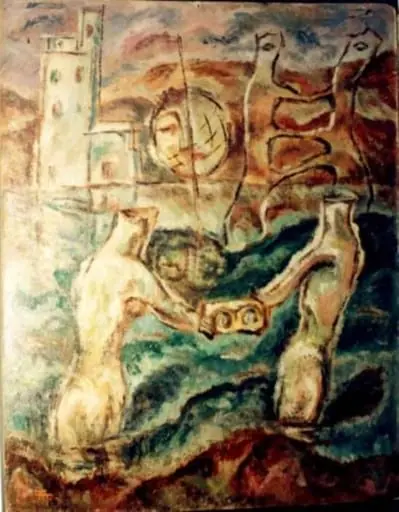
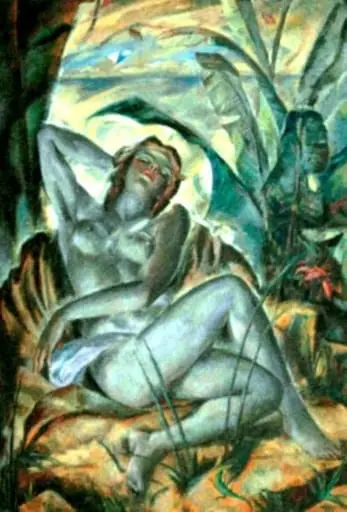
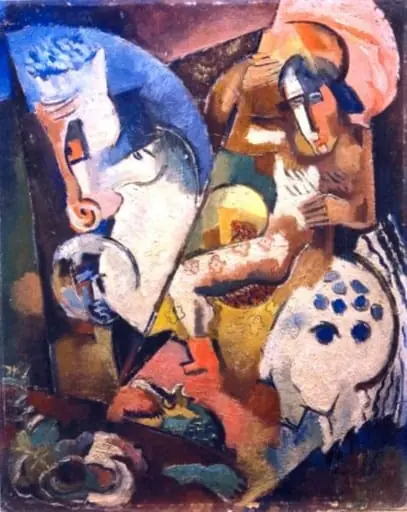
Created in 1930 by Romanian artist Corneliu Michăilescu, Cea mai nouă Olympia is a figurative painting depicting two nude figures in close proximity. The composition emphasizes physical presence over narrative, with a muted, shadowed backdrop that isolates the subjects. The work’s tactile surface and uneven illumination suggest a focus on materiality and mood rather than idealized form.
Subject & Meaning
The dark object held by one figure remains ambiguous, contributing to an atmosphere of mystery rather than storytelling.
The two figures, rendered without clear identity or context, evoke a sense of quiet intimacy or tension. Their stiff, unnatural postures resist classical ideals of grace, hinting at psychological distance or alienation. The dark object held by one figure remains ambiguous, contributing to an atmosphere of mystery rather than storytelling. The title, referencing Manet’s Olympia, invites comparison but subverts its cultural resonance.
Technique & Style
Michăilescu employs thick impasto brushwork to build the figures’ skin, creating a sculpted, uneven texture that catches light unpredictably. Pale blues and whites dominate the flesh tones, contrasting with the dark, indistinct background. The visible strokes and lack of smooth blending give the surface a raw, almost tactile quality, emphasizing the physical act of painting over polished finish.
History & Provenance
The painting was completed in 1930 during Michăilescu’s early career, a period when Romanian modernists were engaging with European avant-garde trends. It remained in private collections within Romania for much of the 20th century, with limited public exposure. Its current location and exhibition history are not widely documented, reflecting its status as a lesser-known work within the artist’s oeuvre.
Context
Emerging in interwar Romania, the work reflects broader European artistic shifts away from academic realism toward expressive, material-focused approaches. While influenced by Post-Impressionism and early Expressionism, Michăilescu’s treatment of the nude diverges from both classical tradition and the eroticism of Manet’s Olympia, favoring psychological ambiguity and formal experimentation over social commentary.
Legacy
Cea mai nouă Olympia stands as a quiet example of Romanian modernism’s engagement with form and texture over narrative. Though not widely exhibited or studied, it contributes to understanding how local artists adapted international styles to explore subjective, non-idealized representations of the human body. Its obscurity underscores the fragmented reception of interwar Romanian art beyond national borders.
Artist & collection