Artwork
Tamara and the Demon
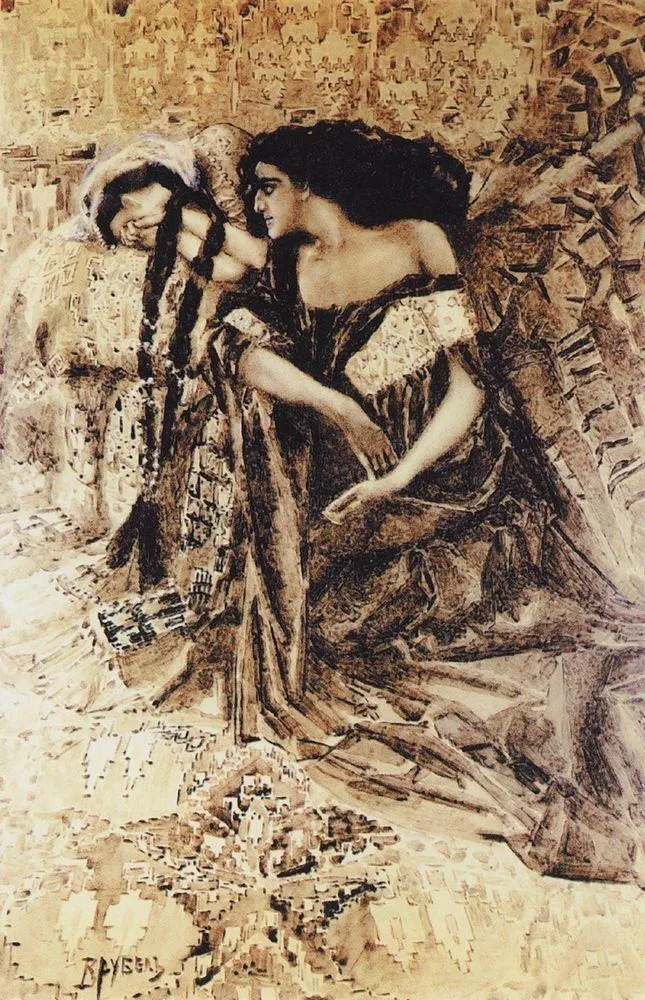
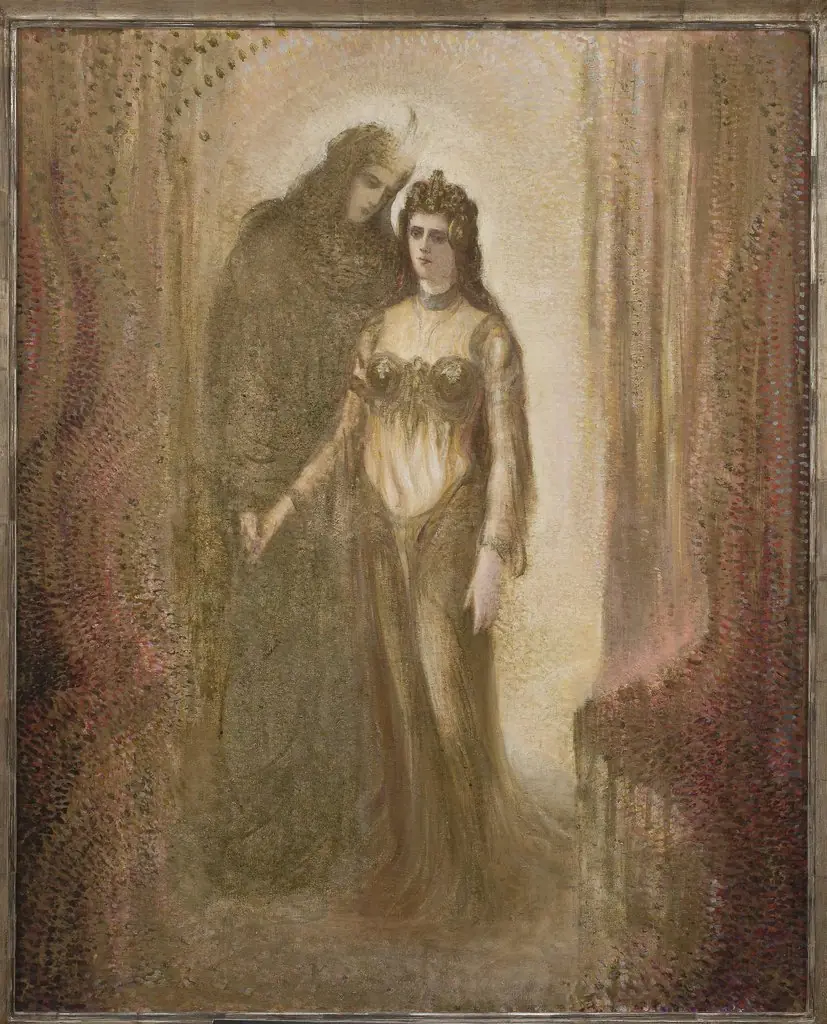
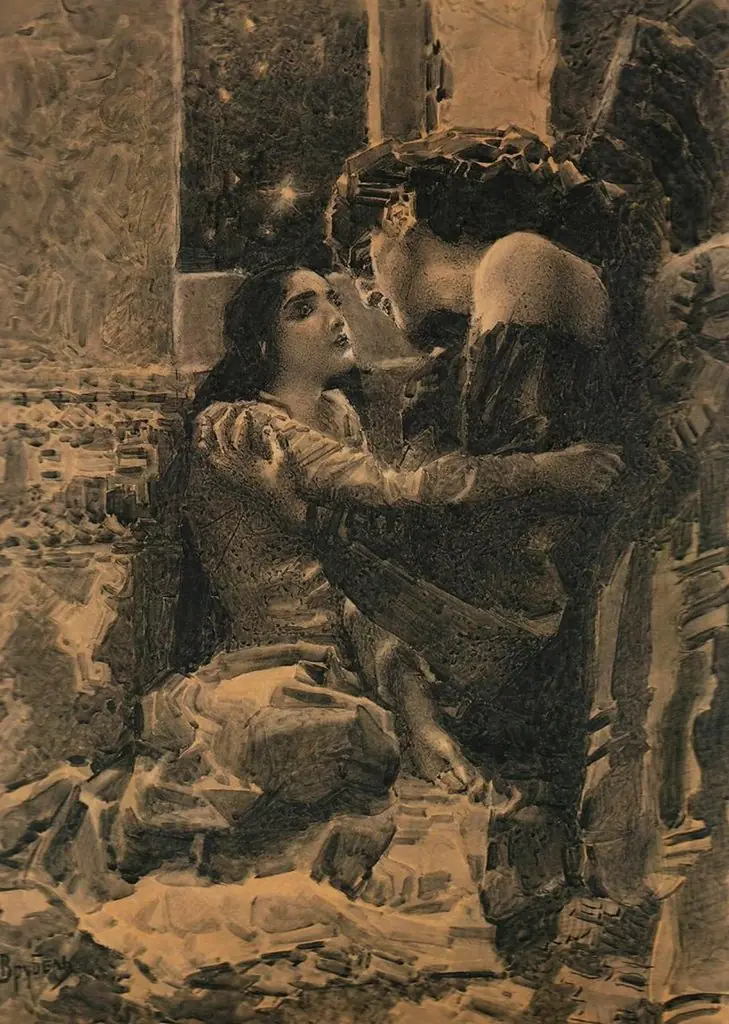
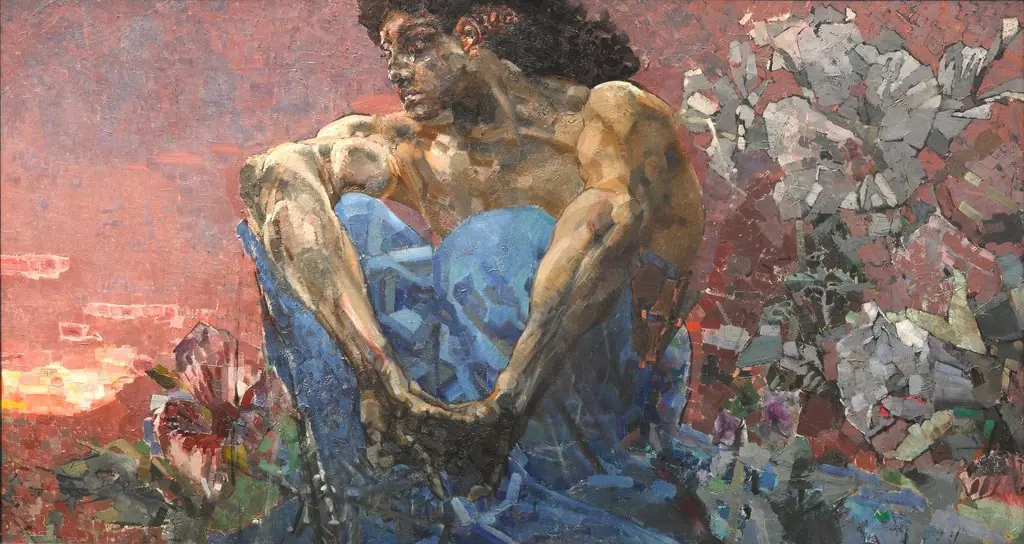
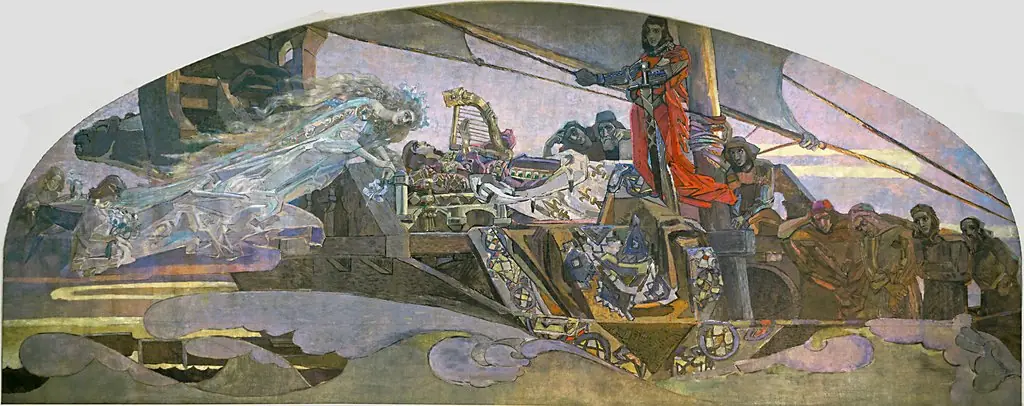
Tamara and the Demon is an unspecified painting by the Symbolist artist Mikhail Vrubel. It dates from 1896 and is held in the collection of the Tretyakov Gallery.
About this work
Overview
Painted in 1896 by Mikhail Vrubel, *Tamara and the Demon* is a key work of Russian Symbolism. It reflects Vrubel’s engagement with psychological and mystical themes, moving beyond literal representation toward emotional and spiritual resonance. The painting is part of the permanent collection at the Tretyakov Gallery in Moscow, where it remains a central example of his mature style.
Subject & Meaning
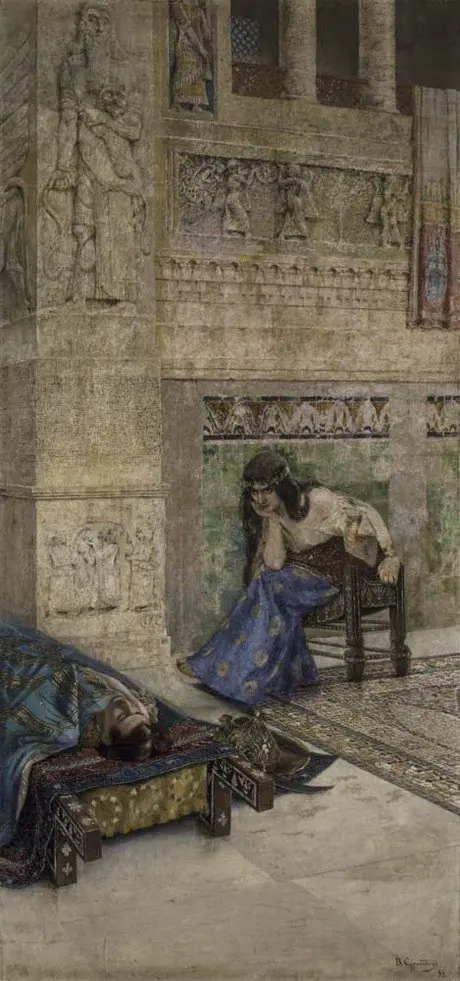
The painting depicts a tense, silent encounter between Tamara, a historical Georgian queen known for her allure and danger, and a spectral demon.
The painting depicts a tense, silent encounter between Tamara, a historical Georgian queen known for her allure and danger, and a spectral demon. Their locked gaze suggests a moment of seduction, confrontation, or inner torment. The work draws on literary and folkloric traditions, using their interaction to explore themes of temptation, moral ambiguity, and the clash between earthly desire and supernatural force.
Technique & Style
Vrubel employed thick, expressive brushwork and a restricted palette dominated by deep blues, blacks, and muted golds. Light is used selectively, cutting through shadow to highlight the figures’ faces and the demon’s wings. The surface is textured and layered, creating a sense of material weight and emotional intensity. Forms are stylized, blending realism with dreamlike distortion characteristic of Symbolist aesthetics.
History & Provenance
Created during Vrubel’s most productive period, the painting was completed after his time in Venice and reflects his evolving interest in mythic and psychological subjects. It entered the Tretyakov Gallery’s collection shortly after its completion, acquired under the patronage of Pavel Tretyakov, who systematically built a national collection of Russian art. The work has remained in the gallery’s holdings since.
Context
Vrubel worked amid a cultural shift in late 19th-century Russia, where artists sought alternatives to academic realism. Symbolism offered a language for inner experience, drawing from literature, Eastern Orthodox iconography, and European decadence. *Tamara and the Demon* aligns with this movement’s preoccupation with the occult, the feminine sublime, and the tension between the visible and the unseen.
Legacy
The painting influenced later Russian modernists through its emotional intensity and formal innovation. Vrubel’s fusion of mythic narrative with expressive technique helped redefine the boundaries of Russian painting. While not widely reproduced in his lifetime, *Tamara and the Demon* has since become a touchstone for discussions of Symbolist identity and psychological depth in Russian art.
Artist & collection
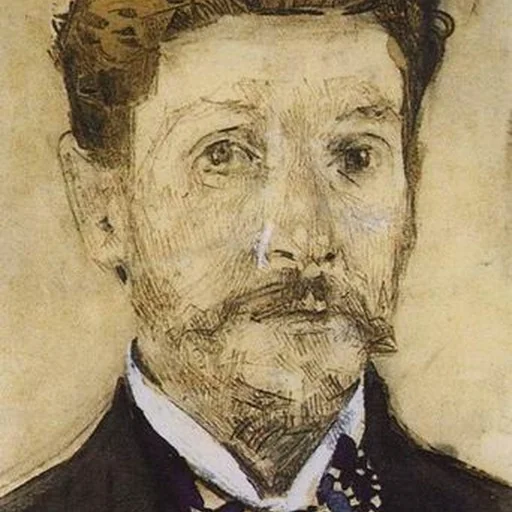
Artist
Mikhail Aleksandrovich Vrubel (Russian: Михаил Александрович Врубель; March 17, 1856 – April 14, 1910) was a Russian painter, draughtsman, and sculptor.

![[Retrato de mujer al pie de su lecho], by Unknown](https://artifactworldgallery.com/img/unknown--retrato-de-mujer-al-pie-de-su-lecho--96c1576d0f3bbaa8-w320.webp)