Artwork
Gitanilla
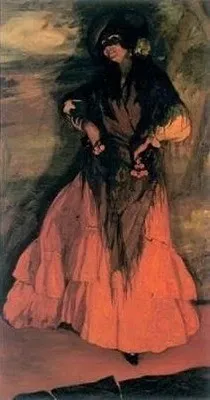
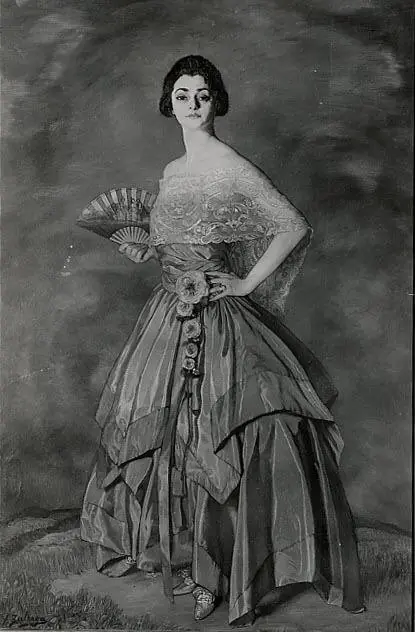
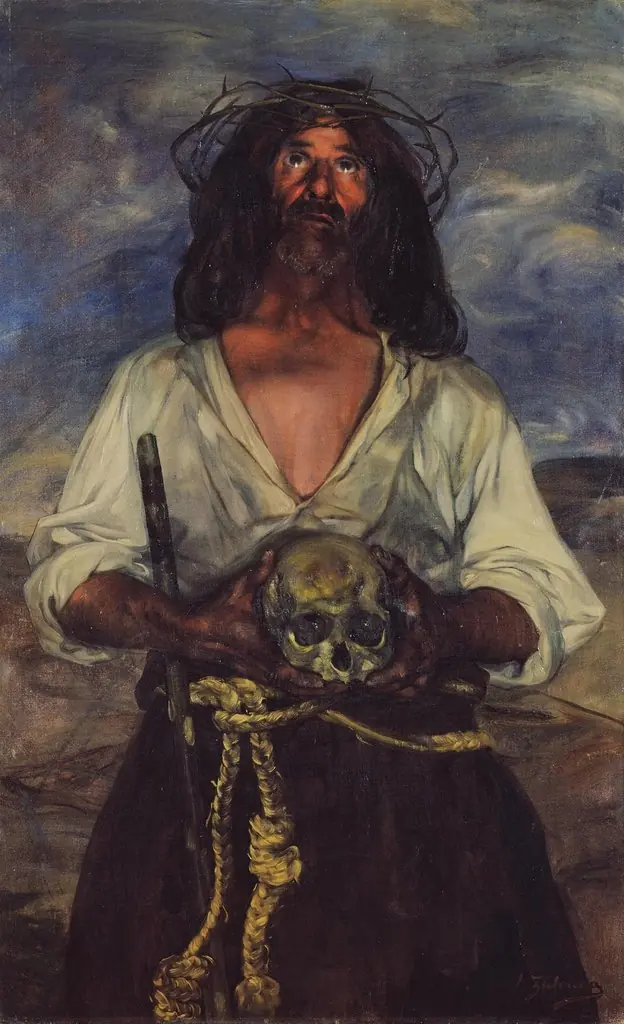
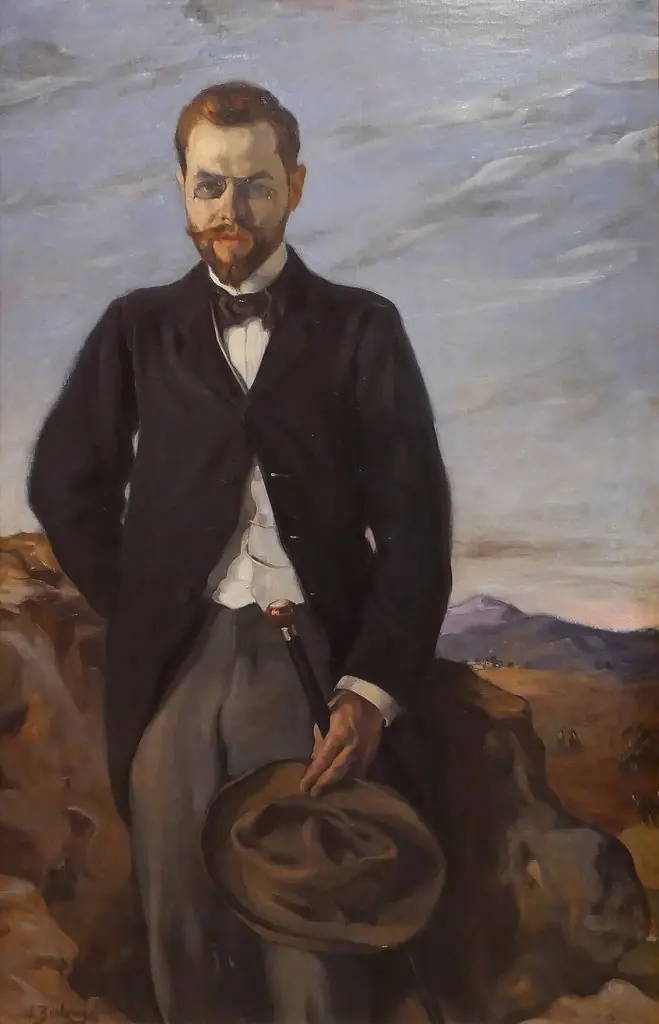
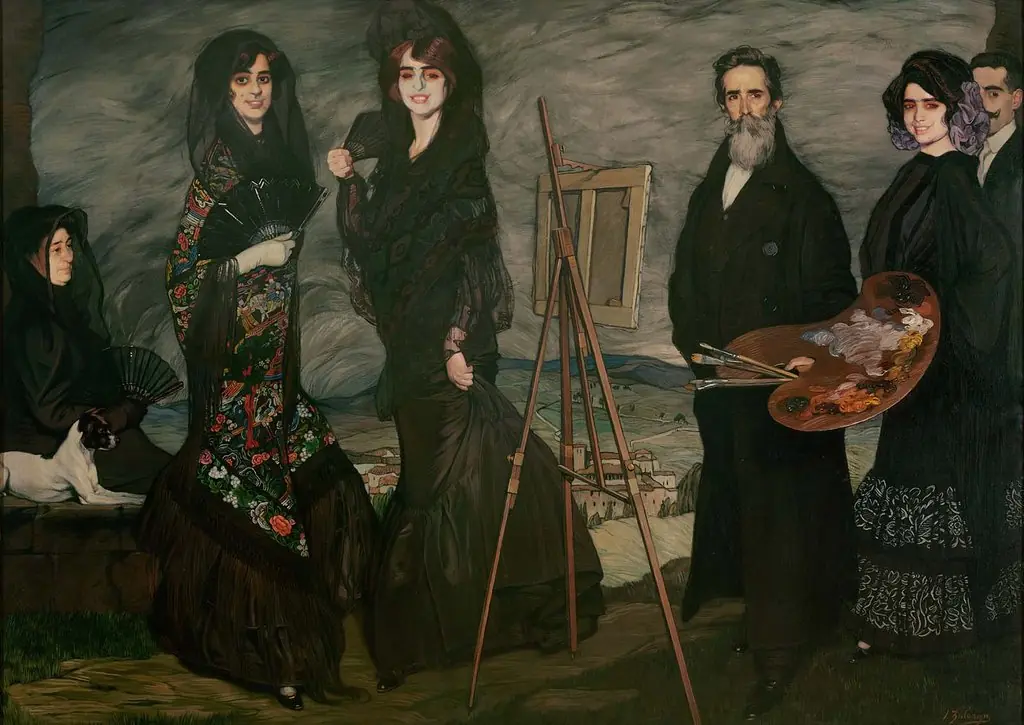
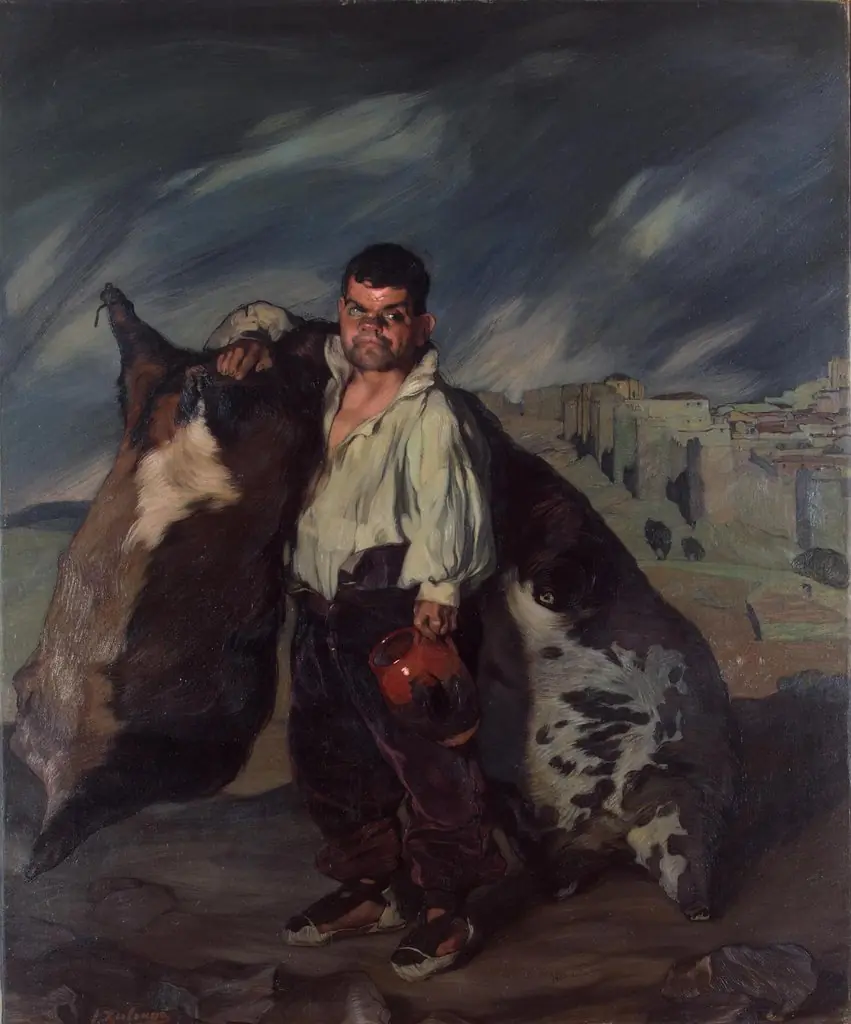
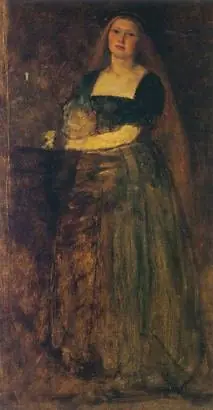
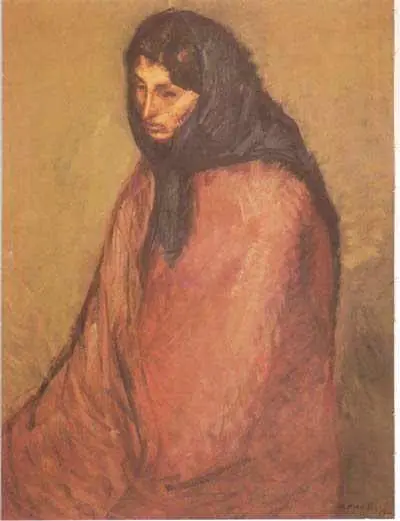
Gitanilla is an oil painting by the Spanish Baroque Tenebrist artist Ignacio Zuloaga. It dates from 1917 and is held in the collection of the National Museum of Fine Arts, Argentina.
About this work
Overview
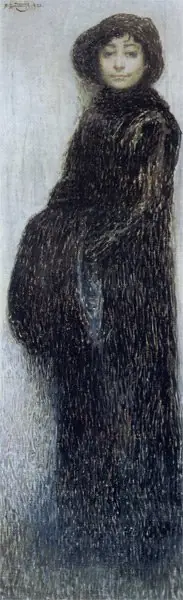
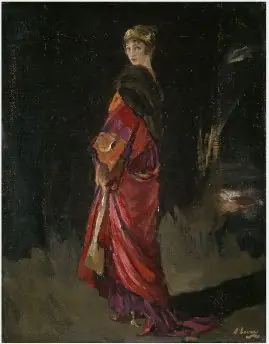
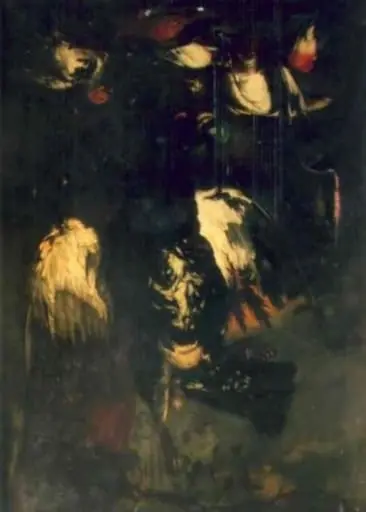
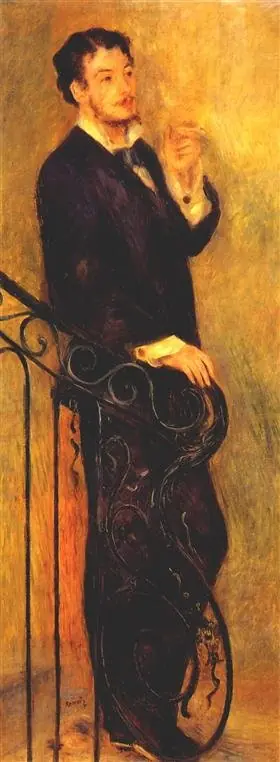
Ignacio Zuloaga’s *Gitanilla*, executed in oil around 1917, belongs to the collection of the National Museum of Fine Arts in Buenos Aires. The canvas presents a solitary woman rendered in a tenebrist manner, with stark contrasts of light and shadow that give the work a dramatic, almost theatrical presence.
Subject & Meaning
The figure is a young woman dressed in a light, ruffled gown that catches the eye against a deep, indistinct background. Dark hair and a shawl partially veil her face, suggesting a sense of mystery or introspection while emphasizing the interplay between concealment and revelation.
Technique & Style
Zuloaga employs a Spanish Baroque tenebrist approach, using chiaroscuro to model the form and create volume. Thick impasto in the oil paint adds texture to the fabric and folds, while the softened, blurred backdrop recedes, focusing attention on the illuminated parts of the subject.
History & Provenance
Created shortly after World War I, the painting entered the Argentine national collection sometime after its completion, reflecting the early 20th‑century interest of Latin American institutions in contemporary European art.
Context
*Gitanilla* fits within Zuloaga’s broader investigation of dramatic lighting and expressive, often solitary figures, a motif he pursued throughout his career. The work echoes the influence of Spanish Baroque masters while also bearing the personal, realist sensibility that defined his oeuvre.
Artist & collection
Artist
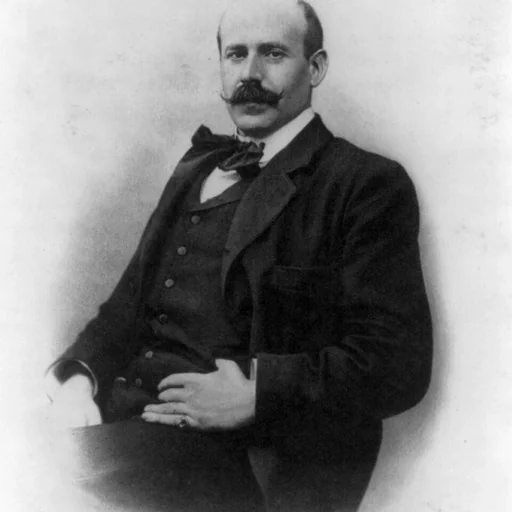
Ignacio Zuloaga y Zabaleta (July 26, 1870 – October 31, 1945) was a Spanish painter, born in Eibar, Guipuzcoa, near the monastery of Loyola.

Museum
National Museum of Fine Arts, Argentina
Continue through works from the same source collection.