Artwork
Bărbierul satului
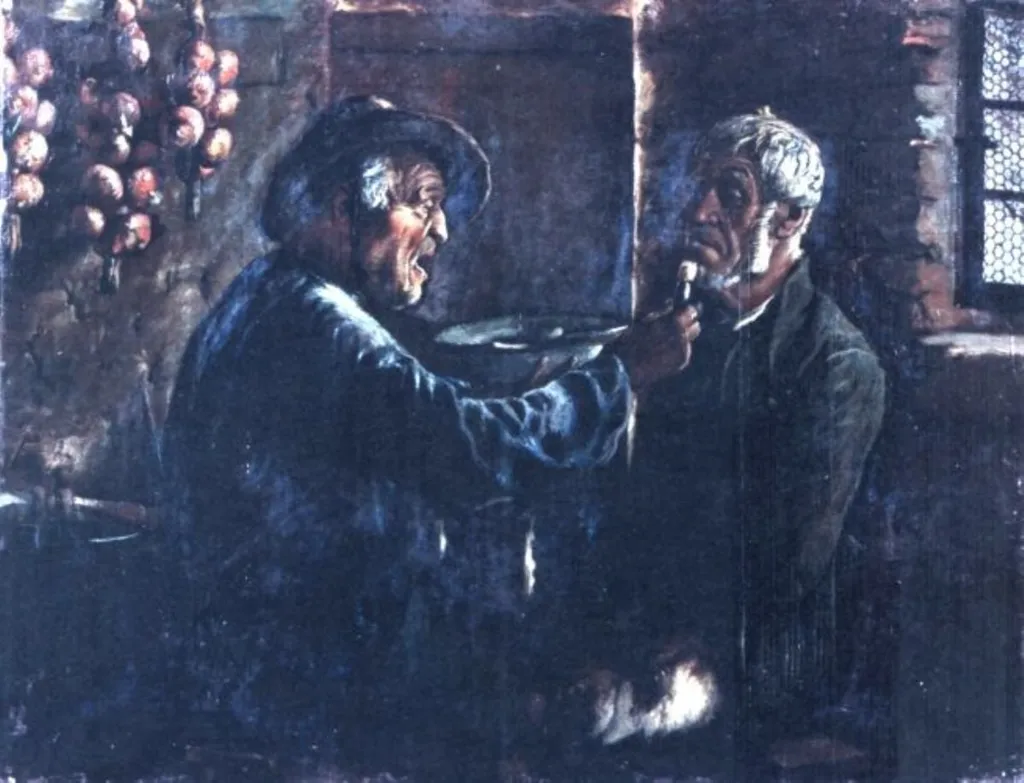
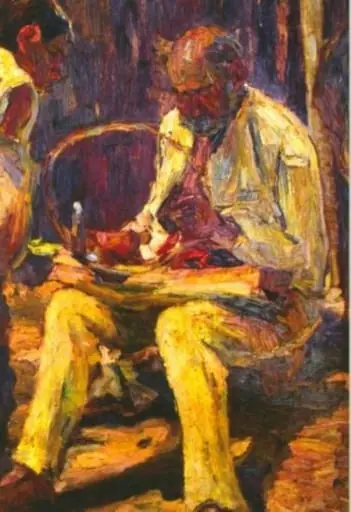
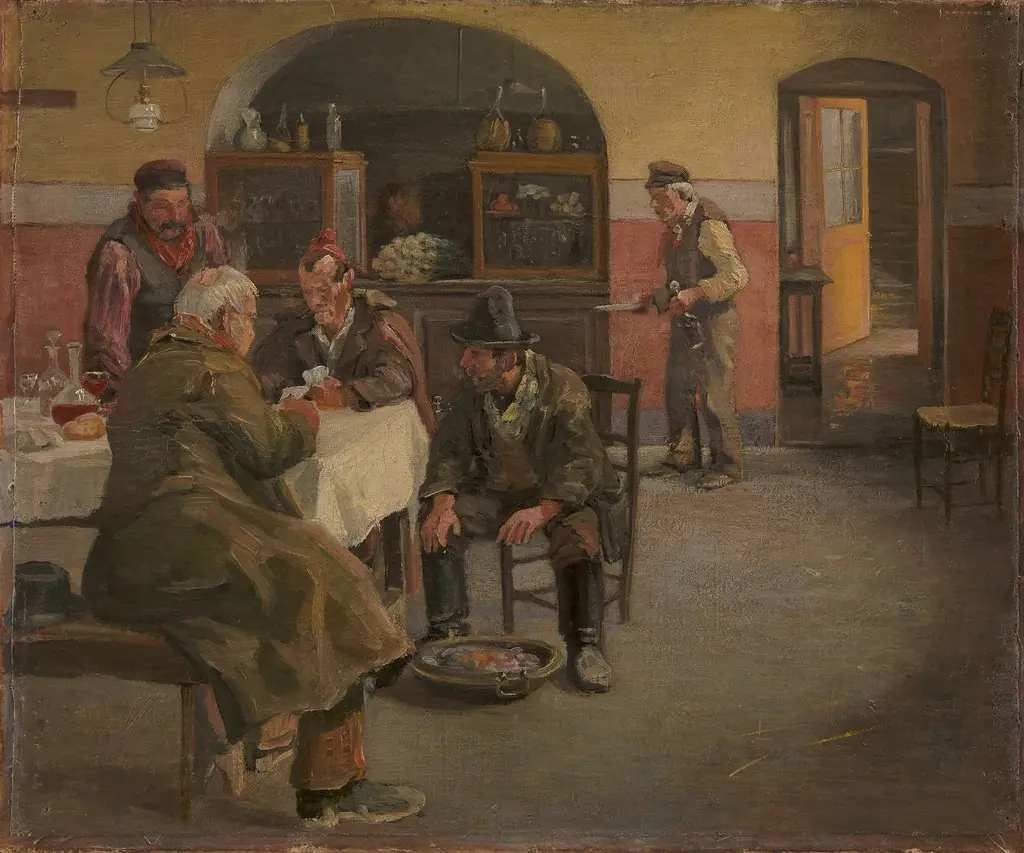
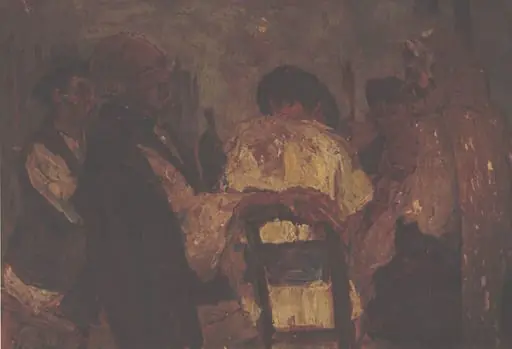
Bărbierul satului is an unspecified painting by Charles Milcendeau. It is held in the collection of the National Museum of Art of Romania. This painting depicts two elderly men in a dim interior, engaged in a quiet, intimate moment.
About this work
Overview
The lighting is sharply directional, casting deep shadows and highlighting textures, creating a mood of stillness and introspection.
This painting depicts two elderly men in a dim interior, engaged in a quiet, intimate moment. One holds a small mirror, while the other grips a pipe, their postures suggesting reflection or ritual. The space is enclosed, with minimal furnishings and a window barred like a cell. The lighting is sharply directional, casting deep shadows and highlighting textures, creating a mood of stillness and introspection.
Subject & Meaning
The scene appears to capture a private, possibly ceremonial act—perhaps grooming or self-examination—rendered without narrative clarity. The absence of context invites interpretation: is this a moment of dignity, decay, or routine? The barred window and dark walls suggest confinement, while the apples may symbolize temptation or the passage of time, adding layers of ambiguity to the figures' silent interaction.
Technique & Style
The artist employs chiaroscuro to define form through stark contrasts between light and shadow. Faces and objects emerge from near-total darkness, their surfaces modeled with precision. The uneven illumination draws attention to textures—the wrinkled skin, the metallic gleam of the mirror, the rough wood of the pipe—while the background dissolves into obscurity, focusing the viewer’s attention on the intimate exchange between the two men.
History & Provenance
The painting’s origin is undocumented in public records, and its early ownership remains unclear. It has been attributed to a regional artist active in the late 19th or early 20th century, likely from a rural Eastern European community. Its survival suggests it was preserved within a private collection, possibly passed down through generations, before entering institutional hands.
Context
Created during a period when rural life was increasingly marginalized by industrialization, the work reflects a quiet resistance to modernity. Its focus on aging, solitude, and domestic ritual aligns with broader regional traditions of realism that valued everyday scenes over grand narratives. The barred window and dim interior may echo the social isolation experienced by older generations in changing rural economies.
Legacy
Though not widely exhibited, the painting has influenced regional artists interested in psychological realism and the expressive potential of shadow. Its restrained composition and emotional ambiguity have been studied in art pedagogy as an example of how minimal elements can convey complex human states. It remains a quiet testament to the dignity found in overlooked moments of ordinary life.
Artist & collection
Artist