Artwork
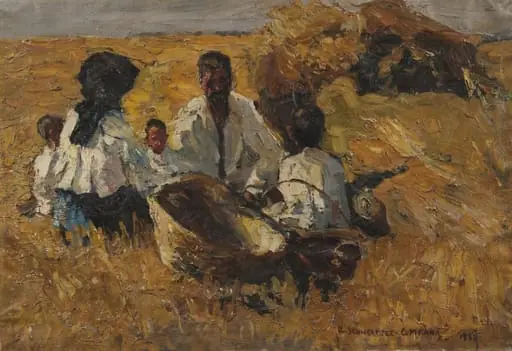
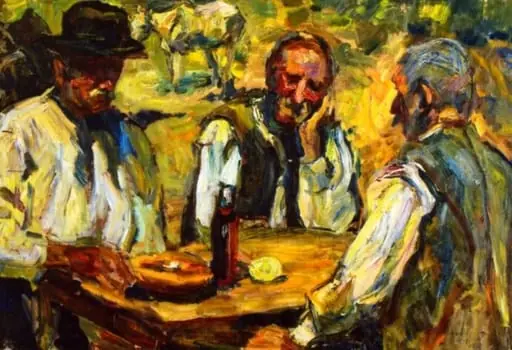
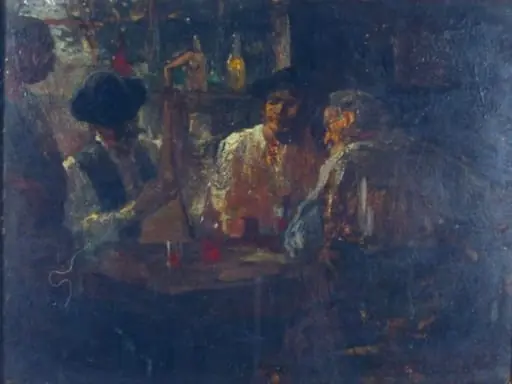
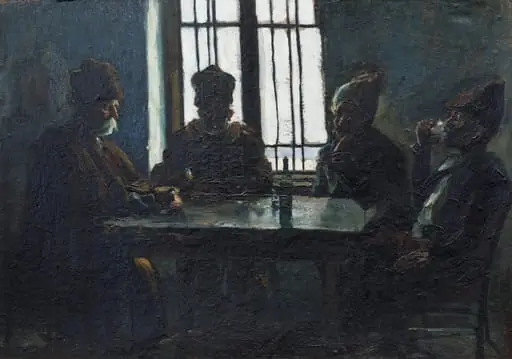
Țărani la cârciumă
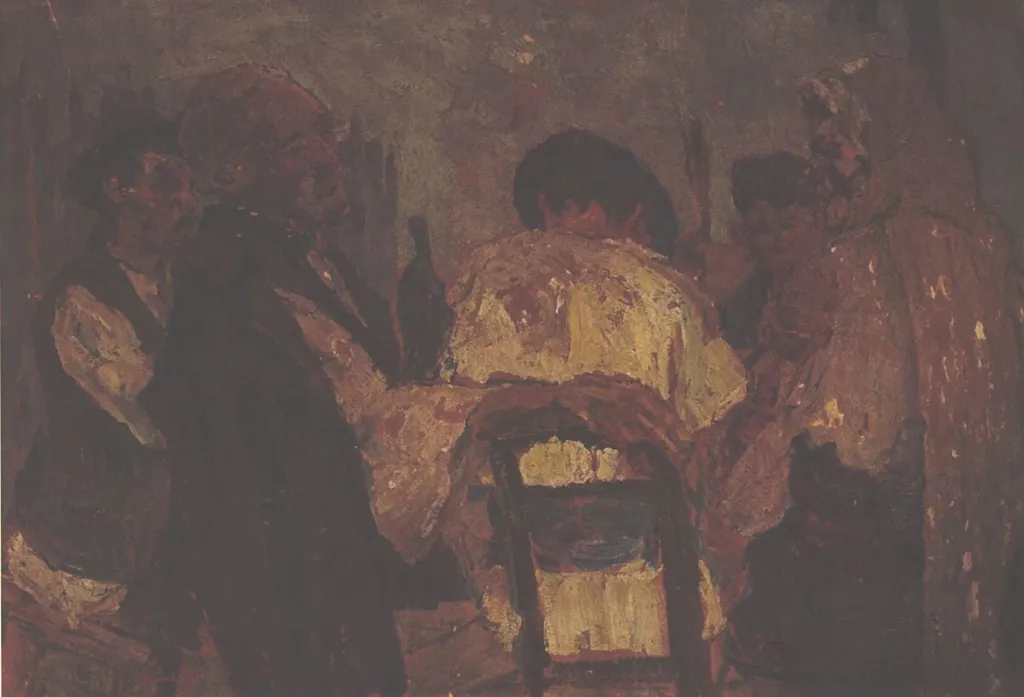
Țărani la cârciumă is a print by Rudolf Schweitzer-Cumpăna. It dates from 1927 and is held in the collection of the Bucharest Municipality Museum.
About this work
Overview
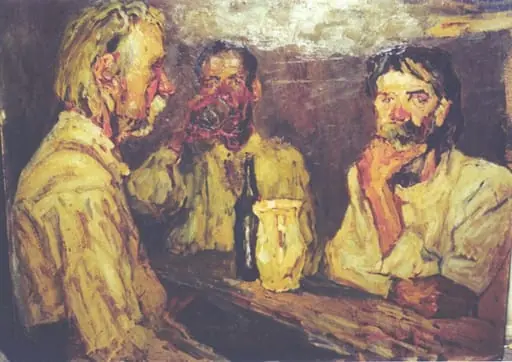
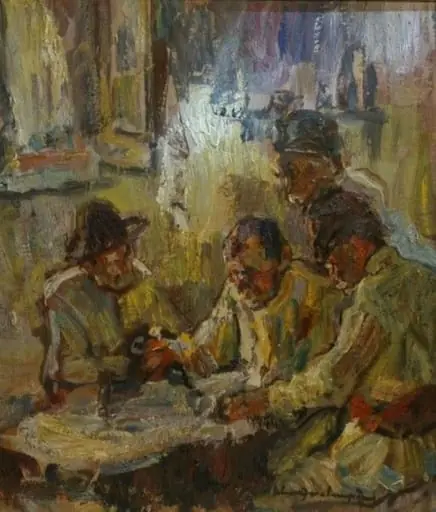
Created in 1927 by Rudolf Schweitzer-Cumpăna, this oil painting depicts a quiet interior scene of rural laborers in a tavern. The work is part of the Museum of Ethnography’s collection, reflecting early 20th-century Romanian rural life. Its atmospheric quality and rough brushwork suggest an intimate, unidealized glimpse into everyday social interaction among peasants.
Subject & Meaning
Four figures gather in a dim, enclosed space, their postures suggesting a moment of pause amid routine. The central figure, seated with back turned, is framed by two standing men—one holding a bottle, the other leaning forward in conversation. The absence of facial expressions and the muted setting emphasize anonymity and the quiet dignity of ordinary laborers, avoiding romanticization.
Technique & Style
Thick, uneven brushstrokes create a tactile surface, characteristic of impasto, which enhances the sense of smoke and shadow in the room. Warm browns and muted tones dominate, with the central figure’s yellow coat providing a subtle focal point. The blurred background and lack of sharp detail reinforce the hazy, intimate atmosphere, as if viewed through memory or dim lamplight.
History & Provenance
The painting entered the Museum of Ethnography’s collection shortly after its completion, likely through institutional acquisition or donation tied to ethnographic documentation efforts in interwar Romania. Its preservation reflects early efforts to record rural customs through visual art, aligning with broader cultural preservation movements of the period.
Context
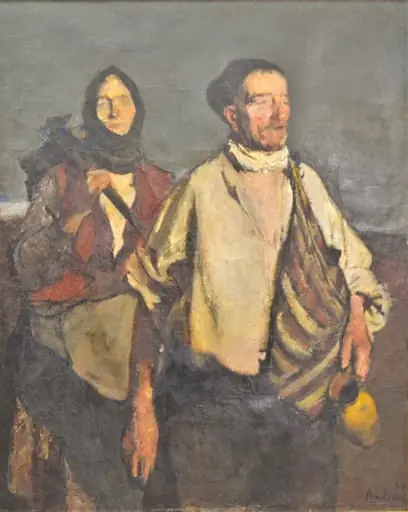
In the 1920s, Romanian artists increasingly turned to rural subjects as national identity was being redefined after territorial expansion. Schweitzer-Cumpăna’s work contributes to this trend, portraying peasants not as symbols but as individuals in unadorned settings. The tavern scene reflects a common social space where laborers gathered, offering insight into informal community life.
Legacy
Though not widely exhibited beyond regional institutions, the painting remains a quiet example of interwar Romanian realism. Its emphasis on texture and mood, rather than narrative clarity, distinguishes it from more idealized depictions of peasant life. It continues to serve as a reference for studies of vernacular culture and artistic responses to rural society in Eastern Europe.
Artist & collection
Artist
Rudolf Schweitzer-Cumpăna was a Romanian painter. Born in Pitești into an ethnic German family, he finished high school in his native town before attending the Royal Academy of Arts at Berlin from 1904 to 1909, studying…